Standard Time vs Daylight Saving Time: What's the Difference?

Quick Answer
Standard time is the "natural" time for a region, based on its longitude and UTC offset, for example, Eastern Standard Time (UTC-5) for New York. daylight saving time is an artificial one-hour shift forward from standard time, used during warmer months to extend evening daylight, making New York UTC-4 (Eastern Daylight Time). Standard time aligns better with solar noon; DST prioritizes evening light. Roughly 70 countries switch between them each year.
When Do Clocks Go Back in 2026?
In US locations that observe daylight saving time, clocks go back on Sunday, November 1, 2026, at 2:00 a.m. local time. The clock returns to 1:00 a.m., repeating that hour and restoring the standard-time offset. Hawaii and most of Arizona do not make this change; the Navajo Nation observes DST.
The date is not worldwide. In the UK, clocks go back on Sunday, October 25, 2026, at 2:00 a.m. British Summer Time, returning to 1:00 a.m. GMT. Check the 2026 clock-change dates by country before scheduling across time zones.
The US date and exceptions are published by NIST; the UK date and transition time are published by GOV.UK.
What Standard Time Is
The Natural Baseline
Standard time is the default time zone offset for a given region. It is the time that most closely corresponds to the position of the Sun at that location's longitude. When a region is on standard time, the Sun is at its highest point in the sky (solar noon) at or near 12:00 PM on the clock, at least for locations near the center of the time zone.
Standard time is defined by a region's base UTC offset. Some examples:
- Eastern Standard Time (EST): UTC-5
- Central Standard Time (CST): UTC-6
- Pacific Standard Time (PST): UTC-8
- Central European Time (CET): UTC+1
- Japan Standard Time (JST): UTC+9
How Standard Time Was Established
Standard time zones were created in the late 19th century to solve the chaos of every town keeping its own local solar time. In the US, the railroad companies led the charge, they needed consistent schedules. On November 18, 1883, known as "The Day of Two Noons," American railroads implemented four standard time zones (Eastern, Central, Mountain, and Pacific). Cities gradually adopted railroad time, and the system became federal law with the Standard Time Act of 1918.
Standard Time Around the World
About 125 countries do not observe DST and remain on their standard time year-round. These include:
- All of Asia's major economies (China, Japan, India, South Korea)
- Most of Africa
- Most of South America
- Russia
- Most of Australia's Northern Territory and Western Australia
For these countries, the distinction between standard time and daylight saving time is irrelevant, they simply have one time, all year, every year.
What Daylight Saving Time Is
The Artificial Shift
Daylight Saving Time is a deliberate, temporary shift of clocks forward by one hour from standard time. It is not a separate time zone, it is a seasonal modification of an existing time zone. When DST is in effect, a region's UTC offset increases by one hour.
For example:
- EST (UTC-5) becomes EDT (UTC-4)
- CST (UTC-6) becomes CDT (UTC-5)
- CET (UTC+1) becomes CEST (UTC+2)
- GMT (UTC+0) becomes BST (UTC+1)
The Intended Effect
DST shifts an hour of daylight from the early morning to the evening. Without DST, the Sun might rise at 4:30 AM and set at 7:30 PM in June in New York. With DST, sunrise moves to 5:30 AM and sunset to 8:30 PM. The total amount of daylight does not change, you cannot create or destroy sunlight, but the distribution shifts to favor the hours when most people are awake and active.
When DST Is in Effect
In the Northern Hemisphere, DST typically runs from spring through early autumn. In the Southern Hemisphere, where seasons are reversed, DST runs from October/November through March/April. The specific start and end dates vary by country and region.
The Key Differences
| Feature | Standard Time | Daylight Saving Time |
|---|---|---|
| Relationship to solar noon | Closer alignment (Sun highest near 12:00 PM) | Sun highest near 1:00 PM |
| UTC offset | Base offset (e.g., UTC-5) | Base offset +1 hour (e.g., UTC-4) |
| Sunrise time | Earlier on the clock | Later on the clock |
| Sunset time | Earlier on the clock | Later on the clock |
| When it applies | Typically late autumn through early spring | Typically spring through early autumn |
| Origin | Based on longitude and geography | Based on policy and legislation |
| Abbreviation | EST, CST, PST, CET, etc. | EDT, CDT, PDT, CEST, etc. |
| Used year-round by | ~125 countries | No country uses "permanent DST" currently |
| Clock change | No change (the default) | Clocks set forward 1 hour from standard |
| Energy argument | Neutral | Claimed to save energy (debated) |
| Health argument | Better circadian alignment | Sleep disruption during transitions |
| Legal status in US | Allowed year-round (states can opt out of DST) | Not allowed year-round without federal approval |
Why We Switch Between Them
The switch between standard time and DST exists because of a political compromise. When DST was first widely adopted (during World Wars I and II), it was seen as a temporary emergency measure. After the wars, many countries kept it but returned to standard time in winter, when the extra evening daylight offered less benefit and the dark mornings posed safety risks (especially for children walking to school).
The argument for switching (rather than choosing one permanently) is:
- In summer: DST provides valuable extra evening daylight for recreation, retail, and reduced lighting costs.
- In winter: Standard time ensures that mornings are not unreasonably dark. If the US were on permanent DST, winter sunrise in some northern cities would be after 8:30 AM.
The argument against switching is that the twice-yearly transition is disruptive, unhealthy, and provides minimal energy savings. Both permanent standard time and permanent DST have their advocates.
How the Transition Works
Spring Forward
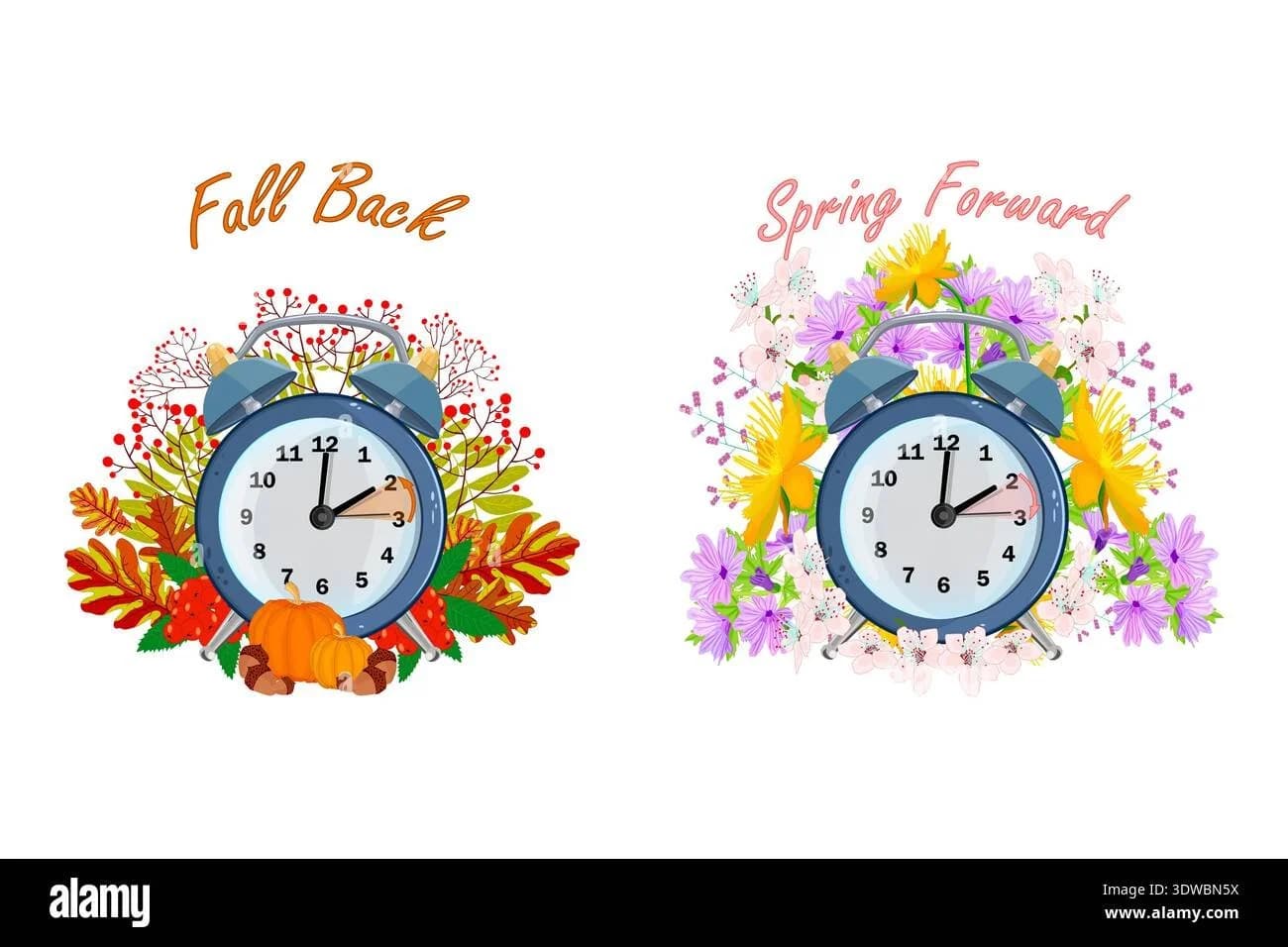
On the transition day in spring, clocks are moved forward by one hour. In the US, this happens at 2:00 AM local time on the second Sunday of March. At that moment, 2:00 AM becomes 3:00 AM, and the hour between 2:00 AM and 3:00 AM simply does not exist. This means:
- You lose one hour of sleep.
- Shift workers who work overnight work one hour less (or are paid for one hour less).
- Flights scheduled to depart at 2:30 AM are affected; airlines adjust schedules.
- Some digital systems can experience "missing hour" bugs if they are not configured for DST.
Fall Back
On the transition day in autumn, clocks are moved back by one hour. In the US, this happens at 2:00 AM local time on the first Sunday of November. At that moment, 2:00 AM becomes 1:00 AM, and the hour between 1:00 AM and 2:00 AM occurs twice. This means:
- You gain one hour of sleep.
- Shift workers work an extra hour.
- The same time (e.g., 1:30 AM) occurs twice, which can confuse timestamps in logs and databases.
- Some bars and restaurants extend their hours by one hour on this night.
The Importance of 2:00 AM
The 2:00 AM transition time was chosen because it minimizes disruption. Most people are asleep, most businesses are closed, and the impact on public transportation is minimal. In the EU, the transition occurs at 1:00 AM UTC, which is also during the night for most of Europe.
What Changes During the Switch
Sunrise and Sunset Times
The most noticeable change is the shift in when the Sun rises and sets. Here is what happens for a typical mid-latitude city like Chicago (UTC-6 standard / UTC-5 DST):
| Event | Standard Time (January) | DST (July) |
|---|---|---|
| Sunrise | ~7:15 AM | ~5:25 AM (would be 4:25 AM on Standard Time) |
| Solar noon | ~12:02 PM | ~12:58 PM (on DST) |
| Sunset | ~4:45 PM | ~8:25 PM (on DST) |
Without DST in July, Chicago's sunset would be around 7:25 PM instead of 8:25 PM. With DST in January, Chicago's sunrise would be around 8:15 AM instead of 7:15 AM.
Sleep Schedule
The spring transition disrupts sleep because people lose an hour. Most people adjust within a few days to a week, but research shows measurable health effects during the adjustment period (increased heart attacks, traffic accidents, and workplace injuries, see our full DST article for details).
The fall transition is easier for most people because they gain an hour, though the earlier sunset can trigger seasonal affective disorder (SAD) in susceptible individuals.
Business Hours
Businesses do not typically change their operating hours during DST transitions. A store open "9 AM to 9 PM" is open for the same 12 hours whether it is standard time or DST. What changes is the amount of daylight available during those hours. Under DST, more of the open hours coincide with daylight, which generally benefits retail, restaurants, and outdoor recreation.
Countries That Don't Use DST
The majority of the world's countries do not observe DST. Key holdouts include:
Asia
No major Asian country observes DST. Japan, China, India, South Korea, Thailand, Indonesia, Vietnam, the Philippines, and Pakistan all stay on standard time year-round. This is partly because many Asian countries are at lower latitudes where seasonal daylight variation is small, and partly because DST was seen as a Western imposition.
Africa
Most African countries do not observe DST. Morocco is a notable exception, observing DST during Ramadan period. The equatorial location of most African countries means seasonal daylight variation is minimal.
South America
Brazil abolished DST in 2019. Argentina abolished it in 2009. Chile and Paraguay still observe it.
Russia
Russia abolished DST in 2014 and now stays on permanent standard time (UTC+3 for Moscow). The country had tried permanent DST (UTC+4) from 2011 to 2014 but found that dark winter mornings were too depressing and dangerous, so it switched to permanent standard time instead.
The Argument for Permanent Standard Time
Scientific Backing
The American Academy of Sleep Medicine (AASM) has endorsed permanent standard time as the healthiest option. Their reasoning:
-
Circadian alignment: Standard time is closer to natural solar time. The human body's internal clock is set by morning light, and standard time ensures that morning light arrives at a biologically appropriate time.
-
Sleep health: Permanent standard time avoids the chronic misalignment caused by DST, where the body is effectively in a different time zone than the clock for half the year.
-
Safety: Morning light is critical for school children and commuters. Under permanent DST, winter sunrises in northern areas would occur after 8:30 AM or even 9:00 AM, increasing the risk of accidents.
The Longitude Argument
Standard time is, by definition, the time that best matches the Sun's position for a given longitude. Abandoning it in favor of permanent DST means permanently misaligning clocks with solar time. For cities in the western part of their time zone (like Boston or Seattle), permanent DST would push solar noon to nearly 1:30 PM on the clock.
The Argument for Permanent DST
Lifestyle and Recreation
Proponents of permanent DST argue that most people value evening daylight more than morning daylight. After work and school, people want light for outdoor activities, sports, socializing, and shopping. Permanent DST would guarantee later sunsets year-round.
Economic Benefits
The retail, hospitality, and tourism industries benefit from extended evening daylight. The golf industry, for example, has estimated that each additional month of DST is worth hundreds of millions of dollars in revenue. Gas stations, restaurants, and sporting goods stores all report increased business during DST months.
Reduced Crime
Some studies suggest that later sunsets reduce certain types of crime, particularly robbery and assault, which are more common in darkness.
Public Opinion
Opinion polls consistently show that a majority of Americans prefer not to change their clocks twice a year. Among those who want to stop changing clocks, permanent DST is more popular than permanent standard time. The Sunshine Protection Act, which would establish permanent DST, passed the US Senate unanimously in 2022.
The Counterargument
Critics of permanent DST point to the US experiment with year-round DST in 1974. During that winter, children walked to school in the dark, and public opposition was fierce. The experiment was ended early by congressional vote. Similar concerns apply today: under permanent DST, winter sunrise in cities like Minneapolis, Seattle, and Boston would occur after 8:30 AM for weeks at a time.
Frequently Asked Questions
10 questions answered
When does daylight saving end in 2026 in the United States?
When do clocks go back in 2026 in the UK?
What is the difference between standard time and daylight saving time?
Why is standard time considered "natural"?
Do all countries switch between standard time and DST?
Which is healthier, permanent standard time or permanent DST?
What happens to the "missing hour" when clocks spring forward?
Can US states choose permanent standard time or permanent DST?
Why did Russia abandon permanent DST?
What time do most countries switch to DST?
Put this into action
Stop guessing. Use our professional tools to schedule, convert, and manage time zones perfectly, 100% free.
Convert Time Zones