What Is Daylight Saving Time? The Complete Guide
Quick Answer
daylight saving time (DST) is the practice of moving clocks forward by one hour in spring and back by one hour in fall. The goal is to shift an hour of daylight from the morning (when most people are asleep) to the evening (when most people are awake), theoretically saving energy and extending usable daylight hours. About 70 countries observe DST, but the practice is increasingly controversial, with growing numbers of nations abolishing it.
What DST Is
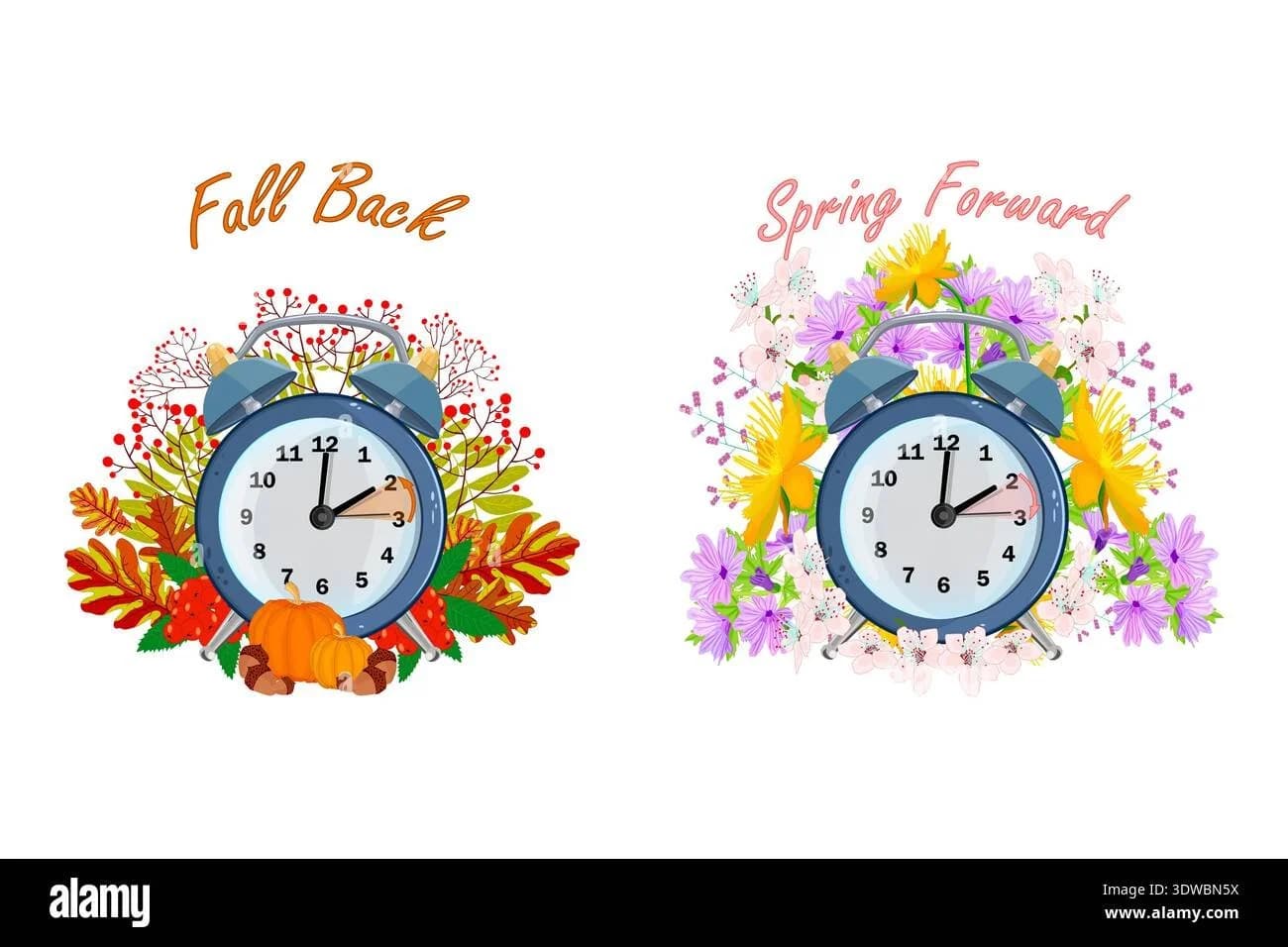
Daylight Saving Time works by shifting the clock forward one hour near the start of spring and shifting it back one hour near the end of autumn. The mnemonic "spring forward, fall back" helps people remember which way the clocks move.
During DST months, a region's UTC offset increases by one hour. For example:
- New York moves from UTC-5 (Eastern Standard Time) to UTC-4 (Eastern Daylight Time)
- London moves from UTC+0 (GMT) to UTC+1 (British Summer Time)
- Paris moves from UTC+1 (CET) to UTC+2 (CEST)
The net effect is that the Sun appears to rise one hour later and set one hour later on the clock. A sunset that would occur at 6:00 PM on standard time instead occurs at 7:00 PM on DST, giving people an extra hour of usable daylight after typical working hours.
Why DST Was Created
Benjamin Franklin's Satirical Suggestion
The earliest known proposal for something like DST came from Benjamin Franklin in 1784. While serving as American ambassador to France, Franklin wrote a satirical letter to the Journal of Paris suggesting that Parisians could save money on candles by waking up earlier. He calculated that shifting sleep schedules to match the Sun could save the city roughly 64 million livres per year in candle wax. Franklin was joking, he proposed taxing window shutters and ringing church bells at sunrise to rouse the populace, but the idea of aligning human activity with daylight had been planted.
The Real Pioneer: William Willett
The serious campaign for DST began with William Willett, a British builder who in 1907 published a pamphlet called "The Waste of Daylight." Willett was an avid horseback rider who was frustrated that Londoners slept through the early morning sunshine while burning artificial light in the evening. He proposed advancing clocks by 20 minutes on each of four Sundays in April and reversing the process on four Sundays in September, a total shift of 80 minutes.
Willett lobbied the British Parliament for nearly a decade, but his proposal was repeatedly rejected. Farmers opposed it, the scientific establishment was skeptical, and many politicians considered it an unnecessary interference. Willett died in 1915, a year before his idea was finally adopted.
World War I: The First Implementation
Germany and its ally Austria-Hungary became the first countries to implement DST on April 30, 1916, as a wartime measure to save coal for the war effort. Britain followed three weeks later on May 21, 1916, calling it "British Summer Time." The United States adopted DST in 1918 with the Standard Time Act, which also established standard time zones across the country.
After the war, most countries abandoned DST. It returned during World War II, sometimes in extreme forms. The UK used "Double Summer Time" (UTC+2) during the war to maximize daylight for factory work and minimize blackout hours. The US observed year-round DST ("War Time") from February 1942 to September 1945.
The Energy Crisis Revival
DST remained inconsistent in the US after WWII, with states free to choose whether to observe it. By 1965, the mess was so bad that Iowa had 23 different DST start and end dates, and a 35-mile bus ride from Steubenville, Ohio, to Moundsville, West Virginia, passed through seven time changes. The Uniform Time Act of 1966 standardized DST dates across the US (though states could opt out).
The 1973 oil crisis prompted the US to try year-round DST from January to April 1974. The experiment was unpopular, children walked to school in the dark, and there were reports of increased traffic accidents. Congress voted to end the experiment early, in October 1974.
When DST Starts and Ends
DST dates vary significantly by country. In the Northern Hemisphere, DST typically runs from spring to autumn. In the Southern Hemisphere, the seasons are reversed, so DST runs from October/November to March/April.
2026 DST Dates for Major Countries
| Country / Region | DST Begins | DST Ends | Direction |
|---|---|---|---|
| United States | March 8, 2026 | November 1, 2026 | Spring forward, fall back |
| Canada (most provinces) | March 8, 2026 | November 1, 2026 | Same as US |
| European Union / UK | March 29, 2026 | October 25, 2026 | Last Sunday of March / October |
| Mexico | Does not observe DST | Abolished in 2022 | |
| Australia (SE states) | October 4, 2026 | April 4, 2027 | Southern Hemisphere timing |
| New Zealand | September 27, 2026 | April 4, 2027 | Southern Hemisphere timing |
| Brazil | Does not observe DST | Abolished in 2019 | |
| Russia | Does not observe DST | Permanent standard time since 2014 | |
| China | Does not observe DST | Never adopted | |
| Japan | Does not observe DST | Not observed since 1952 | |
| India | Does not observe DST | Never adopted | |
| Chile | September 6, 2026 | April 4, 2027 | Southern Hemisphere |
| Argentina | Does not observe DST | Abolished in 2009 |
Note: US and Canadian DST starts on the second Sunday of March and ends on the first Sunday of November. EU DST starts on the last Sunday of March and ends on the last Sunday of October. This creates a roughly two-week "gap" each spring and one week each autumn where the US is on DST but the EU is not (or vice versa).
Which Countries Observe DST
Approximately 70 countries currently observe DST in some form. These are predominantly in North America and Europe:
| Region | Major Countries Observing DST |
|---|---|
| North America | United States (most states), Canada (most provinces), Bahamas, Cuba, Greenland, Haiti |
| Europe | All EU member states, UK, Norway, Switzerland, Ukraine, Turkey |
| South America | Chile, Paraguay, Uruguay (partially) |
| Middle East | Israel, Lebanon, Palestine, Jordan |
| Oceania | Australia (SE states only), New Zealand, Fiji |
| Africa | Morocco, Namibia (partially) |
| Asia | Very few (none of the major Asian economies observe DST) |
Notable US Exceptions
Two US states do not observe DST: Arizona (except the Navajo Nation, which does) and Hawaii. Several US territories also skip DST: Puerto Rico, Guam, American Samoa, the US Virgin Islands, and the Northern Mariana Islands.
Notable Canadian Exceptions
Most of Saskatchewan stays on Central Standard Time (UTC-6) year-round. Parts of British Columbia, Yukon (abolished DST in 2020), and some areas of Nunavet and Quebec also do not observe DST.
Which Countries Have Abolished DST
The trend toward abolition is accelerating:
| Country | Year Abolished | Current Status |
|---|---|---|
| Russia | 2014 | Permanent UTC+3 (Moscow Time) |
| Japan | 1952 | Never resumed after US occupation |
| China | 1991 | Abolished after brief experiment |
| India | Never adopted | UTC+5:30 year-round |
| South Korea | 1988 | Not observed since Seoul Olympics |
| Brazil | 2019 | Abolished by presidential decree |
| Argentina | 2009 | Abolished after years of inconsistency |
| Mexico | 2022 | Abolished except for border cities aligning with US |
| Iceland | 1968 | Permanent UTC+0 (effectively permanent DST) |
| Belarus | 2011 | Permanent UTC+3 |
| Yemen | Never adopted | |
| Thailand | Never adopted |
Does DST Actually Save Energy?
The original and still most commonly cited justification for DST is energy conservation. The theory is straightforward: if people have an extra hour of daylight in the evening, they use less electricity for lighting. But does this hold up to scrutiny?
The Evidence Is Mixed
- A 2008 US Department of Energy study found that the four-week extension of DST in 2007 (part of the Energy Policy Act of 2005) saved about 0.5% of total electricity per day, roughly 1.3 terawatt-hours over the year. This is a small but measurable reduction.
- A 2008 study in Indiana (where some counties observed DST and others did not) found that DST actually increased residential electricity demand by about 1%, because the reduced need for lighting was more than offset by increased demand for heating in the morning and air conditioning in the evening.
- A 2014 study in Australia during the 2000 Sydney Olympics found no meaningful energy savings from extending DST.
- A 2017 meta-analysis concluded that DST's energy savings are "modest at best" and may be offset by increased heating and cooling costs.
Why the Savings Are Small
When DST was first implemented, lighting was the primary use of residential electricity. Today, lighting accounts for a much smaller share of household energy use (roughly 10-15% in most developed countries), while heating, cooling, and appliance use dominate. Shifting daylight hours barely affects these larger loads. Moreover, modern LED lighting is so efficient that the marginal savings from reduced lighting are negligible.
Health Effects of DST
The health impacts of DST have become one of the strongest arguments against it.
Sleep Disruption
The spring transition (losing one hour) is the more disruptive one. Studies consistently show that:
- Sleep duration drops by 15–30 minutes on average in the week after the spring transition.
- Sleep quality decreases, with more reported insomnia and restlessness.
- Recovery takes days to weeks, especially for people with already poor sleep habits or young children.
Heart Attacks
Multiple studies have found a statistically significant increase in acute myocardial infarction (heart attacks) in the days following the spring DST transition:
- A 2014 study in Open Heart found a 24% increase in heart attack admissions on the Monday after the spring transition.
- A 2012 University of Alabama study found a 10% increase in the Monday and Tuesday after the spring change.
- The fall transition (gaining an hour) shows a corresponding but smaller decrease in heart attacks.
Traffic Accidents
The spring transition is associated with a spike in fatal traffic accidents:
- A 2020 study in Current Biology found a 6% increase in fatal traffic deaths in the US during the workweek after the spring transition, amounting to approximately 28 additional deaths per year.
- Fatigue, darker morning commutes, and disrupted circadian rhythms all contribute.
Workplace Injuries
A 2009 study in the Journal of Applied Psychology found that mine workers in the US experienced 5.7% more workplace injuries and 67.6% more days lost to injuries in the week after the spring transition compared to other weeks.
Mental Health
Some research links the fall transition (earlier sunset) to increased rates of seasonal affective disorder (SAD) and depression. A 2017 study in Epidemiology found that depression diagnoses increase by about 11% in the weeks after the fall clock change.
The Business Impact of DST
DST creates real costs for businesses:
International Scheduling
Companies with global teams must constantly adjust meeting times around DST transitions. A weekly call between New York and London might be at 10:00 AM ET / 3:00 PM GMT for part of the year and 10:00 AM ET / 2:00 PM GMT for the rest. Missing the transition can mean a missed meeting.
Technology Costs
Every DST change requires software updates, database adjustments, and IT coordination. The 2007 US DST extension (which moved the start date from April to March) cost an estimated $500 million to $1 billion in IT changes across US businesses.
Transportation Disruptions
Airlines, railways, and shipping companies must reschedule operations around DST. In the EU, the October DST transition has been known to cause disruptions to train schedules, with some overnight trains pausing for an hour at the border.
Retail and Recreation
DST generally benefits the retail, tourism, and recreation industries. People shop more, dine out more, and play sports more when there is extra evening daylight. The golf industry in the US has estimated that each additional month of DST is worth $200–$400 million in extra revenue.
DST and International Scheduling
The greatest DST headaches arise from international scheduling, particularly between regions that observe DST at different times or not at all.
The US-EU Mismatch
The US starts DST in early March, while the EU starts in late March. The US ends DST in early November, while the EU ends in late October. This creates two "mismatch windows" each year:
- Spring mismatch (approximately 2–3 weeks): The US is on DST, the EU is not. The time difference between New York and London shrinks from 5 hours to 4 hours.
- Autumn mismatch (approximately 1 week): The EU has ended DST, the US has not. The time difference between New York and London temporarily becomes 4 hours instead of 5.
These windows are a recurring source of missed meetings and scheduling confusion.
Asia-Europe Mismatch
Most Asian countries (Japan, China, India, South Korea) do not observe DST. This means the time difference between, say, London and Tokyo is 9 hours during UK winter but only 8 hours during UK summer (British Summer Time). Teams with members in both regions must adjust meeting times twice a year.
The Future of DST
The EU Vote to Abolish
In 2018, the European Commission proposed ending seasonal clock changes across the EU. In 2019, the European Parliament voted 410 to 192 in favor of abolishing DST, with a target date of 2021. However, the implementation has stalled. Member states cannot agree on whether to adopt permanent summer time or permanent winter time, and the COVID-19 pandemic pushed the issue aside. As of 2026, EU countries still change their clocks twice a year, though the debate continues.
The US Sunshine Protection Act
In the United States, the Sunshine Protection Act was passed unanimously by the Senate in March 2022, which would make DST permanent (eliminating the fall-back clock change). However, the bill stalled in the House of Representatives and was not brought to a vote. Similar bills have been introduced in subsequent sessions of Congress but have not advanced. As of 2026, the US still changes clocks twice a year.
State-Level Actions
Several US states have passed legislation to adopt permanent DST, but federal law (the Uniform Time Act of 1966) currently allows states to opt out of DST (as Arizona and Hawaii have done) but does not allow them to adopt permanent DST without Congressional approval. This legal barrier has prevented states like Florida, Washington, and Oregon from implementing their preferred time changes.
Global Trend
The global trend is moving away from DST. Since 2000, at least 14 countries have abolished the practice. No major country has newly adopted DST in that period. The momentum is clearly toward either permanent standard time or permanent DST, rather than biannual clock changes.
Frequently Asked Questions
8 questions answered
Why do we change our clocks twice a year?
Which US states don't observe DST?
Does DST actually save energy?
Why is DST bad for your health?
Will the US ever get rid of DST?
Why doesn't Japan observe DST?
When do the US and EU change their clocks at different times?
Is permanent DST better than permanent standard time?
Put this into action
Stop guessing. Use our professional tools to schedule, convert, and manage time zones perfectly, 100% free.
Convert Time Zones