Winter Solstice 2026: Exact Time, the Shortest Day, and When Days Get Longer
Quick Answer
The winter solstice of 2026 arrives on Monday, December 21, at 20:50 UTC, that's 3:50 p.m. Eastern, 2:50 p.m. Central, 12:50 p.m. Pacific, and 8:50 p.m. in London. It's the moment the sun stands over the Tropic of Capricorn, the northern hemisphere tilts as far from the sun as it ever gets, and the year's shortest day officially begins its turnaround. In New York, that means 9 hours and 15 minutes of daylight; in London, 7 hours 50 minutes. From this instant forward, every single day gets longer. And one myth needs busting right away: the solstice is not the day of the earliest sunset, that already happened about two weeks earlier. (More on that below, because it genuinely surprises people every year.)
Winter Solstice 2026: Exact Time, the Shortest Day, and When Days Get Longer
The winter solstice of 2026 arrives on Monday, December 21, at 20:50 UTC, that's 3:50 p.m. Eastern, 2:50 p.m. Central, 12:50 p.m. Pacific, and 8:50 p.m. in London. It's the moment the sun stands over the Tropic of Capricorn, the northern hemisphere tilts as far from the sun as it ever gets, and the year's shortest day officially begins its turnaround. In New York, that means 9 hours and 15 minutes of daylight; in London, 7 hours 50 minutes. From this instant forward, every single day gets longer. And one myth needs busting right away: the solstice is not the day of the earliest sunset, that already happened about two weeks earlier. (More on that below, because it genuinely surprises people every year.)
A quick note for timezones: the solstice moment falls on December 21 for the Americas, Europe, and Africa, but lands on Tuesday, December 22 across East Asia, Australia, and New Zealand, same instant, different calendar date. The full equinoxes and solstices 2026 guide covers the whole family of these events; this page is the deep dive on December's.
First Day of Winter 2026: Same Event, Different Names
The winter solstice 2026, arriving Monday, December 21 at 20:50 UTC (3:50 PM Eastern, 8:50 PM London, 1:50 AM December 22 in Tokyo), is the same moment most people search as the first day of winter, the shortest day of the year, or the December solstice. All four names describe one instant: the Sun at its southernmost, after which the Northern Hemisphere's daylight begins winning back minutes again.
Two calendar nuances worth knowing:
- For East Asia the solstice lands on December 22. The 20:50 UTC moment is already past midnight in Japan, Korea, and eastern Australia, which is why searches for "december solstice 2026" show both dates depending on the source.
- The meteorological calendar disagrees, on purpose. Weather services (US NWS, India's IMD) begin winter on December 1 for whole-month record-keeping. The astronomical first day of winter, December 21 at 20:50 UTC, is the one with an exact time, and it's the date this site tracks.
"Last day of fall" and "when does fall end" have one answer: December 21. In US tradition fall runs from the September equinox to the winter solstice, so the last day of fall 2026 is Monday, December 21, the same day as the first day of winter and the shortest day of the year. It is worth saying plainly, because plenty of pages give a different answer: meteorological fall (the calendar weather records use) ends November 30, and university calendars have their own "last day of fall semester" in mid-December. If a source tells you fall ends in November, it is counting the meteorological calendar, not the astronomical one.
The earliest-sunset quirk catches everyone each year: the Sun stops setting later in early December, before the solstice even arrives, the shortest daylight still waits for December 21. Full mechanics below.
What the Solstice Actually Is
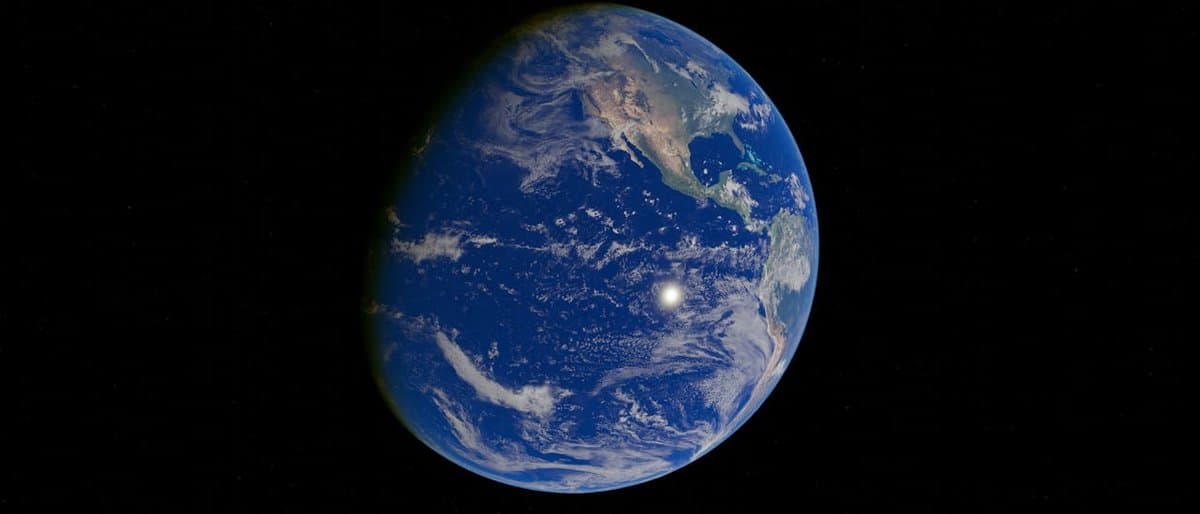
Strip away the poetry and the solstice is geometry. Earth's axis is tilted 23.4 degrees relative to its orbit, and that tilt is the reason seasons exist at all. For half the year, your hemisphere leans toward the sun, long days, high noon sun, summer. For the other half, it leans away, short days, low sun, winter. The December solstice is the exact moment the Northern Hemisphere's lean-away reaches its maximum, when the sun sits directly overhead at the latitude of the Tropic of Capricorn, 23.4 degrees south of the equator.
The word itself tells you what ancient skywatchers noticed: solstitium, Latin for "sun stands still." For a few days around the solstice, the sun's noontime height in the sky barely changes, the sunset point on your horizon stops marching south, pauses, and reverses. If you've been watching the sun set further and further into the southwest corner of your window view since June, the solstice is the day that retreat ends. It's the year's pivot, and every culture that ever watched the sky carefully figured out how to mark it, usually with stone, fire, or both.
The tilt also explains the hemisphere flip: when the north leans away, the south leans in. On December 21, while New Yorkers get 9 hours 15 minutes of daylight, Sydney gets 14 hours 25 minutes, their longest day of the year, the mirror image of our winter. Our summer solstice guide covers that event's June counterpart.
The Shortest Day, City by City
How short the shortest day gets depends entirely on your latitude, the further from the equator, the more dramatic the difference. Here are computed day lengths for the December 21, 2026 solstice across the Northern Hemisphere (with Southern Hemisphere cities for comparison):
| City | Daylight on Dec 21, 2026 | Sunrise | Sunset |
|---|---|---|---|
| Miami | 10h 32m | 7:02 a.m. | 5:35 p.m. |
| Los Angeles | 9h 53m | 6:54 a.m. | 4:48 p.m. |
| Dallas | 10h 00m | 7:25 a.m. | 5:25 p.m. |
| Washington, DC | 9h 26m | 7:22 a.m. | 4:49 p.m. |
| New York | 9h 15m | 7:16 a.m. | 4:32 p.m. |
| Chicago | 9h 08m | 7:14 a.m. | 4:22 p.m. |
| Seattle | 8h 26m | 7:54 a.m. | 4:20 p.m. |
| London | 7h 50m | 8:03 a.m. | 3:53 p.m. |
| Anchorage | 5h 28m | 10:13 a.m. | 3:42 p.m. |
| Fairbanks | 3h 43m | 10:57 a.m. | 2:41 p.m. |
| Sydney (SH summer peak) | 14h 25m | 5:40 a.m. | 8:05 p.m. |
| Cape Town (SH summer peak) | 14h 25m | 5:31 a.m. | 7:57 p.m. |
Read down that table and the country's winter personality emerges. Miami loses barely two hours off its summer day length; Seattle loses nearly seven. In Fairbanks, the sun makes a brief, low arc, rising just before 11 a.m., setting before 3 p.m., and peaking barely two degrees above the horizon. Interior Alaska in December is twilight with a lunch break.
And then there's the extreme. In Utqiagvik (formerly Barrow), the northernmost town in the United States at 71.3°N, the sun set for the last time this year on November 18 and does not rise again until January 22, 65 straight days of polar night. Not "short days": no sunrise at all. The town runs on its own rhythm through those weeks, and its first sunrise of 2027, a slowly returning orange sliver on the southern horizon, is a genuine civic event. If your winter feels dark, Utqiagvik offers perspective.
The Sunset Paradox: Why the Darkest Evening Already Happened
Here's the detail that upends most people's mental model of December. The solstice is the shortest day, but the earliest sunset of the year lands weeks before it. In New York, the earliest sunset (4:28 p.m.) arrives around December 5. By December 21, sunset has already drifted two to four minutes later. The trade-off: sunrise keeps getting later through the solstice and beyond, bottoming out days after the new year begins, New York's latest sunrise, 7:19 a.m., doesn't arrive until around January 4.
So if you've ever noticed that the 5 p.m. darkness feels equally oppressive in mid-December and mid-January, your eyes weren't lying, the two miseries simply peak at different dates. December's evenings stop shrinking early; January's mornings stay dark late; the total day length, the sum of the two, bottoms out exactly at the solstice in between.
The cause is a piece of orbital bookkeeping called the equation of time. Earth's orbit is elliptical and its axis is tilted, so the sun's apparent motion across the sky runs slightly fast against our clocks for part of the year and slightly slow for another part. In late October through early December, the sun runs "fast", solar noon drifts later against clock noon by a few seconds a day. The effect: sunset times stall and reverse a couple of weeks before the solstice, while sunrise times keep sliding later for a couple of weeks after. It's the same reason a sundial and your watch disagree by up to 16 minutes depending on the season, and we go deeper on it in why sunrise and sunset times change.
The practical takeaway is a genuinely useful one: the evening turnaround has already begun by the solstice. If you crave daylight after work more than daylight before breakfast, the corner was turned back on December 5. You can watch it happen in your own city with our sunrise and sunset calculator, track the sunset time for a week either side of the solstice and you'll catch the reversal in the act.
Perihelion, the Analemma, and Winter's Secret: It's the Shortest Season
And once the solstice passes, the countdown everyone's watching changes: our Christmas countdown tracks the final days, sleeps, and shipping deadlines of the season.
Two more pieces of orbital geometry give December a pair of facts most people never hear. First: Earth is actually closest to the sun during Northern Hemisphere winter. Perihelion, the nearest point of our slightly oval orbit, falls on January 3, 2027, at about 147.1 million kilometers, roughly 5 million kilometers closer than the aphelion of early July. Distance is not what makes winter cold; tilt is. If proximity ran the seasons, both hemispheres would share the same summer.
Second: winter is measurably the shortest season. Because Earth moves fastest along its orbit when it is nearest the sun, Kepler's second law, working exactly as advertised, the stretch from the December solstice to the March equinox takes only about 89 days, while the northern summer arc from June solstice to September equinox runs to nearly 94. Winter does not just feel shorter to people counting the weeks until spring; the calendar agrees, by almost five days. (Southern Hemisphere readers get the mirror image: your winter is the long one.)
Both effects are summarized in a shape dedicated skywatchers know by name: the analemma, the figure-eight the sun traces if you photograph it at the same clock time every week or two for a year. The solstices mark the top and bottom of the loop, and the equation of time behind the sunset paradox above is the loop's left-right swing. Sundial builders, and sundial correctors, have been puzzling over that figure-eight for four centuries, and we go deeper into it in why sunrise and sunset times change.
Two Kinds of Winter: Meteorological vs. Astronomical
If someone tells you winter starts December 1 and someone else says December 21, they're both right, they're using different definitions, and the distinction matters more than most people realize.
Astronomical winter runs from the winter solstice (December 21, 2026) to the spring equinox (March 20, 2027). It's defined by Earth's position in orbit, it matches the day-length story, and it's the version you read about on calendars and in sky guides. Meteorological winter runs December 1 through February 28, a fixed calendar window chosen by weather scientists so that seasonal statistics line up cleanly year after year. When a meteorologist says "this was the third-warmest winter on record," they mean the December-January-February block, not the solstice-to-equinox window.
The mismatch has real consequences for the "shortest day" feeling. By meteorological reckoning, winter is already three weeks old when the solstice arrives, which tracks, because for most of North America, the coldest average weather of the year actually lands in mid-to-late January, a month after the solstice. The oceans and continents take weeks to cool down after the light starts draining, so thermal winter lags solar winter. The darkest day is December 21; the coldest days usually come later; and the whole system runs about a month behind the sun.
December 21 or December 22? The Solstice's Date Border
Because the solstice is an instant rather than a day, the date on your calendar depends on your timezone, and 2026 is a textbook case. The moment itself arrives at 20:50 UTC on Monday, December 21. Add eight hours for China and the clock reads 4:50 on the morning of Tuesday, December 22 in Beijing; add nine for Japan and Tokyo sits at 5:50 a.m. on the 22nd. China's Dongzhi festival therefore falls on December 22 in 2026, Japan's Toji observances likewise, while the Americas, Europe, and Africa all keep the solstice, and its festivities, on Monday the 21st.
Iran lands almost exactly on the border. The solstice instant arrives at 00:19 on December 22, Tehran time, nineteen minutes after local midnight, so on the Iranian calendar winter begins on the 22nd, and Shab-e Yalda, the ancient solstice night of pomegranates, watermelon, and poetry, is the evening of Monday, December 21, the last night of autumn.
The lesson generalizes. Whenever you see a solstice date quoted without a timezone, the writer is silently assuming one, usually UTC, which for December favors the Americas, Europe, and Africa. Every year, part of the world marks the turning of the light a full calendar day before or after the rest: same instant, different dates, one sun. Now you can work out which date is yours with nothing but the UTC moment and an hour of arithmetic.
Fire, Stone, and Dumplings: The Oldest Holiday on Earth
The solstice is humanity's oldest reliably observed astronomical event, older than writing, older than the wheel. Every culture that lived through a northern winter built something to mark the moment the light turned, and much of what we now call "the holiday season" is downstream of that instinct.
Stonehenge is the famous example: its great trilithon stones frame the winter solstice sunset, not, as widely assumed, the summer sunrise, and the monument's midwinter alignment has drawn people to the Salisbury Plain for roughly 4,500 years. Today the site hosts a modern gathering each December 21, and the sunrise is livestreamed for the thousands who follow it remotely; watching the sun rise through the stones on the shortest morning has become one of the quieter internet rituals of the season.
Yule is the Norse and Germanic midwinter festival whose logs, evergreens, and twelve nights of feasting were folded into Christmas as northern Europe Christianized, the Yule log on the dessert table is a fossil of a literal midwinter bonfire. Dongzhi, the Chinese winter solstice festival, falls on December 22 in 2026, the solstice instant lands at 4:50 a.m. Beijing time, past local midnight into Tuesday, and it is a major family holiday built on the same logic as Thanksgiving: the year's longest night is for coming home, and the traditional foods, dumplings in the north, sweet tangyuan in the south, are warmth encoded as cuisine. Shab-e Yalda, Iran's ancient solstice night, is spent by candlelight with pomegranates, watermelon, and poetry, deliberately staying awake until dawn as an act of defiance against the longest dark. The Roman Saturnalia wrapped the same astronomical moment in a week of gift-giving, role reversal, and greenery, several traditions that Christmas later inherited.
The thread running through all of them: nobody celebrated the darkness itself. They celebrated the pivot, the demonstrable, observable fact that the sun had stopped retreating. That's the solstice's real job in human history, and why "the days are getting longer" remains one of the most quietly reassuring sentences in any language.
Monuments Built to Catch the Solstice
Long before clocks existed, cultures engineered buildings to do the solstice's timing work, and several still perform on schedule, five millennia later.
The most precise is Newgrange in Ireland, a passage tomb older than Stonehenge's great stones and the pyramids of Giza. Above its entrance sits a small roofbox slit; on the handful of mornings around the winter solstice, the rising sun sends a beam 19 meters up the narrow passage to light the inner chamber for roughly 17 minutes, an effect engineered around 3200 BC and still arriving on time. Demand to stand inside now vastly exceeds supply: roughly 30,000 people apply each year for a few dozen lottery places in the chamber, and the monument livestreams the dawn for everyone else.
Scotland's Maeshowe, on Orkney, runs the same trick in reverse: its passage catches the setting midwinter sun, which throws a blade of light along the corridor onto the back wall of the central chamber for several weeks either side of the solstice. Twelfth-century Vikings broke in centuries later and carved runes across the stonework, including a boast apparently left by Jerusalem-bound crusaders, which makes the chamber home to some of Europe's most famous graffiti.
Goseck Circle in Germany is the oldest of them all: concentric timber palisades built around 4900 BC, nearly 7,000 years ago, whose gates frame the winter solstice sunrise and sunset, making it arguably the world's oldest known solar observatory. And in New Mexico, on Fajada Butte in Chaco Canyon, three sandstone slabs standing before a spiral petroglyph cast daggers of light that bracket the spiral at the winter solstice, a calendar engineered by the Ancestral Puebloans roughly a thousand years ago, and one that still works, though the slabs shifted slightly in 1989 and the display is no longer quite what its builders saw.
What the monuments prove is not just astronomical skill but urgency. These were hard builds, in eras with no spare labor, oriented on the single date that guaranteed the light would return. The solstice was the year's most important fact, and people set it in stone.
When the Light Comes Back: Your Recovery Schedule
The days lengthen immediately, slowly, then all at once. The gain is almost invisible at first (a few seconds per day in late December), then accelerates through winter as Earth's orbital geometry swings back toward balance. Here's New York's computed recovery after the 2026 solstice:
| Date | Daylight (New York) | Gained Since Dec 21 |
|---|---|---|
| Dec 21, 2026 | 9h 15m | |
| Dec 25, 2026 | 9h 16m | +1 minute |
| Jan 1, 2027 | 9h 19m | +4 minutes |
| Jan 15, 2027 | 9h 35m | +20 minutes |
| Feb 1, 2027 | 10h 08m | +53 minutes |
| Mar 1, 2027 | 11h 17m | +2 hours |
| Mar 20, 2027 | 12h 08m | +2 hours 53m (equinox) |
Notice the acceleration: January claws back 20 minutes; February takes it past the hour mark; by March, day length is growing by more than two and a half minutes per day. The halfway milestone is the spring equinox on March 20, 2027, when day and night balance again and, for the Northern Hemisphere, light finally wins the season. Higher latitudes recover even faster: Seattle outpaces Los Angeles by a wide margin, and Fairbanks gains more than six minutes of daylight per day by early spring.
If you want a single number to hold onto for the dark weeks: by February 1, 2027, most of the United States will have regained close to an hour of daylight. The solstice is the year's lowest point, but the climb out starts the next morning.
Winter Solstice Dates Through 2030
The solstice moment drifts about six hours later each year, then snaps back with each leap year, so the date hops between December 21 and 22 (and 22 becomes more common in the years just before leap years). Here are the next five December solstices, with local-time notes:
| Year | Solstice Moment (UTC) | US Eastern |
|---|---|---|
| 2026 | Dec 21, 20:50 | Mon, Dec 21, 3:50 p.m. |
| 2027 | Dec 22, 02:41 | Tue, Dec 21, 9:41 p.m. |
| 2028 | Dec 21, 08:19 | Thu, Dec 21, 3:19 a.m. |
| 2029 | Dec 21, 14:13 | Fri, Dec 21, 9:13 a.m. |
| 2030 | Dec 21, 20:09 | Sat, Dec 21, 3:09 p.m. |
Note how 2027's solstice lands on December 22 in UTC but still December 21 in North America, the timezone flip in reverse. The same table runs in mirror image for the Southern Hemisphere, where these dates mark the summer solstice and the year's longest days.
Explore More
- Equinoxes and Solstices 2026, all four turning points of the year in one guide
- Summer Solstice 2026, the other end of the see-saw, and the year's longest day
- Geminid Meteor Shower 2026, the year's best meteor shower lands one week before the solstice, under moonless skies
- When Does Daylight Saving Time End in 2026?, the November 1 clock change that makes December evenings feel even darker
- Sunrise and Sunset Calculator, exact times for your city, any date of the year
Frequently Asked Questions
8 questions answered
When is the winter solstice in 2026?
Is the winter solstice really the shortest day of the year?
What is the last day of fall 2026?
When is the first day of winter 2026?
Is the winter solstice the day of the earliest sunset?
Is December 21 the first day of winter?
When do days start getting longer?
What is the shortest day 2026?
Put this into action
Stop guessing. Use our professional tools to schedule, convert, and manage time zones perfectly, 100% free.
Track Sky EventsOfficial Sources & References
- NASA Science: official data and scientific overviews for astronomical events and missions.