Why the Moon Looks Bigger Near the Horizon: The Moon Illusion Explained

Quick Answer
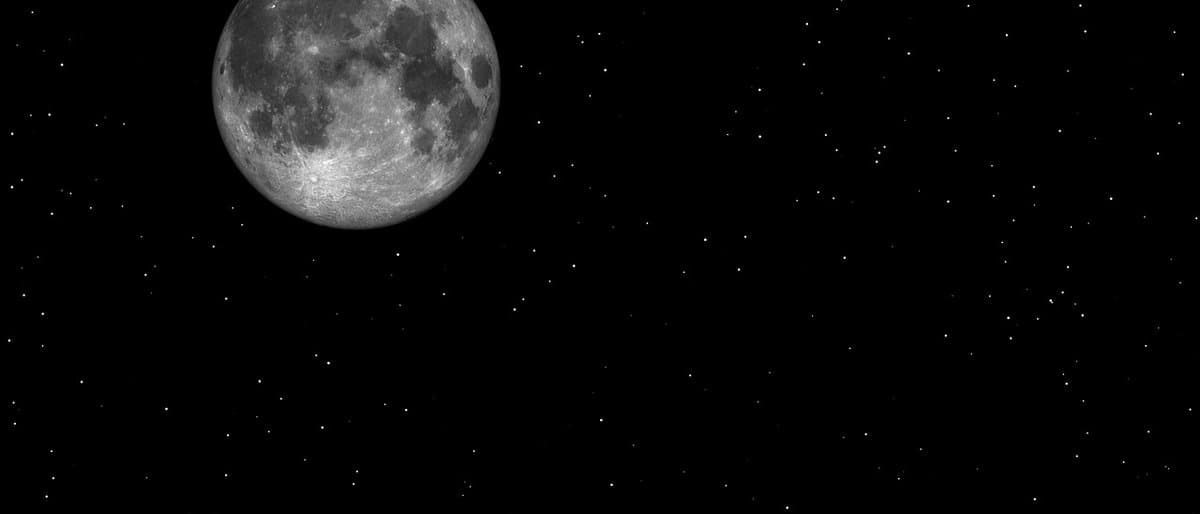
The Moon looks bigger near the horizon because of a well-known optical illusion called the Moon illusion, not because the Moon is actually closer. When the Moon is low, nearby foreground objects like trees and buildings provide a scale reference that makes it appear larger. When it is high in the sky with nothing to compare it against, it seems smaller. Photographs prove the Moon is the same angular size at both positions. The illusion is entirely in your brain.
The Moon Illusion Explained
If you have ever watched a Full Moon rise above the horizon and thought it looked enormous, far bigger than it does when it is high overhead, you are not alone. This observation has been recorded for thousands of years, and it is one of the most powerful and persistent optical illusions in human experience.
The key fact: the Moon's actual angular size does not change significantly between the horizon and the zenith. The Moon's diameter is always about 0.5 degrees of arc (roughly 31 arcminutes on average), regardless of where it appears in the sky. In fact, the Moon is technically very slightly smaller when it is at the horizon because it is farther away by roughly one Earth radius (about 3,959 miles / 6,371 km) compared to when it is directly overhead. This distance increase reduces the Moon's apparent size by about 1.2%, making the horizon Moon actually slightly smaller, not larger.
The impression that the Moon is huge at the horizon is entirely a product of human visual perception. Your eyes are not malfunctioning, your brain is interpreting visual information in a way that produces this compelling illusion.
This phenomenon is not limited to the Moon. The Sun also appears larger near the horizon, and even constellations can look bigger when they are low in the sky compared to when they are overhead. The Moon illusion is simply the most commonly noticed version because the Moon is a large, bright, easily observed disk.
Two Main Theories
Psychologists and vision scientists have debated the Moon illusion for over a century. While no single theory explains everything, two main explanations have emerged as the most widely accepted. Most researchers now believe the illusion results from a combination of both.
Theory 1: The Ponzo Illusion (Relative Size)
The Ponzo illusion is a well-known visual trick named after Italian psychologist Mario Ponzo, who described it in 1913. In the classic version, two identical lines are drawn between two converging lines (like railroad tracks stretching into the distance). The line closer to the converging point appears larger because your brain interprets the converging lines as depth cues, if two objects produce the same retinal image size but one appears farther away, your brain concludes the farther one must be larger.
Applied to the Moon: when the Moon is near the horizon, it is surrounded by trees, buildings, mountains, and other foreground objects that provide depth cues. Your brain perceives the Moon as being far away, beyond those foreground objects, and since it appears to be the same retinal size despite being "farther," your brain scales it up and perceives it as larger. When the Moon is high in the empty sky, there are no such depth cues, so your brain does not make the same scaling adjustment.
Theory 2: Apparent Distance Theory (Emmert's Law)
Emmert's Law states that the perceived size of an afterimage (or any object of known retinal size) is proportional to the perceived distance to the surface on which it appears to be projected. In simpler terms: if your brain thinks something is farther away, it will perceive it as larger.
When the Moon is near the horizon, the intervening landscape creates an impression of vast distance. Your brain perceives the horizon as being farther away than the zenith (the point directly overhead). In reality, the horizon and the zenith are at roughly the same distance from you as far as the Moon is concerned, both are about 238,855 miles away. But the visual cues of terrain, atmosphere, and perspective make the horizon seem farther.
Because your brain thinks the horizon Moon is farther away, and because the retinal image is the same size, your brain concludes the Moon must be larger than usual. This is sometimes called the "paradox of the Moon illusion", the Moon appears both larger and closer at the horizon, which seems contradictory. The resolution is that perceived size and perceived distance are processed by different brain systems, and they do not always agree.
Which Theory Is Correct?
Most vision scientists believe the truth involves elements of both theories, and possibly other factors as well. Research by Lloyd Kaufman and Irvin Rock in the 1960s and 1970s provided strong evidence for the apparent distance explanation, but the relative size / Ponzo effect also contributes. Some researchers have proposed additional factors, including the angle of regard (looking horizontally vs. upward changes eye position and may affect size perception) and the role of the shape of the sky dome (people perceive the sky as a flattened bowl rather than a hemisphere, with the horizon appearing farther than the zenith).
Proof That It Is an Illusion
The most convincing proof that the Moon illusion is just that, an illusion, is photographic. If you photograph the Moon when it is at the horizon and again when it is high in the sky, using the same camera and lens at the same focal length, the Moon will be the same size in both images.
The Photograph Test
Here is how to perform this test yourself:
-
Set up your camera on a tripod with a telephoto lens (200mm or longer).
-
When the Full Moon is at the horizon, take a photo.
-
Several hours later, when the Moon is high in the sky, take another photo using the exact same camera settings and focal length.
-
Compare the two images, the Moon will be the same diameter in pixels in both.
If the Moon were actually larger at the horizon, the photograph would show it. It does not. The only difference you might notice is that the horizon Moon may appear slightly more flattened (oval-shaped) due to atmospheric refraction, which compresses the Moon vertically near the horizon by about 0.5 to 1 arcminute.
The Theodolite Measurement
Long before photography, astronomers used theodolites (precision instruments for measuring angles) to measure the Moon's angular diameter at different elevations. These measurements consistently show that the Moon's angular size is the same (or very slightly smaller) at the horizon compared to the zenith. The first recorded such measurements were made by Ptolemy in the 2nd century AD.
The Role of Foreground Objects
Foreground objects, trees, buildings, mountains, church steeples, and other landscape features, play a critical role in the Moon illusion. They provide the depth and distance cues that trigger your brain's size-scaling mechanism.
When the Moon rises behind a stand of trees or a city skyline, your visual system has reference points for scale. Your brain knows roughly how big a tree or building is, and it sees the Moon next to or behind these objects. This comparison makes the Moon seem enormous, much larger than when it hangs in a featureless sky with nothing around it.
You can test this: the Moon illusion is dramatically reduced or eliminated when you view the Moon through a tube (like a paper towel roll) that blocks out the surrounding landscape. Without the foreground reference, the Moon suddenly looks smaller, its "true" perceived size.
Similarly, sailors at sea, where the horizon is a clean line with no foreground objects, often report a weaker Moon illusion than people on land. The absence of intermediate depth cues reduces the effect.
Why the Moon Also Looks More Colorful at the Horizon
The Moon's color near the horizon is a separate phenomenon from its apparent size, but the two often occur together and are worth distinguishing.
When the Moon is near the horizon, its light passes through a much thicker layer of Earth's atmosphere than when it is high in the sky. The path length through the atmosphere can be 10 to 40 times longer for a horizon Moon compared to an overhead Moon. This extended atmospheric path causes Rayleigh scattering, the same process that makes sunsets red.
Shorter wavelengths of light (blue, violet) are scattered away by air molecules and particles, while longer wavelengths (red, orange) pass through more easily. The result is that a horizon Moon often appears yellowish, orange, or even deep red, while a high Moon appears white or pale yellow.
The color change is real, it is not an illusion. Photographs confirm the reddish tint. As the Moon climbs higher and its light passes through less atmosphere, the color shifts back to its normal silvery white.
| Moon Position | Atmospheric Path Length | Color Appearance | Reason |
|---|---|---|---|
| Rising/setting (0–5 degrees) | Very long | Deep orange to red | Maximum Rayleigh scattering removes blue light |
| Low (5–15 degrees) | Long | Yellow-orange | Moderate scattering |
| Medium (15–45 degrees) | Moderate | Pale yellow | Some scattering |
| High (45–90 degrees) | Short | White to silvery | Minimal scattering |
The color change is most dramatic during times of high atmospheric particulate content, after volcanic eruptions, during wildfire season, or in areas with heavy air pollution. Under exceptionally clear conditions, even a horizon Moon may appear only slightly yellowed.
Other Sky Illusions
The Moon illusion is not an isolated phenomenon. Similar size illusions affect other celestial objects.
The Sun Illusion
The Sun appears larger at the horizon for exactly the same reason as the Moon. A rising or setting Sun looks enormous, but photographs show it is the same angular size as the midday Sun (about 0.53 degrees). The same foreground depth cues that enlarge the perceived Moon also enlarge the perceived Sun.
Constellations
Constellations near the horizon appear larger than when they are overhead. This is particularly noticeable with Orion, which looks huge when it rises in the east during winter evenings but seems more compact when it is high in the southern sky later that same night. Again, the same illusion is at work.
Planets
Bright planets like Venus and Jupiter can also appear larger near the horizon, though this is harder to notice because planets are point-like to the naked eye. The illusion still operates on the perceived brightness and "presence" of these objects.
How to Test the Moon Illusion Yourself
You do not need expensive equipment to prove the Moon illusion is all in your head. Here are three simple methods you can try:
The Tube Method
-
Wait for a Full Moon that appears large at the horizon.
-
Roll a piece of paper into a tube about 1.5 inches in diameter.
-
Look at the horizon Moon through the tube so you cannot see the surrounding landscape.
-
Note the apparent size of the Moon.
-
Now look at the Moon without the tube.
-
The Moon will look smaller through the tube, closer to its "true" perceived size, because the foreground depth cues have been removed.
The Coin Method
-
When the Moon appears large at the horizon, hold a coin (a dime or penny) at arm's length and note how much of the Moon it covers.
-
Later, when the Moon is high in the sky, hold the same coin at the same arm's length.
-
The coin will cover the same amount of the Moon in both positions, proving the Moon's angular size has not changed.
The Photograph Method
-
Use a camera with a telephoto lens on a tripod.
-
Photograph the Moon when it is at the horizon.
-
Several hours later, photograph the Moon when it is high in the sky, using the same focal length and settings.
-
Compare the images side by side. The Moon will be the same size in both.
Historical Understanding
The Moon illusion has fascinated thinkers for millennia. Some key milestones in understanding it:
- Aristotle (4th century BC): Described the illusion and attributed it to atmospheric effects, which we now know is incorrect for size (though correct for color).
- Ptolemy (2nd century AD): Measured the Moon's angular size at different elevations and found no real difference, recognizing the effect as perceptual.
- Alhazen (Ibn al-Haytham, 11th century): In his Book of Optics, proposed that the illusion was related to the distance the Moon appears to be from the observer, an early version of the apparent distance theory.
- René Descartes (17th century): Suggested the illusion came from vision and judgment pulling against each other.
- Kaufman and Rock (1960s–1970s): Conducted systematic experiments that established the apparent distance theory as the dominant explanation and demonstrated that removing distance cues eliminates the illusion.
Despite centuries of study, the Moon illusion remains an active area of research in perceptual psychology. The fact that such a powerful and universal illusion can be produced by the brain's normal visual processing, and that it persists even when you know it is an illusion, reveals just how deeply our perception of size and distance is shaped by context and expectation.
Frequently Asked Questions
8 questions answered
Q: Is the Moon actually closer when it is at the horizon?
Q: Why does the Moon look bigger at the horizon but photographs show it is the same size?
Q: Does everyone experience the Moon illusion?
Q: Can the Moon illusion be turned off?
Q: Why is the Moon red when it rises?
Q: Does the Moon illusion happen with supermoons?
Q: Do animals experience the Moon illusion?
Q: Has anyone ever not noticed the Moon illusion?
Put this into action
Stop guessing. Use our professional tools to schedule, convert, and manage time zones perfectly, 100% free.
View Moon PhasesOfficial Sources & References
- NASA Science: official data and scientific overviews for astronomical events and missions.