Moon Phases Explained: A Complete Guide to the Lunar Cycle
Quick Answer
moon phases happen because the Moon orbits Earth, and we see different amounts of its sunlit side as its position changes relative to the Sun and Earth. The complete cycle, from one New Moon to the next, takes about 29.53 days, called a synodic month. There are eight recognized phases: New Moon, Waxing Crescent, First Quarter, Waxing Gibbous, Full Moon, Waning Gibbous, Third Quarter, and Waning Crescent.
The Basic Idea: Why We See Different Moon Shapes
The Moon does not produce its own light. It shines because sunlight reflects off its surface. At any given moment, exactly one half of the Moon is illuminated by the Sun, and the other half is in darkness. What we see from Earth depends on where the Moon is in its orbit around our planet.
As the Moon travels around Earth, a journey that takes roughly 27.3 days to complete one full orbit (the sidereal month), the angle between the Sun, Earth, and Moon constantly changes. Sometimes the sunlit side faces us directly, and we see a Full Moon. Sometimes the dark side faces us, and we see no Moon at all. Most of the time, we see something in between.
Think of it like walking around a ball that has a flashlight shining on it from one direction. From different positions in your circle, you see different amounts of the lit side. That is essentially what happens with the Moon, except the "flashlight" is the Sun, the "ball" is the Moon, and you are standing on Earth watching from the center of the circle.
One important detail: the Moon always shows the same face to Earth. This is called tidal locking, and it means the Moon's rotation period equals its orbital period. It takes the Moon the same amount of time to spin once on its axis as it does to orbit Earth once. Because of this, we always see the same side of the Moon regardless of its phase.
The Eight Main Moon Phases
Astronomers recognize eight distinct phases in the lunar cycle. Each one represents a specific geometric arrangement of the Sun, Earth, and Moon system. Here is a detailed look at each phase in order.
1. New Moon
During a New Moon, the Moon sits between the Sun and Earth. The sunlit side of the Moon faces away from us, so the side facing Earth is completely dark. The Moon is still there, you just cannot see it with the naked eye because no reflected sunlight reaches your eyes.
The New Moon rises and sets roughly with the Sun, meaning it is up during the day. This phase marks the beginning of the lunar cycle and is the starting point astronomers use when numbering lunations.
2. Waxing Crescent
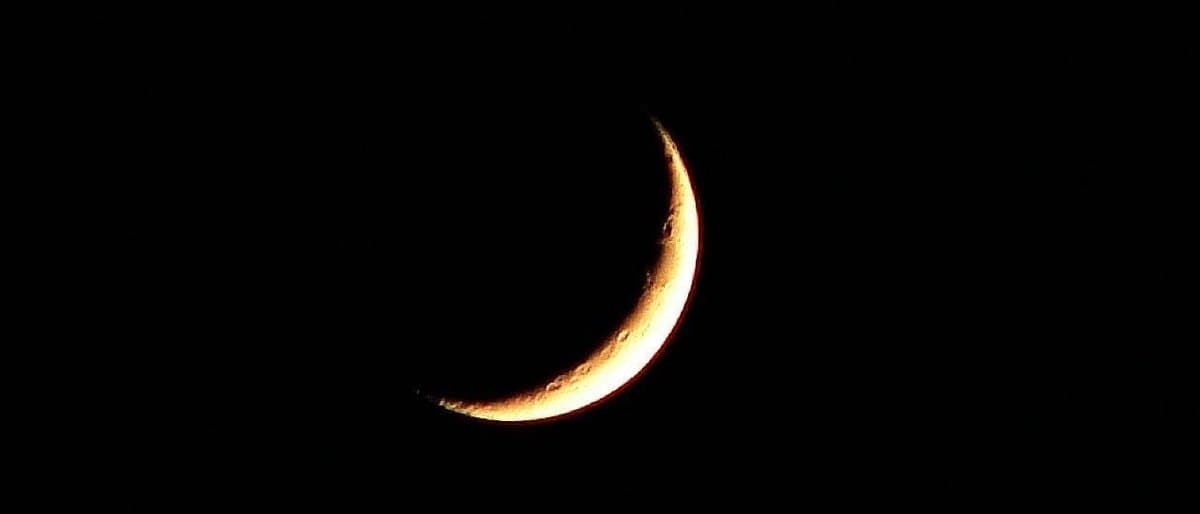
After the New Moon, a sliver of light appears on the right side of the Moon (for observers in the Northern Hemisphere). This is the Waxing Crescent. The word "crescent" comes from the Latin crescere, meaning "to grow," and indeed, the illuminated portion is growing each night.
The Waxing Crescent is visible in the western sky just after sunset. It often appears as a thin, curved sliver, sometimes called a "fingernail Moon." You may also see the dark portion of the Moon faintly illuminated by earthshine, sunlight reflected off Earth onto the Moon's dark side.
3. First Quarter
Despite the name, the Moon appears half-illuminated during the First Quarter phase. The "quarter" refers to the Moon being one-quarter of the way through its cycle, not that it looks one-quarter lit. The right half of the Moon (Northern Hemisphere view) is illuminated.
The First Quarter Moon rises around noon and sets around midnight. It is high in the southern sky at sunset, making it one of the easiest phases to observe during evening hours.
4. Waxing Gibbous
"Waxing" means growing, and "gibbous" means more than half but less than fully illuminated (from the Latin gibbus, meaning "hump"). During this phase, the Moon continues to grow brighter, with the illuminated portion expanding from just over half to nearly full.
The Waxing Gibbous Moon is visible from late afternoon through most of the night. It dominates the evening sky and is bright enough to cast shadows on clear nights.
5. Full Moon
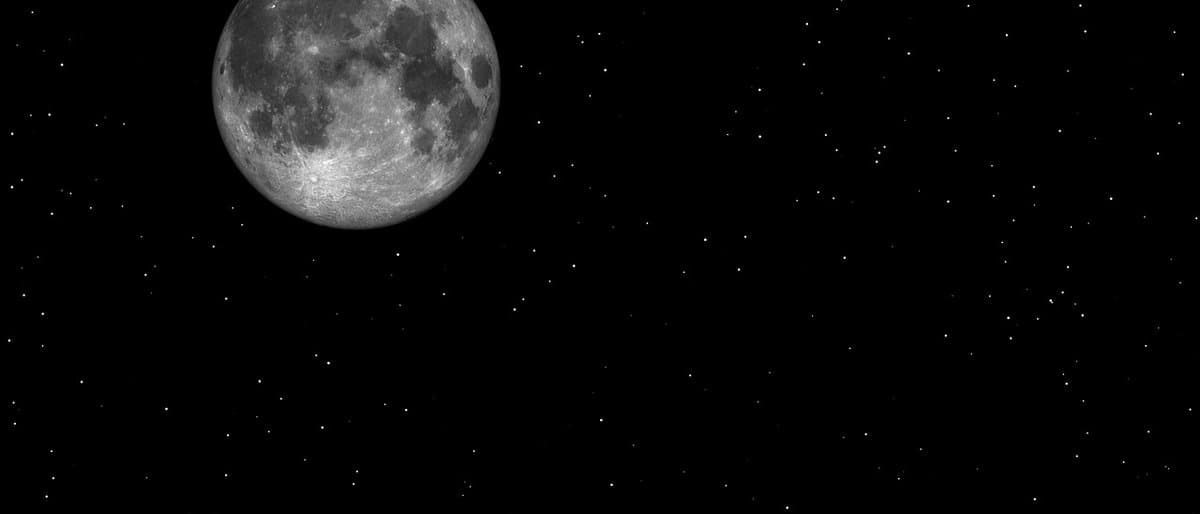
The Full Moon occurs when the Moon is on the opposite side of Earth from the Sun. The entire face visible from Earth is illuminated. The Full Moon rises at sunset and sets at sunrise, making it visible all night long.
The Full Moon is the brightest phase, but surprisingly, it is not dramatically brighter than a gibbous Moon. The Moon's surface is covered in dark areas called maria (seas), and the Full Moon's direct illumination actually reduces contrast on the surface compared to oblique lighting at other phases.
6. Waning Gibbous
After the Full Moon, the illuminated portion begins to shrink, this is "waning." The Waning Gibbous Moon is still more than half lit, but the light is decreasing. The right side (Northern Hemisphere) begins to darken first.
The Waning Gibbous Moon rises after sunset and remains visible well into the morning hours. It is sometimes called a "disseminating Moon" in some traditions.
7. Third Quarter (Last Quarter)
Like the First Quarter, the Third Quarter Moon appears half-illuminated, but now it is the left half (Northern Hemisphere). The Moon is three-quarters of the way through its cycle. It rises around midnight and sets around noon, making it a prominent morning sky object.
8. Waning Crescent
The final phase before the next New Moon. Only a thin sliver of light remains on the left side (Northern Hemisphere). The Waning Crescent is visible in the eastern sky just before sunrise. After this, the cycle begins again with the next New Moon.
Moon Phase Summary Table
| Phase | Illumination | Visibility | Rise Time | Set Time |
|---|---|---|---|---|
| New Moon | 0% | Not visible | Sunrise | Sunset |
| Waxing Crescent | 1–49% | Evening, western sky | Morning | Evening |
| First Quarter | 50% | Afternoon to midnight | Noon | Midnight |
| Waxing Gibbous | 51–99% | Late afternoon to pre-dawn | Afternoon | Pre-dawn |
| Full Moon | 100% | All night | Sunset | Sunrise |
| Waning Gibbous | 99–51% | Late night to morning | Post-sunset | Post-sunrise |
| Third Quarter | 50% | Midnight to noon | Midnight | Noon |
| Waning Crescent | 49–1% | Pre-dawn, eastern sky | Pre-dawn | Afternoon |
What Waxing and Waning Mean
These two words describe the direction of change in the Moon's illumination:
- Waxing means the illuminated portion is growing. The word comes from the Old English weaxan, meaning "to increase." During the waxing phases (New Moon to Full Moon), the Moon appears to gain light each night.
- Waning means the illuminated portion is shrinking. From the Old English wanian, meaning "to decrease." During the waning phases (Full Moon to New Moon), the Moon loses light each night.
A simple memory trick: "Wax on, Wane off", think of the Moon gaining light (waxing) as putting light on, and losing light (waning) as taking light off.
For observers in the Northern Hemisphere, the right side of the Moon is illuminated during waxing phases and the left side during waning phases. In the Southern Hemisphere, this is reversed, the left side is lit during waxing, and the right side during waning. Observers near the equator see the Moon rotated roughly 90 degrees compared to mid-latitude views.
Why Moon Phases Are NOT Caused by Earth's Shadow
This is one of the most common misconceptions in astronomy. Many people believe that the changing phases of the Moon are caused by Earth's shadow falling on the Moon. This is completely wrong.
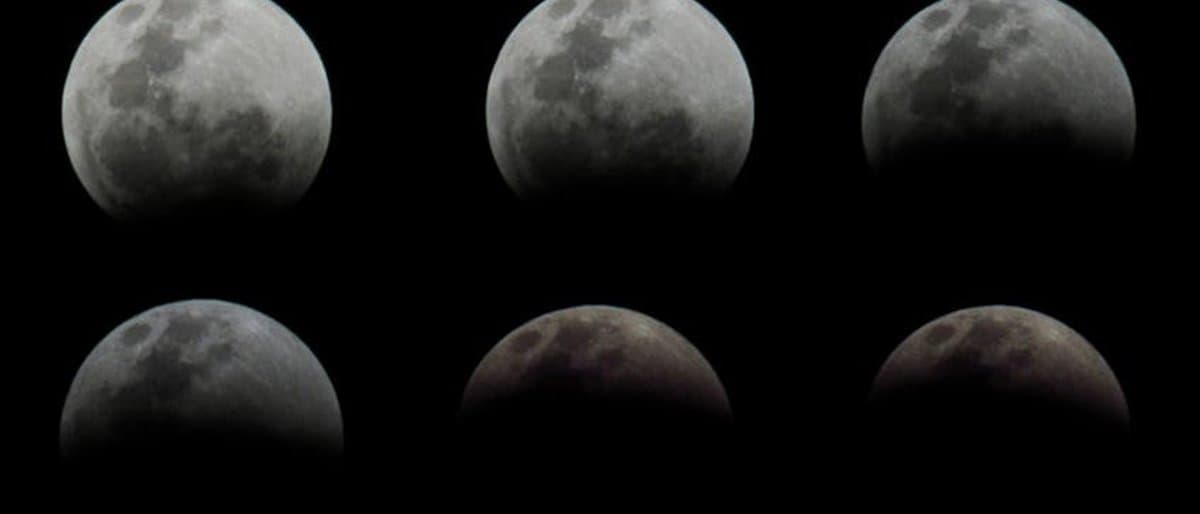
Earth's shadow only falls on the Moon during a lunar eclipse, which can only happen during a Full Moon and is a relatively rare event. Moon phases, by contrast, happen every single month without fail.
Here is the key distinction:
- Moon phases are caused by the changing angle between the Sun, Earth, and Moon as the Moon orbits Earth. We simply see different amounts of the Moon's sunlit half.
- Lunar eclipses happen when the Moon passes through Earth's shadow. This requires a precise alignment that only occurs when the Moon is near one of its orbital nodes (the points where its path crosses the ecliptic plane).
If Earth's shadow caused the phases, then a crescent Moon would mean Earth's shadow is covering most of the Moon. But Earth's shadow is always cone-shaped and extends away from the Sun. During crescent phases, the Moon is actually near the Sun in the sky, far from Earth's shadow, which is on the opposite side of Earth.
You can verify this yourself: notice that crescent Moons are always close to the Sun in the sky (visible just after sunset or just before sunrise). If Earth's shadow were the cause, crescent Moons would appear on the opposite side of the sky from the Sun, which they never do.
How Long the Cycle Takes: The Synodic Month
The lunar phase cycle, from one New Moon to the next, takes 29.53 days on average. This period is called the synodic month or lunation.
Why not 27.3 days, which is how long the Moon takes to orbit Earth? Because while the Moon is orbiting Earth, Earth is also moving along its own orbit around the Sun. By the time the Moon completes one orbit, Earth has moved roughly 27 degrees along its orbital path. The Moon must travel a little farther to realign with the Sun, which adds about 2.2 days to the cycle.
The two periods compared:
| Period | Duration | What It Measures |
|---|---|---|
| Sidereal month | 27.32 days | One complete orbit of the Moon around Earth (relative to the stars) |
| Synodic month | 29.53 days | One complete cycle of Moon phases (relative to the Sun) |
The actual length of a synodic month can vary by up to about 7 hours from the average because the Moon's orbit is elliptical, not circular. Its orbital speed changes depending on how close it is to Earth.
Why Moon Phases Matter
Moon phases are not just an astronomical curiosity. They have real, practical effects on life on Earth and have shaped human culture for thousands of years.
Tides
The Moon's gravitational pull creates tides in Earth's oceans, and the phase of the Moon affects the tidal range. During New and Full Moons, the Sun and Moon align their gravitational forces, producing spring tides, the highest high tides and lowest low tides. During the Quarter phases, the Sun and Moon are at right angles, producing neap tides, the smallest tidal range. For anyone living on the coast, knowing the Moon phase is essential for understanding tide patterns.
Culture and Religion
Many calendars are based on the lunar cycle. The Islamic calendar is purely lunar, with each month beginning at the first sighting of the Waxing Crescent. The Hebrew and Chinese calendars are lunisolar, combining lunar months with solar year adjustments. Major religious observances, including Ramadan, Easter, Passover, Diwali, and the Chinese New Year, are tied to the lunar cycle.
Fishing
Many anglers swear by Moon phases for fishing success. The theory holds that fish are more active during certain phases, particularly the days around the Full and New Moons. While scientific evidence is mixed, the connection between Moon phases and tidal movements certainly affects saltwater fishing, as tides influence where and when fish feed.
Gardening
Lunar gardening is an ancient practice that continues today. The idea is that the Moon's gravitational pull affects moisture in the soil, much as it affects ocean tides. Proponents plant above-ground crops during the waxing phase and root crops during the waning phase. While scientific studies have not conclusively supported these claims, the practice remains popular among organic gardeners.
Wildlife Behavior
Many nocturnal animals time their activity to Moon phases. Some predators hunt more actively during Full Moons, using the extra light. Some prey species reduce activity during bright phases to avoid detection. Sea turtles, corals, and certain birds use Moon phases as cues for breeding and migration.
Moon Phase Names and Their Origins
The names we commonly use for Moon phases have interesting etymological histories:
- New Moon: From Old English nīwe mōna, referring to the start of a new lunar cycle. The concept of "newness" is tied to the Moon's reappearance after its invisible phase.
- Crescent: From Latin crescere ("to grow"), originally referring to the waxing shape. The same root gives us "increase." The crescent shape became a symbol in many cultures, most notably in Islamic art and flags.
- Gibbous: From Latin gibbus ("hump" or "swelling"), describing the rounded, convex shape of the Moon when more than half is illuminated but not yet full.
- Quarter: Refers to the fraction of the cycle completed, not the visual appearance. First Quarter means the Moon is one-quarter through its cycle; Third Quarter means three-quarters through.
Common Misconceptions
"The Moon produces its own light"
False. The Moon is a dark object that reflects sunlight. Its surface albedo (reflectivity) is only about 0.12, meaning it reflects just 12% of the sunlight that hits it. For comparison, fresh snow has an albedo of about 0.80 to 0.90.
"There is a 'dark side of the Moon' that never sees sunlight"
False. Both sides of the Moon receive equal amounts of sunlight over the course of a lunar day (about 29.5 Earth days). What is often called the "dark side" is actually the "far side", the side that always faces away from Earth due to tidal locking. The far side gets just as much sunlight as the near side.
"Moon phases are caused by clouds"
False. Clouds may temporarily block your view of the Moon, but they have no effect on the phase. Moon phases are determined purely by the Sun-Earth-Moon geometry.
"The Moon only comes out at night"
False. The Moon is visible during the day for roughly half of each month. First Quarter Moons are visible in the afternoon, and Third Quarter Moons are visible in the morning. The only phase exclusively visible at night is the Full Moon.
"A crescent Moon is a small Moon"
False. The Moon is always roughly the same size (about 2,159 miles / 3,474 km in diameter). A crescent Moon appears as a sliver because only a portion of the sunlit half is facing us, not because the Moon itself has shrunk.
How to Observe Moon Phases
Observing the lunar cycle is one of the easiest and most rewarding astronomical activities. You do not need any special equipment, just your eyes and a clear sky.
With the Naked Eye
Start by stepping outside at the same time each evening and noting the Moon's shape. Within a week, you will see noticeable changes. A Moon journal or sketch can help you track the progression. Look for earthshine on the crescent Moon, the faint glow on the dark portion caused by sunlight reflecting off Earth.
With Binoculars
A pair of 7×50 or 10×50 binoculars will reveal stunning detail on the Moon: craters, mountain ranges, and the dark maria. The best viewing is actually not during the Full Moon but along the terminator, the line between light and dark, where shadows create dramatic three-dimensional relief.
With a Telescope
Even a small telescope will show craters, rilles, and individual mountain peaks. The Moon is one of the most rewarding telescopic targets because it is large, bright, and covered in fine detail. Use a low-power eyepiece first to find the Moon, then switch to higher magnification to explore features along the terminator.
Observation Tips
| Tip | Details |
|---|---|
| Best phase for detail | First Quarter or Third Quarter, shadows along the terminator reveal surface features |
| Best phase for Full Moon view | Full Moon, but reduce brightness with a Moon filter or by observing through thin clouds |
| When to look for earthshine | Waxing Crescent and Waning Crescent, the dark side glows faintly from reflected earthlight |
| Avoid light pollution? | Not necessary, the Moon is bright enough to observe from anywhere |
| Track the cycle | Step outside at the same time each day for 30 days and sketch what you see |
Frequently Asked Questions
10 questions answered
Q: How long does it take to go from a New Moon to a Full Moon?
Q: Can you see the Moon during the day?
Q: Why do we always see the same side of the Moon?
Q: Do Moon phases look the same from the Southern Hemisphere?
Q: What is a Black Moon?
Q: Does the Moon's phase affect human behavior?
Q: How accurate is the 29.53-day cycle?
Q: Why is there not a solar eclipse every New Moon?
Q: What is earthshine?
Q: Can Moon phases affect sleep?
Put this into action
Stop guessing. Use our professional tools to schedule, convert, and manage time zones perfectly, 100% free.
View Moon PhasesOfficial Sources & References
- NASA Science: official data and scientific overviews for astronomical events and missions.