Autumn Equinox 2026: Date, Time, Meaning, and Everything You Need to Know
Quick Answer
The Autumn Equinox 2026 occurs on Wednesday, September 23, 2026, at 00:05 UTC (September 22 at 8:05 PM EDT in North America). This is the moment the Sun crosses the celestial equator from north to south, marking the official start of astronomical autumn in the Northern Hemisphere and the beginning of spring in the Southern Hemisphere. On this day, nearly every place on Earth experiences roughly equal hours of daylight and darkness.
When Is the Autumn Equinox 2026?
The autumn equinox in 2026 falls on September 23. The exact time is 00:05 UTC (Coordinated Universal Time). Because the equinox is a specific moment in time rather than a full day, the local date may differ depending on your time zone.
| Time Zone | Date & Time |
|---|---|
| UTC (GMT) | September 23, 00:05 |
| Eastern Daylight Time (EDT) | September 22, 20:05 |
| Central Daylight Time (CDT) | September 22, 19:05 |
| Mountain Daylight Time (MDT) | September 22, 18:05 |
| Pacific Daylight Time (PDT) | September 22, 17:05 |
| British Summer Time (BST) | September 23, 01:05 |
| Central European Summer Time (CEST) | September 23, 02:05 |
| Japan Standard Time (JST) | September 23, 09:05 |
| Australian Eastern Standard Time (AEST) | September 23, 10:05 |
For observers in the Americas, the equinox technically falls on September 22, 2026; for Europe, Africa, Asia, Australia, and New Zealand, it falls on September 23.
Why Does the Date Change Each Year?
The autumn equinox can fall on September 22, 23, or occasionally 24. This variation happens because the tropical year (the time between successive equinoxes) is approximately 365.2422 days, which doesn't align perfectly with our 365-day calendar. Leap years help correct this drift, but the equinox still wobbles by a few hours from year to year. In the 21st century, September 22 equinoxes are becoming more common, and by the end of the century, most autumn equinoxes will occur on that date.
What the Autumn Equinox Means Scientifically
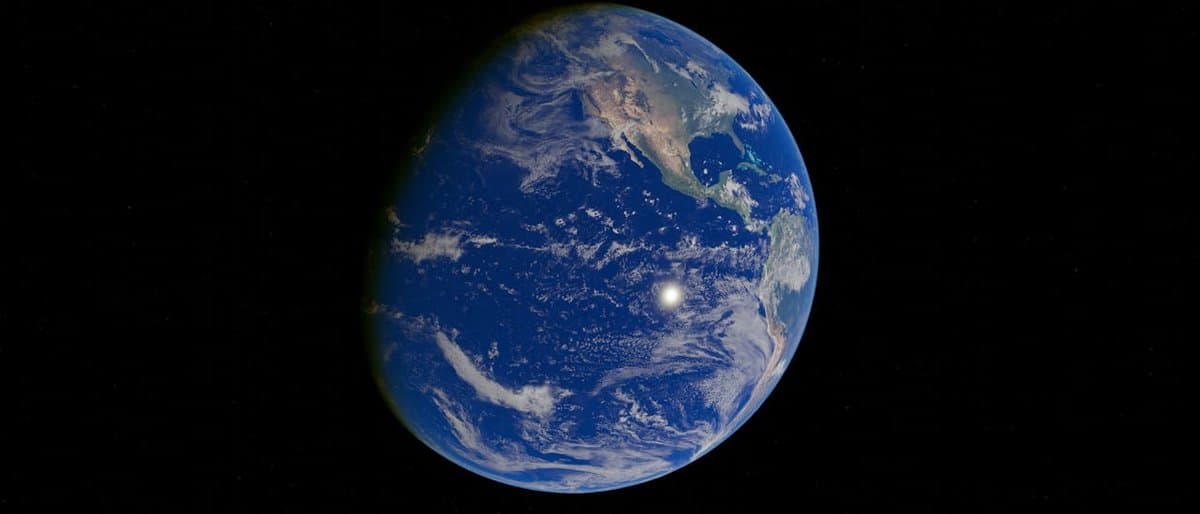
The autumn equinox is one of two moments each year when the Earth's axis of rotation is neither tilted toward nor away from the Sun. On this day, the Sun stands directly over the Earth's equator, and the terminator line, the boundary between day and night, runs nearly straight from pole to pole.
The Earth's Tilt and the Seasons
Earth rotates on an axis tilted approximately 23.44 degrees relative to its orbital plane around the Sun. This tilt is the fundamental reason we experience seasons. During the June solstice, the Northern Hemisphere is tilted toward the Sun, receiving more direct sunlight and longer days. During the December solstice, the opposite occurs.
The equinoxes represent the midpoint of this journey. At the autumn equinox, the Sun's declination (its angular distance from the celestial equator) crosses zero degrees, moving from positive (north) to negative (south). From this point onward, the Sun's noontime height in the sky decreases each day for Northern Hemisphere observers until the December solstice.
The Sun's Path Across the Sky
On the autumn equinox, the Sun rises almost exactly due east and sets almost exactly due west, no matter where you are on Earth. This is one of only two days each year when this happens (the other being the spring equinox). After the autumn equinox, the Sun's rising and setting positions migrate southward, reaching their southernmost point at the December solstice.
The word "equinox" itself comes from the Latin aequus (equal) and nox (night), reflecting the near-equality of day and night on this date. However, as we'll explore below, day and night are not exactly equal on the equinox, a common misconception.
Daylight Hours on the Autumn Equinox 2026
While the equinox is often described as having "12 hours of day and 12 hours of night," the actual daylight duration varies by latitude and is slightly longer than 12 hours everywhere. This is because the Sun is not a point source, it has an angular diameter of about 0.5 degrees, and atmospheric refraction bends sunlight around the horizon, making the Sun appear to rise earlier and set later than it would without an atmosphere.
The following table shows approximate daylight hours for cities around the world on September 22, 2026:
| City | Latitude | Daylight Hours |
|---|---|---|
| Reykjavik, Iceland | 64.1°N | 12h 00m |
| Helsinki, Finland | 60.2°N | 12h 08m |
| Oslo, Norway | 59.9°N | 12h 09m |
| London, UK | 51.5°N | 12h 14m |
| Paris, France | 48.9°N | 12h 16m |
| New York, USA | 40.7°N | 12h 18m |
| Rome, Italy | 41.9°N | 12h 17m |
| Madrid, Spain | 40.4°N | 12h 18m |
| Tokyo, Japan | 35.7°N | 12h 20m |
| Los Angeles, USA | 34.1°N | 12h 21m |
| Cairo, Egypt | 30.0°N | 12h 22m |
| Houston, USA | 29.8°N | 12h 23m |
| Miami, USA | 25.8°N | 12h 25m |
| Mexico City, Mexico | 19.4°N | 12h 27m |
| Mumbai, India | 19.1°N | 12h 27m |
| Bangkok, Thailand | 13.8°N | 12h 29m |
| Lagos, Nigeria | 6.5°N | 12h 31m |
| Singapore | 1.4°N | 12h 32m |
| Quito, Ecuador | 0.2°S | 12h 32m |
| São Paulo, Brazil | 23.6°S | 12h 26m |
| Sydney, Australia | 33.9°S | 12h 20m |
| Cape Town, South Africa | 33.9°S | 12h 20m |
| Buenos Aires, Argentina | 34.6°S | 12h 19m |
| Melbourne, Australia | 37.8°S | 12h 16m |
| Queenstown, New Zealand | 45.0°S | 12h 11m |
Notice that cities at higher latitudes have daylight durations closer to 12 hours on the equinox, while equatorial cities actually have slightly longer days. This counterintuitive result occurs because atmospheric refraction has a larger relative effect at the equator, where the Sun rises and sets nearly perpendicular to the horizon.
The Equal Day and Night Myth
One of the most persistent myths about the equinox is that day and night are exactly 12 hours each. In reality, the day with exactly equal day and night, sometimes called the "equilux", occurs a few days after the autumn equinox in the Northern Hemisphere.
Why Day and Night Are Not Equal on the Equinox
Three factors make the equinox day slightly longer than 12 hours:
-
Atmospheric refraction: Earth's atmosphere bends sunlight by about 0.57 degrees at the horizon. This means we can still see the Sun even when it's geometrically below the horizon. The effect adds roughly 5–6 minutes of extra daylight (a few minutes at sunrise and sunset combined).
-
The Sun's angular size: The Sun is not a point of light, it spans about 0.5 degrees across. Sunrise is defined as the moment the Sun's upper edge appears above the horizon, and sunset is when the upper edge disappears. This adds another 2–3 minutes of daylight.
-
Latitude effects: At higher latitudes, the Sun rises and sets at a shallower angle, which means it takes longer to cross the horizon. This extends daylight slightly at locations farther from the equator.
The combined effect means that on the autumn equinox, most locations experience about 12 hours and 7–12 minutes of daylight, depending on latitude. The equilux typically falls around September 25–27 for mid-northern latitudes.
Autumn Equinox vs Spring Equinox
Both equinoxes share the characteristic of nearly equal day and night, but they represent opposite transitions in the two hemispheres. Here's how they compare:
| Feature | Spring Equinox (March) | Autumn Equinox (September) |
|---|---|---|
| Northern Hemisphere | Spring begins | Autumn begins |
| Southern Hemisphere | Autumn begins | Spring begins |
| Sun's declination | Moving northward | Moving southward |
| Daylight trend (NH) | Days getting longer | Days getting shorter |
| Daylight trend (SH) | Days getting shorter | Days getting longer |
| Sun rise direction | Moving north of east | Moving south of east |
| Traditional associations | Renewal, planting | Harvest, reflection |
The spring equinox in 2026 occurs on March 20 at 14:01 UTC, about six months before the autumn equinox. The two equinoxes are separated by approximately 186 days (the time from March to September is longer because Earth moves more slowly in its orbit when farther from the Sun, near aphelion in July).
Cultural Celebrations Around the Autumn Equinox
The autumn equinox has been celebrated by cultures around the world for thousands of years. The changing of the seasons, the harvest, and the shifting balance of light and dark have deep symbolic meaning across traditions.
Harvest Festival (United Kingdom and Western Traditions)
In the UK and many Western Christian traditions, the Harvest Festival is celebrated on the Sunday nearest to the autumn equinox. Churches are decorated with baskets of fruit, vegetables, and bread, and hymns of thanksgiving are sung. The tradition dates back to pre-Christian harvest celebrations but was formalized in the Church of England in 1843 by Reverend Robert Hawker.
In the United States and Canada, Thanksgiving, while not directly tied to the equinox, echoes the same harvest-time gratitude. Canadian Thanksgiving falls on the second Monday of October, much closer to the equinox than its American counterpart.
Mabon (Modern Pagan and Wiccan Tradition)
Mabon is one of the eight sabbats in the modern Pagan Wheel of the Year. Named after the Welsh mythological figure Mabon ap Modron, it celebrates the second harvest and the balance of light and dark. Practitioners often mark the occasion with feasts featuring autumn foods like apples, squash, and grains; rituals of gratitude; and reflections on the coming darkness of winter.
Mabon has been celebrated in its modern form since the 1970s, when it was formalized within the Wiccan and Neopagan movements as the autumn equinox festival.
Mid-Autumn Festival (East Asia)
One of the most widely celebrated equinox-adjacent festivals is the Mid-Autumn Festival, also known as the Moon Festival or Mooncake Festival. Celebrated on the 15th day of the 8th month of the Chinese lunar calendar, it typically falls in September or early October, close to the autumn equinox.
In 2026, the Mid-Autumn Festival falls on September 25. The festival is celebrated across China, Vietnam, Japan (as Tsukimi), Korea (as Chuseok), and other East and Southeast Asian countries. Families gather to share mooncakes, light lanterns, and admire the full moon, a symbol of unity and togetherness.
Chuseok (Korea)
Chuseok, sometimes called Korean Thanksgiving, is a major harvest festival celebrated over three days around the autumn equinox. In 2026, Chuseok is expected to be celebrated around late September or early October (based on the lunar calendar). Families return to ancestral hometowns, share traditional foods like songpyeon (rice cakes), and perform ancestor worship rituals called charye.
Ohigan (Japan)
Ohigan is a Buddhist observance celebrated twice yearly, at both the spring and autumn equinoxes. The autumn Ohigan typically lasts for seven days, centered on the equinox itself. The word "ohigan" means "the other shore," referring to the Buddhist concept of crossing from the shore of suffering to the shore of enlightenment. During this period, Japanese families visit the graves of their ancestors, clean the gravestones, and offer flowers and incense.
Indigenous Traditions
Many Indigenous cultures around the world mark the autumn equinox with ceremonies and traditions tied to the harvest and the changing natural world. Native American tribes, including the Hopi, Cherokee, and Iroquois, have historically held harvest ceremonies around this time. In the Andes, the Quechua people celebrate the equinox as a time of transition, with rituals honoring Pachamama (Mother Earth).
First Day of Fall 2026: Same Date, Five Names
The autumn equinox 2026 is the same event as the fall equinox 2026, the autumnal equinox 2026, and, in everyday US phrasing, the first day of fall. All of them land on the same instant: Wednesday, September 23 at 00:05 UTC, which is Tuesday evening, September 22, 8:05 PM Eastern for the Americas.
Two phrases people also search need a correction: "fall solstice 2026" and "september solstice 2026" are misnomers for this same equinox event. A solstice is a pause in daylight growth or shrinkage, only June and December have those. September's event is an equinox. Whatever you've been calling it, September 22–23, 2026 is the date.
The flip side is the last day of summer 2026: under the popular astronomical convention, summer ends on September 22 in the Americas (the equinox evening) and September 21–22 by custom. Under the meteorological convention used by the US National Weather Service, and under India's IMD monsoon-recession framing, which runs on its own calendar, summer ends August 31, two days after its calendar month. The equinox answer is the one with an exact time.
Southern Hemisphere: Spring Equinox
While the Northern Hemisphere welcomes autumn on September 22–23, 2026, the Southern Hemisphere celebrates the spring equinox on the same day. The date marks the beginning of longer, warmer days south of the equator.
Spring Equinox Celebrations in the Southern Hemisphere
- Nowruz (Southern Hemisphere adaptation): Some Zoroastrian and Bahá'í communities in the Southern Hemisphere adjust their celebration of Nowruz, the Persian New Year, to coincide with the September equinox rather than the March one.
- Australian spring festivals: Many Australian communities host spring festivals and flower shows around the September equinox, celebrating the blooming of wildflowers and the return of warmer weather.
- South American celebrations: In countries like Argentina, Chile, and Brazil, the September equinox marks the beginning of spring, with cultural events and outdoor celebrations.
The symmetry of the equinox, one hemisphere's autumn is the other's spring, is one of the most elegant features of Earth's seasonal cycle.
How Days Will Get Shorter From Here
After the autumn equinox, the rate of daylight loss accelerates for Northern Hemisphere locations before slowing as the December solstice approaches. The amount of daylight lost each day depends on your latitude, the farther north you are, the faster the days shrink.
Daylight Loss by Latitude (After the Autumn Equinox)
| Latitude | Approximate Daylight Loss Per Day (Early October) | Daylight at Equinox | Daylight at December Solstice |
|---|---|---|---|
| 0° (Equator) | 0 minutes | 12h 32m | 12h 32m |
| 25°N | ~1.5 minutes | 12h 25m | 10h 27m |
| 35°N | ~2 minutes | 12h 20m | 9h 48m |
| 40°N | ~2.5 minutes | 12h 18m | 9h 20m |
| 50°N | ~3.5 minutes | 12h 14m | 8h 04m |
| 55°N | ~4 minutes | 12h 11m | 7h 08m |
| 60°N | ~5 minutes | 12h 08m | 5h 52m |
| 65°N | ~6+ minutes | 12h 03m | 3h 42m |
The maximum rate of daylight change occurs around the equinoxes themselves, this is a direct consequence of the geometry of Earth's tilt. Near the solstices, the rate of change slows to near zero, which is why the term "solstice" (from Latin sol stetit, "the Sun stands still") is used.
The Psychological Impact of Shorter Days
The progressive loss of daylight after the autumn equinox has real effects on human health and behavior. Seasonal Affective Disorder (SAD) affects an estimated 5% of the US population, with symptoms typically beginning in the fall as daylight hours decrease. Even those without clinical SAD often experience changes in sleep patterns, energy levels, and mood during the transition to shorter days.
Light therapy, exercise, and maintaining consistent sleep schedules are common strategies for managing the effects of reduced daylight. Many people find that being mindful of the equinox as a turning point helps them prepare psychologically for the darker months ahead.
Key Astronomical Events Around the Autumn Equinox 2026
The period surrounding the autumn equinox in 2026 features several notable celestial events worth watching:
- September 11, 2026: New Moon, excellent conditions for deep-sky observing
- September 19, 2026: International Observe the Moon Night (first quarter moon)
- September 23, 2026 (00:05 UTC): Autumn Equinox
- September 26, 2026: Full Harvest Moon
- October 11, 2026: New Moon
- October 21, 2026: Orionid meteor shower peak (favorable moon conditions)
The Full Harvest Moon on September 26 is particularly noteworthy. The Harvest Moon is the full moon closest to the autumn equinox, and it's special because the time between successive moonrises is at its shortest around this date. Traditionally, this gave farmers extra light to continue harvesting crops into the evening.
What comes after the equinox? Your Q4 planner
From this moment, daylight drops faster than any other time of year, and the calendar fills up just as fast. The Harvest Moon rises just four days later, on Saturday, September 26 at 16:49 UTC, the full moon that comes up at sunset for three straight nights (exact moonrise times here). Then the Orionids arrive October 21-22, Halloween 2026 lands on Saturday the 31st, clocks go back on Sunday, November 1 (sunsets jump an hour earlier that week, see the full DST guide), Election Day lands November 3, and Thanksgiving follows on November 26 (full Thanksgiving 2026 guide) with the Beaver Moon supermoon on the 24th. If you're hosting this year, our turkey thawing calculator works out the exact day your bird goes in the fridge. And when the Orionids fade, the Geminids, the year's best shower, close the season on December 13-14, right before the winter solstice on December 21.
Explore More
- Equinoxes and Solstices 2026, All four seasonal milestones in one guide.
- August 27-28 Partial Lunar Eclipse, 96% of the Moon enters Earth's shadow.
- 2026 Supermoon Dates, Three supermoons in October, November, and December.
- Moon Phases 2026, Full moons, new moons, and eclipses.
- August 12 Total Solar Eclipse, The biggest eclipse event of 2026.
- Why Day Length Changes Through the Year, The science behind seasonal daylight variation.
Frequently Asked Questions
10 questions answered
What is the exact time of the autumn equinox 2026?
Is the autumn equinox always on September 22?
Why isn't day and night exactly equal on the equinox?
What is the equilux?
What is the Harvest Moon?
Does the autumn equinox affect the tides?
How do people celebrate the autumn equinox?
What happens at the equator during the equinox?
Will the days keep getting shorter after the autumn equinox?
What's the difference between meteorological and astronomical autumn?
Put this into action
Stop guessing. Use our professional tools to schedule, convert, and manage time zones perfectly, 100% free.
Track Sky EventsOfficial Sources & References
- NASA Science: official data and scientific overviews for astronomical events and missions.