When Is the Next Solar Eclipse?
Quick Answer
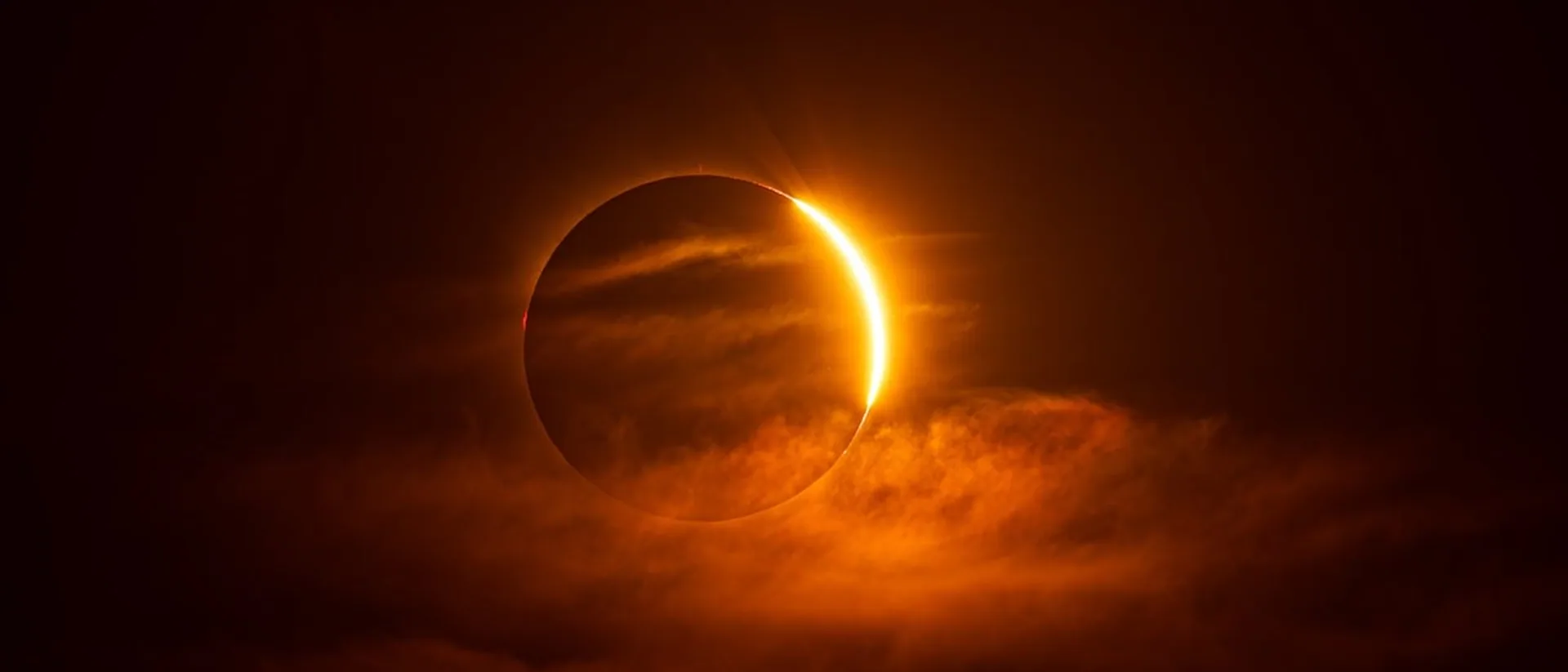
The next solar eclipse is an annular ("ring of fire") eclipse on Saturday, February 6, 2027, with its narrow annular path crossing southern South America, the Atlantic Ocean, and west and central Africa. Outside that path, a large partial eclipse will be visible from the Americas, Europe, and Africa. You must use certified eye protection to view any phase of this eclipse. The most recent total solar eclipse, August 12, 2026, over Greenland, Iceland, and northern Spain, is covered in depth below.
What Is a Solar Eclipse?
A solar eclipse happens when the Moon passes between the Sun and Earth, blocking all or part of the Sun's light from reaching a portion of Earth's surface. This can only occur during a new moon, when the Moon is positioned between the Sun and Earth. However, solar eclipses do not happen every new moon because the Moon's orbit is tilted about 5 degrees relative to Earth's orbit around the Sun. Only when the new moon occurs near one of the orbital nodes, the two points where the Moon's path crosses the ecliptic plane, can an eclipse take place.
The Geometry of a Solar Eclipse
The Moon, despite being roughly 400 times smaller than the Sun, is also about 400 times closer to Earth. This remarkable coincidence means the Moon and Sun appear roughly the same size in the sky, about 0.5 degrees in angular diameter. When the Moon passes directly in front of the Sun, it can cover the Sun's disk almost perfectly, producing a total solar eclipse.
Because the Moon's orbit is elliptical, its apparent size varies. When the Moon is near perigee (closest to Earth), it appears slightly larger than the Sun and can fully cover it. When the Moon is near apogee (farthest from Earth), it appears slightly smaller, leaving a ring of sunlight visible around its edge, this is called an annular eclipse.
Types of Solar Eclipses
| Type | Description | Visual Effect |
|---|---|---|
| Total | Moon completely covers the Sun | Day turns to night; solar corona visible |
| Annular | Moon covers the Sun's center but leaves a ring ("Ring of Fire") | Bright ring of sunlight around the Moon |
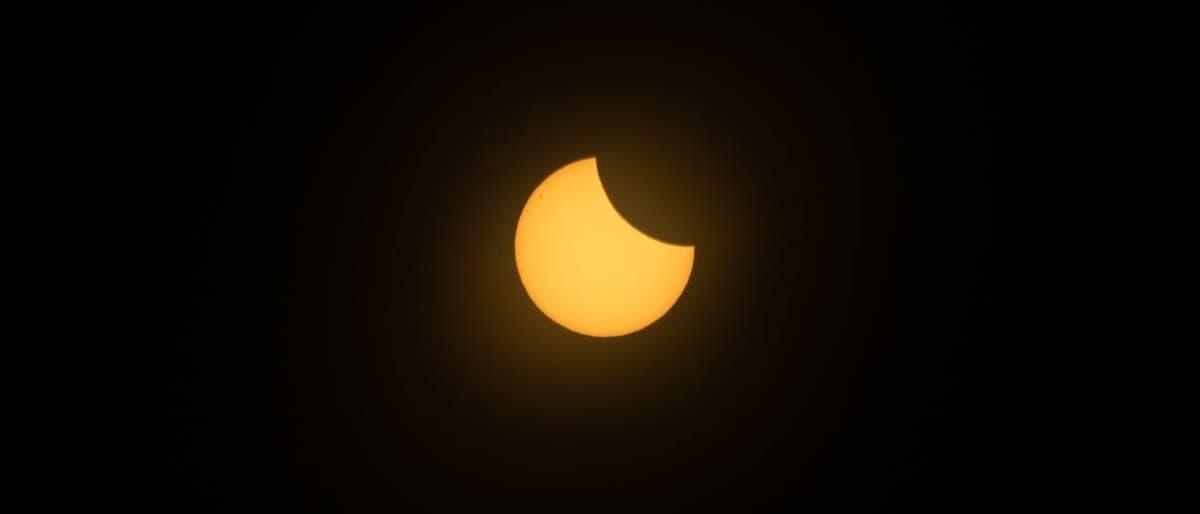
| Partial | Moon covers only part of the Sun | Sun appears with a "bite" taken out |
| Hybrid | Shifts between total and annular along the path | Total in some areas, annular in others |
The Shadow Cone
During a solar eclipse, the Moon casts two types of shadows on Earth:
- Umbra: The dark, central shadow where the Sun is completely blocked. This creates the path of totality during a total solar eclipse. The umbra is relatively small, typically 100–250 km wide, which is why total solar eclipses are visible only from a narrow strip of Earth's surface.
- Penumbra: The lighter, outer shadow where the Sun is only partially blocked. This creates the region where a partial solar eclipse is visible. The penumbra is much larger, often thousands of kilometers across.
The Most Recent Total Solar Eclipse: August 12, 2026
The most recent total solar eclipse took place on Wednesday, August 12, 2026, bringing totality to mainland Europe for the first time since August 11, 1999, when the eclipse crossed from Cornwall to the Black Sea. The next total solar eclipse comes on August 2, 2027 over North Africa, the Middle East, and South Asia, our August 2, 2027 eclipse guide has the full track, and the very next solar eclipse of any kind is the February 6, 2027 annular, with up to 7 minutes 51 seconds of ring-of-fire, at its longest where the centerline sweeps from the Argentine steppe out over the open Atlantic.
Key Facts at a Glance
| Parameter | Value |
|---|---|
| Date | August 12, 2026 |
| Eclipse type | Total solar eclipse |
| Saros series | 126 |
| Maximum duration of totality | 2 minutes 18 seconds |
| Width of path of totality | ~290 km at maximum |
| Magnitude | 1.039 |
| Greatest eclipse | 17:45:53 UTC, ~45 km off Iceland's west coast |
| Where totality is visible | Northern Siberia, Arctic Ocean, western Greenland, southwestern Iceland (incl. Reykjavik), northern Spain, Balearic Islands |
Why This Eclipse Matters
The August 2026 total solar eclipse was significant for several reasons:
-
The first total solar eclipse visible from Iceland in the 21st century, and the next one will not occur until 2196
-
The first total solar eclipse from mainland Spain since August 30, 1905 (and the first from Spanish territory as a whole since the Canary Islands eclipse of October 2, 1959), with the next one arriving just 11 months later, on August 2, 2027
-
Accessible from Europe, while the path crossed remote Arctic regions, it also touched northern Spain, putting it within reach of millions of European eclipse chasers
-
Part of an eclipse triple, it was followed by a partial lunar eclipse on August 27–28, 2026 and an annular solar eclipse on February 6, 2027
Path of Totality and Key Locations
The path of totality for the August 12, 2026 eclipse begins in the Arctic Ocean and sweeps southeast across Greenland, Iceland, and into northern Spain. Only locations within this narrow path will experience the Sun being completely covered by the Moon.
Path Overview
The Moon's penumbra first touches Earth over far northeastern Siberia at approximately 15:34 UTC; the dark umbral shadow that produces totality makes its first landfall an hour later over the Greenland ice sheet. The track then sweeps across:
-
Siberia and the Arctic Ocean: The path begins at sunrise in northeastern Russia and tracks across the Arctic between Svalbard and Greenland
-
Greenland: The path crosses northern Greenland, passing about 100 km south of the North Pole and touching the remote northeast coast (the weather station at Station Nord sees only ~16 seconds of totality). There is no practical viewing here, sea ice, and a Sun grazing the horizon
-
Iceland: The path sweeps diagonally across the western half of the country, entering at Straumnes lighthouse in the Hornstrandir peninsula (Westfjords), touching Ísafjörður, skirting the Snæfellsnes peninsula, and crossing Reykjavík and the Reykjanes peninsula before leaving land. The longest totality on land anywhere (2 minutes 13 seconds) is at Látrabjarg, Iceland's westernmost cliff. The north and east (including Akureyri) see only a deep partial eclipse
-
Atlantic Ocean: The shadow races across the North Atlantic between Iceland and Spain in about 35 minutes
-
Northern Spain: The path enters Spain in Galicia and crosses Asturias, Cantabria, Castile and León, the Basque edge, Aragon, Valencia, and the Balearic Islands before the shadow leaves Earth near sunset over the western Mediterranean
The partial eclipse (penumbra) begins at 15:34 UTC and the shadow leaves Earth's surface at approximately 19:58 UTC, with greatest eclipse at 17:45:53 UTC just 45 km off Iceland's west coast.
Key Cities Near or Within the Path of Totality
| Location | In Path? | Totality Duration | Notes |
|---|---|---|---|
| Látrabjarg, Iceland (Westfjords) | Yes | ~2 min 13 sec | Longest totality on land anywhere |
| Reykjavik, Iceland | Yes | ~1 min 05 sec | Capital city; excellent infrastructure |
| Ísafjörður, Iceland | Yes | ~1 min 30 sec | Largest Westfjords town; path crosses just offshore |
| Akureyri, Iceland | No (partial ~98%) | Outside the northern path edge | |
| Gijón, Spain | Yes | ~1 min 45 sec | Largest Asturian city in the path |
| Oviedo, Spain | Yes | ~1 min 48 sec | Capital of Asturias |
| Santander, Spain | Yes | ~1 min 00 sec | Cantabria coast |
| Bilbao, Spain | Edge (partial ~99.9%) | ~0–30 sec | On the northern path boundary |
| Burgos, Spain | Yes | ~1 min 44 sec | Historic Castilian city |
| Zaragoza, Spain | Yes | ~1 min 25 sec | Inside the path |
| Valencia, Spain | Yes | ~1 min 00 sec | Sunset eclipse by the coast |
| Madrid, Spain | No (partial ~99.9%) | Just outside the southern path edge |
Partial Visibility Regions
Even if you are not within the path of totality, you can still see a partial solar eclipse from a much wider area. The partial eclipse will be visible across:
- All of Europe: From the British Isles to the Urals, including Scandinavia, continental Europe, and the Mediterranean
- North Africa: Morocco, Algeria, Tunisia, Libya, and northern Egypt
- West Africa: Mauritania, Mali, Niger, and northern Nigeria
- Northeastern North America: Eastern Canada (Newfoundland, Labrador) and parts of northeastern Maine
Estimated Partial Eclipse Coverage for Major Cities
| City | Approximate Sun Coverage |
|---|---|
| London, UK | ~93% |
| Paris, France | ~93% |
| Berlin, Germany | ~87% |
| Madrid, Spain | ~99.9% (near-total) |
| Rome, Italy | ~96% |
| Oslo, Norway | ~86% |
| Stockholm, Sweden | ~84% |
| Moscow, Russia | ~84% |
| Casablanca, Morocco | ~89% |
| St. John's, Newfoundland | ~62% |
| Halifax, Nova Scotia | ~42% |
| New York, USA | ~19% (low, near sunset) |
Even at 80% coverage, the Sun remains dangerously bright. You must use certified solar filters at all times when viewing a partial eclipse, the Sun's rays can cause permanent eye damage in seconds.
Timing Table for Major Cities
The following table shows approximate times for the partial and total phases of the August 12, 2026 solar eclipse in major cities. All times are local.
| City | Partial Begins | Totality Begins | Maximum | Totality Ends | Partial Ends |
|---|---|---|---|---|---|
| Reykjavik, Iceland | 16:47 GMT | 17:48 | 17:48 | 17:49 | 18:47 |
| Keflavík, Iceland | 16:47 GMT | 17:48 | 17:49 | 17:50 | 18:48 |
| Gijón, Spain | 19:31 CEST | 20:27 | 20:27 | 20:28 | 21:21 |
| Oviedo, Spain | 19:31 CEST | 20:27 | 20:28 | 20:29 | 21:21 |
| Burgos, Spain | 19:33 CEST | 20:28 | 20:29 | 20:30 | 21:22 |
| Zaragoza, Spain | 19:35 CEST | 20:29 | 20:30 | 20:30 | 21:21 |
| Valencia, Spain | 19:38 CEST | 20:32 | 20:33 | 20:33 | 21:24 |
| London, UK | 18:17 BST | 19:13 | 20:06 | ||
| Paris, France | 19:22 CEST | 20:17 | 21:09 | ||
| Berlin, Germany | 19:15 CEST | 20:08 | 20:58 | ||
| Madrid, Spain | 19:36 CEST | 20:32 | 21:24 | ||
| Rome, Italy | 19:32 CEST | 20:24 | 21:13 | ||
| Oslo, Norway | 19:02 CEST | 19:57 | 20:49 | ||
| St. John's, Canada | 14:28 NDT | 15:35 | 16:37 |
Note: Times are approximate and based on central city coordinates. Actual times may vary by 1–2 minutes; locations near the path edges experience shorter or no totality. Cities marked "" do not experience totality. Icelandic times use GMT (UTC+0, Iceland does not observe DST); Spanish and most European times use CEST (UTC+2).
How to Safely View a Solar Eclipse
This is the most important section of this article. Viewing a solar eclipse without proper eye protection can cause permanent, irreversible eye damage, including solar retinopathy, a condition where the retina is burned by concentrated sunlight. This damage can occur in seconds and may not be immediately painful because the retina has no pain receptors.
Safe Viewing Methods
| Method | Safety Rating | Description |
|---|---|---|
| ISO 12312-2 certified eclipse glasses | Safe | Purpose-made solar viewers; check for ISO certification |
| Welding glass (shade 14 or higher) | Safe | Must be shade 14; lower shades are NOT safe |
| Pinhole projector | Safe | DIY method; projects image of Sun onto a surface |
| Solar telescope with proper filter | Safe | Must have filter at front of telescope (not eyepiece) |
| Regular sunglasses | NOT Safe | Do not block enough light; can cause severe eye damage |
| Smoked glass | NOT Safe | Uneven filtering; dangerous |
| CDs or DVDs | NOT Safe | Inconsistent filtering; not designed for solar viewing |
| Looking through camera viewfinder without filter | NOT Safe | Can damage eyes AND camera sensor |
| Eyepiece solar filters (that screw onto eyepiece) | NOT Safe | Can crack from heat; dangerous |
During Totality, The Only Safe Moment
The only time it is safe to look at the Sun with the naked eye during a solar eclipse is during totality, the brief period when the Moon completely covers the Sun. During totality:
- The Sun's bright photosphere is completely hidden
- The solar corona is visible as a pearly white halo
- No eye protection is needed
- The corona streams outward in every direction
However, you must be absolutely certain totality has begun before removing your eclipse glasses, and you must put them back on BEFORE the first ray of sunlight reappears at the end of totality. If you are not sure whether totality has started, keep your glasses on.
The "Diamond Ring" Warning
As totality begins and ends, a bright spot of sunlight appears at the Moon's edge, this is called the diamond ring effect. It is stunningly beautiful but also a signal: sunlight is about to emerge or has just emerged. When you see the diamond ring forming at the end of totality, immediately put your eclipse glasses back on. Do not wait.
Total vs Annular vs Partial: What's the Difference?
Understanding the three main types of solar eclipses helps you know what to expect and how to prepare for each.
Total Solar Eclipse
A total solar eclipse occurs when the Moon passes directly between the Sun and Earth and is close enough (near perigee) to completely cover the Sun's disk. The Moon's dark silhouette is surrounded by the Sun's corona, a ghostly, pearly white halo of superheated plasma extending millions of kilometers into space. Totality can last from a few seconds to a maximum of about 7.5 minutes, though most total eclipses have totality durations of 1–3 minutes.
What you see: Day turns to an eerie twilight. Bright stars and planets become visible. The temperature drops. Animals fall silent. The corona streams outward from the black disk of the Moon. It is widely described as one of the most awe-inspiring natural phenomena a person can witness.
Annular Solar Eclipse
An annular eclipse occurs when the Moon passes directly between the Sun and Earth but is too far away (near apogee) to completely cover the Sun. The Moon appears slightly smaller than the Sun, leaving a brilliant ring of sunlight, the "Ring of Fire", visible around the Moon's silhouette.
What you see: The Moon covers most of the Sun, but a bright ring remains. The sky dims but does not turn dark. The corona is NOT visible because sunlight still streams around the Moon. You must keep your eclipse glasses on at ALL times during an annular eclipse, there is no safe naked-eye moment.
Partial Solar Eclipse
A partial solar eclipse occurs when the Moon passes in front of the Sun but does not align perfectly, covering only a portion of the solar disk. This is the most common type of solar eclipse and is what most observers outside the path of totality or annularity will experience.
What you see: The Sun appears with a "bite" taken out of it. The size of the bite depends on how close you are to the central path. Even with a large bite (80–90%), the Sun remains dangerously bright, and eye protection is required at all times.
Comparison Table
| Feature | Total | Annular | Partial |
|---|---|---|---|
| Sun fully covered | Yes | No (ring remains) | No |
| Corona visible | Yes | No | No |
| Safe to view without filters | During totality only | Never | Never |
| Sky darkens significantly | Yes | Slightly | Slightly to moderately |
| Path width | 100–250 km | 150–300 km | N/A (wide region) |
| Maximum duration | ~7.5 minutes | ~12 minutes | Several hours |
| Emotional impact | Often described as life-changing | Beautiful but less dramatic | Interesting astronomical event |
Future Solar Eclipses Through 2030
If you cannot make it to the August 2026 eclipse, there are more opportunities coming. Here is every solar eclipse through 2030:
| Date | Type | Path of Totality/Annularity | Maximum Duration |
|---|---|---|---|
| Aug 12, 2026 | Total | Arctic, Greenland, Iceland, N Spain | 2m 18s |
| Feb 6, 2027 | Annular | S America, Atlantic, W/Central Africa | 7m 51s |
| Aug 2, 2027 | Total | N Africa, Middle East, S Asia | 6m 23s |
| Jan 26, 2028 | Annular | S America, Atlantic, W Europe, N Africa | 10m 27s |
| Jul 22, 2028 | Total | SE Asia, Australia, New Zealand | 5m 10s |
| Jan 14, 2029 | Partial | , (no central eclipse) | N/A |
| Jun 12, 2029 | Partial | , (no central eclipse) | N/A |
| Jul 11, 2029 | Partial | , (no central eclipse) | N/A |
| Dec 5, 2029 | Partial | , (no central eclipse) | N/A |
| Jun 1, 2030 | Annular | N Africa, SE Europe, Central/East Asia | 5m 21s |
The August 2, 2027 total solar eclipse is particularly notable, with a maximum totality of 6 minutes 23 seconds crossing Egypt (including Luxor and the Valley of the Kings), Saudi Arabia, and Yemen, it will be one of the longest total eclipses of the decade and is already generating enormous interest among eclipse travelers.
Why Solar Eclipses Are Rare at Any Given Location
Solar eclipses occur somewhere on Earth roughly 2–5 times per year, so they are not rare on a global scale. However, at any specific location, total solar eclipses are extraordinarily rare.
The Numbers
- The average interval between total solar eclipses at a given point on Earth is approximately 375 years
- Some locations have gone over 1,000 years without a total solar eclipse
- A total solar eclipse has not been visible from London since 1715 and will not be again until 2151
- The 2024 total solar eclipse was the first to cross the contiguous United States since 2017, but before that, the previous one was in 1979 for the mainland US
Why So Rare Locally?
The path of totality is extremely narrow, typically 100–250 km wide. Earth's surface is vast (510 million km²), so the chance that the path crosses any particular point is very small in any given year. Additionally, about 71% of Earth's surface is ocean, meaning many total solar eclipses are visible only from remote waters with no land in the path.
The Moon's shadow also moves quickly, at speeds of 1,700 km/h near the equator to over 8,000 km/h near the poles, so the window of totality at any location lasts only minutes. All of these factors combine to make total solar eclipses one of the rarest and most sought-after astronomical experiences for any given observer.
Frequently Asked Questions
10 questions answered
When is the next solar eclipse?
Where were the best places to see the August 2026 total solar eclipse?
Is it safe to look at a solar eclipse with sunglasses?
When can I take off my eclipse glasses?
How long does a total solar eclipse last?
What is the difference between a solar eclipse and a lunar eclipse?
Will the August 2026 solar eclipse be visible from the United States?
When is the next total solar eclipse visible from the United States?
How often do solar eclipses happen?
What should I bring to view a solar eclipse?
Put this into action
Stop guessing. Use our professional tools to schedule, convert, and manage time zones perfectly, 100% free.
Track Sky EventsOfficial Sources & References
- NASA Science: official data and scientific overviews for astronomical events and missions.