International Observe the Moon Night 2026: Date, How to Participate & What to See
Quick Answer
International Observe the Moon Night 2026 takes place on Saturday, September 19, 2026, an annual NASA-sponsored event that invites people worldwide to look up and appreciate the Moon. The event is held on a Saturday near the first quarter moon in September or October, and 2026's first quarter moon on September 18 anchors the celebration one night later.
Quick Answer
International Observe the Moon Night (InOMN) 2026 is confirmed for Saturday, September 19, 2026, the night after the first quarter moon of September 18 (20:44 UTC). This NASA-led global event encourages everyone, from casual sky watchers to experienced astronomers, to observe, learn about, and celebrate the Moon. You can participate by hosting an event, attending a public gathering, or simply stepping outside with binoculars. The first quarter phase is ideal for observation because the terminator line reveals dramatic crater detail along the Moon's day-night boundary.
What Is International Observe the Moon Night?
International Observe the Moon Night, often abbreviated as InOMN (pronounced "IN-om"), is an annual worldwide public event dedicated to lunar observation and appreciation. It is organized by NASA's Lunar Reconnaissance Orbiter (LRO) mission and the Solar System Exploration Research Virtual Institute (SSERVI), with support from a consortium of astronomical organizations, planetariums, observatories, universities, and astronomy clubs around the globe.
History and Origins
The event was first held on September 18, 2010, as a grassroots effort by NASA and the lunar science community to engage the public with the Moon at a time when lunar exploration was experiencing a renaissance. The Lunar Reconnaissance Orbiter had been orbiting the Moon since 2009, returning the most detailed maps of the lunar surface ever created, and NASA wanted to share that excitement with the public.
Since its founding, InOMN has grown from a modest national event into a truly international celebration. In recent years, thousands of events have been registered across all seven continents, including Antarctica, where researchers at McMurdo Station and the South Pole Observatory have participated.
The Mission of InOMN
The organizers describe the event's purpose with three core goals:
-
Inspire, Spark curiosity about the Moon, space science, and exploration
-
Connect, Bring people together through a shared experience of looking up
-
Educate, Provide accurate information about lunar science, history, and culture
The event is deliberately non-technical and welcoming. You don't need a telescope, astronomy knowledge, or any special equipment. The only requirement is looking up.
Who Organizes InOMN?
While NASA takes the lead, the event is a collaborative effort involving:
| Organization | Role |
|---|---|
| NASA's Lunar Reconnaissance Orbiter (LRO) | Primary sponsor and coordinator |
| Solar System Exploration Research Virtual Institute (SSERVI) | Scientific oversight |
| International Astronomical Union (IAU) | Global coordination support |
| Astronomical Society of the Pacific | Education and outreach |
| Local astronomy clubs & planetariums | Event hosting and public engagement |
| Universities and research institutions | Academic events and lectures |
When Is International Observe the Moon Night 2026?
International Observe the Moon Night is always held on a Saturday evening near the first quarter moon in September or October. The first quarter moon is chosen deliberately because it provides the best combination of evening visibility and dramatic surface detail.
Determining the 2026 Date
NASA confirmed the official date on the InOMN website. The 2026 details are:
| Parameter | Value |
|---|---|
| Official Date | Saturday, September 19, 2026 |
| Moon Phase | Waxing gibbous (1 day past first quarter) |
| First Quarter Moon | September 18, 2026 at 20:44 UTC |
| Moon Illumination | ~55–60% |
| Moonrise (approx.) | ~4:00 PM local time |
| Moonset (approx.) | ~1:30 AM local time |
| Moon Constellation | Capricornus |
Note: The date above is confirmed by NASA on the InOMN website.
Why the First Quarter Moon?
The first quarter phase is widely considered the best time for lunar observation, and InOMN's scheduling reflects this. Here's why:
- The terminator is prominent. The terminator, the line separating the Moon's lit and unlit portions, is the most scientifically interesting and visually dramatic feature on the Moon. Along this line, the Sun is low on the lunar horizon, and craters, mountains, and valleys cast long, high-contrast shadows that reveal surface topography in stunning three-dimensional relief.
- The Moon is visible in the evening. A first quarter moon is high in the sky at sunset and sets around midnight, making it convenient for public events. Full moons rise at sunset but are often too bright and lack the dramatic terminator shadows.
- Moderate brightness. The partially lit Moon is easier to observe comfortably than the glaring full moon, especially through telescopes. You can see more detail without being overwhelmed by glare.
How to Participate in International Observe the Moon Night
There are three primary ways to take part in InOMN 2026, ranging from casual to organized:
1. Solo Observation
The simplest way to participate: step outside and look at the Moon. No equipment required. Spend 10 minutes studying the Moon's surface with your naked eye, can you see the dark patches (maria)? The bright highlands? The way the terminator cuts across craters?
To enhance the experience:
- Download a free Moon map or app (see the Equipment section below)
- Try a pair of binoculars, even modest 7x35 or 10x50 binoculars reveal a stunning amount of detail
- Take a photo with your smartphone and share it on social media with the hashtag #ObserveTheMoon
2. Attend a Public Event
Hundreds of organized InOMN events take place worldwide each year, hosted by astronomy clubs, planetariums, museums, universities, libraries, and parks. These events typically feature:
- Telescope viewing sessions with experienced operators
- Guided lunar tours pointing out key features
- Educational presentations about lunar science
- Hands-on activities for children and families
- Moon-themed refreshments (moon pies are a popular tradition)
To find an event near you, visit the official InOMN event map, which is updated annually as October approaches. Most events are free and open to the public.
3. Host Your Own Event
Anyone can host an InOMN event, you don't need to be an astronomer. Successful events have been held in backyards, school courtyards, community centers, and parking lots. See the "Hosting Your Own Event" section below for detailed guidance.
What to Look For on the Moon Tonight
Whether you're observing with the naked eye, binoculars, or a telescope, here are the key features to seek out during InOMN 2026. On the night of September 19, the Moon will be a waxing gibbous at roughly 55–60% illumination, ideal for terminator viewing, with excellent detail along the day-night line and the eastern maria.
Major Lunar Maria (Dark Patches)
The dark areas visible even without optical aid are the maria (singular: mare), Latin for "seas." These are vast plains of solidified basaltic lava that filled ancient impact basins billions of years ago. Early astronomers mistakenly thought they were actual oceans, giving them poetic names.
| Mare | Translation | Size | Key Feature |
|---|---|---|---|
| Mare Tranquillitatis | Sea of Tranquility | ~870 km diameter | Apollo 11 landing site (July 20, 1969) |
| Mare Imbrium | Sea of Rains | ~1,150 km | Largest mare; surrounded by mountain ranges |
| Mare Serenitatis | Sea of Serenity | ~700 km | Distinct circular shape; dark, smooth floor |
| Mare Crisium | Sea of Crises | ~460 km | Isolated near the eastern limb; easily visible |
| Oceanus Procellarum | Ocean of Storms | ~2,500 km | Largest dark area; not a true mare but an ocean |
| Mare Nubium | Sea of Clouds | ~750 km | Southern highlands; near the Straight Wall |
Prominent Craters
| Crater | Diameter | What Makes It Special | Best Seen With |
|---|---|---|---|
| Tycho | 85 km | Bright ray system visible across the southern highlands; youngest large crater (~108 million years) | Naked eye (rays), binoculars (crater) |
| Copernicus | 93 km | "Monarch of the Moon"; prominent ray system; deep terraced walls | Binoculars or small telescope |
| Plato | 100 km | Dark, flat floor; nearly circular; shadow-filled at first quarter | Small telescope |
| Aristarchus | 40 km | Brightest spot on the Moon; reflects ~15% of sunlight | Binoculars |
| Clavius | 225 km | One of the largest craters; distinctive arc of smaller craters across its floor | Small telescope |
The Terminator: Where the Action Is
On September 19, 2026, the terminator will be located just east of the Moon's center line, with the western portion fully illuminated. As the Moon progresses toward full, the terminator moves steadily eastward, revealing new terrain each night. Features near the terminator show maximum shadow detail:
- Mountain ranges like the Apennines (Montes Apenninus) cast dramatic shadows
- Crater rims stand out in bold relief
- Rilles (narrow channels) and wrinkle ridges become visible in the low-angle sunlight
Pro tip: If you have a telescope, sketch what you see along the terminator. Even a rough pencil sketch forces you to look more carefully than you would otherwise, and you'll notice details you'd miss with a casual glance.
Apollo Landing Sites
While you cannot see the actual landing modules or equipment from Earth (they're far too small), you can identify the regions where astronauts walked:
| Mission | Landing Site | Location | Visible Feature |
|---|---|---|---|
| Apollo 11 | Mare Tranquillitatis | 0.7°N, 23.5°E | The mare itself; three small craters near the site (Aldrin, Armstrong, Collins) |
| Apollo 12 | Oceanus Procellarum | 3.0°S, 23.4°W | Near the crater Lansberg |
| Apollo 14 | Fra Mauro highlands | 3.6°S, 17.5°W | Between craters Fra Mauro and Parry |
| Apollo 15 | Hadley-Apennine | 26.1°N, 3.7°E | At the foot of the Apennine Mountains; near Hadley Rille |
| Apollo 16 | Descartes highlands | 8.9°S, 15.5°E | Highland terrain near crater Descartes |
| Apollo 17 | Taurus-Littrow | 20.2°N, 30.8°E | Valley near the Taurus Mountains |
Best Equipment for Moon Observation
You don't need expensive gear to enjoy the Moon. Here's a practical guide organized by budget and experience level.
Naked Eye (Free)
The Moon is one of the few celestial objects that's rewarding without any equipment at all. With just your eyes, you can:
- Distinguish the dark maria from the bright highlands
- See Tycho's ray system (looks like bright streaks on the southern half)
- Track the Moon's phase changes from night to night
- Observe the Moon's apparent motion against the star background over several hours
Binoculars ($30–$200)
Binoculars are the single best investment for a beginning lunar observer. They provide a wider field of view than most telescopes and are incredibly easy to use.
| Specification | Recommendation | Why |
|---|---|---|
| 7x50 | Excellent for beginners | Bright, wide field, easy to hold steady |
| 10x50 | Best overall for the Moon | Good magnification, still hand-holdable |
| 15x70 | Advanced; requires tripod | Impressive detail but heavy |
With 10x50 binoculars, you can resolve dozens of craters, see the mountain rings around Mare Imbrium, and trace the ray systems of Tycho and Copernicus across the surface.
Small Telescope ($100–$500)
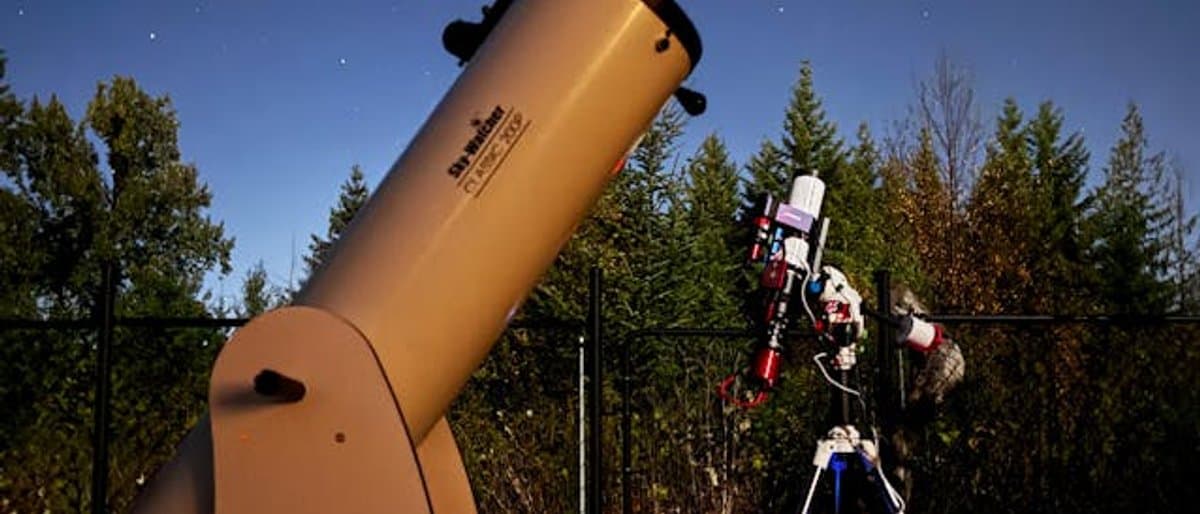
A 3- to 6-inch refractor or reflector opens up the Moon in extraordinary detail. At 50x–100x magnification, crater floors show texture, mountain peaks catch sunlight along the terminator, and rilles become visible.
| Aperture | Magnification Range | What You'll See |
|---|---|---|
| 3" (76mm) | 30x–120x | Major craters in detail, maria boundaries, mountain ranges |
| 4.5" (114mm) | 40x–180x | Crater interiors, rilles, wrinkle ridges, small craters |
| 6" (150mm) | 50x–250x | Fine crater detail, central peaks, rille networks |
Critical tip: Use a moon filter (a neutral-density filter that screws onto your eyepiece) when observing the Moon through a telescope, especially near full moon. The Moon is intensely bright through a telescope and can be uncomfortable or even slightly harmful to view at high magnification without a filter. A moon filter reduces brightness by 60–80% while preserving detail and contrast.
Smartphone Apps
| App | Platform | Cost | Best Feature |
|---|---|---|---|
| NASA's Moon Trek | Web | Free | Interactive LRO map; zoom to meter-scale resolution |
| SkySafari | iOS/Android | Free–$40 | Identifies lunar features in real time |
| Moon Globe | iOS/Android | Free | Detailed 3D lunar map |
| Virtual Moon Atlas | Windows/Mac | Free | Professional-grade lunar feature database |
| Stellarium | All platforms | Free | General planetarium with Moon labeling |
Moon Observation Activities for Families and Kids
InOMN is particularly well suited to families because the Moon is bright, easy to find, and rewarding even with minimal equipment. Here are engaging activities for children of all ages:
For Ages 4–7
- Moon shape journal. Have your child draw the Moon's shape every night for a month. Watch the cycle progress from crescent to full and back. Use a dark crayon on light paper or white crayon on dark paper.
- Read moon stories. Pair the observation with age-appropriate books like Goodnight Moon by Margaret Wise Brown, Kitten's First Full Moon by Kevin Henkes, or Moonshot by Brian Floca.
- Moon jump. Explain that the Moon's gravity is only 1/6th of Earth's. If you can jump 1 foot high on Earth, you could jump 6 feet on the Moon. Mark jump distances and calculate "Moon jumps."
For Ages 8–12
- Crater creation experiment. Fill a shallow pan with flour, then sprinkle a thin layer of cocoa powder on top. Drop marbles, pebbles, and balls of different sizes from different heights to create impact craters. Observe how impact speed and object size affect crater size and ray patterns.
- Moon feature scavenger hunt. Create a checklist of features to find (dark spot, bright spot, crater, mountain, straight line, curved line). Hand out binoculars and see who can find the most items.
- Apollo mission matching game. Print photos of the six Apollo landing sites and descriptions of what each mission did. Have kids match them up, then try to locate the regions on the Moon.
For Ages 13+
- Lunar photography. Use a smartphone mounted to binoculars or a telescope (a "digiscoping" adapter costs about $15) to photograph the Moon. Compare images from different phases.
- Shadow length measurement. Photograph the same crater near the terminator on consecutive nights. Measure the shadow length change to calculate the approximate height of the crater rim or central peak.
- Research project. Choose one lunar feature (e.g., Tycho, Mare Imbrium, the Straight Wall) and prepare a short presentation on its geology, formation, and history of observation.
Hosting Your Own Observe the Moon Night Event
Organizing a local InOMN event is simpler than you might think. Here is a step-by-step guide.
Planning Checklist
| Timeline | Task |
|---|---|
| 4–6 weeks before | Choose a venue (backyard, park, school, library parking lot) |
| 4 weeks before | Register your event on the official InOMN website |
| 3–4 weeks before | Invite participants (social media, flyers, community boards) |
| 2 weeks before | Confirm equipment (borrow telescopes from local astronomy club) |
| 1 week before | Prepare moon maps, handouts, and activities |
| Day of | Set up by 6:30 PM; have backup plan for clouds |
| After event | Share photos with #ObserveTheMoon; submit attendance to InOMN |
Essential Supplies
- At least one telescope or pair of binoculars (contact a local astronomy club, they're almost always happy to lend equipment and volunteers)
- Red-filtered flashlights (preserves night vision while allowing people to read maps)
- Printed Moon maps (available free from NASA and the InOMN website)
- A laptop or tablet showing NASA's Moon Trek for interactive exploration
- Chairs or blankets for comfortable viewing
- Moon-themed snacks (moon pies, cheese, circular cookies)
- A simple sign-in sheet to track attendance
Cloud Cover Backup Plan
Weather doesn't always cooperate. Have a contingency plan:
- Virtual observation: Stream NASA's live Moon feed or use Moon Trek on a large screen
- Indoor presentation: Prepare a 20-minute slideshow about lunar science
- Hands-on activities: Set up the crater experiment or a lunar phase demonstration using a lamp and styrofoam balls
- Moon movie: Screen Apollo 11 (2019 documentary) or The Dish (2000)
Moon Phase on International Observe the Moon Night 2026
On the official date of September 19, 2026, the Moon will be approximately 1 day past first quarter, a waxing gibbous at roughly 55–60% illumination. This is an excellent phase for observation:
- The terminator will be situated along the eastern portion of the visible disk, casting long shadows across craters and mountain ranges near the limb
- Most major maria will be fully illuminated and visible
- Tycho's ray system will be prominent across the southern highlands
- The Moon will be high in the sky during prime evening hours (7–10 PM), well above the murky atmosphere near the horizon
This is arguably better than first quarter for a public event because more of the Moon's surface is visible while the terminator still provides dramatic shadow detail. A full moon, by contrast, would eliminate terminator shadows entirely and create harsh, flat lighting with no topographic relief.
Other Annual Moon Events
International Observe the Moon Night isn't the only recurring lunar celebration on the calendar. If you enjoy InOMN, consider these related events:
| Event | When | What It Is |
|---|---|---|
| Global Astronomy Month | April (entire month) | Organized by Astronomers Without Borders; includes lunar observation events |
| World Space Week | October 4–10 | UN-declared celebration of space science and technology; often overlaps with InOMN |
| Astronomy Day | Spring & Fall (varies) | League of Astronomy Day event with public star parties |
| National Moon Day | July 20 (US) | Commemorates the Apollo 11 moon landing in 1969 |
| Lunar New Year | January/February (varies) | Cultural celebration tied to the new moon; marks the start of the lunisolar calendar year |
| Mid-Autumn Moon Festival | September/October | East Asian celebration of the harvest moon with mooncakes and lanterns |
Frequently Asked Questions
10 questions answered
What is International Observe the Moon Night?
When is International Observe the Moon Night 2026?
Do I need a telescope to participate?
Why is the first quarter moon chosen for this event?
Can I host an InOMN event even if I'm not an astronomer?
What if it's cloudy on the night of the event?
How do I find an InOMN event near me?
Is International Observe the Moon Night only in the United States?
What should I bring to an InOMN event?
How is International Observe the Moon Night connected to NASA's lunar missions?
Put this into action
Stop guessing. Use our professional tools to schedule, convert, and manage time zones perfectly, 100% free.
Track Sky EventsOfficial Sources & References
- NASA Science: official data and scientific overviews for astronomical events and missions.