Lyrid Meteor Shower 2026: Peak Dates, Viewing Times & Complete Guide
Quick Answer
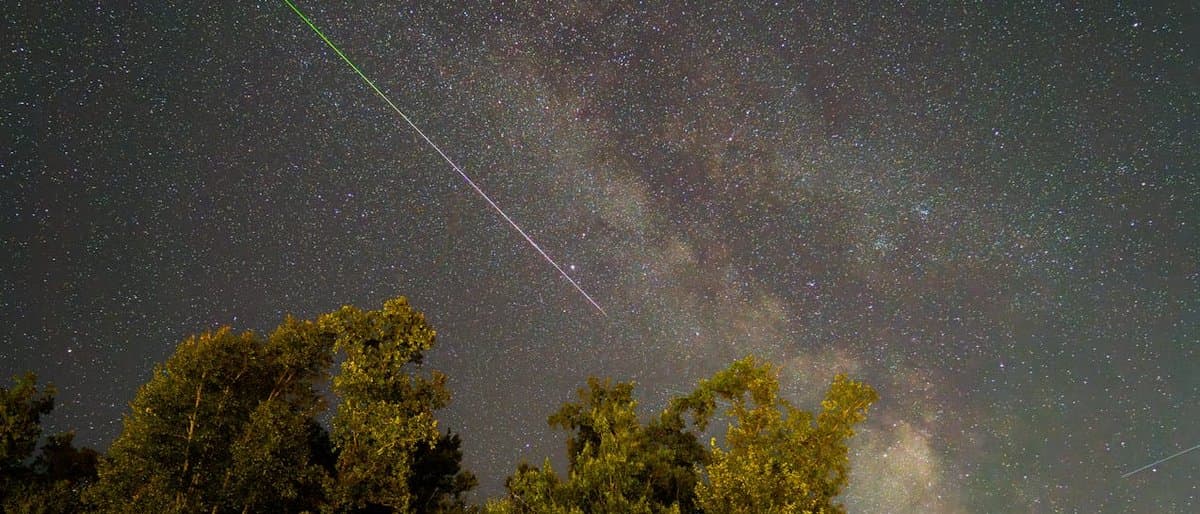
The Lyrid meteor shower peaks on the night of April 22–23, 2026, with an expected rate of about 18 meteors per hour under ideal conditions. In 2026, viewing conditions are favorable thanks to a waxing crescent moon that sets early in the evening, leaving dark skies for most of the night. The Lyrids are one of the oldest known meteor showers, documented by Chinese astronomers for over 2,700 years.
What Are the Lyrids?
The Lyrid meteor shower is an annual event that graces the spring sky every April, running roughly from April 16 through April 25 each year. While it's not the most prolific of the annual meteor showers, that distinction belongs to the Geminids and Perseids, the Lyrids hold a special place in astronomical history as the oldest meteor shower ever recorded.
The Parent Comet: C/1861 G1 Thatcher
The Lyrids originate from long-period Comet C/1861 G1 Thatcher, discovered by A.E. Thatcher on April 5, 1861. This comet follows a highly elongated orbit that takes approximately 415 years to complete one revolution around the Sun. It last reached perihelion (closest approach to the Sun) in 1861, and won't return until approximately 2276.
As Comet Thatcher nears the Sun, solar heating causes its icy nucleus to release dust, rock fragments, and volatile gases. These particles spread out along the comet's orbital path, forming a debris stream. Each April, Earth passes through this stream, and the particles, most no larger than grains of sand, collide with our atmosphere at speeds of about 107,000 mph (173,000 km/h), creating the bright streaks we call meteors.
Because Thatcher's orbit is steeply inclined relative to Earth's, the debris stream is relatively narrow. This means the Lyrid peak is brief, typically lasting only a few hours to about a day, compared to showers like the Perseids, which can maintain near-peak rates for a couple of days.
Ancient Observations
The Lyrids have the longest documented history of any meteor shower. Chinese court astronomers recorded the first known observation in 687 BCE, describing it with the memorable phrase: "In the middle of the night, stars fell like rain." Additional Chinese records from 15 BCE note another Lyrid outburst.
These ancient records are invaluable to modern astronomers because they prove the Lyrid debris stream has remained active and relatively stable for nearly three millennia, a testament to the durability of the particle stream left by Comet Thatcher's ancient passages.
Peak Dates and Best Viewing Times for 2026
The Lyrids reach peak activity on the night of April 22 into the early morning of April 23, 2026. The shower's narrow peak means timing matters more than for many other showers.
When the Radiant Rises
The Lyrid radiant, the point in the constellation Lyra from which the meteors appear to emanate, rises in the northeast around 8:30–9:00 PM local time for mid-northern latitudes. However, you'll see very few Lyrids in the early evening because the radiant is low on the horizon. Meteor rates increase dramatically after midnight as the radiant climbs higher, with the best viewing in the hours just before dawn.
Timing Table by Time Zone
| Location | Time Zone | Radiant Rises | Best Viewing Window | Dawn |
|---|---|---|---|---|
| New York | EDT (UTC−4) | ~8:45 PM | 1:00–5:00 AM | ~5:55 AM |
| Chicago | CDT (UTC−5) | ~8:45 PM | 12:30–4:30 AM | ~5:45 AM |
| Denver | MDT (UTC−6) | ~8:30 PM | 12:00–4:15 AM | ~5:45 AM |
| Los Angeles | PDT (UTC−7) | ~8:30 PM | 11:30–4:00 AM | ~5:50 AM |
| London | BST (UTC+1) | ~9:00 PM | 1:00–4:30 AM | ~5:20 AM |
| Paris | CEST (UTC+2) | ~9:15 PM | 1:00–4:30 AM | ~5:45 AM |
| Tokyo | JST (UTC+9) | ~9:30 PM | 1:00–3:45 AM | ~4:30 AM |
| Sydney | AEST (UTC+10) | ~1:00 AM* | 3:00–5:00 AM | ~5:45 AM |
| Auckland | NZST (UTC+12) | ~2:00 AM* | 3:30–5:30 AM | ~6:15 AM |
*Southern Hemisphere observers have a shorter viewing window because the Lyrid radiant is lower in the northern sky.
Should I Watch on April 21 or April 23 Too?
Yes. While the peak night offers the highest rates, the Lyrids produce noticeable activity from roughly April 19 through April 25. On the nights immediately before and after the peak, you can expect roughly 5–10 Lyrids per hour from a dark site. If clouds block your view on the peak night, don't give up, try the adjacent nights.
How Many Meteors to Expect
The Lyrids have a Zenithal Hourly Rate (ZHR) of approximately 18, meaning a single observer under perfectly dark, moonless skies with the radiant directly overhead could see up to 18 Lyrids per hour. In practice, your actual count will depend on several factors.
Realistic Expectations by Sky Condition
| Sky Condition | Expected Lyrids Per Hour |
|---|---|
| Pristine dark site (Bortle 1–2) | 10–18 |
| Rural area (Bortle 3–4) | 5–12 |
| Suburban (Bortle 5–6) | 2–5 |
| Urban (Bortle 7+) | 0–1 |
These numbers might seem modest compared to the Perseids' ZHR of 100, but the Lyrids compensate with quality. A relatively high proportion of Lyrid meteors are bright, and roughly 15–20% leave persistent trains, luminous trails that linger for a second or two after the meteor itself fades.
Historical Outbursts
While 18 meteors per hour is the typical ZHR, the Lyrids have a well-documented history of occasional outbursts that dramatically exceed this baseline. Notable outburst years include:
- 1803: A spectacular Lyrid storm was observed from the eastern United States, with estimates of 700+ meteors per hour.
- 1922: Observers in Greece reported rates of approximately 100 per hour.
- 1982: Perhaps the best-documented modern Lyrid outburst, with rates briefly reaching 90–100 per hour, caught by experienced observers in the United States.
- 1985: Another notable outburst, though less intense, with rates around 50 per hour.
These outbursts are believed to occur when Earth passes through a denser filament of debris within the broader Lyrid stream, material that may have been shed by Comet Thatcher centuries or millennia ago. No outburst is predicted for 2026, but the Lyrids have a habit of surprising observers, so it's always worth checking.
Moon Conditions for 2026
In 2026, the Moon is a waxing crescent on the night of the Lyrid peak (April 22–23), with approximately 15–20% illumination. This is excellent news for meteor watchers.
Moonset Times on April 22, 2026
| Location | Moonset (Approx.) |
|---|---|
| New York | ~10:45 PM EDT |
| Chicago | ~10:30 PM CDT |
| Denver | ~10:15 PM MDT |
| Los Angeles | ~9:45 PM PDT |
| London | ~11:30 PM BST |
The crescent Moon sets by mid-evening, well before the prime Lyrid viewing hours after midnight. This means the best part of the night will be completely free of lunar interference. The 2026 Lyrids benefit from the same favorable lunar geometry that also makes the 2026 Perseids and Geminids great this year.
How to Watch the Lyrids: Practical Guide
Step 1: Find a Dark Location
Get as far from city lights as possible. Even a 20–30 minute drive from a small town can make a significant difference. Look for a site with open views to the northeast, where the Lyrid radiant rises, and preferably with unobstructed views in all directions.
Step 2: Arrive Early and Adapt
Arrive at your viewing location by 10:00–11:00 PM local time. Give yourself at least 20–30 minutes for your eyes to fully adapt to the darkness. During this time, avoid looking at your phone, car headlights, or any white light. Use a red-filtered flashlight if you need to see your surroundings.
Step 3: Get Comfortable
April nights can still be quite chilly in many locations, especially in the Northern Hemisphere. Dress in layers, warmer than you think you'll need. Bring a reclining lawn chair, sleeping bag, or blanket so you can lie back and look straight up without straining your neck.
Step 4: Look Up, Not at the Radiant
While it's helpful to know where the radiant is (in the constellation Lyra, near the bright star Vega), don't stare directly at it. Meteors near the radiant have very short trails. Instead, look about 40–60 degrees away from the radiant in any direction, this is where meteors will appear longest and most dramatic.
Step 5: Be Patient
Meteor watching is not a rapid-fire activity. Even at peak, you might wait 3–5 minutes between Lyrids. Fill the gaps by enjoying the spring night sky, Vega, Arcturus, and the Big Dipper are all well-placed in April. Let your eyes relax and scan the sky naturally.
Photography Tips for the Lyrids
Capturing Lyrid meteors requires the same fundamentals as any meteor photography, but the lower rates mean you'll need more patience and luck than with the Perseids or Geminids.
Recommended Camera Setup
- Lens: Wide-angle (14–24mm), f/2.8 or faster
- ISO: 1600–3200
- Shutter speed: 15–20 seconds
- Focus: Manual, set to infinity on a bright star
- Intervalometer: Set for continuous shooting
Strategy
With only 10–18 meteors per hour at peak, most of your frames will be empty. The key is to shoot continuously throughout the night to maximize your chances of catching a Lyrid in one of your exposures. Aim your camera about 45 degrees from the radiant and roughly 40–50 degrees above the horizon for the best geometry.
Processing
Review your images for meteor trails, they'll appear as straight lines that cross the star field at a different angle than satellite passes (which are typically uniform in brightness) or airplane trails (which have blinking lights). Stack your best meteor captures into a composite image showing the night's activity.
Lyrid History: Notable Fireball Years
While the Lyrids aren't famous for fireballs the way the Geminids are, they do produce occasional bright events that leave lasting impressions. The shower's relatively high entry velocity (about 107,000 mph / 173,000 km/h) means that when a larger-than-average Lyrid particle enters the atmosphere, it can produce a genuinely spectacular display.
The term "Lyrid fireball" typically refers to a meteor reaching magnitude –3 or brighter, easily visible even from light-polluted areas and sometimes casting shadows on the ground. Historical accounts describe Lyrid fireballs appearing to split into fragments and leaving smoky trains that persisted for several minutes, twisting in high-altitude winds.
The 1803 outburst, observed from Virginia and North Carolina, produced numerous exceptionally bright meteors that alarmed observers unfamiliar with the phenomenon. Newspaper accounts from the era describe the spectacle as "rockets flying in all directions", a testament to the visual impact of a strong Lyrid display.
Other April Meteor Showers
While the Lyrids dominate the April meteor calendar, they aren't the only shower active this month.
Pi Puppids
The Pi Puppids are a minor southern shower, peaking around April 23, the same night as the Lyrids. With a ZHR of only about 5, they're a negligible display for most observers. However, they occasionally produce outbursts near the perihelion passage of their parent comet, 26P/Grigg-Skjellerup, which last occurred in 2018. No outburst is expected in 2026.
Eta Lyrids
Not to be confused with the main Lyrid shower, the Eta Lyrids are a very weak stream active around May 3–14, associated with Comet IRAS-Araki-Alcock. Their ZHR is typically 1–3, making them of interest only to dedicated meteor observers conducting systematic counts.
Distinguishing Lyrids from Sporadic Meteors
On any given night, you can see 5–10 sporadic (random) meteors that aren't associated with any shower. To tell if a meteor is a Lyrid, trace its path backward. If the extended trail points back toward the constellation Lyra (near the bright star Vega), it's a Lyrid. If it points elsewhere, it's a sporadic or belongs to a different shower.
Explore More
- Perseid Meteor Shower 2026, Best viewing since 2024 under moon-free skies.
- Lyrid Meteor Shower 2026, April's classic spring meteor shower.
- August 12 Total Solar Eclipse, Same day as the Perseid peak.
- Moon Phases 2026, Moon-free nights for best viewing.
Frequently Asked Questions
10 questions answered
When is the Lyrid meteor shower in 2026?
Where do the Lyrids appear in the sky?
Is 2026 a good year for the Lyrids?
How many Lyrids will I see per hour?
Can I see the Lyrids from the Southern Hemisphere?
What should I bring for Lyrid watching?
What is Comet Thatcher and when will it return?
Have the Lyrids ever produced a meteor storm?
How are the Lyrids different from the Perseids?
Do I need any special equipment to watch the Lyrids?
Put this into action
Stop guessing. Use our professional tools to schedule, convert, and manage time zones perfectly, 100% free.
Track Sky EventsOfficial Sources & References
- NASA Science: official data and scientific overviews for astronomical events and missions.