Why the Moon Changes Shape: The Science Behind Lunar Phases
Quick Answer
The Moon changes shape because it orbits Earth, and we see different portions of its sunlit half as its position relative to the Sun and Earth changes. It has nothing to do with Earth's shadow. The Moon does not produce its own light, it reflects sunlight. As the Moon circles Earth over 29.53 days, the angle between the Sun, Earth, and Moon shifts continuously, and the amount of the Moon's illuminated side visible from Earth changes accordingly, creating the phases we observe.
The Real Reason the Moon Changes Shape
The Moon is a rocky sphere roughly 2,159 miles (3,474 km) in diameter. Like any sphere lit from one side, exactly half of the Moon is always illuminated by the Sun, and the other half is in shadow. The line dividing the lit half from the dark half is called the terminator.
The Moon does not produce its own light. Every photon of moonlight you see is reflected sunlight. The Moon's surface has an albedo (reflectivity) of about 0.12, meaning it reflects only about 12% of the sunlight that strikes it, which is why the Moon appears relatively dark gray up close, even though it looks brilliantly white against the black night sky from Earth.
The reason the Moon appears to change shape is simple geometry. As the Moon orbits Earth, the angle between the Sun, Earth, and Moon changes continuously. At some points in the orbit, we see mostly the lit side (nearly Full Moon). At other points, we see mostly the dark side (nearly New Moon). Most of the time, we see a combination, part of the lit side and part of the dark side.
Think of it this way: imagine holding a basketball in a dark room with a single bright lamp. As you walk around the basketball, you see different amounts of its lit side. When you stand between the lamp and the ball, you see the fully lit side. When the ball is between you and the lamp, you see only the dark side. At positions in between, you see varying amounts of light and shadow. This is exactly what happens with the Moon, Earth, and Sun.
The Geometry: Sun-Earth-Moon Angles
The shape of the Moon we see at any given time is determined by the angle of elongation, the angle between the Sun and the Moon as seen from Earth. This angle ranges from 0 degrees (New Moon, when the Sun and Moon are in the same direction) to 180 degrees (Full Moon, when they are on opposite sides of Earth).
Here is how the geometry works for each major phase:
- New Moon (0° elongation): The Moon is in the same direction as the Sun. The lit side faces the Sun and away from Earth. We see the dark side.
- First Quarter (90° elongation): The Moon is 90 degrees away from the Sun. We see half of the lit side and half of the dark side. The Moon appears half-illuminated.
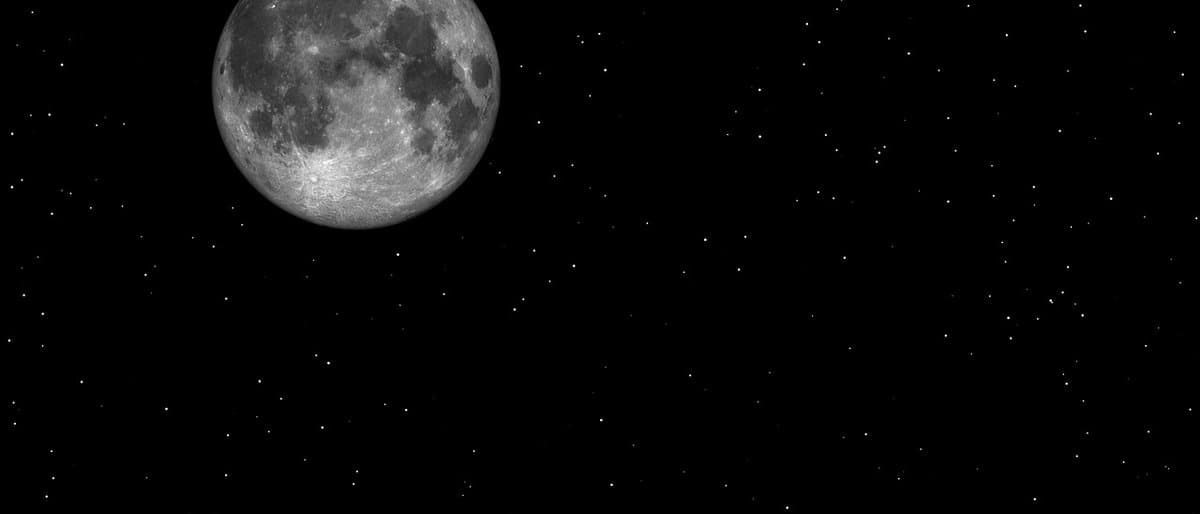
- Full Moon (180° elongation): The Moon is on the opposite side of Earth from the Sun. The lit side faces Earth. We see the fully illuminated side.
- Third Quarter (270° elongation): The Moon is 270 degrees from the Sun (or 90 degrees on the other side). Again we see half of the lit side and half of the dark side, but the opposite half from the First Quarter.
The crescent and gibbous phases occur at intermediate angles:
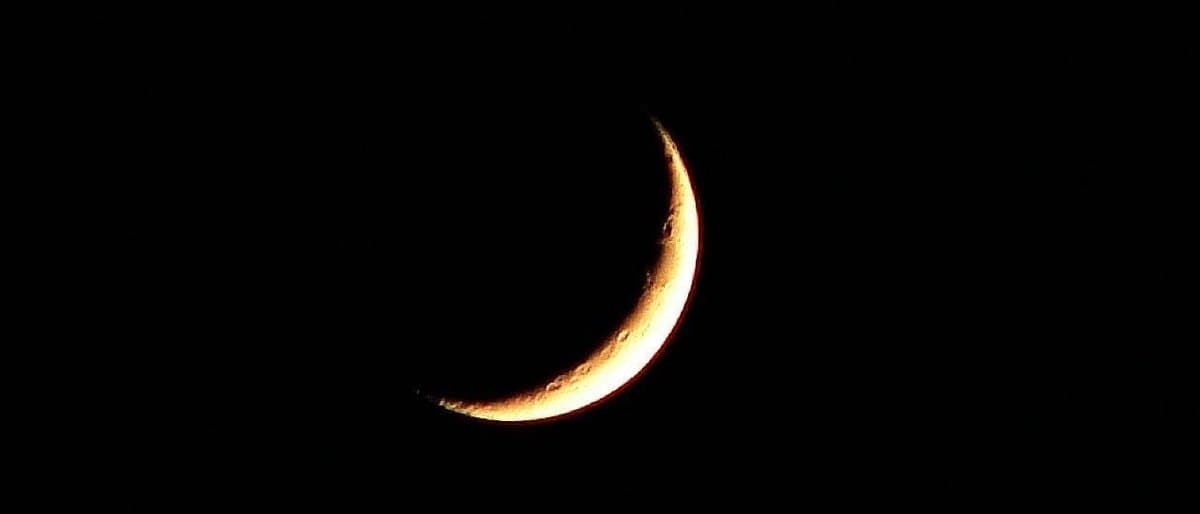
- Waxing Crescent: The Moon is between 0° and 90° from the Sun. Less than half of the visible face is illuminated.
- Waxing Gibbous: The Moon is between 90° and 180° from the Sun. More than half of the visible face is illuminated.
- Waning Gibbous: The Moon is between 180° and 270° from the Sun. More than half is still lit, but decreasing.
- Waning Crescent: The Moon is between 270° and 360° from the Sun. Less than half is illuminated, and shrinking.
The Terminator Line
The terminator, the boundary between the Moon's day and night sides, is the most visually interesting feature during any phase. When the terminator crosses the Moon's face (during crescent, quarter, and gibbous phases), it creates dramatic shadows that reveal the Moon's topography: craters, mountain ranges, valleys, and ridges. When the terminator is at the edge of the Moon (during Full Moon), shadows disappear and the surface looks relatively flat and featureless.
This is why astronomers and amateur observers prefer viewing the Moon at quarter phases rather than Full Moon. The shadows along the terminator create a three-dimensional appearance that brings the lunar landscape to life.
Why It Is Not Earth's Shadow
The number one misconception about moon phases is that they are caused by Earth's shadow falling on the Moon. This is wrong, and it is easy to understand why.
Earth's shadow is always on the side of Earth opposite the Sun. It extends into space in a cone shape behind Earth. The only time the Moon can enter Earth's shadow is during a lunar eclipse, which only occurs during a Full Moon, when the Moon is on the opposite side of Earth from the Sun, right where the shadow is.
If Earth's shadow caused the phases, then:
-
A crescent Moon would be on the opposite side of the sky from the Sun, but in reality, crescent Moons are always close to the Sun in the sky (visible just after sunset or just before sunrise).
-
We would only see crescent phases during Full Moons, but we see crescent Moons at specific times each month, not during Full Moons.
-
The phases would not follow a regular monthly pattern, but they do, with clockwork regularity.
-
We would see Earth's shadow as a curved edge on the Moon, and indeed, during a lunar eclipse, Earth's shadow does appear as a distinct, curved darkening. But during normal phases, the boundary between light and dark on the Moon is a straight line (at quarter phases) or a gentle curve, not the circular arc of Earth's shadow.
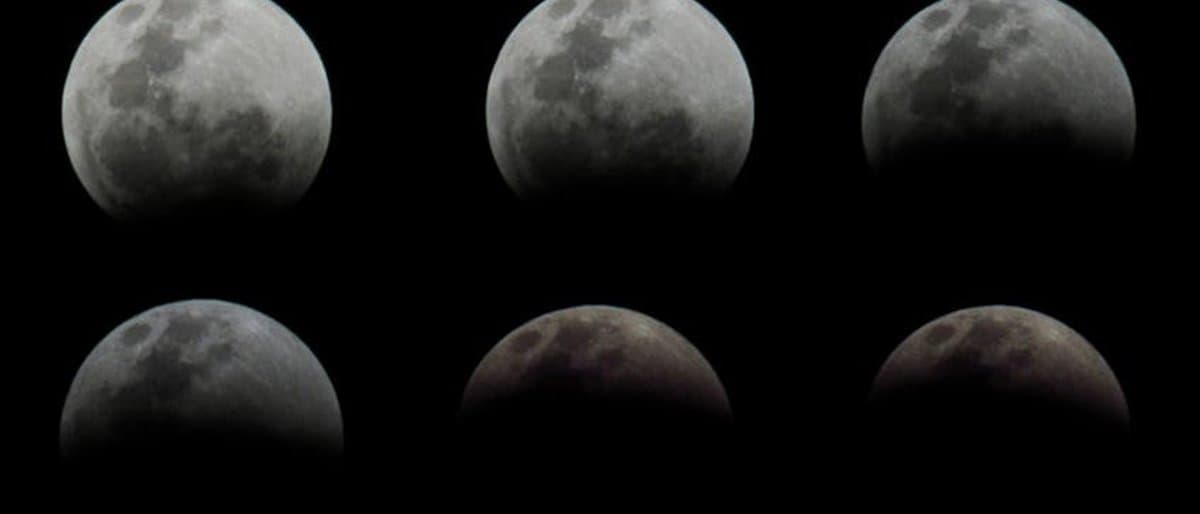
The confusion likely persists because people see a partial lunar eclipse (where Earth's shadow genuinely does fall on part of the Moon) and generalize it to all phases. The visual similarity between a partially eclipsed Moon and a gibbous or crescent Moon reinforces the misconception, even though the underlying causes are completely different.
The Complete Cycle: 29.53 Days
The Moon takes 29.53 days to go from one New Moon to the next. This period is called the synodic month or lunation. Here is why it is longer than the Moon's orbital period of 27.32 days (the sidereal month):
While the Moon is making one orbit around Earth, Earth is also moving along its orbit around the Sun. Earth travels about 27 degrees around its orbit during one lunar orbit. By the time the Moon has completed one full orbit (relative to the stars), the Sun's position in the sky has shifted. The Moon must travel an additional 27 degrees, about 2.2 days' worth of orbital motion, to catch up and realign with the Sun for the next New Moon.
| Period | Duration | Definition |
|---|---|---|
| Sidereal month | 27.32 days | Moon completes one orbit relative to the background stars |
| Synodic month | 29.53 days | Moon completes one full phase cycle (New Moon to New Moon) |
| Anomalistic month | 27.55 days | Moon returns to the same point in its elliptical orbit (perigee to perigee) |
| Draconic month | 27.21 days | Moon returns to the same orbital node (relevant for eclipses) |
The actual length of a synodic month varies between about 29.18 and 29.93 days due to the elliptical shape of the Moon's orbit and gravitational perturbations from the Sun.
How Each Phase Happens: Step by Step
Let us walk through the complete lunar cycle, tracking the changing geometry:
Day 0: New Moon
The Moon is between the Sun and Earth (conjunction). The sunlit side faces away from us. The Moon rises and sets with the Sun, making it invisible to the naked eye.
Days 1–6: Waxing Crescent
The Moon has moved eastward in its orbit, away from the Sun. A thin sliver of the sunlit side becomes visible on the right side (Northern Hemisphere). Each evening, the crescent grows slightly wider, and the Moon sets progressively later after sunset. Earthshine may illuminate the dark side faintly.
Day 7: First Quarter
The Moon has traveled one-quarter of its orbit. It is now 90 degrees from the Sun. Exactly half of the visible face is illuminated, the right half. The Moon rises at noon and sets at midnight.
Days 8–13: Waxing Gibbous
The Moon continues eastward, and more than half of the visible face is now illuminated. The lit portion grows each night, approaching full. The Moon rises in the afternoon and sets after midnight.
Day 14–15: Full Moon
The Moon is on the opposite side of Earth from the Sun (opposition). The entire visible face is illuminated. The Moon rises at sunset and sets at sunrise, remaining visible all night long.
Days 16–21: Waning Gibbous
The Moon begins its journey back toward the Sun. The illumination starts to decrease, with the right side (Northern Hemisphere) beginning to darken. The Moon rises after sunset and sets after sunrise.
Day 22: Third Quarter
The Moon is three-quarters of the way through its cycle and 270 degrees from the Sun. The left half (Northern Hemisphere) is illuminated. The Moon rises at midnight and sets at noon.
Days 23–28: Waning Crescent
Only a thin sliver of light remains on the left side (Northern Hemisphere). The Moon is approaching the Sun in the sky, rising just before dawn. The crescent shrinks each morning.
Day 29.53: New Moon Again
The cycle completes and begins again.
What We See from Different Places on Earth
The Moon's phase is the same everywhere on Earth at any given moment. If it is a Full Moon in New York, it is also a Full Moon in Tokyo, Sydney, and Cape Town. However, the Moon's orientation in the sky depends on your latitude.
Northern Hemisphere
The Moon is lit from the right during waxing phases and from the left during waning phases. The crescent Moon looks like a "C" opening to the left during waning and a "D" shape during waxing.
Southern Hemisphere
The orientation is reversed. The Moon is lit from the left during waxing and from the right during waning. A waxing crescent looks like a "C" shape, and a waning crescent looks like a "D."
Near the Equator
The Moon appears rotated roughly 90 degrees compared to mid-latitude views. Crescent Moons look more like a boat or a bowl, lit on the bottom during waxing and on the top during waning.
Extreme Latitudes (Near the Poles)
At high latitudes, the Moon's path across the sky is more horizontal, and its orientation changes throughout the night as it moves. Near the poles, the Moon can be visible for extended periods during certain phases, appearing to circle the horizon rather than rising and setting.
The phase is always the same, but the way the lit portion is oriented relative to the horizon changes with your location on Earth.
Why the Moon Does Not Produce Its Own Light
The Moon is a cold, solid body with no internal source of illumination. Unlike the Sun, which generates light through nuclear fusion in its core, the Moon simply reflects sunlight.
The Moon's surface is composed primarily of dark gray basaltic rock (in the maria) and lighter gray anorthosite (in the highlands). Even the brightest parts of the Moon are relatively dark. The overall albedo of 0.12 means the Moon reflects only about 12% of incoming sunlight. For comparison:
| Surface | Albedo (Reflectivity) |
|---|---|
| Fresh snow | 0.80–0.90 |
| White paint | 0.70–0.80 |
| Desert sand | 0.30–0.40 |
| The Moon | 0.12 |
| Fresh asphalt | 0.04–0.05 |
The Moon appears so bright in the night sky because it is surrounded by the darkness of space, and our eyes adapt to low light levels, making the Moon seem brilliantly white by contrast. In reality, the Moon's surface is about the same shade as worn asphalt.
What Would Happen If the Moon Did Not Orbit
If the Moon stopped orbiting Earth, if it were somehow frozen in place relative to the Sun-Earth line, there would be no changing phases. The Moon's appearance would be fixed.
If the Moon were locked at the opposition position (opposite the Sun from Earth), it would always be a Full Moon, visible every night all night. If it were locked at the conjunction position (between Earth and the Sun), it would always be a New Moon, invisible forever.
If the Moon were locked at a quarter position, we would always see a half-illuminated Moon. There would be no monthly progression, no cycle, no gradual waxing and waning. The term "month" itself would not exist in its current form, as the word derives from "Moon" and originally referred to the period of the lunar cycle.
The cultural, biological, and practical impacts would be enormous. Calendars, religious observances, tidal patterns, and nocturnal animal behavior would all be very different from what they are today. The rhythmic cycle of the Moon has shaped life on Earth for billions of years, and removing it would leave a hole nothing else fills.
Frequently Asked Questions
8 questions answered
Q: Does the Moon actually change shape?
Q: Why does the Moon sometimes look like a thin crescent and other times like a full circle?
Q: Can both hemispheres see the same Moon phase at the same time?
Q: Why doesn't Earth's shadow cause the phases?
Q: Does the Moon change color during different phases?
Q: How long does each phase last?
Q: Why do we always see the same face of the Moon?
Q: Is the Moon the only body that shows phases?
Put this into action
Stop guessing. Use our professional tools to schedule, convert, and manage time zones perfectly, 100% free.
View Moon PhasesOfficial Sources & References
- NASA Science: official data and scientific overviews for astronomical events and missions.