April 2026 Moon Phases: Complete Calendar, Pink Moon, Lyrids & Best Stargazing Nights
Quick Answer
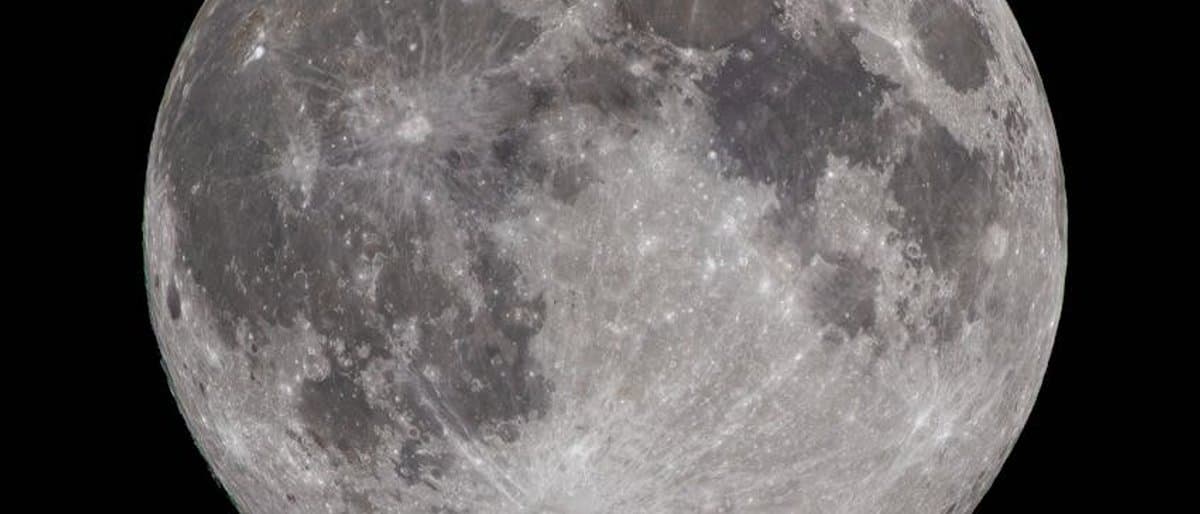
April 2026 features a full Pink Moon on April 2 (peaking at 02:12 UTC, the evening of April 1 in the Americas) and a new moon on April 17, creating two distinct sky-watching windows, bright moonlit nights early in the month and dark, star-filled skies in the middle of the month. The Lyrid meteor shower peaks around April 22–23, with decent moon conditions as the roughly 35–40% waxing crescent sets shortly after midnight, leaving the pre-dawn hours dark for meteor viewing.
Quick Answer
In April 2026, the full Pink Moon falls on April 2 at 02:12 UTC, and the new moon occurs on April 17 at 11:52 UTC. The third quarter moon is on April 10 and the first quarter on April 24. The Lyrid meteor shower peaks on the night of April 22–23 with favorable viewing conditions thanks to a waxing crescent moon that sets shortly after midnight, leaving the pre-dawn hours dark. The best stargazing nights fall in the week surrounding the new moon on April 17, roughly April 14 to 20.
April 2026 Moon Phase Calendar
The following table shows the moon phase for each day of April 2026, along with approximate illumination percentages. Use this as your daily guide for planning observations, photography, and outdoor activities.
| Date | Moon Phase | Illumination | Moonrise (Approx.) | Moonset (Approx.) |
|---|---|---|---|---|
| Apr 1 | Full (Pink Moon) | 100% | ~6:05 PM | ~5:15 AM |
| Apr 2 | Full (Pink Moon) | 100% | ~7:10 PM | ~5:35 AM |
| Apr 3 | Waning Gibbous | 98% | ~8:15 PM | ~6:00 AM |
| Apr 4 | Waning Gibbous | 94% | ~9:15 PM | ~6:25 AM |
| Apr 5 | Waning Gibbous | 89% | ~10:20 PM | ~6:55 AM |
| Apr 6 | Waning Gibbous | 82% | ~11:20 PM | ~7:30 AM |
| Apr 7 | Waning Gibbous | 75% | ~8:10 AM | |
| Apr 8 | Last Quarter | 66% | ~12:15 AM | ~9:00 AM |
| Apr 9 | Waning Crescent | 57% | ~1:05 AM | ~9:55 AM |
| Apr 10 | Waning Crescent | 47% | ~1:45 AM | ~11:00 AM |
| Apr 11 | Waning Crescent | 37% | ~2:25 AM | ~12:00 PM |
| Apr 12 | Waning Crescent | 28% | ~2:55 AM | ~1:05 PM |
| Apr 13 | Waning Crescent | 19% | ~3:20 AM | ~2:15 PM |
| Apr 14 | Waning Crescent | 11% | ~3:45 AM | ~3:25 PM |
| Apr 15 | Waning Crescent | 5% | ~4:05 AM | ~4:35 PM |
| Apr 16 | Waning Crescent | 1% | ~4:30 AM | ~5:45 PM |
| Apr 17 | New Moon | 0% | ~5:00 AM | ~7:05 PM |
| Apr 18 | Waxing Crescent | 2% | ~5:30 AM | ~8:25 PM |
| Apr 19 | Waxing Crescent | 6% | ~6:05 AM | ~9:45 PM |
| Apr 20 | Waxing Crescent | 13% | ~6:55 AM | ~11:00 PM |
| Apr 21 | Waxing Crescent | 22% | ~7:50 AM | |
| Apr 22 | Waxing Crescent | 32% | ~9:00 AM | ~12:05 AM |
| Apr 23 | Waxing Crescent | 43% | ~10:15 AM | ~12:55 AM |
| Apr 24 | First Quarter | 54% | ~11:25 AM | ~1:35 AM |
| Apr 25 | Waxing Gibbous | 65% | ~12:40 PM | ~2:10 AM |
| Apr 26 | Waxing Gibbous | 75% | ~1:45 PM | ~2:35 AM |
| Apr 27 | Waxing Gibbous | 83% | ~2:50 PM | ~3:00 AM |
| Apr 28 | Waxing Gibbous | 90% | ~3:55 PM | ~3:20 AM |
| Apr 29 | Waxing Gibbous | 95% | ~5:00 PM | ~3:40 AM |
| Apr 30 | Waxing Gibbous | 98% | ~6:00 PM | ~4:00 AM |
Moonrise and moonset times are approximate for 40°N latitude. Times vary significantly by location. Consult a local almanac for precise times.
Key Moon Phase Dates for April 2026
| Phase | Date | Time (UTC) | What to Expect |
|---|---|---|---|
| Full Moon (Pink Moon) | April 2 | 02:12 | Bright all-night illumination (evening of April 1 in the Americas) |
| Third Quarter | April 10 | 04:52 | Half-lit Moon rises around midnight, morning sky object |
| New Moon | April 17 | 11:52 | Darkest skies, ideal for deep-sky observation |
| First Quarter | April 24 | 02:32 | Half-lit Moon visible in the evening sky |
Full Pink Moon: What the Name Means
The April full moon is universally known as the Pink Moon, but this name has nothing to do with the Moon's color. The name comes from the pink wildflower Phlox subulata, commonly called moss phlox or creeping phlox, which blooms across eastern North America in early spring. This low-growing plant carpets meadows and hillsides with pink blossoms, and Native American tribes, particularly the Algonquin, associated its appearance with the April full moon.
Other Traditional Names for the April Full Moon
Different cultures have their own names for April's full moon, many tied to seasonal indicators:
| Name | Origin | Meaning |
|---|---|---|
| Pink Moon | Algonquin/Colonial American | Moss phlox blooming |
| Sprouting Grass Moon | Various tribes | New grass emerging |
| Egg Moon | Colonial American | Fish spawning, bird egg-laying season |
| Fish Moon | Coastal tribes | Shad running upstream to spawn |
| Breaking Ice Moon | Algonquin | Ice thawing on northern lakes |
| Budding Moon | Lakota | Tree buds opening |
| Awakening Moon | Cree | Animals emerging from hibernation |
Will the Moon Actually Look Pink?
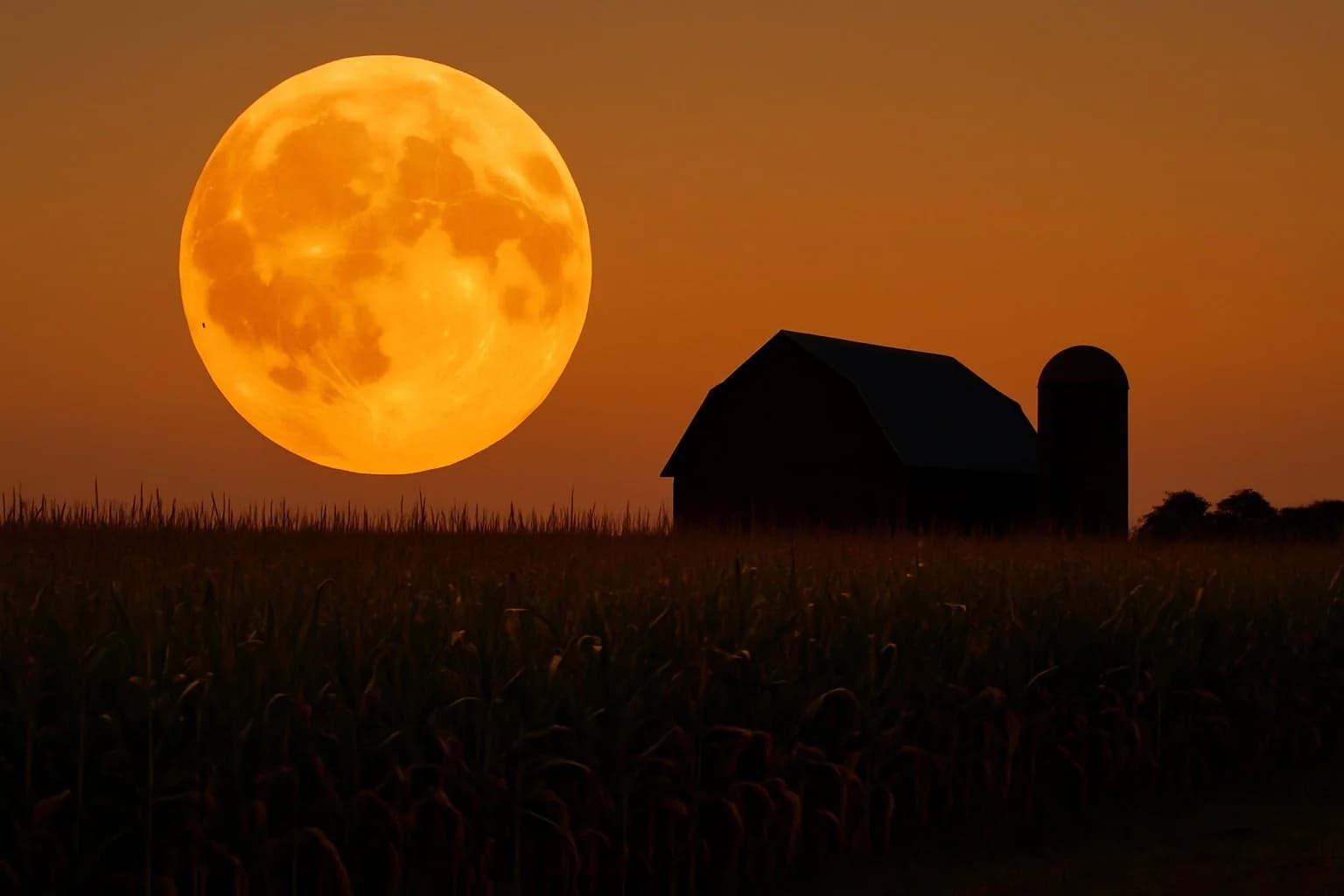
Not really. The Moon itself does not change color based on its phase name. However, atmospheric conditions can give any moon, including the Pink Moon, a warm hue. When the Moon is low on the horizon, its light passes through a thicker layer of atmosphere, scattering shorter blue wavelengths and allowing longer red and orange wavelengths to dominate. This effect, called atmospheric refraction, can make the Moon appear golden, orange, or even pinkish at moonrise and moonset. The effect is the same for every full moon and is not specific to April.
Lyrid Meteor Shower and Moon Conditions
The Lyrid meteor shower is one of the oldest documented meteor showers, with records dating back over 2,700 years to ancient Chinese astronomers in 687 BCE. It runs annually from approximately April 16 to April 25, with peak activity around April 22–23.
2026 Lyrid Forecast
In 2026, the Lyrids get workable moon conditions. On the night of April 22–23, the Moon is a waxing crescent at roughly 35–40% illumination, it sets shortly after midnight local time, so the pre-dawn hours when meteor activity is highest will be moonless and dark. The evening hours will carry some moonlight, but conditions improve sharply after moonset.
| Parameter | Detail |
|---|---|
| Active period | April 16–25, 2026 |
| Peak night | April 22–23 |
| Zenithal Hourly Rate (ZHR) | ~18 meteors/hour (under ideal conditions) |
| Moon phase at peak | Waxing Crescent, ~35–40% |
| Moonset | shortly after midnight local time |
| Best viewing window | roughly 1:00 AM – dawn, after moonset |
| Radiant | Constellation Lyra, near the star Vega |
Tips for Watching the Lyrids
-
Get away from city lights. Light pollution is the single biggest enemy of meteor watching. Drive at least 20–30 miles from major urban areas.
-
Look toward the radiant, but not directly at it. Meteors near the radiant have shorter trails. Looking 30–40 degrees away from Lyra gives you the best chance of seeing bright, long-streaking meteors.
-
Allow 20–30 minutes for dark adaptation. Avoid looking at your phone or any white light. Red-filtered flashlights preserve night vision.
-
Lie flat and look up. A reclining lawn chair or blanket on the ground is ideal. The more sky you can see, the more meteors you'll catch.
-
Be patient. The Lyrids produce roughly one meteor every 3–4 minutes under dark skies. They occasionally surprise with bright fireballs.
Best Stargazing Nights in April 2026
The darkest and best nights for deep-sky observation fall around the new moon. In April 2026, the prime stargazing window runs from approximately April 14 through April 20, centered on the April 17 new moon.
Recommended Deep-Sky Targets for April Nights
April evenings feature some of the most celebrated objects in the northern sky as the winter constellations set and spring constellations rise:
| Target | Type | Constellation | Magnitude | Notes |
|---|---|---|---|---|
| M13 | Globular cluster | Hercules | 5.8 | Best globular in northern sky |
| M51 (Whirlpool Galaxy) | Spiral galaxy | Canes Venatici | 8.4 | Visible in 6" telescopes |
| M81 & M82 | Galaxy pair | Ursa Major | 6.9 / 8.4 | Interacting galaxies |
| M104 (Sombrero Galaxy) | Spiral galaxy | Virgo | 8.0 | Distinctive edge-on shape |
| M3 | Globular cluster | Canes Venatici | 6.2 | Excellent binocular target |
| Leo Triplet (M65, M66, NGC 3628) | Galaxy group | Leo | 9–10 | Rewarding in 8" + telescopes |
Stargazing Quality by Night
| Date Range | Sky Quality | Recommendation |
|---|---|---|
| Apr 1–2 | Poor (full Pink Moon, all-night brightness) | Observe the Moon itself instead |
| Apr 3–6 | Fair to good (waning gibbous, rising in evening) | Early evening is darkest; Moon rises later each night |
| Apr 7–13 | Very good (waning half, rises after midnight) | Moonless evenings, excellent for deep-sky |
| Apr 14–20 | Excellent (new moon zone, centered Apr 17) | Best deep-sky observing of the month |
| Apr 21–23 | Good (waxing crescent sets after midnight) | Lyrid meteors after moonset |
| Apr 24–27 | Fair (first quarter to gibbous, evening brightness) | Deep-sky after the Moon sets, roughly 1–3 AM |
| Apr 28–30 | Poor (waxing gibbous, bright all evening) | Moon and planet viewing instead |
Moonrise and Moonset Times by City
Moonrise and moonset times vary significantly by location. The table below provides approximate times for the full Pink Moon on the night of April 1–2, 2026 (full moon April 2 at 02:12 UTC, so the moonrise happens on the evening of April 1 in most of the world).
| City | Moonrise | Moonset | Time Zone |
|---|---|---|---|
| New York, USA | 7:14 PM EDT (Apr 1) | 6:35 AM EDT (Apr 2) | UTC−4 |
| Los Angeles, USA | 7:13 PM PDT (Apr 1) | 6:43 AM PDT (Apr 2) | UTC−7 |
| Chicago, USA | 7:12 PM CDT (Apr 1) | 6:29 AM CDT (Apr 2) | UTC−5 |
| London, UK | 7:15 PM BST (Apr 1) | 6:22 AM BST (Apr 2) | UTC+1 |
| Paris, France | 8:01 PM CEST (Apr 1) | 7:15 AM CEST (Apr 2) | UTC+2 |
| Tokyo, Japan | 5:19 PM JST (Apr 1) | 5:12 AM JST (Apr 2) | UTC+9 |
| Sydney, Australia | 5:14 PM AEST (Apr 1) | 5:59 AM AEST (Apr 2) | UTC+10 |
| Toronto, Canada | 7:39 PM EDT (Apr 1) | 6:53 AM EDT (Apr 2) | UTC−4 |
| São Paulo, Brazil | 5:45 PM BRT (Apr 1) | 6:34 AM BRT (Apr 2) | UTC−3 |
| Dubai, UAE | 6:06 PM GST (Apr 1) | 6:03 AM GST (Apr 2) | UTC+4 |
| Mumbai, India | 6:21 PM IST (Apr 1) | 6:24 AM IST (Apr 2) | UTC+5:30 |
| Berlin, Germany | 7:19 PM CEST (Apr 1) | 6:25 AM CEST (Apr 2) | UTC+2 |
Times are approximate and may vary by several minutes depending on exact location within each city. Daylight saving time is in effect for most Northern Hemisphere locations in April.
Gardening by the Moon in April
Moon-phase gardening is an ancient practice that remains popular among home gardeners and organic farmers. While scientific evidence is mixed, the underlying logic draws on observable phenomena, notably, the Moon's gravitational influence on soil moisture and the correlation between lunar cycles and plant growth rhythms.
The Basic Principles
- Plant above-ground crops during the waxing Moon (new moon to full moon, April 13–27). The theory holds that increasing moonlight stimulates leaf growth and that rising moisture levels encourage seed germination.
- Plant below-ground crops during the waning Moon (full moon to new moon, April 1–13 and April 14–27). The decreasing light is said to direct energy downward into roots.
- Avoid planting on the exact day of the full moon or new moon, when gravitational forces are in transition.
April 2026 Gardening Calendar
| Date Range | Moon Phase | Recommended Activity |
|---|---|---|
| Apr 1–3 | Waning Gibbous | Harvest, prune, preserve |
| Apr 4–9 | Waning Crescent → Third Quarter | Plant root crops (carrots, potatoes, beets, onions) |
| Apr 10–12 | Waning Crescent (thin) | Rest period; prepare beds, compost |
| Apr 13 | Full Moon | Avoid planting; harvest instead |
| Apr 14–19 | Waning Gibbous | Prune, control pests, fertilize |
| Apr 20–26 | Waning Crescent | Plant root crops, transplant perennials |
| Apr 27 | New Moon | Avoid planting; prepare soil |
| Apr 28–30 | Waxing Crescent | Sow above-ground crops (lettuce, spinach, peas, beans) |
What to Plant in April by Moon Phase
Waxing Moon (late April 28–30): Leafy greens (lettuce, spinach, kale, chard), brassicas (cabbage, broccoli, cauliflower), annual flowers (marigolds, zinnias, cosmos), and vine crops (peas, pole beans).
Waning Moon (early and mid-April): Root vegetables (carrots, beets, radishes, turnips, potatoes), bulb flowers (tulips, daffodils, though it's late for bulbs), and perennials you want to establish strong root systems.
Explore More
- 2026 Supermoon Dates, When the Moon is closest to Earth.
- August 27-28 Partial Lunar Eclipse, Upcoming lunar eclipse.
- Moon Phases Explained, Why the Moon changes shape.
- Full Moon Names Explained, Traditional names for each month's full Moon.
Frequently Asked Questions
10 questions answered
What phase is the Moon on April 1, 2026?
When is the new moon in April 2026?
Why is the April full moon called the Pink Moon?
Can I see the Lyrid meteor shower in April 2026?
When are the darkest nights in April 2026?
What time does the Pink Moon rise in April 2026?
Is the April 2026 full moon a supermoon?
How does the April moon phase affect ocean tides?
What constellations are visible in April 2026?
Can I photograph the Pink Moon with a smartphone?
Put this into action
Stop guessing. Use our professional tools to schedule, convert, and manage time zones perfectly, 100% free.
Track Sky EventsOfficial Sources & References
- NASA Science: official data and scientific overviews for astronomical events and missions.