Moon Phases 2026: Complete Calendar, Full Moon Names, Eclipses & Supermoons

Quick Answer
The 2026 moon phase cycle includes 13 full moons, 12 new moons, 4 eclipses (2 solar and 2 lunar), and two supermoons. The year's full moons follow the traditional naming system from Wolf Moon in January through Cold Moon in December, with the March 3 full moon coinciding with a total lunar eclipse visible across the Americas, Europe, and Africa.
Quick Answer
In 2026, you can expect 13 full moons and 12 new moons, beginning with a full Wolf Moon on January 3 and ending with a full Cold Moon on December 24 (UTC). There are four eclipses: a total lunar eclipse on March 3, an annular solar eclipse on February 17, a total solar eclipse on August 12, and a partial lunar eclipse on August 28. Two full moons qualify as supermoons, the Beaver Moon on November 24 and the Cold Moon on December 24. May contains two full moons (May 1 and May 31), which makes the May 31 full moon a monthly Blue Moon, the only one of 2026.
Complete 2026 Moon Phase Calendar
The table below shows every major moon phase for all 12 months of 2026. All times are listed in Coordinated Universal Time (UTC). Depending on your time zone, the date may shift by one day.
| Month | New Moon | First Quarter | Full Moon | Third Quarter |
|---|---|---|---|---|
| January | Jan 18, 19:52 | Jan 26, 04:47 | Jan 3, 10:03 | Jan 10, 15:48 |
| February | Feb 17, 12:01 | Feb 24, 12:28 | Feb 1, 22:09 | Feb 9, 12:43 |
| March | Mar 19, 01:23 | Mar 25, 19:18 | Mar 3, 11:38 | Mar 11, 09:39 |
| April | Apr 17, 11:52 | Apr 24, 02:32 | Apr 2, 02:12 | Apr 10, 04:52 |
| May | May 16, 20:01 | May 23, 11:11 | May 1, 17:23 | May 9, 21:10 |
| June | Jun 15, 02:54 | Jun 21, 21:55 | May 31, 08:45 | Jun 8, 10:01 |
| July | Jul 14, 09:44 | Jul 21, 11:06 | Jun 29, 23:57 | Jul 7, 19:29 |
| August | Aug 12, 17:37 | Aug 20, 02:46 | Jul 29, 14:36 | Aug 6, 02:21 |
| September | Sep 11, 03:27 | Sep 18, 20:44 | Aug 28, 04:19 | Sep 4, 07:51 |
| October | Oct 10, 15:50 | Oct 18, 16:13 | Sep 26, 16:49 | Oct 3, 13:25 |
| November | Nov 9, 07:02 | Nov 17, 11:48 | Oct 26, 04:12 | Nov 1, 20:28 |
| December | Dec 9, 00:52 | Dec 17, 05:43 | Nov 24, 14:54 | Dec 1, 06:09 |
| , | Dec 24, 01:28 | Dec 30, 18:59 |
Note: Times are approximate and may vary by a minute or two depending on the source. Always verify with a reputable astronomical almanac for precise timing.
What Are Moon Phases?
moon phases describe the changing appearance of the Moon as illuminated by the Sun, seen from Earth. The Moon does not produce its own light, it reflects sunlight. As the Moon orbits Earth over approximately 29.5 days (one synodic month), the angle between the Sun, Earth, and Moon shifts, revealing different portions of the Moon's sunlit half to observers on Earth.
The Eight Principal Moon Phases
The lunar cycle progresses through eight recognized phases, each lasting roughly 3.7 days:
-
New Moon: The Moon sits between Earth and the Sun, with its illuminated side facing away from us. The Moon is essentially invisible from Earth.
-
Waxing Crescent: A sliver of light appears on the right side (in the Northern Hemisphere), growing each evening.
-
First Quarter: Exactly half the Moon's face appears illuminated, the right half. Often called a "half moon" colloquially.
-
Waxing Gibbous: More than half the Moon is lit, and the illuminated area continues to grow toward full.
-
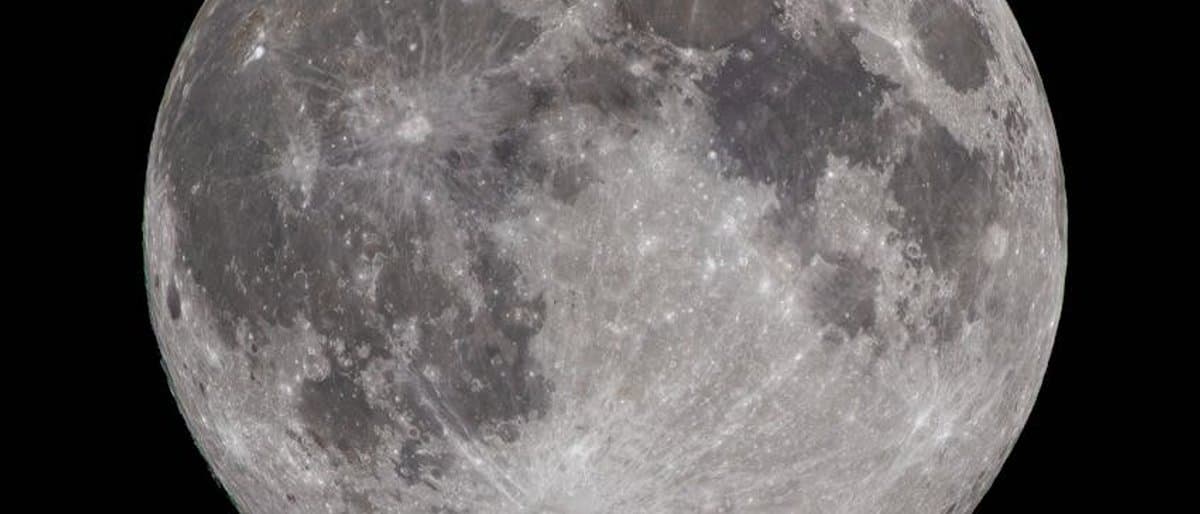
Full Moon: The Earth sits between the Sun and Moon, and the entire near side is illuminated.
-
Waning Gibbous: The illuminated portion begins to shrink, starting from the right edge.
-
Third Quarter: The left half of the Moon is illuminated (Northern Hemisphere view), also called "last quarter."
-
Waning Crescent: Only a thin sliver remains lit on the left side before the cycle restarts with a new moon.
Why the Cycle Is 29.5 Days
The synodic month, the time from one new moon to the next, is about 29.53 days. This is longer than the Moon's orbital period around Earth (27.32 days, the sidereal month) because Earth itself is moving along its orbit around the Sun. By the time the Moon completes one orbit, Earth has advanced roughly 27 degrees along its path, and the Moon must travel that extra angular distance to realign with the Sun.
New Moons 2026
New moons mark the beginning of each lunar cycle. They occur when the Moon passes between Earth and the Sun, making the Moon invisible to the naked eye. New moons are the best time for deep-sky observing because the absence of moonlight means darker skies.
| No. | New Moon Date | Time (UTC) | Constellation |
|---|---|---|---|
| 1 | January 18 | 19:52 | Capricornus |
| 2 | February 17 | 12:01 | Aquarius |
| 3 | March 19 | 01:23 | Pisces |
| 4 | April 17 | 11:52 | Aries |
| 5 | May 16 | 20:01 | Taurus |
| 6 | June 15 | 02:54 | Gemini |
| 7 | July 14 | 09:44 | Cancer |
| 8 | August 12 | 17:37 | Leo |
| 9 | September 11 | 03:27 | Virgo |
| 10 | October 10 | 15:50 | Libra |
| 11 | November 9 | 07:02 | Scorpius |
| 12 | December 9 | 00:52 | Sagittarius |
What Makes New Moons Special for Astronomers
During a new moon, the Moon rises and sets with the Sun, meaning it is absent from the night sky entirely. This creates the darkest possible natural conditions for observing faint celestial objects like galaxies, nebulae, and star clusters. Many amateur astronomers plan their most important observing sessions around the new moon window, typically the three to four days on either side of the exact new moon date.
Full Moons 2026
Full moons have captivated human imagination for millennia. Each full moon of the year carries a traditional name rooted in Native American, Colonial American, and European folklore. These names historically tracked seasonal changes and guided agricultural and hunting activities.
| No. | Full Moon Date | Time (UTC) | Traditional Name |
|---|---|---|---|
| 1 | January 3 | 10:03 | Wolf Moon |
| 2 | February 1 | 22:09 | Snow Moon |
| 3 | March 3 | 11:38 | Worm Moon (total lunar eclipse) |
| 4 | April 2 | 02:12 | Pink Moon |
| 5 | May 1 | 17:23 | Flower Moon |
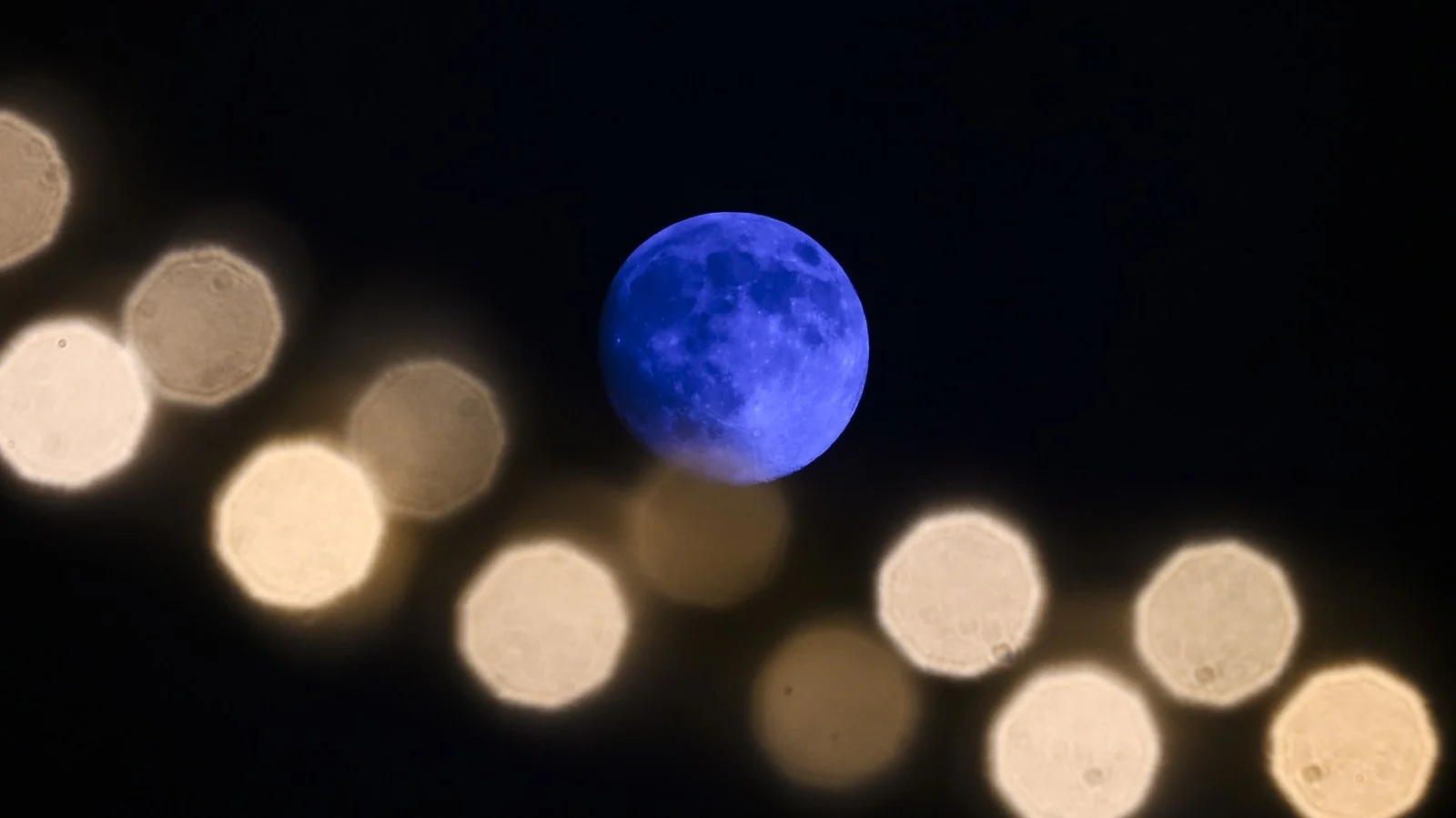
| 6 | May 31 | 08:45 | Blue Moon (second May full moon) |
| 7 | June 29 | 23:57 | Strawberry Moon |
| 8 | July 29 | 14:36 | Buck Moon |
| 9 | August 28 | 04:19 | Sturgeon Moon (partial lunar eclipse) |
| 10 | September 26 | 16:49 | Harvest Moon |
| 11 | October 26 | 04:12 | Hunter's Moon |
| 12 | November 24 | 14:54 | Beaver Moon (supermoon) |
| 13 | December 24 | 01:28 | Cold Moon (supermoon) |
Full Moon Names Explained
- Wolf Moon (January): Named for the howling of hungry wolves during the depths of winter, a name with roots in both Native American and medieval European traditions.
- Snow Moon (February): Reflects the typically heavy snowfall of February in northern latitudes. Some tribes called it the Hunger Moon due to scarce hunting.
- Worm Moon (March): Marks the appearance of earthworm casts as the ground thaws. Also called the Sap Moon or Crow Moon.
- Pink Moon (April): Not named for the color of the Moon itself, but for the pink wildflower Phlox subulata (moss phlox) that blooms in early spring across eastern North America.
- Flower Moon (May): Celebrates the abundant blooming of wildflowers. The Cree called it the Frog Moon; others knew it as the Planting Moon.
- Strawberry Moon (June): Signals the short strawberry harvesting season. In Europe, it was sometimes called the Rose Moon or Hot Moon.
- Buck Moon (July): Named for the time when male deer (bucks) begin to grow new antlers. Also known as the Thunder Moon for summer storms.
- Sturgeon Moon (August): References the sturgeon fish of the Great Lakes, which were most readily caught during this month. Also called the Green Corn Moon.
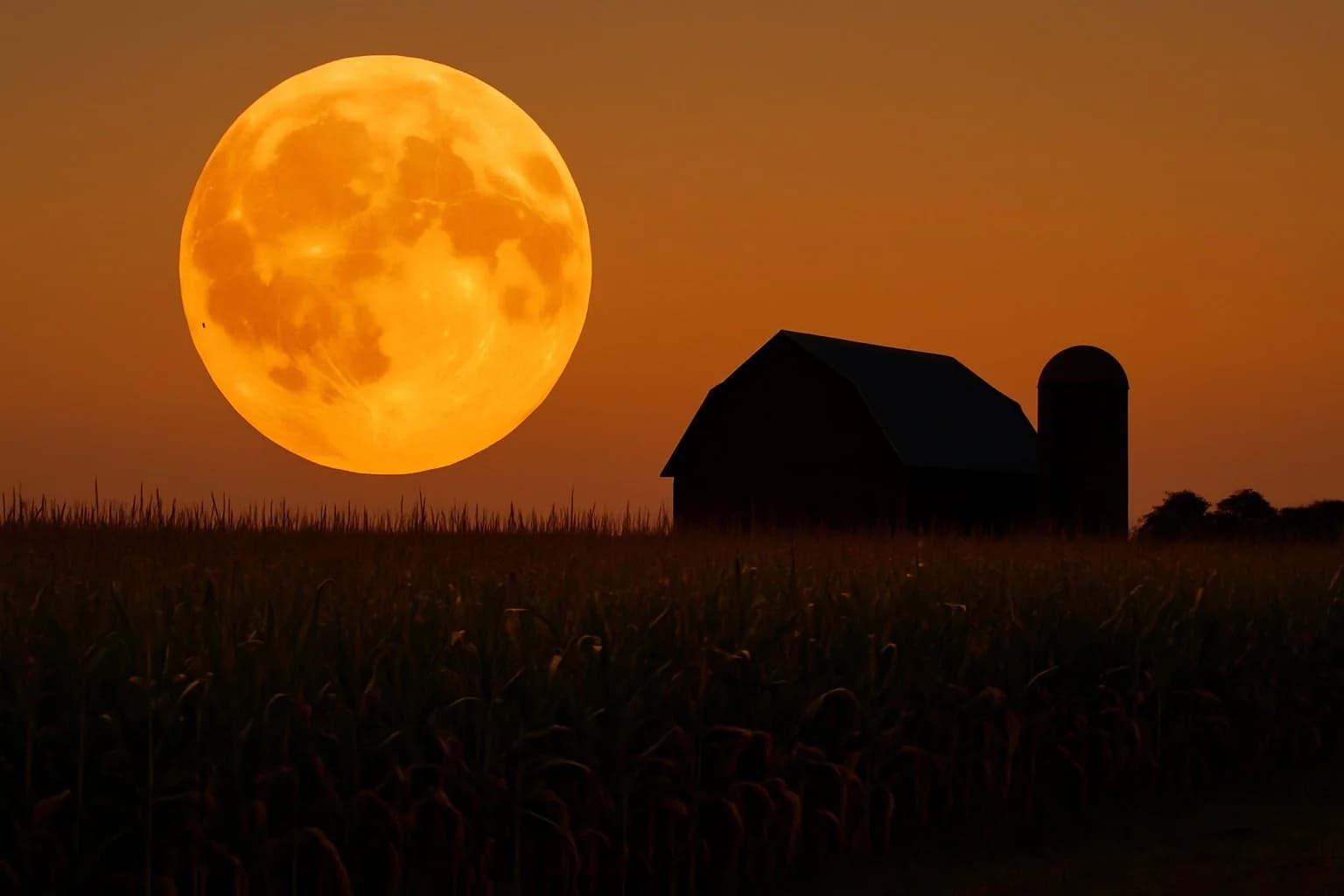
- Corn Moon (September): Corresponds with the harvest of corn and other staple crops. When this full moon falls closest to the autumn equinox, it takes the Harvest Moon name instead, which is the case in 2026, with the September 26 full moon.
- Hunter's Moon (October): The full moon that follows the Harvest Moon. It rises close to sunset for several consecutive nights, providing extended light for hunters preparing for winter. In years when the October full moon is the one closest to the autumnal equinox, it takes the Harvest Moon name and September reverts to Corn Moon.
- Beaver Moon (November): Marks the time when beavers retreat to their lodges for winter. Also historically associated with setting beaver traps before freeze-up.
- Cold Moon (December): Reflects the bitter cold of the approaching winter solstice. Also called the Long Night Moon for the extended hours of darkness around the winter solstice.
Eclipses in 2026
2026 featured four eclipses: two solar and two lunar. Eclipses occur in pairs or trios separated by roughly six months, during eclipse seasons when the Sun is near a lunar node (the point where the Moon's orbit crosses the ecliptic plane). The February and August solar eclipses and the March 3 total lunar eclipse have now passed; the next solar eclipses are the February 6, 2027 annular and the August 2, 2027 total.
Solar Eclipses
| Date | Type | Visibility | Maximum Duration |
|---|---|---|---|
| February 17, 2026 | Annular Solar Eclipse | South Atlantic, Antarctica, South Africa (partial) | ~2 min 20 sec |
| August 12, 2026 | Total Solar Eclipse | Arctic, Greenland, Iceland, Spain (partial across Europe) | ~2 min 18 sec |
The February 17 annular solar eclipse occurred when the Moon was near apogee (farthest from Earth) and appeared slightly too small to fully cover the Sun's disk, creating the "ring of fire" effect. The path of annularity swept across the South Atlantic Ocean and Antarctica, with partial phases visible from southern South America and southern Africa.
The August 12 total solar eclipse was the sky event of the year, with totality crossing the Arctic, Greenland, Iceland, and northern Spain, Reykjavik and Valencia sat inside the path. A deep partial eclipse was visible across most of Europe, northern Africa, and western Russia. Our dedicated August 2026 total eclipse guide and the February 6, 2027 annular guide cover what happened and what's next.
Lunar Eclipses
| Date | Type | Visibility | Duration of Totality |
|---|---|---|---|
| March 3, 2026 | Total Lunar Eclipse | Americas, Europe, Africa | ~58 min |
| August 28, 2026 | Partial Lunar Eclipse | Americas, western Europe, West Africa | 3 hr 19 min (umbral phase) |
The March 3 total lunar eclipse will be a spectacular event for observers across the Americas, Europe, and Africa. During totality, the Moon takes on a deep copper-red hue, often called a "Blood Moon", as sunlight refracted through Earth's atmosphere illuminates the lunar disk. The total phase lasts nearly an hour, giving ample time for viewing and photography.
The August 28 partial lunar eclipse (August 28 UTC; the night of August 27–28 in the Americas) saw 93% of the Moon's diameter pass through Earth's umbral shadow, the deepest partial since 2021. The shadow's curved edge visibly darkened most of the lunar disk for viewers across the Americas, with western Europe and West Africa catching the phases before dawn, the same curved-shadow phenomenon that helped ancient Greek astronomers deduce Earth's spherical shape.
Supermoons in 2026
A supermoon occurs when a full moon coincides with the Moon's closest approach to Earth (perigee) or near it. The most widely accepted definition, from astrologer Richard Nolle, classifies a supermoon as any full or new moon within 90% of the Moon's closest perigee distance. Under a more practical astronomical definition, supermoons are full moons that occur when the Moon is within 360,000 kilometers of Earth.
In 2026, two full moons qualify as supermoons, both late in the year near perigee:
| Supermoon Date | Full Moon Name | Approximate Distance (km) |
|---|---|---|
| November 24 | Beaver Moon | ~358,300 |
| December 24 | Cold Moon | ~356,700 |
The December 24 Cold Moon is the closer of the two, at approximately 356,700 km, making it the largest and brightest full moon of 2026. Both fall within the NASA-style 362,000 km threshold; note that definitions vary, and sources using stricter cutoffs may count only one.
Blue Moons in 2026
A blue moon is an additional full moon that appears in a calendar month or season. There are two definitions:
- Monthly Blue Moon: A second full moon within a single calendar month (the more common modern usage).
- Seasonal Blue Moon: The third full moon in an astronomical season that contains four full moons (the older, traditional definition).
In 2026, May contains two full moons (May 1 and May 31), which makes the May 31 full moon at 08:45 UTC a monthly Blue Moon, the only one of the year. No astronomical season of 2026 contains four full moons, so there is no seasonal Blue Moon this year. The next Blue Moon after May 31, 2026 is the seasonal one on May 20, 2027, and the next monthly Blue Moon arrives on December 31, 2028. Blue moons are not especially rare despite the popular expression, they occur roughly once every 2.5 years on average.
How Moon Phases Affect Tides
The Moon is the dominant force behind Earth's tides. Its gravitational pull creates a bulge in the ocean on the side of Earth facing the Moon, and a corresponding bulge on the opposite side due to inertia. As Earth rotates through these bulges, coastal areas experience two high tides and two low tides roughly every 24 hours and 50 minutes.
Spring Tides and Neap Tides
The phase of the Moon directly affects tidal range, the difference between high and low tide:
- Spring tides occur during full moons and new moons, when the Sun, Moon, and Earth are aligned. The gravitational forces of the Sun and Moon combine, producing the highest high tides and the lowest low tides. Despite the name, this has nothing to do with the spring season, it derives from the Old English "springan," meaning to surge or leap.
- Neap tides occur during first quarter and third quarter moons, when the Sun and Moon are at right angles relative to Earth. Their gravitational forces partially cancel, producing moderate tides with the smallest tidal range.
During supermoons, the Moon's increased proximity intensifies these effects, producing perigean spring tides, sometimes called "king tides", that can be several inches to a foot higher than normal spring tides. While this rarely causes flooding on its own, it can exacerbate coastal flooding when combined with storms or onshore winds.
Moon Phase Photography Tips
Capturing the Moon in photographs is one of the most rewarding, and accessible, forms of astrophotography. Here are practical tips for every skill level.
Equipment Recommendations
| Skill Level | Gear | Best For |
|---|---|---|
| Beginner | Smartphone + tripod | Crescent moons, moonrise shots |
| Intermediate | DSLR/mirrorless + 200mm+ lens | Detailed full moon, moonlit landscapes |
| Advanced | Telescope + dedicated astro camera | High-resolution lunar surface details |
Key Tips
-
Shoot at moonrise or moonset, not at the Moon's highest point. The Moon appears larger near the horizon due to atmospheric refraction and the psychological "moon illusion." This is also when you can frame the Moon alongside landscapes or buildings for scale.
-
Use a fast shutter speed. The Moon is surprisingly bright. Start with ISO 200, f/8, and 1/125s for a full moon. Overexposure is the most common mistake, the Moon should not look like a flat white disk.
-
Focus manually. Autofocus struggles with the Moon, especially when it's high in a dark sky. Use live view and zoom in on the lunar edge to nail focus.
-
Capture the terminator. The line between light and shadow during crescent, quarter, and gibbous phases reveals the most surface detail. Craters and mountains cast long shadows along the terminator, creating three-dimensional depth.
-
Use a sturdy tripod. Even slight vibration will blur your image at longer focal lengths. Use a 2-second timer delay or a remote shutter release.
-
Bracket your exposures. Take shots at varying shutter speeds to ensure you capture both the bright lunar surface and any earthshine (the faint illumination of the Moon's dark side reflected from Earth).
-
For moonlit landscapes, shoot during the days around full moon but before moonrise or after moonset to capture the landscape under moonlight without the Moon itself dominating the frame.
Best Phases for Photography
| Phase | Why It's Great | Tips |
|---|---|---|
| Waxing Crescent (3-5 days) | Earthshine visible, dramatic thin crescent | Shoot just after sunset in the west |
| First Quarter | Strong terminator, half-lit detail | Excellent crater visibility |
| Full Moon | Dramatic, bright, iconic | Avoid overexposure; shoot at moonrise |
| Waning Crescent | Earthshine, pre-dawn composition | Shoot just before dawn in the east |
All times in this article are given in Coordinated Universal Time (UTC). Adjust for your local time zone. For example, EST is UTC−5, CST is UTC−6, PST is UTC−8. Moon phase dates may shift by one calendar day depending on your location.
Frequently Asked Questions
12 questions answered
How many full moons are there in 2026?
When is the next full moon after January 2026?
What is the brightest full moon of 2026?
Will there be a blue moon in 2026?
When is the best time to stargaze in 2026?
Are the 2026 eclipses visible from the United States?
What does "perigee-syzygy" mean?
How much bigger does a supermoon look compared to a regular full moon?
Why do full moons have traditional names?
Can moon phases affect human behavior or sleep?
How accurate are moon phase dates and times?
When do the 2026 supermoons occur?
Put this into action
Stop guessing. Use our professional tools to schedule, convert, and manage time zones perfectly, 100% free.
Track Sky EventsOfficial Sources & References
- NASA Science: official data and scientific overviews for astronomical events and missions.