New Year 2027 Countdown: When Does 2027 Start Where You Live?
Quick Answer
The year 2027 begins at midnight on Friday, January 1, your local midnight. For most of the United States, that moment arrives with the ball drop in Times Square at 12:00 a.m. Eastern, 11:00 p.m. Central, 10:00 p.m. Mountain, 9:00 p.m. Pacific on December 31. But the planet does not celebrate at once. The first inhabited place on Earth to enter 2027 is Kiritimati, Kiribati, at 10:00 UTC on December 31, 5:00 a.m. Eastern time, while New Yorkers are still at lunch. The last inhabited dry land to cross into 2027, tiny American Samoa, waits 25 more hours. From first midnight to last inhabited midnight, the New Year spans 25 hours; the final uninhabited specks, Baker and Howland Islands, do not see it until hour 26.
New Year 2027 falls on Friday, January 1, 2027. See the live countdown below. Full guide.
When 2027 Starts: The Quick Answer for Every U.S. Time Zone
Midnight arrives in the United States in a five-hour wave across the 50 states, from Maine to Hawaii. Here is exactly when 2027 begins where you live, and what that moment is elsewhere on the clock:
| Time zone | 2027 begins | In UTC | On the clock elsewhere |
|---|---|---|---|
| Eastern (New York, Miami, Atlanta) | Fri 12:00 a.m., Jan 1 | 05:00 UTC | 6:00 a.m. in London, 3:00 p.m. in Tokyo (Jan 1) |
| Central (Chicago, Dallas, Houston) | Fri 12:00 a.m. | 06:00 UTC | 7:00 a.m. in London |
| Mountain (Denver, Salt Lake City) | Fri 12:00 a.m. | 07:00 UTC | 8:00 a.m. in London |
| Arizona (most of the state) | Fri 12:00 a.m. | 07:00 UTC | Same as Mountain, Arizona never changes its clocks |
| Pacific (Los Angeles, Seattle) | Fri 12:00 a.m. | 08:00 UTC | 4:00 p.m. in New York |
| Alaska | Fri 12:00 a.m. | 09:00 UTC | 5:00 p.m. in New York |
| Hawaii | Fri 12:00 a.m. | 10:00 UTC | 5:00 a.m. in Tokyo (Jan 1) |
Two quirks worth knowing. First, when the ball drops in Times Square, 2027 is already more than six hours old in London's morning and 15 hours old in Sydney, where the harbor fireworks finished before most Americans have sat down to dinner. Second, the United States as a country spans far more than those five hours: Guam and the Northern Mariana Islands enter 2027 at 9:00 a.m. Eastern on December 31, 15 hours ahead of New York, while American Samoa, also U.S. territory, is among the very last places on the planet to see the New Year. U.S. soil alone brackets nearly the whole 26-hour global wave.
One date fact that matters for planning: January 1, 2027 falls on a Friday, which turns the holiday into a natural three-day weekend (Friday through Sunday) with no bridge day needed. New Year's Eve itself is a Thursday.
The First Place on Earth to Enter 2027: Kiritimati
The distinction of "first" belongs to the Line Islands of Kiribati, a scattering of coral atolls strung along the equator in the central Pacific. Kiritimati (Christmas Island), population roughly 7,000, the largest coral atoll in the world, sits in the UTC+14 zone, the easternmost time zone on the planet. When the clock there strikes midnight, the moment is 10:00 UTC on Thursday, December 31, 2026. In practical terms: while New Yorkers are eating breakfast and Angelenos are still asleep, the New Year has already begun on Kiritimati.
Kiribati holds this record for a reason that is less natural than it sounds. The International Date Line is not a straight path, it bends around national choices, and in 1995 Kiribati moved the line eastward so that all of its islands would share the same calendar day, a decision driven partly by business and tourism ambitions. Before that adjustment, the Line Islands sat on the western side of the date line, and the "first place" title would have gone elsewhere. The lesson: "first to the New Year" is a human decision, not geography. Our guide to the International Date Line covers the logic, and the quirks run deeper than most maps admit, see the half-hour and 45-minute time zones for places like Nepal and the Chathams that refuse round numbers. The UTC times throughout this article are the world's common reference clock, our UTC vs GMT explainer covers why the two are not quite the same thing.
Here is the wave in order, when midnight, January 1, 2027, arrives at 24 notable places, expressed in UTC and Eastern time:
| Order | Place | Midnight there (UTC) | Eastern time |
|---|---|---|---|
| 1 | Kiritimati, Kiribati (UTC+14) | Dec 31, 10:00 | 5:00 a.m. Thu |
| 2 | Chatham Islands, NZ (UTC+13:45) | Dec 31, 10:15 | 5:15 a.m. Thu |
| 3 | Auckland & Wellington, NZ (UTC+13) | Dec 31, 11:00 | 6:00 a.m. Thu |
| 4 | Apia, Samoa; Nukuʻalofa, Tonga (UTC+13) | Dec 31, 11:00 | 6:00 a.m. Thu |
| 5 | Suva, Fiji (UTC+12) | Dec 31, 12:00 | 7:00 a.m. Thu |
| 6 | Sydney, Australia (UTC+11) | Dec 31, 13:00 | 8:00 a.m. Thu |
| 7 | Seoul, South Korea; Tokyo, Japan (UTC+9) | Dec 31, 15:00 | 10:00 a.m. Thu |
| 8 | Beijing & Shanghai, China (UTC+8) | Dec 31, 16:00 | 11:00 a.m. Thu |
| 9 | Bangkok, Thailand (UTC+7) | Dec 31, 17:00 | 12:00 p.m. Thu |
| 10 | Dubai, UAE (UTC+4) | Dec 31, 20:00 | 3:00 p.m. Thu |
| 11 | Tehran, Iran (UTC+3:30) | Dec 31, 20:30 | 3:30 p.m. Thu |
| 12 | Moscow & Riyadh (UTC+3) | Dec 31, 21:00 | 4:00 p.m. Thu |
| 13 | Athens & Cairo (UTC+2) | Dec 31, 22:00 | 5:00 p.m. Thu |
| 14 | Paris, Berlin, Amsterdam (UTC+1) | Dec 31, 23:00 | 6:00 p.m. Thu |
| 15 | London, Lisbon, Reykjavík (UTC+0) | Jan 1, 00:00 | 7:00 p.m. Thu |
| 16 | São Paulo & Buenos Aires (UTC−3) | Jan 1, 03:00 | 10:00 p.m. Thu |
| 17 | New York, Toronto, Miami (UTC−5) | Jan 1, 05:00 | 12:00 a.m. Fri |
| 18 | Mexico City, Chicago (UTC−6) | Jan 1, 06:00 | 1:00 a.m. Fri |
| 19 | Phoenix, Denver (UTC−7) | Jan 1, 07:00 | 2:00 a.m. Fri |
| 20 | Los Angeles, Vancouver (UTC−8) | Jan 1, 08:00 | 3:00 a.m. Fri |
| 21 | Anchorage, Alaska (UTC−9) | Jan 1, 09:00 | 4:00 a.m. Fri |
| 22 | Honolulu, Hawaii (UTC−10) | Jan 1, 10:00 | 5:00 a.m. Fri |
| 23 | Pago Pago, American Samoa (UTC−11) | Jan 1, 11:00 | 6:00 a.m. Fri |
| 24 | Baker & Howland Islands, uninhabited (UTC−12) | Jan 1, 12:00 | 7:00 a.m. Fri |
Watch the New Year arrive, stop by stop
24 local midnights, from Kiritimati to the uninhabited Baker Islands. Press play, or step through with the arrows.
Kiritimati, Kiribati
Midnight there: · 5:00 a.m. Thu in New York
First place on Earth to enter 2027.
Every stop is the same wave: one midnight instant, shown in each place’s own clock across a 26-hour spread. Convert any of them in the time zone converter, and the full 24-row table sits above this tool.
The Last Place on Earth to Enter 2027
The title of "last" belongs to two uninhabited specks of American territory: Baker Island and Howland Island (UTC−12), which welcome 2027 at 7:00 a.m. Eastern on Friday, January 1, 26 hours after Kiritimati. Howland Island, infamously, is the endpoint of Amelia Earhart's final flight; neither island has a permanent population today.
Among inhabited places, the last to celebrate are American Samoa (Pago Pago) and independent Niue, both on UTC−11, entering 2027 at 6:00 a.m. Eastern on January 1. Pago Pago's harbor fires off its fireworks at what is, for most of the world, Friday breakfast time. There is a standing joke among time-zone enthusiasts that you can fly the roughly 30-minute hop from Apia, Samoa to Pago Pago after midnight and celebrate the New Year twice, and in 2011, this became physically possible when Samoa jumped the date line, eliminating December 30, 2011 from its calendar entirely so the country could align its working week with Australia and New Zealand. Samoa went from being among the last nations on Earth to among the first, skipping a full day. Tokelau made the same switch on the same night.
Midnight in the United States, Minute by Minute
The United States is unusually wide, and midnight takes five hours to walk from Caribou, Maine to Honolulu. The sequence across the states:
- Guam and Saipan (territories): midnight = 9:00 a.m. EST Thursday. First U.S. soil in 2027.
- Eastern states: 12:00 a.m. EST. Times Square's ball drops; fireworks over the East River; the New Year reaches about 45 percent of Americans in one stroke.
- Central states: 12:00 a.m. CST, an hour later, Chicago's lakefront show and Nashville's Broadway celebrations kick in.
- Mountain and Arizona: 12:00 a.m. MST, two hours after New York. Phoenix and Denver celebrate together.
- Pacific: 12:00 a.m. PST, three hours after New York.
- Alaska: 12:00 a.m. AKST.
- Hawaii: 12:00 a.m. HST, 5:00 a.m. Eastern Friday. By the time Hawaiians clink glasses, Tokyo has been in 2027 for nearly 19 hours.
- American Samoa (territory): 12:00 a.m. SST, an hour after Hawaii. Last U.S. soil in 2027.
A quirk worth noting for anyone scheduling international calls on the holiday: while Kiritimati's midnight precedes New York's by 19 hours, the reverse is also true somewhere, when Baker Island enters 2027 at 12:00 UTC January 1, it is 7:00 a.m. in New York and already 10:00 p.m. in Sydney, meaning Sydney is barely 2 hours from January 2. The date line's zigzags mean "today" and "tomorrow" coexist across the planet for the full 26-hour wave. If you have family spread across continents, our world clock and time zone converter handle the overlap.
The First Midnight vs. the First Sunrise, They're Different Events
Here is a subtlety most countdown guides get wrong: the first midnight and the first sunrise of 2027 do not happen in the same place. Kiritimati gets the first midnight at 10:00 UTC, but its first sunrise of January 1 comes at roughly 6:31 a.m. local time, 11:31 a.m. Eastern on December 31 (we computed this from the atoll's position at 1.9°N, 157.4°W). So the sun has not yet risen on the first "new day" when the first hour of 2027 begins there.
The distinction has history attached. National Geographic's reporting on New Year "firsts" notes that the first land masses to greet any new year are Kiritimati "and a string of 10 other mostly uninhabited islands" of the Line Islands chain, the inhabited-world claim rests on Kiritimati alone. In the 1990s, the nearby Caroline Atoll was marketed as "Millennium Island" and promoted as the first land to see the sun of the year 2000, drawing television crews to one of the most remote places on Earth. Kiribati's government leaned hard into the tourism value of being first, which is exactly why the date line moved in 1995.
There is also a strong challenger for "first populated midnight": the Chatham Islands of New Zealand, on UTC+13:45, the quirkiest zone in the Southern Hemisphere. Their midnight (10:15 UTC) lands 15 minutes after Kiritimati's, but they beat every other inhabited place on Earth, and the roughly 800 residents of Waitangi township are the first community outside Kiribati's Line Islands to open the year.
For the record, the first large cities in 2027 are Auckland and Wellington, New Zealand (midnight at 6:00 a.m. EST), with Sydney, Australia 40 minutes behind them, and Sydney's 9 p.m. family fireworks and midnight harbor show are, for millions of Americans, the first New Year celebration they can watch live on television, at 8:00 a.m. Eastern over morning coffee.
What New Year's Eve 2026 Looks Like in the Sky
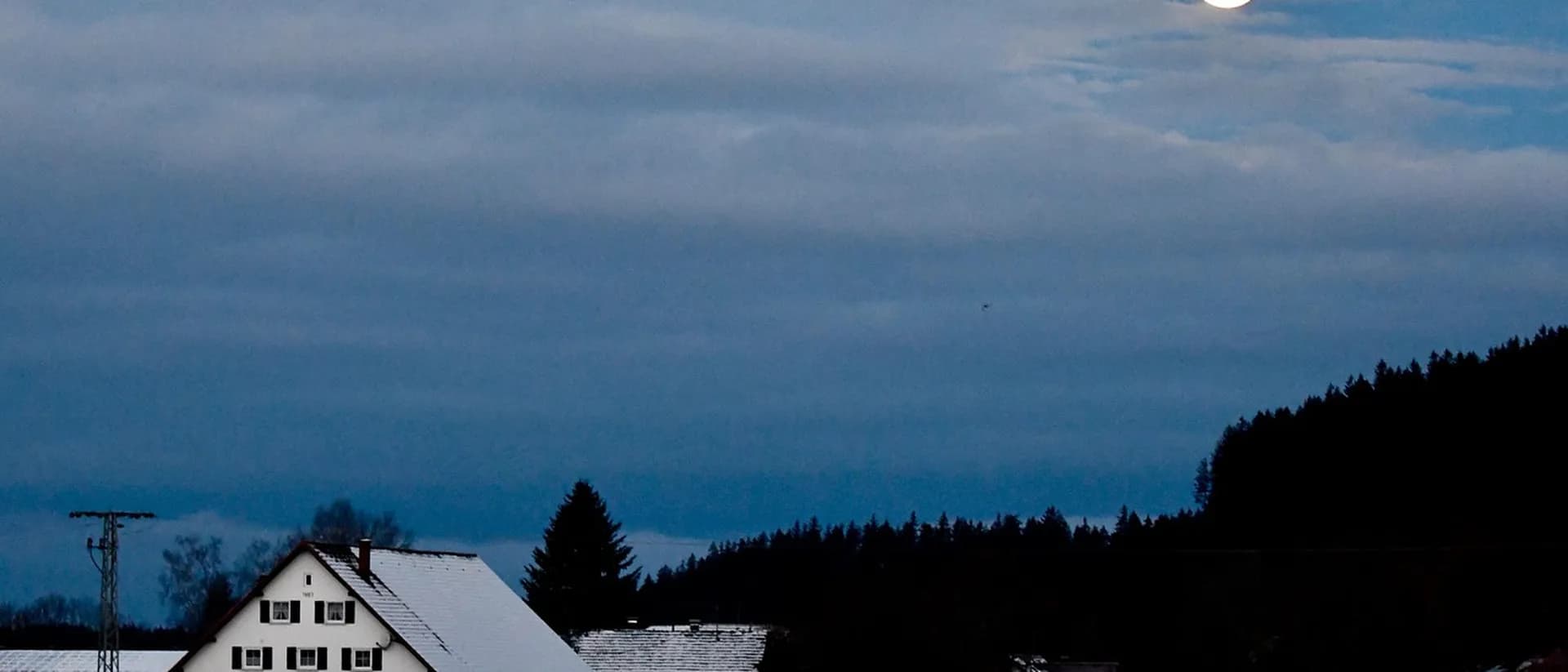
If you step outside at midnight on December 31, the moon will not be up, at least not in the eastern United States. We computed the moon's behavior for New York: last quarter falls on December 30, 2026 at 18:59 UTC, so NYE night carries a waning crescent, only about 36 percent illuminated, and it doesn't rise until 1:45 a.m. on January 1. In other words: dark skies for the fireworks, a thin silver crescent low in the southeast for anyone still outside in the small hours. It's a genuinely good year for midnight sky-gazing, better than the full-moon New Year's Eves that wash out the fireworks backdrop.
In New York City, the day runs from a 7:19 a.m. sunrise to a 4:39 p.m. sunset, the sun sets nearly seven and a half hours before the ball drop, and the day's short daylight is exactly what you'd expect eight days past the winter solstice. (Our winter solstice 2026 guide covers why the solstice and the earliest sunset are not the same day.)
2027 at a Glance: The Calendar Facts Worth Knowing
A handful of date facts about 2027 that answer real search questions:
- January 1, 2027 is a Friday. New Year's Eve is a Thursday, and the holiday weekend runs Friday–Sunday.
- 2027 has 365 days. It is a common year, not a leap year, 2027 leaves no remainder when divided by 4? It does (2027 ÷ 4 = 506.75), and that is precisely the test for a leap year that fails. The next leap day is February 29, 2028. Our how leap years work explainer covers the 400-year fine print.
- Because 365 is one day more than 52 full weeks, 2027 contains 53 Fridays, every date that falls on a Friday repeats its weekday alignment one extra time. Practically: there are 53 Friday paydays this year for anyone paid weekly.
- July 4, 2027 falls on a Sunday (observed Monday, July 5). Thanksgiving is November 25. December 25, 2027 is a Saturday, making Christmas 2027 a two-day weekend with Friday the 24th as many workers' last day. New Year's Eve 2027 is a Friday, another natural long weekend.
The five-year look at when each New Year begins:
| Year | January 1 falls on | Days in year | Leap year? |
|---|---|---|---|
| 2027 | Friday | 365 | No |
| 2028 | Saturday | 366 | Yes, leap day Feb 29 |
| 2029 | Monday | 365 | No |
| 2030 | Tuesday | 365 | No |
| 2031 | Wednesday | 365 | No |
How to Watch the New Year Arrive, Twice
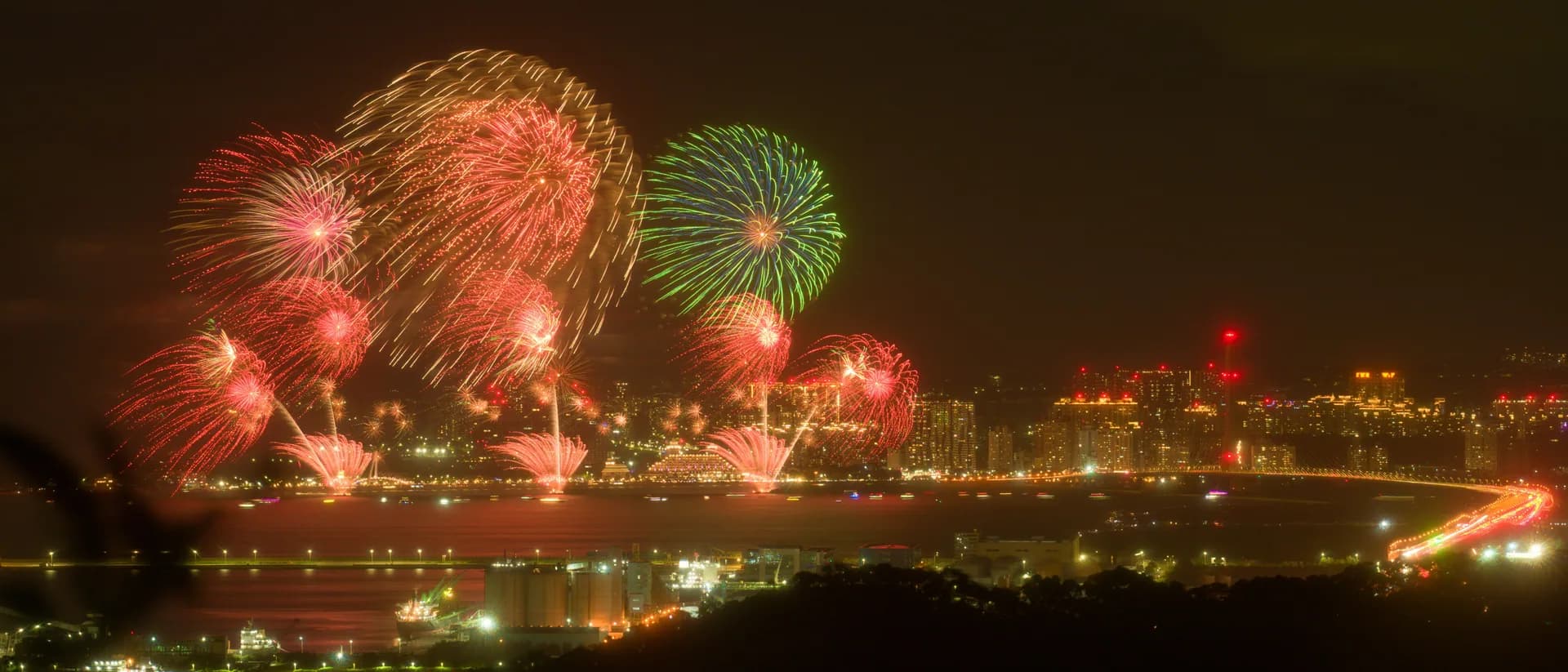
The 26-hour wave turns New Year's Eve into a full-day spectator event if you plan it. In Eastern time, the schedule of major midnights runs: Sydney at 8:00 a.m., Tokyo at 10:00 a.m., Dubai at 3:00 p.m., London at 7:00 p.m., New York at midnight, Honolulu at 5:00 a.m. Friday. Broadcasters run Sydney's fireworks into American morning shows; London's fireworks at 7:00 p.m. Eastern are prime-time viewing on a natural delay.
Two U.S. cities anchor domestic viewing. New York's Times Square ball drop, the crystal ball lowered at 11:59 p.m. since 1907 in its modern lineage, is the default broadcast. On the other side of the international date line, Americans in Guam and the Northern Marianas celebrate at what is Thursday morning back on the mainland, then can do it all again 15 hours later when midnight reaches the West Coast. If you want to be technical about "watching 2027 begin," the first possible viewing for a U.S. resident is Kiritimati's midnight at 5:00 a.m. Eastern on December 31, an hour before most alarm clocks.
For accurate countdowns by the second, keep our timer and world clock open; both handle the DST-free winter time zones correctly. For the holiday itself, history, traditions, and what stays open, see our New Year's Eve and New Year's Day guides. One caution: the U.S. and Europe are on standard time on December 31, but the Southern Hemisphere is on summer time, Sydney is UTC+11, Auckland UTC+13, Santiago UTC−3, which is why time differences change during the year even when the clock on the wall doesn't.
Where to Actually Be: The New Year's Eve Trip Shortlist
For travelers who treat New Year's Eve as a destination rather than a date, the geography above converts directly into itineraries. Five stand out, with honest timing notes for American travelers:
Sydney, Australia. The world's largest fireworks display over an iconic harbor, and the first major city midnight on Earth, 8:00 a.m. ET. Flights from the U.S. West Coast run about 15 hours; book by early October for the harborside hotels, and expect the harbor-view rooms to carry a 3–4x New Year premium. The 9 p.m. "family fireworks" suit travelers with kids.
Dubai, UAE. Midnight arrives at 3:00 p.m. ET, you can watch the Burj Khalifa show over lunch. Direct flights from New York run about 12.5 hours, and December is Dubai's peak (and priciest) season, with warm desert evenings that need no coat.
London, England. The Thames fireworks at the London Eye fire at 7:00 p.m. ET, the most time-zone-friendly major show for Americans, landing in prime time. Flights from the East Coast run about 7 hours; the tube runs all night on NYE.
New York City. Times Square for the ball drop or the East River waterfront for the fireworks; the midnight moment needs no jet lag at all. Hotel rates in Midtown spike hardest of any U.S. market on this one night.
Las Vegas. A midnight that arrives at 9:00 p.m. Pacific for East Coasters still awake, a strip-wide fireworks show, and no passport required. Rooms book out for the weekend weeks ahead.
(Publisher note: this is the designated Travelpayouts placement, flight and hotel widgets for Sydney, Dubai, London, New York, and Las Vegas at the end of this section.)
Frequently Asked Questions
7 questions answered
What time does 2027 start in the United States?
Which country sees 2027 first?
What is the last place to enter 2027?
Is January 1, 2027 a Friday?
Is 2027 a leap year?
Why does it take 26 hours for the New Year to reach everywhere?
Does the whole U.S. celebrate at the same time?
Put this into action
Stop guessing. Use our professional tools to schedule, convert, and manage time zones perfectly, 100% free.
Track Sky EventsOfficial Sources & References
- NASA Science: official data and scientific overviews for astronomical events and missions.