Cold Moon 2026: The Christmas Supermoon of December 23-24
Quick Answer
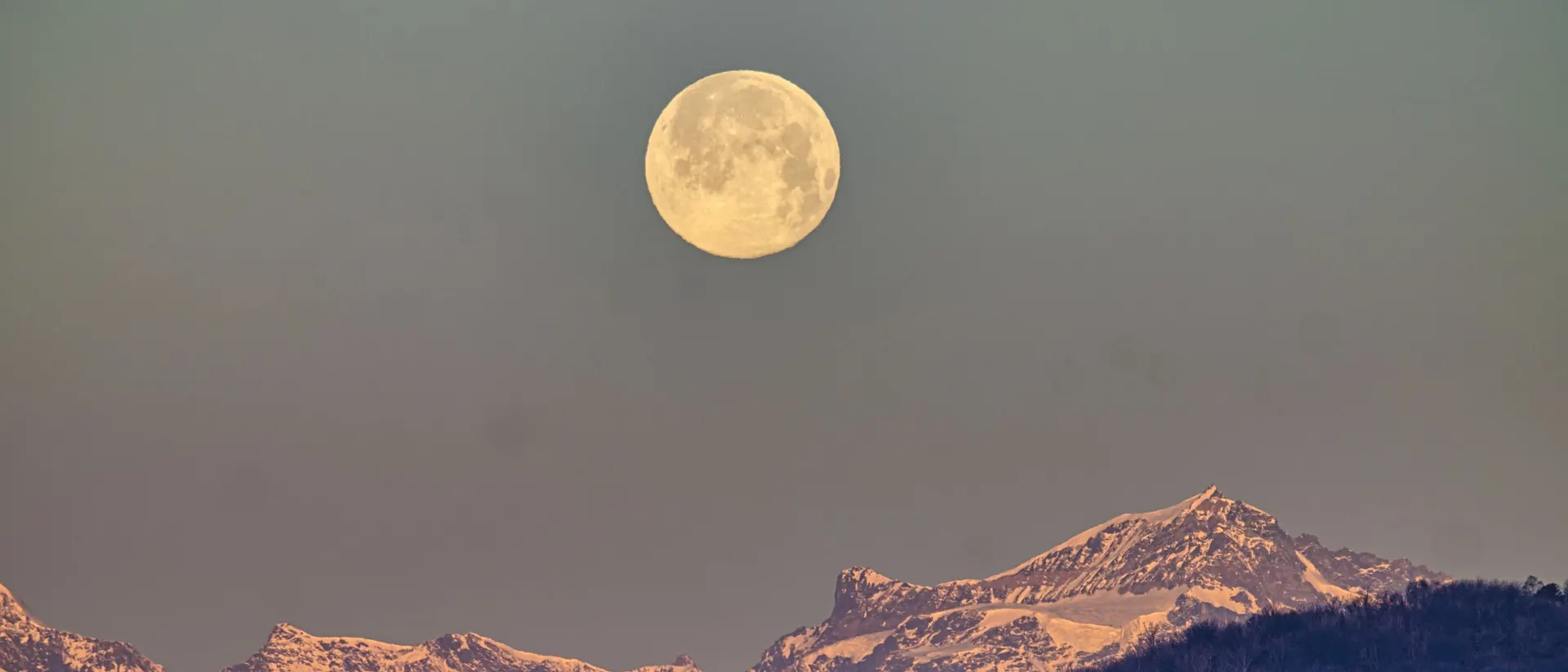
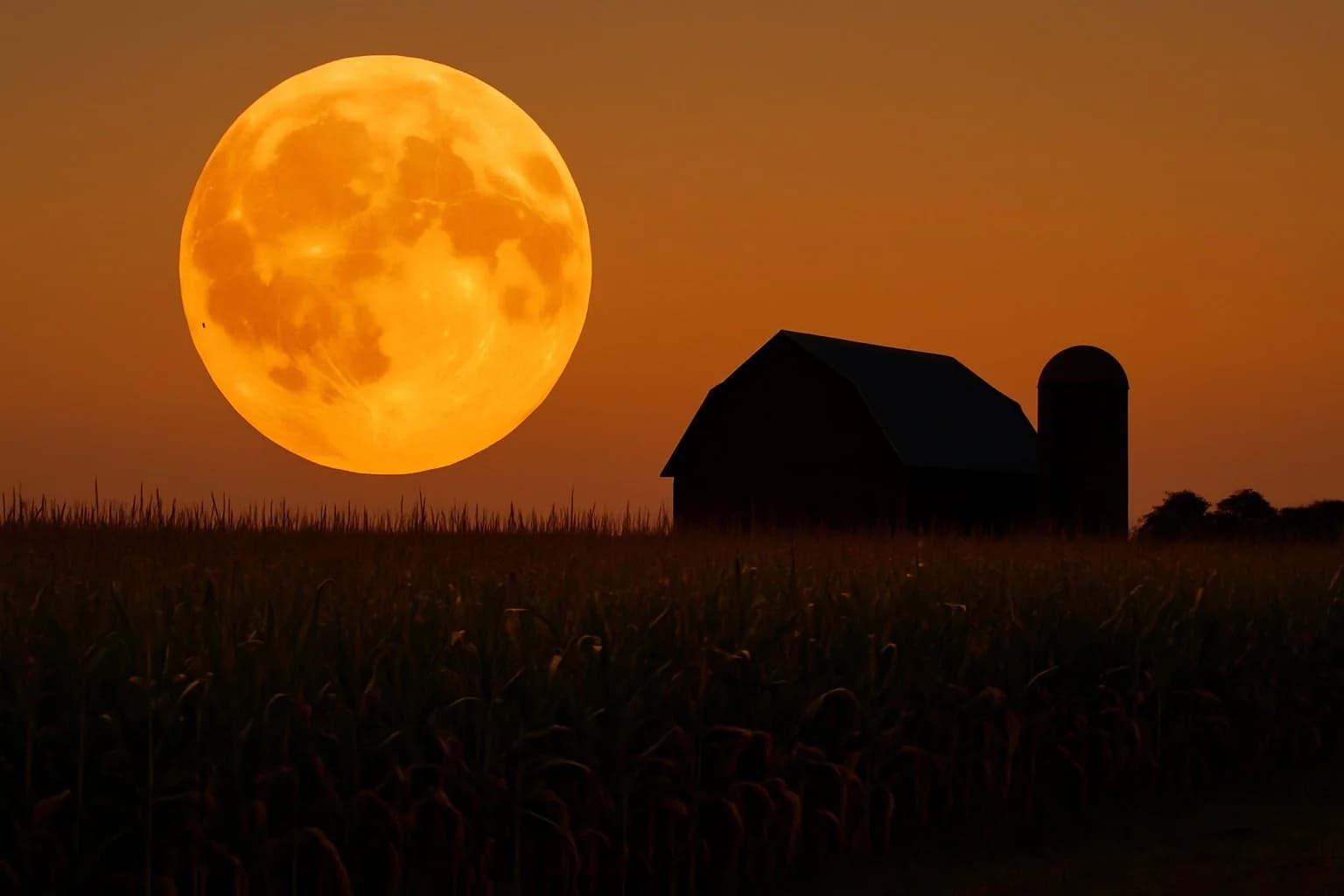
The Cold Moon, December 2026's full moon, peaks at 8:28 p.m. Eastern on Wednesday, December 23, 2026 (01:28 UTC on December 24). It is the closest full moon of the entire year at roughly 356,700 km from Earth, making it a supermoon and the last one of 2026, and it lands two nights before Christmas. The date subtlety matters: in universal time the full moment falls on December 24, but in every U.S. time zone it happens on the evening of December 23. To the eye, the moon will look full for three nights, December 22 through 24, and on Christmas night it will still be 94% illuminated, rising right around dinnertime. This is the brightest the December sky gets all month.
Cold Moon 2026 at a Glance
| Fact | Answer |
|---|---|
| Peak (full) moment | Wed, Dec 23, 8:28 p.m. EST = Thu, Dec 24, 01:28 UTC |
| Distance at full | ~356,700 km geocentric, closest full moon of 2026 |
| Perigee | Dec 24, ~08:54 UTC, 356,650 km, 7.4 hours after full |
| Supermoon status | Yes, 2nd and final of 2026 (after the Nov 24 Beaver Moon) |
| Looks-full window | 3 nights: Dec 22 (98%), Dec 23 (99.9%), Dec 24 (99%) |
| Christmas night | 94% illuminated, rises ~6:35 p.m. in New York |
| Size and brightness | ~8% wider and ~16% brighter than an average full moon |
| Pairing | 2 nights after the winter solstice (Dec 21, 20:49 UTC) |
The Exact Moment, Time Zone by Time Zone
The full moon is an instant, the moment the moon's ecliptic longitude lines up exactly opposite the sun, not a night. Here is that instant everywhere in North America:
| Time zone | Cold Moon peaks |
|---|---|
| Eastern | Wed, Dec 23, 8:28 p.m. |
| Central | Wed, Dec 23, 7:28 p.m. |
| Mountain | Wed, Dec 23, 6:28 p.m. |
| Arizona | Wed, Dec 23, 6:28 p.m. (no DST, but standard now everywhere) |
| Pacific | Wed, Dec 23, 5:28 p.m. |
| Alaska | Wed, Dec 23, 4:28 p.m. |
| Hawaii | Wed, Dec 23, 3:28 p.m. |
| UTC | Thu, Dec 24, 01:28 |
Two consequences of that table. First, for the contiguous United States the full moon arrives during evening twilight or just after, which is close to ideal, because a moon that becomes technically full while it is already up stays effectively 100% all evening. Second, the December 24 you will see on some UTC-based calendars is the same event: an Almanac listing "December 24" and an American news site saying "December 23" are describing the same full moon, just on opposite sides of midnight, universal time is simply the reference most astronomy tables publish in.
Why some calendars print a different time
You may meet a December 23 "6:14 p.m. ET" listing on one prominent almanac's website. That figure is an outlier: Farmers' Almanac, Astronomy.com, EarthSky, and the U.S. Navy's own data all put the moment at 8:28 p.m. EST on December 23 (01:28 UTC December 24), which is what our independent computation also returns. Likewise, one site calls this the "third supermoon of 2026", that count includes the January 3 full moon, which at ~362,300 km sits a few hundred kilometers outside the usual supermoon distance threshold. The NASA-endorsed count for 2026 is two full supermoons: November 24 and December 24. Our 2026 supermoon dates guide lays out the borderline cases in full, because "how many supermoons this year" is a question with an honest answer and several popular wrong ones.
The Three-Night Window: When It Actually Looks Full
The moon's illuminated fraction changes slowly around full, about one percent per 12 hours near maximum, so the eye cannot tell the difference between 99% and 100%. For the Cold Moon of 2026, the practical viewing window spans three evenings:
| Evening | Illumination | Moon phase | What you see |
|---|---|---|---|
| Tue, Dec 22 | 98.1% | Waxing gibbous | Essentially full, rises before sunset |
| Wed, Dec 23 | 99.9% | Full | Peak night, full moment at 8:28 p.m. ET |
| Thu, Dec 24 | 98.6% | Waning gibbous | Still "full" to any observer, rises around sunset |
| Fri, Dec 25 | 94.3% | Waning gibbous | Bright Christmas moon, rises at dinnertime |
| Sat, Dec 26 | 87.6% | Waning gibbous | Noticeably off-round for careful watchers |
The Dec 23 evening is the night the moon is technically full while already risen in the Americas. The Dec 24 evening is the night it rises closest to sunset, the classic supermoon photo opportunity, because moonrise is when the moon sits near the horizon and the moon illusion makes it look enormous. Serious viewers should treat December 22-24 as one continuous event rather than chasing a single evening.
Moonrise Times for 10 Cities, All Three Nights
Moonrise, not the full moment, is what photographers and dinner-party planners actually schedule around. Because the full moon always rises within about an hour of sunset, and sunset lands between 3:45 and 5:40 p.m. across the country in late December, the Cold Moon's rising time is an evening event nationwide. (All times local, computed for standard time; the moon rises about 60-70 minutes later each subsequent night.)
| City | Dec 23 moonrise | Dec 24 moonrise | Dec 25 moonrise |
|---|---|---|---|
| New York | 3:57 p.m. | 5:14 p.m. | 6:35 p.m. |
| Washington, DC | 4:17 p.m. | 5:34 p.m. | 6:54 p.m. |
| Atlanta | 5:07 p.m. | 6:22 p.m. | 7:38 p.m. |
| Chicago | 3:50 p.m. | 5:07 p.m. | 6:29 p.m. |
| Denver | 4:12 p.m. | 5:29 p.m. | 6:49 p.m. |
| Phoenix | 5:04 p.m. | 6:19 p.m. | 7:36 p.m. |
| Los Angeles | 4:28 p.m. | 5:43 p.m. | 7:00 p.m. |
| Seattle | 3:47 p.m. | 5:08 p.m. | 6:36 p.m. |
| Miami | 5:14 p.m. | 6:26 p.m. | 7:39 p.m. |
| Anchorage | 2:13 p.m. | 4:08 p.m. | 6:12 p.m. |
Three patterns in that table are worth naming. On December 23, the moon rises in the afternoon, before or around sunset, and is already climbing as the sky darkens, with the full moment (8:28 p.m. ET) arriving mid-evening. On December 24, moonrise lands within a few minutes of sunset almost everywhere: 5:14 p.m. in New York against a 4:33 p.m. sunset, 5:43 p.m. in Los Angeles against 4:49 p.m. That is the photographer's night, a horizon moon at maximum apparent size during civil twilight. And on Christmas, the 94%-lit moon rises while most tables are mid-meal: 6:35 p.m. in New York, 7:39 p.m. in Miami, bright enough to light the driveway when the last guests leave.
What Makes This One a Supermoon
The moon's orbit is an ellipse, not a circle, and its distance from Earth swings from roughly 356,500 km at perigee (closest) to about 405,500 km at apogee (farthest), a range the NASA supermoon explainer summarizes as 226,000 to 251,000 miles. A supermoon is simply a full moon that occurs near the close end of that swing. The common threshold, attributed to astronomer Fred Espenak and used by NASA, counts full moons within about 361,885 km of Earth, which is 90% of the closest perigee approach.
The Cold Moon of December 2026 does not just clear the threshold; it is the closest full moon of the year by a wide margin. At ~356,700 km it undercuts the year's other supermoon (the November 24 Beaver Moon at ~360,800 km) by more than 4,000 km, and it beats a distant full moon like May 31's (~406,100 km) by almost 50,000 km. Translated into appearance:
| Comparison | Angular size | Brightness |
|---|---|---|
| Cold Moon Dec 24, 2026 (356,738 km) | ~33.5 arcminutes | 100% reference |
| Average full moon (384,400 km) | ~31.1 arcminutes | ~86% as bright |
| Apogee full moon (405,500 km) | ~29.4 arcminutes | ~77% as bright |
So the Cold Moon appears about 8% wider than an average full moon and roughly 16% brighter, and about 14% wider and 30% brighter than a full moon at apogee. The timing is unusually tight this year too: perigee arrives 7.4 hours after the full moment, so the moon is still a few hundred kilometers from its absolute closest while 100% illuminated. That near-simultaneity is what separates a memorable supermoon from a technical one. The full physics, including why "supermoon" is a public-relations coinage from 1979 rather than an official astronomy term, is in our what is a supermoon explainer.
Why It's Called the Cold Moon
December's full moon carries the year's most literal name. Colonial American and Algonquin tradition called it the Cold Moon for the obvious reason, it is the first full moon of hard winter, while other traditions, including the Mohawk, called it the Long Night's Moon, because it rides the year's longest nights, full for more than 15 hours at a stretch in the northern states. Both names predate the Gregorian calendar's fixed months: the moon anchored time-keeping when December's cold arrived on its own schedule, and a full moon in the depths of winter was a practical light source, bright enough, at 16% above average, to travel or work by under clear skies.
The naming system has one quirk worth knowing: full moon names are tied to the lunation they open or close, not to the calendar date, which is why the Cold Moon can fall anywhere from late November (as in 2028, when it lands on December 2) to almost January (2031's falls on December 28). The full naming calendar, Wolf Moon, Worm Moon, Strawberry Moon, Harvest Moon, and the rest, with each name's origin, is collected in our full moon names explained reference, and the complete 2026 lunation schedule is in moon phases 2026.
The Longest Nights Get the Brightest Moon
The Cold Moon of 2026 arrives with unusual dramatic timing: the winter solstice falls on December 21 at 20:49 UTC, just two nights before the full moon. The year's longest night and its brightest moon share the same 72-hour window, a pairing that happens only when the lunation schedule cooperates. In the northern states, that means the week of December 21-24 contains both the earliest sunsets of the year (4:11 p.m. in Seattle, 4:21 p.m. in Chicago, 4:31 p.m. in New York) and a moon that is up all night at maximum brightness. If you have ever wanted to experience just how bright a snow-covered landscape can get without artificial light, that Tuesday-to-Thursday stretch is the year's best window. The winter solstice 2026 guide has the full sunrise/sunset breakdown and the explanation for why the earliest sunset and shortest day are different dates.
The solstice also frames the Cold Moon's deeper connection to old midwinter traditions: nearly every northern culture placed a festival of light at exactly this slot, Saturnalia in Rome, Yule in Scandinavia, Dongzhi in China, Yalda in Persia, and the full moon that follows the solstice was the visible clock many of them used. A bright moon two nights after the longest night is the astronomical echo underneath a great deal of late-December tradition, which is part of why a Christmas supermoon draws attention disproportionate to its 8% size advantage.
The Christmas Night Moon: 94% Over the Dinner Table
The engine of this event's search interest is simpler than the astronomy: people want to know if there will be a full moon on Christmas. For 2026 the answer is a near-miss that behaves like a yes. The moon reaches full at 8:28 p.m. ET on December 23, then stays above 94% illumination through Christmas evening, rising at 6:35 p.m. in New York, 7:39 p.m. in Miami, about two hours after sunset everywhere in the country. It will be visibly gibbous rather than perfectly round to a careful eye, but against holiday lights and in photographs it will read as full, and at ~359,300 km it is still closer than an average full moon. The last time a full moon fell on Christmas Day itself was 2015, and the next will not arrive until 2034, the moon's 19-year Metonic cycle repeats phases on nearby dates, and Christmas full moons land roughly every 19 years at this point in the cycle. A 94% moon two nights past full is, in practical terms, the closest a Christmas-dinner moonshot gets until then. The Christmas countdown 2026 page tracks the full December calendar this event anchors.
King Tides: The Supermoon Effect You Can See Without Looking Up
A supermoon's gravity has a measurable terrestrial consequence: higher-than-usual tides. When a full or new moon coincides with perigee, the alignment's amplified pull produces what coastal communities call king tides, perigean spring tides that run several inches to more than a foot above normal high water. For the December 24, 2026 supermoon, the king-tide window runs roughly December 23-26, with the strongest effect on the higher of the two daily high tides. Coastal flooding advisories in low-lying areas, Miami Beach's pump-backed streets, Charleston's tidal flooding, bay-side San Francisco, typically accompany these events, and the effect stacks when a winter storm pushes water onshore during the peak tide. The mechanics, why perigee amplifies tides, and why spring tides need syzygy, are covered in our how the moon affects tides reference.
How to Photograph the Christmas Supermoon
The moon is the most-photographed object in the sky and the most badly photographed one, mostly because it is bright. Any camera on autoexposure will treat a moonlit night as dark and overexpose the moon into a white disk. The fixes are simple. Expose for the moon itself: at ISO 200, a full moon needs roughly 1/250 second at f/8, daylight settings, because the moon is daylight-lit. Shoot at moonrise, not midnight: the horizon moon trades some sharpness for scale and color, and the moon illusion does the compositional work for free. Give it context: a supermoon alone in a black frame conveys nothing; one rising behind a skyline, a treeline, or a horizon of holiday lights conveys the event. On a phone, tap the moon to set exposure and lock it, or use the telephoto if available, the December 24 moonrise (5:14 p.m. New York, 5:43 p.m. Los Angeles) is timed to golden-hour twilight for exactly this shot. For anyone also out for the Geminid meteor shower twelve nights earlier (peaking December 13-14, moon-free in 2026's favorable calendar), the Geminid 2026 guide has the night-sky photography settings that work for both.
Cold Moons Through 2031 (and a Long Drought After)
The Cold Moon recurs every December, but supermoon Cold Moons do not. Here is the five-year runway, with times in UTC:
| Year | Cold Moon peak (UTC) | Eastern time | Distance | Supermoon? |
|---|---|---|---|---|
| 2026 | Dec 24, 01:28 | Dec 23, 8:28 p.m. | 356,738 km | Yes, closest of the year |
| 2027 | Dec 13, 16:09 | Dec 13, 11:09 a.m. | 368,140 km | No |
| 2028 | Dec 2, 01:40 | Dec 1, 8:40 p.m. | 389,145 km | No |
| 2029 | Dec 20, 22:47 | Dec 20, 5:47 p.m. | 398,119 km | No |
| 2030 | Dec 9, 22:40 | Dec 9, 5:40 p.m. | 406,296 km | No |
| 2031 | Dec 28, 17:33 | Dec 28, 12:33 p.m. | 403,374 km | No |
The pattern after 2026 is stark: no December full moon through 2031 comes within 25,000 km of this year's. The next December supermoons arrive in the mid-2030s, which makes the 2026 Cold Moon the last of its kind this decade, and the only one timed to the holiday window. The 2026 supermoon dates guide tracks the full sequence, including the borderline January 3 case that explains why supermoon counts differ between outlets.
For the 2027 Cold Moon, note the timing shift: it peaks at 11:09 a.m. Eastern on December 13, meaning the best-looking evenings are December 12 and 13, and it sits far enough out (~368,000 km) that the size advantage is gone. The harvest-side counterpart of this event, the full moon nearest the autumn equinox and its early-evening moonrise rhythm, is covered in the Harvest Moon 2026 guide.
Explore More
- Geminid Meteor Shower 2026: the moon kills the peak, but the nights around the Cold Moon reward the patient.
- Moon Phases 2026: every full moon of the year at a glance.
- 2026 Supermoon Dates: the closest full moons of the year, ranked.
- Winter Solstice 2026: the Cold Moon rides the year's longest nights.
Frequently Asked Questions
8 questions answered
When is the Cold Moon in 2026?
Is the December 2026 full moon a supermoon?
Is there a full moon on Christmas 2026?
Why do some sites say the full moon is December 24?
How many supermoons are there in 2026?
What time does the moon rise on December 24, 2026?
What does "Cold Moon" mean?
Are there king tides with the December 2026 supermoon?
Put this into action
Stop guessing. Use our professional tools to schedule, convert, and manage time zones perfectly, 100% free.
Track Sky EventsOfficial Sources & References
- NASA Science: official data and scientific overviews for astronomical events and missions.