When Does Daylight Saving Time Start in 2027? Spring Forward Dates and the Last-Change Question

Quick Answer
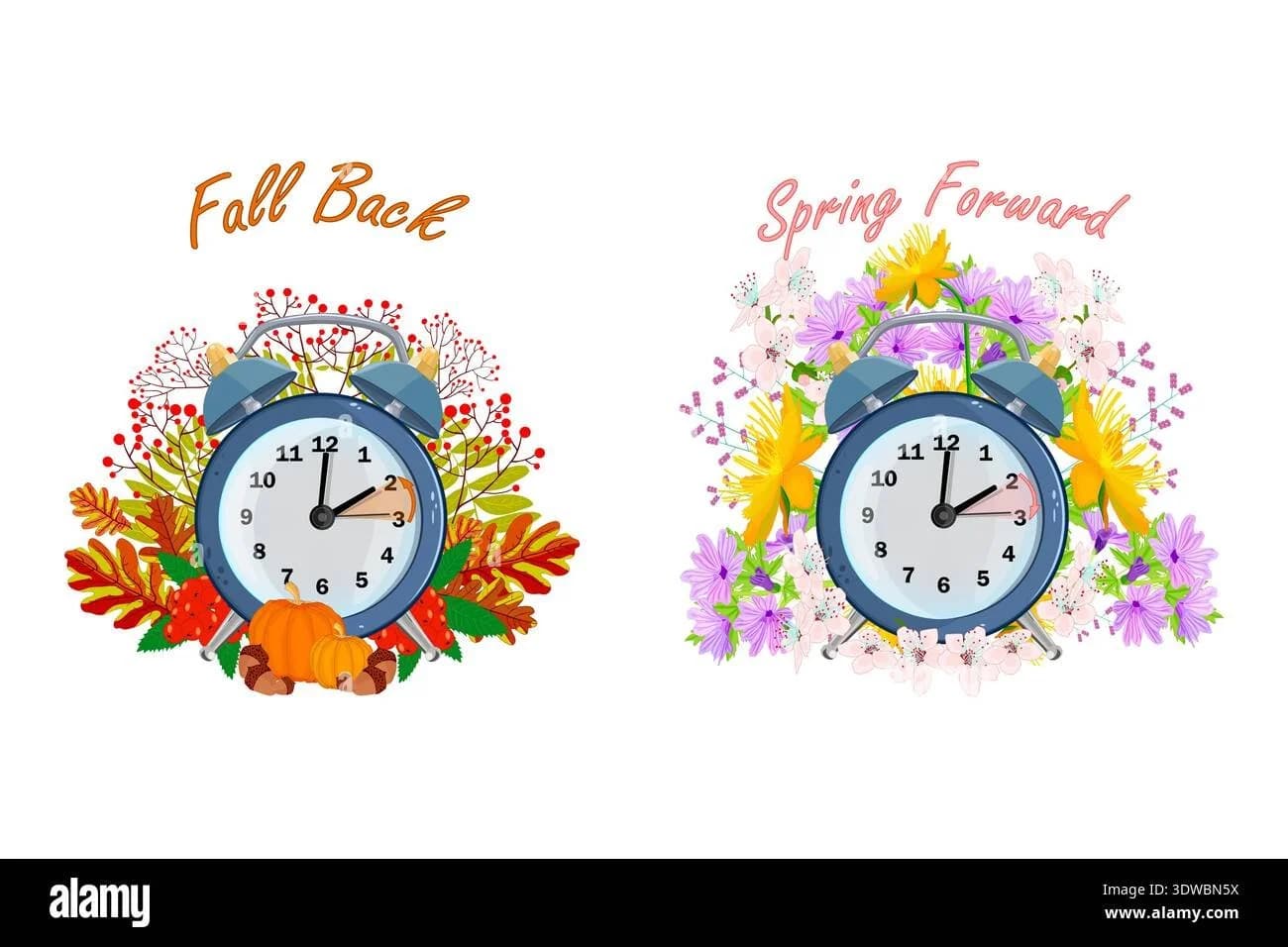
Daylight saving time returns in the United States on Sunday, March 14, 2027, at 2:00 a.m., when clocks jump forward one hour to 3:00 a.m. and every state except Arizona and Hawaii loses an hour of sleep. Europe makes the same jump two weeks later, on Sunday, March 28, 2027. The reward arrives that same evening: sunsets leap roughly an hour in a single day, from about 6:00 p.m. to 7:01 p.m. in New York. And one genuinely consequential question hangs over this particular spring-forward: the Sunshine Protection Act, the bill to make daylight saving time permanent, passed the House 308-117 in July 2026, the President publicly urged the Senate to pass it on August 16, 2026, and if it becomes law, the March 14, 2027 change could be America's last.
When Does Daylight Saving Time Start in 2027? Spring Forward Dates and the Last-Change Question
Daylight saving time returns in the United States on Sunday, March 14, 2027, at 2:00 a.m., when clocks jump forward one hour to 3:00 a.m. and every state except Arizona and Hawaii loses an hour of sleep. Europe makes the same jump two weeks later, on Sunday, March 28, 2027. The reward arrives that same evening: sunsets leap roughly an hour in a single day, from about 6:00 p.m. to 7:01 p.m. in New York. And one genuinely consequential question hangs over this particular spring-forward: the Sunshine Protection Act, the bill to make daylight saving time permanent, passed the House 308-117 in July 2026, the President publicly urged the Senate to pass it on August 16, 2026, and if it becomes law, the March 14, 2027 change could be America's last.
The Dates, Country by Country
| Where | Clocks spring forward | Clocks fall back |
|---|---|---|
| United States (except AZ*, HI, territories) | Sunday, March 14, 2027, 2:00 a.m. → 3:00 a.m. | Sunday, November 7, 2027 |
| Canada (most provinces mirror the U.S.) | Sunday, March 14, 2027 | Sunday, November 7, 2027 |
| European Union, UK, Switzerland | Sunday, March 28, 2027 (1:00 UTC) | Sunday, October 31, 2027 |
| Mexico | No DST, abolished in 2022 | |
| Australia (NSW, Vic, SA, ACT, Tas) | Ends April 4, 2027 (southern autumn) | Resumes October 3, 2027 |
| New Zealand | Ends April 4, 2027 | Resumes September 26, 2027 |
*Most of Arizona stays on Mountain Standard Time year-round (the Navajo Nation does observe DST); Hawaii, Puerto Rico, Guam, American Samoa, and the U.S. Virgin Islands never change. Saskatchewan in Canada also stays put.
Two details shape 2027. First, DST begins a full week before the spring equinox (March 20), America's clocks jump while the calendar still says winter, which is exactly why the sunrise side of the deal feels harsh that first week. Second, the March date lands on the second Sunday of the month per the standard U.S. rule, set by the Energy Policy Act of 2005. The rule is mechanical: second Sunday in March to first Sunday in November, forever, unless Congress rewrites it. Our what is daylight saving time page covers the history, and the standard time vs daylight saving time comparison explains what the two clock systems actually trade away.
The Sunset Jump: What You Get for the Lost Hour
The visible payoff of spring-forward is a one-day sunset lurch. We computed the actual 2027 numbers for seven U.S. cities, the sunset on Saturday, March 13 (standard time) versus Sunday, March 14 (daylight time):
| City | Sunset Sat, Mar 13 | Sunset Sun, Mar 14 | One-day jump |
|---|---|---|---|
| New York | 6:00 p.m. | 7:01 p.m. | +61 minutes |
| Chicago | 5:54 p.m. | 6:56 p.m. | +61 minutes |
| Denver | 6:05 p.m. | 7:06 p.m. | +61 minutes |
| Los Angeles | 5:59 p.m. | 7:00 p.m. | +61 minutes |
| Miami | 6:28 p.m. | 7:29 p.m. | +60 minutes |
| Seattle | 6:12 p.m. | 7:13 p.m. | +61 minutes |
| Anchorage | 6:57 p.m. | 7:59 p.m. | +63 minutes |
The jump is the 60 minutes of DST plus a minute or two of genuine astronomical drift, near the equinox, days lengthen fast. Two days after the change, evening light is already at its "late April" standard-time equivalent, and by the equinox on March 20, New York sunsets sit at 7:08 p.m. (see our spring equinox 2027 guide for the full daylight recovery timeline).
The sunrise side is the cost. In New York, sunrise slides from 6:10 a.m. on Saturday to 7:07 a.m. on Monday morning, commuters and schoolchildren start their weeks in the dark again, a trade that repeats every spring and fuels the permanent-DST argument. City-level daylight hours pages track the full curves.
The First Week of DST, Day by Day
Here is what the week after the 2027 spring-forward actually looks like on the clock in New York, computed morning by morning, in daylight time:
| Date | Sunrise (EDT) | Sunset (EDT) | Daylight |
|---|---|---|---|
| Sun, Mar 14 | 7:09 a.m. | 7:01 p.m. | 11h 52m |
| Mon, Mar 15 | 7:07 a.m. | 7:02 p.m. | 11h 55m |
| Tue, Mar 16 | 7:06 a.m. | 7:03 p.m. | 11h 57m |
| Wed, Mar 17 | 7:04 a.m. | 7:05 p.m. | 12h 00m |
| Thu, Mar 18 | 7:02 a.m. | 7:06 p.m. | 12h 03m |
| Fri, Mar 19 | 7:01 a.m. | 7:07 p.m. | 12h 06m |
| Sat, Mar 20 | 6:59 a.m. | 7:08 p.m. | 12h 08m |
Two things the table makes visible. First, the mornings recover fast, the sunrise that jumps to 7:09 a.m. on Sunday is back under 7:00 a.m. within six days, because the equinox-lengthening is pulling it earlier at nearly two minutes a day. Second, the daylight column crosses the 12-hour line on March 17–18, the true "equilux" balance point, which lands a few days before the astronomical equinox (the March 20 equinox and the 12-hour-day myth are untangled in our spring equinox 2027 guide). By the equinox, the scoreboard reads 12h 08m of daylight and a 7:08 p.m. sunset, an hour more evening than the calendar's "winter" label suggests. From here the gains compound: New York reaches 13h 57m of daylight by May 1 and 15h 06m at the June solstice.
Could March 14, 2027 Be America's Last Spring-Forward?
The honest answer as of this writing: maybe, and the momentum is real.
Where things stand. The Sunshine Protection Act passed the U.S. House of Representatives 308-117 on July 14, 2026, a striking bipartisan margin for a bill that had sat dormant for years. The bill was received in the Senate and, after the August recess, sits awaiting floor action. On August 16, 2026, President Trump publicly urged the Senate to pass it, writing and speaking in favor of permanent daylight saving time over the objections of some Republican senators who prefer permanent standard time. As of late August 2026, no Senate vote is scheduled, reporting from Delaware Online and others notes the calendar is empty but the pressure is building. The Senate returned from summer recess September 21, 2026, and the fall session is the bill's window.
What the bill would do. If enacted and signed before March 14, 2027, clocks would still move in November 2026 (the already-published fall-back), but the March 2027 spring-forward would become permanent, freezing the country in daylight time year-round. No more clock changes, and no rollback the following November. The statutory dates on this page remain the default until a bill is actually signed, that caveat matters, and any article claiming the change is already law is wrong.
Why 1974 says be careful. America has run this experiment before. The Emergency Daylight Saving Time Energy Conservation Act was signed December 15, 1973, amid an energy crisis and roughly 80 percent public approval; permanent DST began January 6, 1974. Then came the January mornings: schoolchildren in the dark, and in Detroit, a sunrise that didn't arrive until after 8:30 a.m. By February 1974, approval had collapsed to around 42 percent, and by October 27, 1974, Congress had repealed the experiment. Our daylight saving time 2026 fall-back guide carries the full 1974 story with the computed midwinter sunrise tables, and the numbers are bracing. Under permanent DST, Detroit's midwinter sunrises would land near 9:00 a.m., Seattle's around 8:55, Minneapolis's about 8:49.
The 2026 bill's fate likely turns on exactly this: permanent DST's evening-light majority versus the sleep-science and school-safety coalition that wants permanent standard time instead. Either outcome ends the twice-a-year change; they disagree on which clock wins.
The Health Cost of the Lost Hour
Spring-forward weekend is not just an annoyance, it is a measurable public-health event. The best-known finding comes from a 2014 study of Michigan hospital admissions: heart attacks rose about 24 percent on the Monday after the spring clock change, while the fall-back Monday showed no comparable spike. The mechanism is circadian disruption: a one-hour forced shift in sleep timing stresses cardiovascular systems already running on compressed winter sleep.
For 2027, the risk window is Monday, March 15. The practical mitigations are unglamorous but effective:
- Shift your bedtime 20 minutes earlier per night on the Thursday, Friday, and Saturday before the change, so Sunday's 2 a.m. jump lands on an already-adjusted body.
- Get morning light on Sunday and Monday, outdoor light within an hour of waking resets the circadian clock faster than any supplement; the problem is that the first post-change mornings are dark, so a bright walk at lunch does double duty.
- Front-load caffeine and skip the late-afternoon nap the first three days; the crash is real but short.
- Drivers: the Monday morning commute runs on one less hour of sleep at darker-than-expected clock times, drowsy-driving risk peaks exactly then.
The fall-back article covers the mirror-image effects in October, including why the autumn shift is genuinely easier on bodies even as it triggers the early-evening-darkness complaints.
A Short History of the Clock Change
The spring-forward of 2027 arrives 111 years after the first national clock change, and the idea has been controversial since that first adoption. The timeline is worth knowing because every argument in today's permanent-DST debate has already been run at least once:
- 1908: Thunder Bay, Canada, becomes the first city to adopt DST.
- April 30, 1916: Germany becomes the first nation, an energy-saving measure in World War I. Britain follows weeks later; the U.S. adopts DST in 1918 and repeals it after the war (New York City kept it locally for years anyway).
- 1942–1945: "War Time", the U.S. runs year-round daylight saving through World War II, the first national permanent-DST experiment.
- 1966: The Uniform Time Act finally standardizes the U.S. system and gives states the opt-out that Arizona and Hawaii still use.
- January 1974: The Emergency Daylight Saving Time Energy Conservation Act makes DST permanent again, approval collapses from about 80 percent to 42 percent in two months of dark winter mornings, and the experiment is repealed by October 1974. The full story is in our DST 2026 fall-back guide.
- 1986 and 2007: The start date creeps earlier, first Sunday in April from 1987, then second Sunday in March from 2007 (the Energy Policy Act of 2005). Each move extended DST's share of the year.
- 2027: DST now covers 239 of the year's 365 days, about 65 percent (March 14 through November 7, computed). The "permanent" question, in other words, is not whether most of the year runs on shifted clocks, it already does, but whether the remaining 126 days of standard time are worth the twice-a-year disruption.
That last framing is the one most coverage misses: the U.S. has been quietly drifting toward "daylight saving time most of the time" for four decades, by calendar creep rather than by law. The 2026 Senate bill would simply finish the job.
Who Else Changes Clocks in 2027
The American change is part of a much smaller global club than it was a generation ago. Most of the world's population never changes clocks: China and India abandoned or never adopted DST, Japan has not used it since the early 1950s, and Mexico ended it in 2022. In Europe, every EU state plus the UK, Switzerland, and most of the Balkans change on the last Sundays of March and October, though Iceland sits out entirely, Russia tried permanent summer time in 2011 and reversed to permanent standard time in 2014, and Turkey has stayed on permanent summer time since 2016, two live data points on the exact question the U.S. Senate is debating. Egypt is the notable exception in Africa: it reinstated daylight saving time in 2023 and will spring forward on April 30, 2027, a quirk that matters to anyone planning the August 2027 total solar eclipse trip to Luxor, since Egypt runs UTC+3 that week. Brazil dropped DST in 2019; Chile keeps it only in central-southern regions; and the Southern Hemisphere flips the whole script, Australia and New Zealand are ending their summer time on April 4, 2027, the same week America's spring is hitting its stride. For anyone coordinating across hemispheres, the best time to call London and New York guide shows how the gaps shift four times a year, not two.
Why 2 a.m., and Why Arizona and Hawaii Opted Out
The 2:00 a.m. switch is a hundred-year-old compromise: the hour when the fewest trains were running, bars were closed (in the original 1918 world), and overnight shift workers were mid-shift rather than changing. It still minimizes disruption today, though it creates its own oddities, the hour from 2:00 a.m. to 2:59 a.m. on March 14, 2027 simply does not exist, which is why night-shift pay rules, aviation schedules, and bar-closing statutes all have special cases baked in.
Arizona has refused DST since 1968 (excluding the Navajo Nation, which observes it): in a state where summer afternoons already hit 110°F, an extra hour of evening sunlight is a cost, not a benefit, standard time puts the sunset at a survivable hour. Hawaii, near the tropics, sees almost no seasonal day-length variation, so clock-changing buys nothing. The same latitude logic applies across the tropics worldwide, which is why most of Asia, Africa, and Latin America abandoned or never adopted DST, Mexico ended its observance in 2022, and China, India, Japan, and most others never bothered. Our why time differences change during the year guide shows how this patchwork shifts the U.S.–Europe gap twice a year, and how to avoid DST mistakes in global meetings handles the practical fallout, the March 14–28 window in 2027 is exactly when a New York–London call that worked all winter lands an hour off.
The Five-Year Table: Every U.S. Clock Change Through 2031
| Year | U.S. spring forward | U.S. fall back | EU/UK change dates |
|---|---|---|---|
| 2027 | Sunday, March 14 | Sunday, November 7 | March 28 / October 31 |
| 2028 | Sunday, March 12 | Sunday, November 5 | March 26 / October 29 |
| 2029 | Sunday, March 11 | Sunday, November 4 | March 25 / October 28 |
| 2030 | Sunday, March 10 | Sunday, November 3 | March 31 / October 27 |
| 2031 | Sunday, March 9 | Sunday, November 2 | March 30 / October 26 |
(The U.S. rule: second Sunday in March and first Sunday in November. The EU rule: last Sundays of March and October. Both computed forward through 2031, the 2030 EU start of March 31 is the odd late one.)
Frequently Asked Questions
8 questions answered
When does daylight saving time start in 2027?
Do we lose an hour of sleep in March 2027?
Is March 14, 2027 the last time clocks change in the U.S.?
Which states don't observe daylight saving time?
What was the sunset jump on March 14, 2027?
Why does DST start a week before spring in 2027?
What happens to the New York–London time difference in March 2027?
When does DST end in 2027?
Put this into action
Stop guessing. Use our professional tools to schedule, convert, and manage time zones perfectly, 100% free.
Convert Time Zones