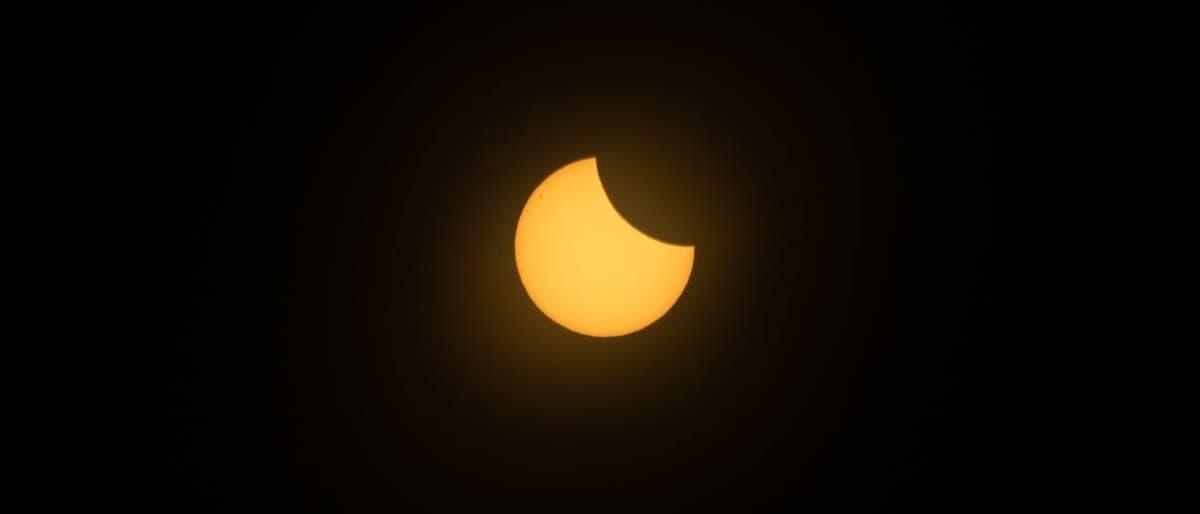
August 2, 2027 Total Solar Eclipse: The 6-Minute 'Eclipse of the Century' and How to See It
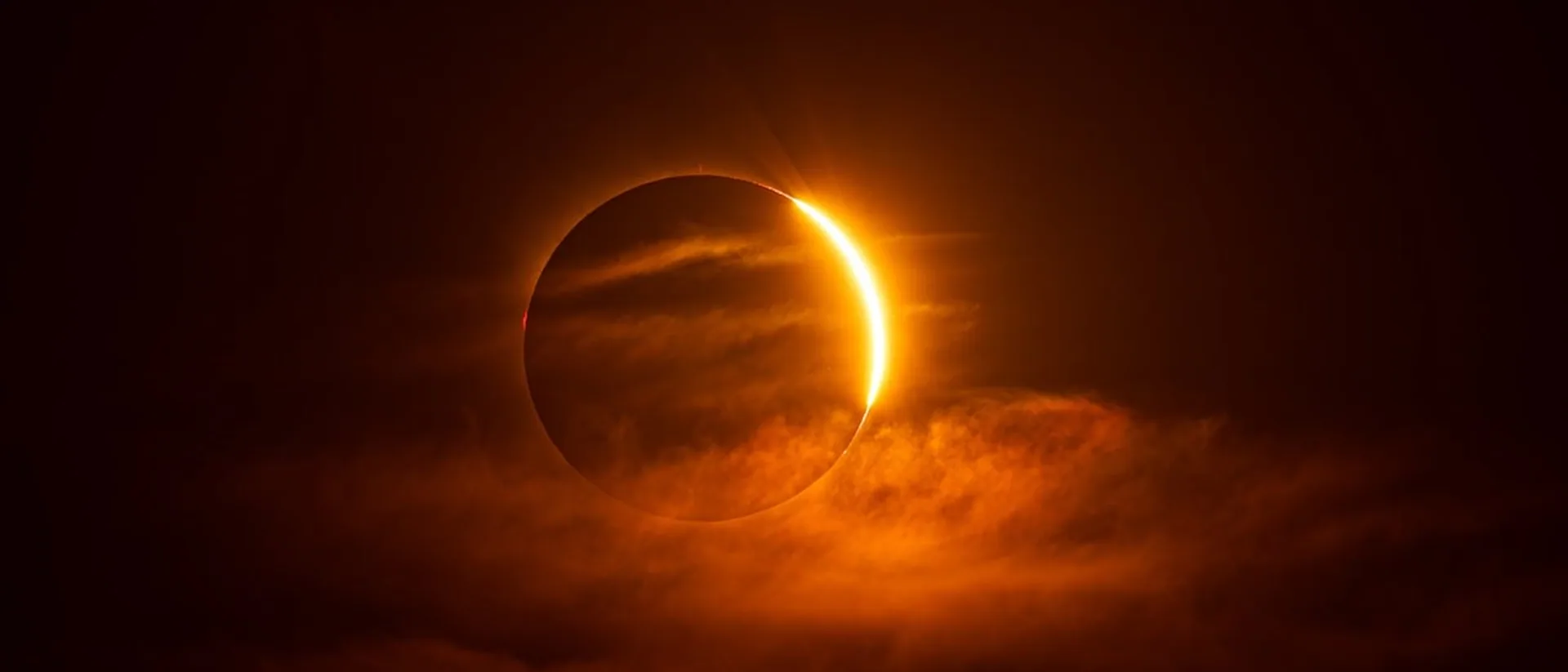
Quick Answer
On Monday, August 2, 2027, the moon's shadow crosses Earth on a path from the South Pacific through Spain, North Africa, Egypt, Saudi Arabia, and Yemen, and it produces the longest totality any living person will likely ever have the chance to see on land: 6 minutes and 23 seconds, with the maximum near Luxor, Egypt. It is the longest total solar eclipse since 1991, and by NASA's data no longer one will occur until August 3, 2114. One honest note for most American readers: the eclipse is effectively not visible from the United States, only a 5-minute partial at sunrise, low on the ocean horizon, from the eastern tip of Maine. To see totality, you have to travel, and this guide is built around doing exactly that, with real numbers.
August 2, 2027 Total Solar Eclipse: The 6-Minute "Eclipse of the Century" and How to See It
On Monday, August 2, 2027, the moon's shadow crosses Earth on a path from the South Pacific through Spain, North Africa, Egypt, Saudi Arabia, and Yemen, and it produces the longest totality any living person will likely ever have the chance to see on land: 6 minutes and 23 seconds, with the maximum near Luxor, Egypt. It is the longest total solar eclipse since 1991, and by NASA's data no longer one will occur until August 3, 2114. One honest note for most American readers: the eclipse is effectively not visible from the United States, only a 5-minute partial at sunrise, low on the ocean horizon, from the eastern tip of Maine. To see totality, you have to travel, and this guide is built around doing exactly that, with real numbers.
The Basics: When, Where, and for How Long
The essentials, verified against NASA's eclipse bulletin data:
- Date: Monday, August 2, 2027.
- Greatest eclipse: 10:07:50 UTC, 6:07 a.m. Eastern daylight time. The eclipse occurs in the late morning and midday hours along the whole track.
- Maximum duration: 6 minutes 23 seconds, in the desert of Egypt's New Valley Governorate, northeast of Luxor.
- Path width: about 250 kilometers (roughly 155 miles), wide enough that entire regions sit inside totality, not just lucky cities.
- Countries inside the path: Spain (Cádiz region and the south coast), Gibraltar, Ceuta, Morocco, Algeria, Tunisia, Libya, Egypt, Saudi Arabia, Yemen, and Somalia (where the shadow exits at sunset).
- Longest totality since: July 11, 1991 (the 6m53s eclipse over Mexico and Hawaii). No longer totality until: August 3, 2114.
For comparison: the celebrated U.S. eclipses of 2017 and 2024 maxed out at 2m40s and 4m28s of totality. The 2027 event nearly triples the first and adds roughly two full minutes to the second. For eclipse chasers, this is the one, CNN has already branded it the "eclipse of the century," and the tour industry has been selling it since before the 2026 eclipse ended.
Why This Eclipse Lasts So Long: The Geometry
Every total solar eclipse balances on three distances: how big the moon looks, how big the sun looks, and how directly the shadow hits. On August 2, 2027, all three line up generously.
We computed the numbers ourselves. At the moment of greatest eclipse, the moon is about 357,400 km from Earth, nearly its closest approach. The moon actually reaches perigee (its orbital closest point) that same morning, at about 7:25 UTC, just hours before the eclipse peaks. That proximity makes the moon's disk measure roughly 2,008 arcseconds wide against the sun's 1,891 arcseconds, the moon appears about 6 percent larger than the sun. The shadow it casts is wide and reaches Earth with room to spare.
Meanwhile, Earth is near the far end of its orbit, about 151.8 million km from the sun in early August, not far off the early-July aphelion of 152.1 million, which shrinks the sun's disk slightly. A near-maximum moon paired with a slightly distant sun produces the deep, long shadow that stretches totality past six minutes. In effect, the new moon of August 2 is an "invisible supermoon": at a distance that would make headlines if it were full. Our what is a supermoon explainer covers what perigee normally does to full moons; on August 2 it does the same thing while showing us its dark side, literally.
The Path, Country by Country, With Durations
The duration of totality varies enormously along the track, from under two minutes at some Mediterranean edges to more than six minutes in Egypt. City-level durations (from the standard NASA-derived tables):
| Country | City / site | Duration of totality |
|---|---|---|
| Spain | Cádiz | 2m 56s |
| Spain | Málaga | 1m 57s |
| Spain | Marbella | 3m 21s |
| Spain | Melilla | 4m 34s |
| Spain (N. Africa) | Ceuta | 4m 49s |
| Gibraltar | Gibraltar | 4m 28s |
| Morocco | Tangier | 4m 51s |
| Morocco | Oujda | 1m 07s |
| Algeria | Oran | 5m 08s |
| Algeria | M'Sila | 5m 23s |
| Tunisia | Kasserine | 5m 28s |
| Tunisia | Sfax | 5m 41s |
| Libya | Benghazi | 6m 11s |
| Egypt | Siwa Oasis | 5m 33s |
| Egypt | Asyut | 6m 07s |
| Egypt | Luxor | 6m 22s |
| Saudi Arabia | Jeddah | 5m 53s |
| Saudi Arabia | Mecca | 5m 10s |
| Saudi Arabia | Khamis Mushait | 6m 00s |
| Yemen | Sana'a | 2m 39s |
| Somalia | Bosaso | 4m 08s |
The track also clips Portugal's Porto Santo and Madeira by only about 70 km, close enough that the islands sit in deep partial, and passes near, but not over, some huge population centers. Madrid gets an 86 percent partial; London, 42 percent; Rome, 75 percent; Paris, 51 percent; Algiers, a heartbreakingly deep 99.8 percent partial. Cairo gets about a 95 percent partial, close, but totality requires heading south toward the Nile Valley. The city tables put that in perspective: Cairo sees the sun 94.8 percent covered at 12:56 p.m. local time, and it never quite reaches totality.
Egypt: The Center of the Eclipse World
If the eclipse has a capital city, it is Luxor. Totality there runs from roughly 1:02 p.m. to 1:08 p.m. local time on August 2, the sun nearly overhead, about 80 degrees high in a midday August sky. The viewing comfort is unusual for a total eclipse: no stiff neck from staring at a low sun, and shadows that shrink almost to nothing beneath your feet.
Three practical realities make Egypt the serious eclipse-chaser's default choice:
Weather. The cloud climatology along the August 2 track is about as good as terrestrial weather gets. Sky-and-telescope analysts note that over Libya and western Egypt, "cloud is almost unknown in the summer months", some stretches of desert have recorded effectively zero August cloud cover in two decades of satellite data. Compare that with Spain and Morocco, where the August statistics run closer to a 60–70 percent chance of clear skies, and coastal haze is a real factor. Weather is the single biggest gamble in eclipse planning, and Egypt is the lowest-rolling-gamble place on this path.
Infrastructure. Luxor is not a remote desert camp, it is a city of half a million people, a 45-minute flight or overnight train from Cairo, with a hotel base already sized for Nile cruise tourism and some of the world's most extraordinary archaeology within a bus ride: Karnak, Luxor Temple, the Valley of the Kings. The eclipse ends by early afternoon, leaving the whole rest of the day for sites that normally bake under the midsummer sun. Tour operators are building exactly that into their itineraries.
Crowds. The flip side: everyone else has done this math. Astronomy tours anchored in Luxor are already listing at roughly $2,700 to $7,000 per person, and premium Nile cruise eclipse packages, including the Smithsonian's own river-ship itineraries and the Sky & Telescope flagship with its post-eclipse Cairo-to-Nile cruise extension (August 3–11, from $7,299), have been open for booking well over a year in advance. Luxor's hotel capacity is large but finite, and August 2, 2027 falls in Egypt's low summer season that hotels and cruise lines will convert to a peak-rate week.
For Americans, the standard routing is New York or Washington to Cairo (roughly 10.5–11 hours nonstop), then a connection to Luxor. Egypt keeps daylight saving time in 2027 (clocks spring forward April 30, back October 29), so the country is on UTC+3 in August, totality at 1:02–1:08 p.m. local, ending with the whole afternoon ahead of you. Visas are straightforward for U.S. passport holders; check current entry requirements when you book.
(Publisher note: Travelpayouts placement #1, flights to Cairo/Luxor, Luxor hotels for Jul 30–Aug 4 2027, and Nile cruise search widgets here.)
Spain: The Shorter-Trip Option, and the "Iberian Trio"
Spain is the eclipse's European front door. The umbral shadow makes landfall on the Andalusian coast, and totality sweeps the Cádiz region in late morning local time, Cádiz city gets 2m56s, the rock of Gibraltar 4m28s, and the Spanish North African enclaves of Ceuta and Melilla 4m49s and 4m34s. Partial phases begin around 8:32 a.m. local time, with totality around 10:45–10:50 a.m.
What Spain gives up in duration and weather odds, it buys back in ease: a 6–7 hour flight from the U.S. East Coast, no visa for Americans, a first-world tourism infrastructure, and beaches. And the timing is better for photography, the sun sits about 55 degrees high, a friendlier angle than Egypt's near-overhead sun for wide-angle foreground compositions of old-town rooftops.
Spain also holds a distinction no other country can claim in this era: the "Iberian trio." Southern Spain saw totality on August 12, 2026 (the eclipse that just crossed Iceland and northern Spain), sees it again on August 2, 2027, and then catches the sunset-end of the January 26, 2028 annular eclipse as a "ring of fire" slips into the Atlantic horizon over Portugal and the Spanish coast. Three solar eclipses in eighteen months over one country is a once-in-many-lifetimes run, our when is the next solar eclipse page keeps the full sequence, and our guides to the August 12, 2026 total eclipse and the February 6, 2027 annular eclipse cover the other two legs. Lunar-eclipse watchers have their own calendar, see when is the next lunar eclipse.
(Publisher note: Travelpayouts placement #2, flights to Madrid/Seville/Málaga and Cádiz-region hotels here.)
What Americans Can Actually See on August 2, 2027
The honest answer: almost nothing, from almost everywhere. The moon's penumbra only grazes the far northeastern corner of North America. The one exception is easternmost Maine: from the Eastport area, the sun rises at 5:14 a.m. EDT already partially eclipsed, reaches a brief shallow maximum, and exits the eclipse by 5:19 a.m., a five-minute partial at sunrise, with the sun sitting right on the ocean horizon. You need a clear view of a sea-level eastern horizon and, ideally, solar filters; an unfiltered sunrise glare through haze makes the notch hard to see safely. Everywhere else in the lower 48, the eclipse simply is not visible, the whole event happens before the sun rises over America.
Canada's Atlantic provinces and far eastern Quebec catch a somewhat better partial at sunrise. But make no mistake: if you want the corona, the 2027 eclipse is a travel eclipse, full stop. That is not a marketing line, it's geometry.
There is a livestream consolation, and it will be a good one: with the eclipse crossing three continents in daylight, multiple broadcast operations (NASA among them, historically) will carry totality live from Spain and Egypt at roughly 5:45–10:15 a.m. Eastern (our world clock converts 10:07 UTC to your time zone), beginning before most American breakfasts end. The deepest-drama window, the 6-minute-plus Egyptian totality, happens around 8:00–8:15 a.m. Eastern (1:00 p.m. in Luxor).
What Six Minutes of Totality Is Like
Most people who saw the 2017 American eclipse describe it as the most astonishing natural event of their lives, and that one lasted about two minutes. Six minutes changes the experience in kind, not just degree.
The partial phase builds for over an hour first: the light goes hard and gray, shadows grow strange crescents (look under trees, leaf gaps become pinhole projectors), and the temperature drops measurably. Then the shadow wall arrives, totality's onset reads like a storm front moving at highway speed across the desert, and the sun's corona, the outer atmosphere normally lost in glare, appears as a structured white crown around the black moon. Planets and bright stars pop out. The horizon glows in a 360-degree twilight band. During long totality, the sky darkens to roughly deep civil twilight, bright enough to walk around, dark enough that animals respond; eclipse veterans describe confused birds and temperature drops of several degrees. Our guide to twilight categories explains the lighting levels you'll pass through, and the same dark-sky habits that make our best stargazing nights of 2026 guide work, site selection, eyes adapted, no screens, serve you under an eclipsed sun too.
Six minutes also changes the logistics of watching. In a 2-minute eclipse, you stare and absorb. In a 6-minute one, you have time to look away deliberately, check the horizon colors, look for planets (Venus and possibly others), try binoculars during totality, safe with filters off only during full totality, and still have minutes to simply be present. Photographers can afford real compositions rather than panic bursts. Bring a chair; a near-overhead sun at 80 degrees means lying back, not craning.
Eye safety, briefly and seriously: outside of totality, you need certified solar viewers meeting the ISO 12312-2 standard, and the American Astronomical Society has warned loudly since 2017-2024 about counterfeits, noting that the ISO marking itself is easy to fake and costs nothing to print. Buy from a vendor on the AAS's vetted list, and inspect viewers before travel. Totality itself is safe to watch with the naked eye; the instant the "diamond ring" re-emerges, filters go back on. Fake glasses have genuinely injured people before, this is not a corner to cut for a trip this expensive.
Every Eclipse Between Now and 2045, So You Can Plan
The 2027 eclipse anchors a remarkable run of sky events. Here is the sequence that matters for planning:
| Date | Type | Where |
|---|---|---|
| February 6, 2027 | Annular ("ring of fire") | Southern Chile and Argentina at sunset |
| August 2, 2027 | Total, 6m23s | Spain, North Africa, Egypt, Arabia |
| January 26, 2028 | Annular, up to 10m27s | Galápagos, Amazon, Iberia at sunset |
| July 22, 2028 | Total, max 5m10s | Australia (path crosses Sydney) and New Zealand |
| March 30, 2033 | Total | Alaska (Anchorage in the path), eastern Russia |
| August 23, 2044 | Total | Contiguous U.S., Montana, the Dakotas |
| August 12, 2045 | Total, over 6 min | Coast-to-coast U.S., Florida to California |
For U.S. residents the practical calculus: after the 2026 Spain eclipse, the next totalities reachable without extreme distance are 2027 and 2028 abroad, then Alaska in 2033, and the next big American show in 2044–45. The 2028 Australian eclipse, crossing Sydney with totality near 4–5 minutes in the city, is already being packaged as the natural "next stop" for travelers who catch the 2027 event.
Frequently Asked Questions
8 questions answered
When is the total solar eclipse of August 2, 2027?
How long does totality last?
Is the August 2027 eclipse visible from the United States?
Why is this eclipse called the "eclipse of the century"?
Where is the best place to watch the 2027 eclipse?
When did the last 6-minute total solar eclipse occur?
Is it safe to travel to Egypt for the eclipse?
What is the next total solar eclipse after 2027?
Put this into action
Stop guessing. Use our professional tools to schedule, convert, and manage time zones perfectly, 100% free.
Track Sky EventsOfficial Sources & References
- NASA Science: official data and scientific overviews for astronomical events and missions.