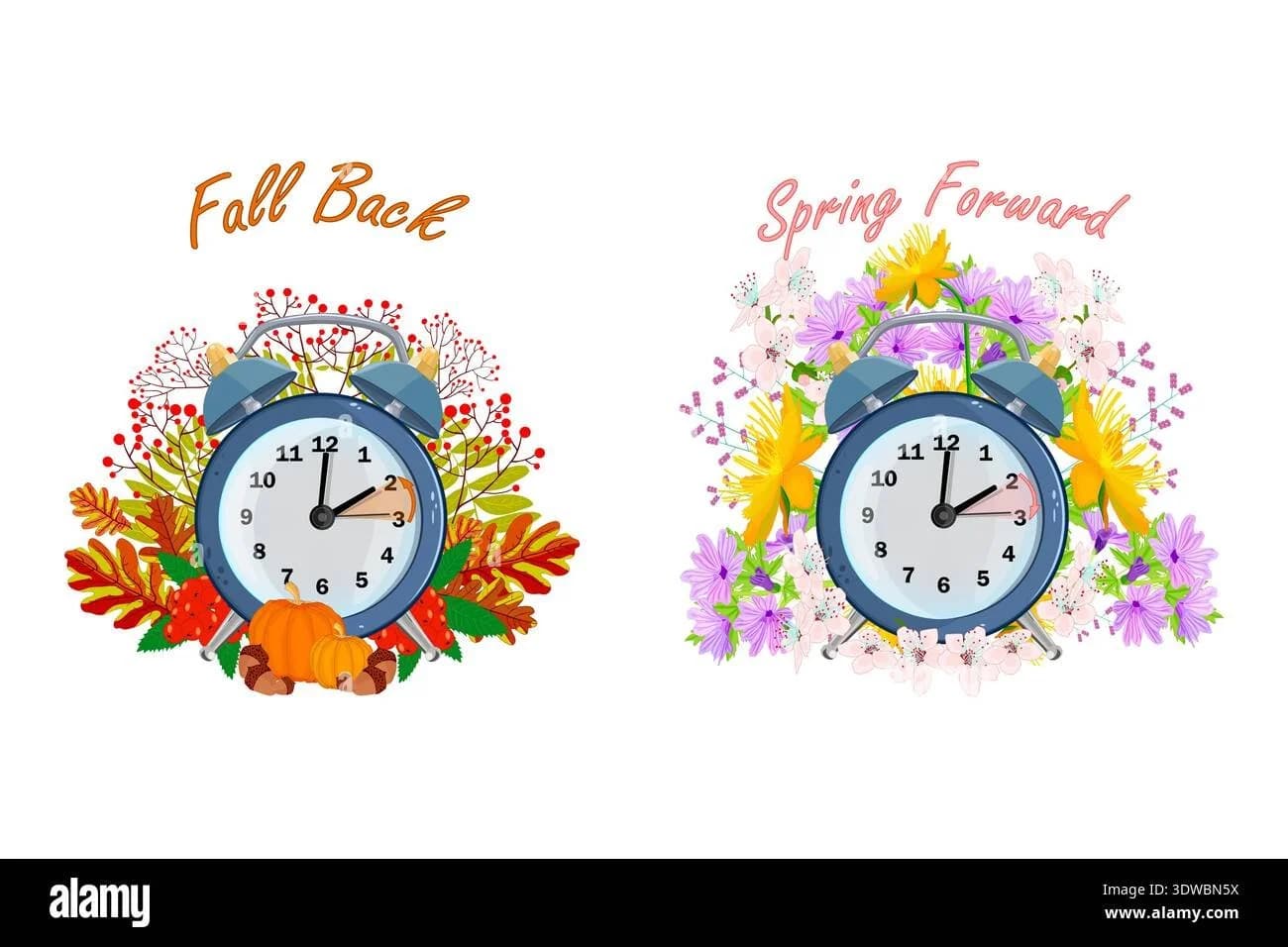
Do Clocks Go Back on Halloween 2026? Yes, and 1 AM Happens Twice That Night
Quick Answer
Yes, in the United States the clocks go back on Halloween weekend, but not during Halloween evening. In U.S. places that observe daylight saving time, clocks are set back one hour at 2:00 AM local daylight time on Sunday, November 1, 2026. In New York that means 1:59 AM EDT is followed by 1:00 AM EST, so the 1 AM hour happens twice and the Sunday is 25 hours long. Hawaii, most of Arizona, and the U.S. territories do not change at all, and the UK and Europe already changed a week earlier.
Every year the same question arrives a few days before Halloween, and every year the answer is a little more complicated than the question expects. The short version is that the change happens on the same weekend but on the other side of midnight, which is why some people call it the Saturday-night change and others say it is a Sunday-morning change. Both are describing the same event from different angles.
When does the 2026 clock change happen?
Halloween 2026 falls on Saturday, October 31. The rollback happens at 2:00 AM local daylight time on Sunday, November 1.
That single distinction answers most of the confusion. If you are trick-or-treating at 6 PM, going to a party at 9 PM, or watching something that ends at midnight, nothing about your evening has changed. The clocks move after the party is over.
The change is not on Saturday at 2 AM. It is not at midnight either. Saturday evening runs on daylight time from start to finish, exactly as the afternoon did.
| Question | Answer |
|---|---|
| When is Halloween 2026? | Saturday, October 31, 2026. |
| When do U.S. clocks go back? | Sunday, November 1, 2026, at 2:00 AM local daylight time in places that observe DST. |
| Does Halloween evening itself change time? | No. The rollback happens after midnight, early Sunday morning. |
| Does 1 AM happen twice? | Yes, in U.S. locations observing DST. The first 1 AM is daylight time and the second is standard time. |
| Does the whole U.S. change at one instant? | No. The rule is 2:00 AM local time, so each time zone changes at its own moment. |
| Do Hawaii and most of Arizona change? | No. They do not observe DST. The Navajo Nation does observe DST. |
| Do U.S. territories change? | American Samoa, Guam, the Northern Mariana Islands, Puerto Rico and the U.S. Virgin Islands do not observe DST. |
| Does the UK change on Halloween weekend? | No. UK clocks go back on Sunday, October 25, 2026, one week earlier. |
What actually happens at 2:00 AM
Here is the sequence, in plain language. Local daylight time runs normally until 1:59:59 AM. At that moment the clock is set back one hour, landing on 1:00:00 AM standard time. The clock then ticks forward again from 1:00 to 1:59 for a second time, and after that it behaves normally.
So the 1:00 AM to 1:59 AM interval happens twice. The 2:00 AM to 2:59 AM interval happens once, and it happens after the rollback, on standard time.
This is the detail most people get wrong. It is tempting to say the clock goes from 1 AM back to 1 AM, or that 2 AM happens twice. Neither is right. Only the 1 AM hour is repeated, and 2 AM arrives exactly once, an hour later than it would on an ordinary night.
The physical timeline is unbroken. No hour is lost or gained in the universe. Only the local label on it is used twice.
New York: what the clock actually says
New York makes the clearest example because its time zone abbreviation changes with the clock. Before the rollback the city is on Eastern Daylight Time, EDT, which is UTC-4. After the rollback it is on Eastern Standard Time, EST, which is UTC-5.
Here is the cross-midnight sequence. The elapsed column starts at 11:30 PM on Halloween night and counts real time, including through the repeated hour.
| Local clock in New York | What it means | Elapsed since 11:30 PM |
|---|---|---|
| Saturday, Oct. 31, 11:30 PM EDT | Halloween night, daylight time still in effect | 0 minutes |
| Sunday, Nov. 1, 12:00 AM EDT | Date has changed, clock rule has not | 30 minutes |
| 1:00 AM EDT | First 1:00 AM | 1 hour 30 minutes |
| 1:59:59 AM EDT | Last daylight-time reading before the rollback | 2 hours 29 minutes 59 seconds |
| 1:00:00 AM EST | Clock has rolled back, second 1:00 AM begins | 2 hours 30 minutes |
| 1:30 AM EST | Second 1:30 AM | 3 hours |
| 2:00 AM EST | Clock now moves forward normally on standard time | 3 hours 30 minutes |
The jump from 1:59:59 AM EDT to 1:00:00 AM EST does not reverse real time. One second passed. Only the clock's label moved backward.
Why 1:30 AM is ambiguous on that night
Here is the practical problem. In New York on November 1, 2026, the reading "1:30 AM" can mean two different moments that are one real hour apart.
The first 1:30 AM is EDT, which is 05:30 UTC. The second 1:30 AM is EST, which is 06:30 UTC. On a clock face that shows only hours and minutes, the two are identical. They are not the same moment.
This matters more than it sounds. If someone tells you to meet them at 1:30 AM, and you do not know whether they mean before or after the rollback, you can be off by a full hour without either of you noticing at first.
The fix is small and easy: include the time zone. "1:30 AM EDT" and "1:30 AM EST" are unambiguous. A UTC offset such as UTC-4 or UTC-5 works just as well.
When clock subtraction gives you the wrong answer
Because the clock runs backwards for an hour, comparing two clock faces can produce a duration that is wrong. The examples below were calculated with the real 2026 New York transition applied, not by reading the numbers.
| Start | End | What clock subtraction suggests | Actual elapsed time |
|---|---|---|---|
| 12:30 AM EDT | 1:30 AM EDT, first occurrence | 1 hour | 1 hour |
| 1:15 AM EDT, first occurrence | 1:45 AM EST, second occurrence | 30 minutes | 1 hour 30 minutes |
| 1:40 AM EDT, first occurrence | 1:20 AM EST, second occurrence | Arrival appears 20 minutes earlier | 40 minutes |
| Saturday 11:30 PM EDT | Sunday 2:30 AM EST | 3 hours by the clock labels | 4 hours |
| 1:30 AM EST, second occurrence | 2:30 AM EST | 1 hour | 1 hour |
Rows two and three are the ones that cause real confusion. Someone can leave at 1:40 AM and arrive at 1:20 AM without travelling back in time, because they left during the first 1 AM and arrived during the second.
The last row is a useful sanity check: once the repeated hour is over, the clock behaves normally again.
The extra hour does not extend your Halloween plans
The repeated hour makes Sunday, November 1 a 25-hour civil day in places that observe the change. It does not add an hour to a party, a bar's closing time, a ticketed event, a parking rule, a transit schedule, or a trick-or-treat window.
If an event runs from 9 PM to 1 AM, the organizer has to say what happens if it reaches the repeated period. It might end at the first 1 AM, run through the rollback, or use some other rule. The clock change does not tell you which was intended.
Halloween evening itself does not gain an hour between dinner and trick-or-treating. That idea is worth discarding, because it makes people plan a night that is not actually different.
The U.S. does not change at one nationwide moment
The rule is based on local time, not on a single national instant. A place changes when its own local daylight clock reaches 2:00 AM, which means the East Coast changes earlier in absolute time than the West Coast.
| City | First 1 AM standard time begins | Same instant in UTC |
|---|---|---|
| New York | 1:00 AM EST | 06:00 UTC |
| Chicago | 1:00 AM CST | 07:00 UTC |
| Denver | 1:00 AM MST | 08:00 UTC |
| Los Angeles | 1:00 AM PST | 09:00 UTC |
| Anchorage | 1:00 AM AKST | 10:00 UTC |
This matters for anything involving several U.S. zones at once: a call, a livestream, an online meeting. "At the clock change" is not one moment in the United States, it is five different moments.
To compare one exact instant across zones rather than only knowing the rule, use the site's meeting planner and time converter.
Most of Arizona does not change, but the Navajo Nation does
Arizona is the exception that causes the most confusion, because saying "Arizona does not use daylight saving time" is incomplete.
Arizona state law rejects daylight saving time, and most of the state stays on Mountain Standard Time all year. Phoenix does not move its clocks back on November 1, 2026. There is no repeated 1 AM there.
The Navajo Nation does observe daylight saving time. The Navajo Nation Office of the President reaffirmed that practice in its March 2026 clock-change notice, explaining that the Nation observes DST while most of Arizona does not.
Location inside the state therefore matters. If you are travelling in northern Arizona, or across Navajo Nation lands, do not treat "Arizona time" as a single rule. Check the exact place and date.
For the broader annual rule and the spring change, see the daylight saving time 2026 guide.
Hawaii and several U.S. territories do not get the repeated hour
Hawaii does not observe daylight saving time, so clocks there do not fall back on November 1. The U.S. Department of Transportation also lists American Samoa, Guam, the Northern Mariana Islands, Puerto Rico, and the U.S. Virgin Islands among the places that do not observe DST.
If you are in one of those places, November 1 is an ordinary clock day. There is no first 1 AM and second 1 AM.
That distinction becomes useful when travel crosses an observing and non-observing area. A flight, hotel booking, or call involving Phoenix, Honolulu, or San Juan alongside a city such as New York can have a different time gap before and after the mainland change. Use the date-specific offset rather than memorising a fixed number of hours.
The UK and Europe change a week earlier
The U.S. change should not be applied to the UK or Europe.
In the UK, clocks go back on Sunday, October 25, 2026. GOV.UK lists the change at 2:00 AM local British Summer Time, after which the UK returns to Greenwich Mean Time. In London, 1:59 AM BST is followed by 1:00 AM GMT.
EU summer-time rules also put the 2026 end of summer time on Sunday, October 25, at 01:00 UTC. The local clock reading depends on the zone. In Paris and Berlin, 2:59 AM CEST is followed by 2:00 AM CET.
By Halloween on Saturday, October 31, all of those European changes have already happened. Someone in New York is still on EDT that evening while someone in London is already on GMT. The United States then changes the following morning.
That one-week gap is why an international call scheduled for Halloween weekend can be off by an hour from what you expect, depending on which side of the Atlantic each person is on.
Phones update themselves, but an ambiguous booking stays ambiguous
NIST notes that many computers and cell phones update their clocks automatically. That is helpful, but it does not mean every device, calendar, ticket, or booking system interprets an ambiguous 1 AM the same way.
Calendar software faces a harder problem than moving the clock back. "November 1 at 1:30 AM in New York" can refer to either occurrence unless the stored time zone information distinguishes them, and different interfaces handle that differently.
If an appointment matters, ask the organiser which occurrence they mean. A confirmation that says EDT or EST, or carries an explicit UTC offset, removes the ambiguity entirely.
Alarms need the same care
An alarm set for 1:30 AM on November 1 sits inside the ambiguous hour. Operating systems and alarm apps can differ in how they treat a repeated clock time, especially if automatic time zone settings are off or the device has outdated time zone data.
Do not build a flight, shift, or pickup around the assumption that every alarm app behaves identically. Check the device's time zone settings, and check the operator's schedule if missing the time would matter.
The ambiguity ends once the repeated hour is over. A 3:00 AM EST appointment in New York happens exactly once.
Sunset and trick-or-treat are separate questions
Halloween sunset happens on Saturday evening, before U.S. clocks go back. If you are deciding when to leave the house with children, use the sunset and twilight times for October 31, not the November 1 clock change.
The Halloween 2026 guide keeps the short answer: Halloween is Saturday, and the U.S. fall-back happens after the evening is over. This article owns the detailed repeated-hour explanation so that page does not have to carry it.
For city-level timing, see the trick-or-treat timing guide. Published neighbourhood hours, municipal recommendations, and event schedules do not gain an hour because the clocks change later that night.
Only worry about this if you are still out after midnight
If your Halloween plans end before midnight, you can mostly ignore the rollback. Saturday evening runs on the same daylight-time clock as the afternoon.
If they continue past midnight, check whether you expect to travel or meet someone between 1:00 AM and 2:00 AM. A pickup at 12:45 AM is unambiguous. A pickup at 2:15 AM standard time is unambiguous. A pickup at 1:15 AM needs more information.
If you are coordinating with someone in another U.S. zone or in Europe, convert for the exact date. Halloween weekend is one of the periods when assumptions based on the usual difference between two cities are wrong.
Explore More
- Halloween 2026: The Saturday Halloween, Full Moon, Fall-Back Night, and Everything in Between, the main Halloween guide with the date, moon and evening timing
- Daylight Saving Time 2026: When Clocks Change in Every Major Country, the annual rules worldwide and every exception
- Trick-or-Treat Timing 2026: When Does Trick-or-Treating Start and End?, city-level hours and sunset context
- When Does Daylight Saving Time Start in 2027? Spring Forward Dates, the next change and the hour that does not exist
Frequently Asked Questions
12 questions answered
Do clocks go back on Halloween 2026?
Does 1 AM happen twice on November 1, 2026?
Does 2 AM happen twice?
Is Halloween 2026 a 25-hour day?
Does the whole United States change clocks at the same moment?
Do clocks change in Arizona on November 1, 2026?
Does Hawaii change clocks after Halloween 2026?
Do Puerto Rico and Guam change clocks?
Do trick-or-treat hours become an hour longer?
If a reservation says 1:30 AM, which 1:30 does it mean?
When do clocks go back in the UK in 2026?
When do clocks go forward again in 2027?
Put this into action
Stop guessing. Use our professional tools to schedule, convert, and manage time zones perfectly, 100% free.
Track Sky EventsOfficial Sources & References
- NASA Science: official data and scientific overviews for astronomical events and missions.