Halloween 2026: The Saturday Halloween, Full Moon, Fall-Back Night, and Everything in Between

Quick Answer
Halloween 2026 falls on Saturday, October 31, 2026, the first Saturday Halloween since 2020 and the last until 2037. A weekend Halloween changes everything: trick-or-treat runs later, parties don't face a school night, and the night itself gets longer, because daylight saving time ends the very next morning. When the clock hits 2:00 AM on Sunday, November 1, it falls back to 1:00 AM, meaning the witching hour of Halloween night, 2026 edition, happens twice.
The live countdown below tracks the seconds until the big night, and the rest of this guide covers the full moon timing (a hunter's moon rises this week), trick-or-treat start times by city, the spending picture, and the history of how October 31 became America's second-biggest commercial holiday.
How Many Days Until Halloween 2026?
Halloween falls on Saturday, October 31, 2026. The countdown below shows the time remaining; its live display updates as the date approaches.
Halloween 2026 falls on Saturday, October 31, 2026. See the live countdown below. Full guide.
For local trick or treat times, use our 2026 trick-or-treat timing guide. Halloween is the date of the holiday, but communities can set their own trick-or-treat schedules.
Out past midnight? Do clocks go back on Halloween 2026? The US change is early Sunday, November 1, after Saturday's trick-or-treating. Check the repeated 1 AM before booking a late-night ride or meeting.
Halloween 2026 at a Glance
| Question | Answer |
|---|---|
| Date | Saturday, October 31, 2026 |
| First Saturday Halloween since | 2020 |
| Next Saturday Halloween | 2037 |
| Daylight saving ends | Sunday, November 1, 2026, at 2:00 AM local |
| October full moon | Monday, October 26, 2026, at 04:12 UTC (Hunter's Moon) |
| Typical sunset, Oct 31 (US cities) | 5:46–6:40 PM local |
| Typical trick-or-treat hours | 5:30–8:30 PM local |
| Federal holiday? | No, Halloween is not a federal holiday |
| US spending (NRF 2025 survey) | $13.1 billion total, $114.45 per person |
Why the Saturday Halloween Matters
The calendar lines up roughly once a decade. When October 31 lands on a weekday, the whole holiday squeezes into a school-night evening: trick-or-treat hours end early, parties shift to the weekend before or after, and the season peaks on a Tuesday. A Saturday Halloween lets the night run full length, and in 2026 it runs even longer than most people realize.
The extra hour arrives at 2:00 AM on Sunday, November 1. That's when daylight saving time ends across most of the US, and 2:00 AM becomes 1:00 AM. Halloween night, in other words, is 25 hours long for most Americans. Party hosts get an extra hour; parents of young trick-or-treaters get a headache; and anyone who ever wanted to live the same hour twice, the literal witching hour, repeated, gets their chance.
The last Saturday Halloweens were 2009, 2015, and 2020; the next is 2037. That 11-year gap is the longest in a generation, and it's why 2026's edition carries a once-a-decade feel.
The Moon: A Full Hunter's Moon Rises This Halloween Week
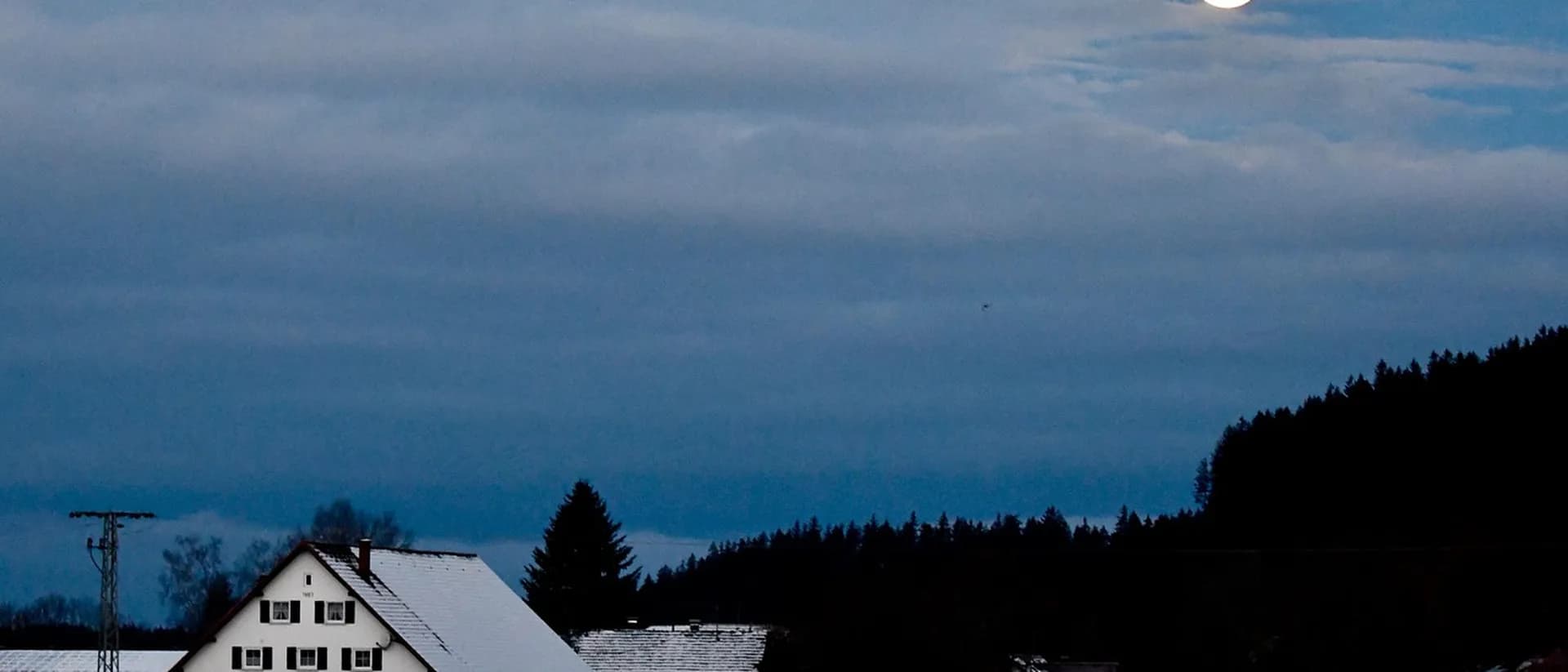
Halloween 2026 misses a true full moon by five days, but the moon is still the story of the season's sky. The October full moon, the Hunter's Moon, arrives Sunday, October 26, 2026, at 04:12 UTC, which is 12:12 AM Eastern / 9:12 PM Pacific on October 25. By Halloween night the moon is five nights past full, a waning gibbous around 84% illuminated, rising in the late evening.
For photographers and porch-light planners: full moon phase data and the complete 2026 lunar calendar are in our moon phases 2026 guide, and the naming lore, Hunter's Moon, Harvest Moon, Cold Moon, is unpacked in full moon names explained.
The Hunter's Moon has a date, a time, and its own set of 2026 viewing questions that deserve a fuller answer than this guide gives them. For the exact full moon instant by time zone, the full-moon table through the end of 2026, and the full breakdown of the five-day gap to Halloween, see Hunter's Moon 2026: Exact Date, Times by Time Zone.
Trick-or-Treat Hours by City (and Why They Vary)
There is no national trick-or-treat time. Start times are set by local custom, and in most of the country the rule is simple: trick-or-treating starts at or near sunset and runs two to three hours.
| City | Sunset, Oct 31 2026 | Common trick-or-treat window |
|---|---|---|
| New York | 5:53 PM | ~6:00–8:30 PM |
| Chicago | 5:46 PM | ~6:00–8:30 PM |
| Denver | 5:59 PM | ~6:15–9:00 PM |
| Los Angeles | 6:01 PM | ~6:15–9:00 PM |
| Miami | 6:40 PM | ~6:45–9:15 PM |
| Anchorage | 6:01 PM | ~6:15–9:00 PM |
| Honolulu | 5:56 PM | ~6:00–8:30 PM |
Note the pattern: sunset lands between 5:45 and 6:40 PM across major US cities in late October, so trick-or-treat kickoffs cluster in the 6:00–6:45 PM window local regardless of time zone, the closer to the equator (Miami) or the western edge of a zone, the later the daylight holds. For exact sunset times for your location, the sunrise & sunset calculator gives the precise minute.
For the full timing picture, when each region actually starts, when the porch lights go off, what the fall-back night does to the evening, and start times for individual cities, see Trick-or-Treat Timing 2026: What Time Does It Start and End by City?.
The Fall-Back Night Survival Guide
Halloween 2026 doubles as the night the clocks change, and the two events interact in ways worth planning for.
The double witching hour. At 2:00 AM Sunday, clocks fall back to 1:00 AM. Any party running past 2 AM literally re-lives an hour. Phones update automatically; ovens and car clocks don't. If you're hosting, the extra hour is a gift. If you're a parent of a sugar-loaded six-year-old, the extra hour is why Sunday morning feels like a trap.
Sleep math. The 25-hour night means anyone who sleeps a normal stretch wakes up relatively better-rested, the clock shift gifts you an hour in bed.
Devices. Devices on network time fix themselves. The microwave, the oven, the car, and that one wall clock are now wrong until spring. The full list of what changes and what doesn't is in our daylight saving time 2026 guide.
The Sunday after. November 1 is when the early darkness of standard time first bites, sunset snaps roughly an hour earlier in clock terms. It's also the day Christmas-season commerce officially kicks into gear; our Christmas countdown 2026 starts its count from that morning.
The repeated hour. At 2:00 AM the clock goes back to 1:00 AM, so in places observing daylight saving time the 1 AM hour happens twice, once on daylight time and once on standard time. That is what makes a pickup or reservation set for 1:30 AM ambiguous unless it says EDT or EST. For the full timeline, see when 1 AM happens twice on Halloween weekend 2026.
How Big Is Halloween? The Spending Picture
The National Retail Federation's 2025 survey put total Halloween spending at a record $13.1 billion, with per-person spending of $114.45, both all-time highs at the time. Roughly 73% of Americans celebrated in some form. The 2026 NRF figures arrive in late September; the trajectory of the last decade says records tend to fall.
| Category (2025 NRF survey) | Total | Per person | Share participating |
|---|---|---|---|
| Costumes | $4.3 billion | $51 | 71% |
| Decorations | $4.2 billion | $45 | 51% |
| Candy | $3.9 billion | $33 | 66% |
| Greeting cards | $0.7 billion | $21 | 38% |
A Saturday Halloween historically amplifies spending: more parties, more adult costume participation, more decorating. Retailers began treating the 2026 edition as a major event months in advance.
The History: From Samhain to Saturday Night
Halloween's roots trace to Samhain (pronounced SAH-win), the ancient Celtic festival marking summer's end and the start of winter, the darker half of the year, when the boundary between the living and the dead was believed to thin. Bonfires were lit; costumes were worn to confuse spirits.
When Christianity spread through the Celtic lands, the church placed All Saints' Day on November 1, making October 31 "All Hallows' Eve," which wore down into "Halloween." The traditions carried over: souling (going door to door for soul cakes in exchange for prayers) became trick-or-treating; turnip lanterns became pumpkins, an American substitution once Irish immigrants found the native gourd far easier to carve.
The holiday's American rise was gradual: Victorian-era parties, then postwar suburbanization, then the 1970s–80s candy-and-costume commercialization that built the modern industry. Today it sits behind only Christmas in US retail spending per holiday.
Halloween Sky and Calendar Neighbors
October 31 sits in a dense stretch of the calendar for a time-and-date site, worth mapping because the queries cluster:
- Hunter's Moon, Sunday, October 26 (04:12 UTC), five nights before Halloween
- Orionid meteor shower, peak October 21–22, the last major shower before the Geminids; see the Orionid guide
- Daylight saving ends, Sunday, November 1, 2:00 AM, the fall-back night
- All Saints' Day / Día de los Muertos, November 1–2
- Election Day, Tuesday, November 3, 2026, a national-margin election year
The Halloween-to-solstice corridor, Halloween, fall-back night, Thanksgiving, Black Friday, Christmas, the winter solstice, is the busiest stretch of the American calendar year, and the reason this site's event coverage peaks in Q4.
Explore More
- Moon Phases 2026: Full, New & Quarter Dates All Year, the full lunar calendar
- Orionid Meteor Shower 2026: Peak Dates & Viewing Guide, the October sky event
- Daylight Saving 2026: When Clocks Change and Why, the full fall-back guide
- Winter Solstice 2026: The Shortest Day, Hour by Hour, where the darkness leads
- Holidays Hub, every major holiday with dates and countdowns
- Sunrise & Sunset Calculator, exact sunset times for any city
Frequently Asked Questions
9 questions answered
How many days until Halloween 2026?
When is Halloween 2026?
Is Halloween 2026 on a Saturday?
Do the clocks change on Halloween 2026?
Is there a full moon on Halloween 2026?
What time does trick-or-treating start?
Is Halloween a federal holiday?
How much do Americans spend on Halloween?
Why is Halloween on October 31?
Put this into action
Stop guessing. Use our professional tools to schedule, convert, and manage time zones perfectly, 100% free.
Track Sky EventsOfficial Sources & References
- NASA Science: official data and scientific overviews for astronomical events and missions.