Best Stargazing Nights 2026: Complete Dark Sky Calendar (July-December)
Quick Answer
The best stargazing nights in 2026 are always within ±3 days of a new moon. Standout dates: July 12 to 18 (new moon July 15), August 9 to 15 (new moon August 12, plus Perseid peak), September 8 to 14 (new moon September 11), October 7 to 13 (new moon October 10, just after Saturn's October 4 opposition), November 6 to 12 (new moon November 9), and December 6 to 12 (new moon December 9, plus Geminid peak). August 2026 is the single best stargazing month of the year, with a new moon, Perseid peak, and total solar eclipse all converging.
The best stargazing nights in 2026 are always within ±3 days of a new moon, when the sky is darkest and the most stars, planets, and celestial objects are visible. For the second half of 2026, the standout dates are July 12 to 18 (new moon July 15), August 9 to 15 (new moon August 12, also the best Perseid meteor shower in years), September 8 to 14 (new moon September 11), October 7 to 13 (new moon October 10, just after Saturn's October 4 opposition), November 6 to 12 (new moon November 9), and December 6 to 12 (new moon December 9, plus the Geminid meteor shower peak December 14).
August 2026 is the best stargazing month of 2026, and possibly the best single month for astronomy in the entire decade. The August 12 new moon coincides with both a total solar eclipse (during the day) and the peak of the Perseid meteor shower (that night). This is a rare convergence that happens once every few decades, and the dark-sky conditions for the Perseids are the best since 2021 and will not be matched again until 2029. See our August 12 double event page for the complete story.
For the moon-phase calendar that drives this entire schedule, see our moon phases 2026 page.
The Fundamental Rule: ±3 Days of New Moon
Everything in this calendar flows from one rule: the best stargazing nights are always within ±3 days of the new moon. Here is why this rule exists and how to apply it.
The Moon is the single biggest source of natural light pollution in the night sky. A full moon is bright enough to wash out all but the brightest stars. Under a full moon, you can see perhaps 100 to 200 stars from a dark location, compared to 2,000 to 3,000 stars under a new moon from the same location. The Milky Way is invisible under a full moon and spectacular under a new moon. Faint nebulae, galaxies, and star clusters that are easily visible in a small telescope under a new moon are completely invisible under a full moon.
The Moon's brightness changes dramatically across its 29.5-day cycle. A full moon is magnitude −12.7, about 40,000 times brighter than the brightest star (Sirius, at magnitude −1.46). A new moon is magnitude "infinity" (the Moon is invisible). The first and last quarter moons are magnitude about −10, still very bright, but only about 1/10th as bright as a full moon. A thin crescent moon (3 to 4 days after new) is magnitude about −6, comparable to Venus, and bright enough to cast faint shadows but not bright enough to wash out the Milky Way.
The practical implication is that the ±3 day window around each new moon is when the sky is at its darkest. Within this window:
- The night of new moon is the darkest: the Moon is essentially invisible all night.
- The night before new moon has a thin waning crescent that rises shortly before dawn, invisible during the prime stargazing hours of 9 PM to 3 AM.
- The night after new moon has a thin waxing crescent that sets shortly after sunset, invisible during the prime stargazing hours.
Outside this ±3 day window, the Moon becomes bright enough to start degrading the view. By first quarter (about 7 days after new), the Moon is bright enough to wash out faint objects, and the Milky Way is significantly degraded. By full moon (about 14 days after new), the sky is dominated by moonlight and serious stargazing is impossible.
For the complete new moon calendar for 2026, see our moon phases 2026 page.
The Bortle Scale: Why Driving 30 Minutes Matters
The second most important factor in stargazing quality (after the moon phase) is light pollution. Even on a perfect new moon night, a city sky shows only a few dozen stars. A true dark sky shows several thousand. The difference is not subtle.
The Bortle Scale is the standard measure of sky brightness, ranging from class 1 (darkest skies on Earth) to class 9 (inner city):
| Bortle Class | Sky Description | Naked-eye Limiting Magnitude | Stars Visible |
|---|---|---|---|
| 1 | Excellent dark sky | 7.6 to 8.0 | ~2,500+ at zenith |
| 2 | Typical truly dark sky | 7.1 to 7.5 | ~2,000 to 2,500 |
| 3 | Rural sky | 6.6 to 7.0 | ~1,500 to 2,000 |
| 4 | Rural/suburban transition | 6.1 to 6.5 | ~1,000 to 1,500 |
| 5 | Suburban sky | 5.6 to 6.0 | ~500 to 1,000 |
| 6 | Bright suburban sky | 5.1 to 5.5 | ~250 to 500 |
| 7 | Suburban/urban transition | 4.6 to 5.0 | ~100 to 250 |
| 8 | City sky | 4.1 to 4.5 | ~50 to 100 |
| 9 | Inner-city sky | <4.0 | <50 |
You can check the Bortle class of any location using the free light pollution map at lightpollutionmap.info. The key practical insight: even a 30-minute drive from a small city can take you from Bortle class 6 to Bortle class 3, a four-class improvement that doubles or triples the number of visible stars. A 60 to 90 minute drive from a major metro area can reach Bortle class 1 to 2, which is qualitatively a different experience.
For timing your stargazing session, you also need to know when "dark" actually begins. Astronomical twilight ends when the Sun is 18 degrees below the horizon. This is the moment when the sky is as dark as it will get all night. See our civil vs nautical vs astronomical twilight page for the complete explanation.
July 2026: Best Nights July 12 to 18
New Moon: July 15, 2026 at approximately 09:44 UTC
Best Stargazing Window: July 12 to 18, 2026
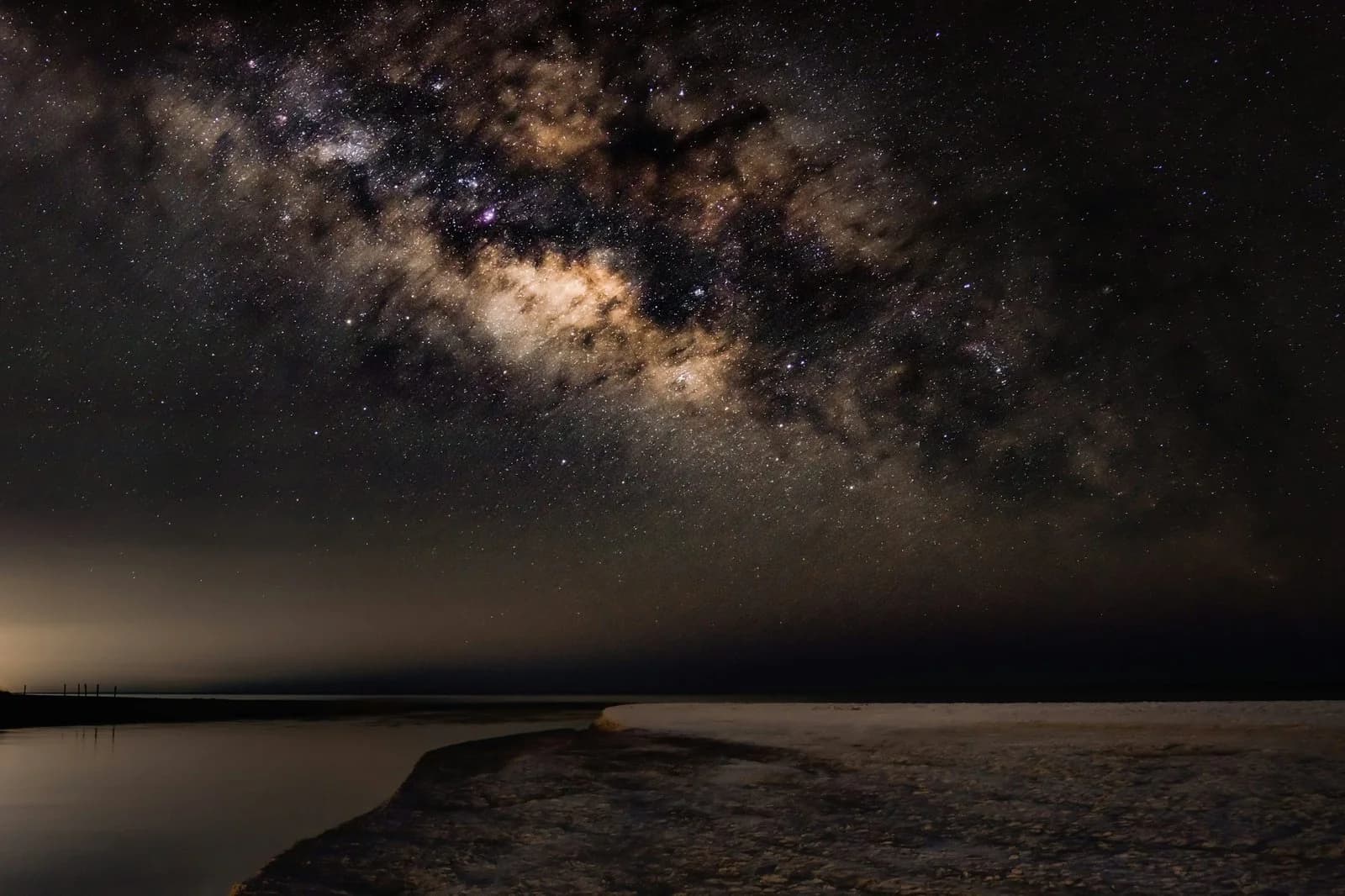
July is a transition month for stargazing. The galactic core of the Milky Way is visible all night in July; this is peak Milky Way season, and any of the nights in the July 12 to 18 window are excellent for Milky Way photography and viewing. The nights are still relatively short (10 to 11 hours of true darkness at mid-northern latitudes), but the weather is typically warm and pleasant, making July one of the most comfortable months for stargazing.
What is visible in July 2026:
- Venus: brilliant in the western sky after sunset. Sets about 90 minutes after the Sun. Naked-eye, unmistakable.
- Jupiter: bright in the southwestern sky after sunset, higher than Venus. Naked-eye. Visible until around midnight.
- Saturn: rises in the east-southeast around 10 PM local time, visible the rest of the night. Naked-eye, pale yellow. Saturn is approaching its October 4 opposition, so it is getting brighter and larger in telescopes throughout July.
- Mars: in the morning sky before dawn, low in the east. Still relatively faint (the next Mars opposition is February 2027) but brightening.
- Milky Way: visible from after dark through about 2 to 3 AM, arching from Sagittarius (low in the south) through Cygnus (nearly overhead) to Cassiopeia (low in the north).
- Summer Triangle: the bright stars Vega, Deneb, and Altair form a prominent triangle nearly overhead in the summer sky.
- Delta Aquariid meteor shower: active from about July 12 through August 23, with a broad peak around July 29 to 30. Modest rates (15 to 20 meteors per hour at peak under ideal conditions) but the late-July peak coincides reasonably well with the post-new-moon dark sky.
Naked-eye highlights: Venus and Jupiter in the evening, Milky Way arching overhead, Saturn rising late evening. The summer constellations (Scorpius, Sagittarius, Lyra, Cygnus, Aquila) are at their best.
Binocular/telescope highlights: Saturn's rings (just barely; they are near edge-on in 2026, see our planet parade 2026 page for details), Jupiter's moons, the Lagoon Nebula (M8) and Trifid Nebula (M20) in Sagittarius, the Hercules Cluster (M13) overhead.
For more on July's planet viewing, see our planet parade 2026 page.
August 2026: Best Nights August 9 to 15 (The Best Month of the Year)
New Moon: August 12, 2026 at 17:37 UTC
Best Stargazing Window: August 9 to 15, 2026
August 2026 is the best stargazing month of 2026, and possibly the best single month for astronomy in the entire decade. The August 12 new moon coincides with both a total solar eclipse (visible from Greenland, Iceland, and northern Spain during the day) and the peak of the Perseid meteor shower (visible that night from the Northern Hemisphere). This is a rare convergence that happens once every few decades, and the dark-sky conditions for the Perseids are the best since 2024 and the best until 2028.
The Perseid meteor shower peaks on August 12 to 13, 2026, with maximum activity predicted around 14:53 UTC on August 13. The night of August 12 to 13 is the prime viewing window. Under dark skies with no moon, observers can expect 60 to 100 meteors per hour at peak, with many bright "fireball" meteors. The Moon is new on August 12, meaning there is zero moonlight interference; the faintest meteors will be visible. This is the best Perseid shower since 2024 and the best until 2028. See our Perseid meteor shower 2026 page for the complete viewing guide.
The total solar eclipse of August 12, 2026 is visible as a total eclipse from Greenland, Iceland, and northern Spain, and as a partial eclipse from most of Europe, North Africa, and northeastern North America. Maximum eclipse is at 17:45:53 UTC. Maximum duration of totality is 2 minutes 18 seconds. See our August 12 double event page for the complete story.
What else is visible in August 2026:
- Saturn: rising earlier each night (around 9 PM by month's end), approaching its October 4 opposition. Visible all night by late August.
- Jupiter: bright in the evening sky, setting around 11 PM by month's end.
- Venus: transitions from evening to morning sky in mid-August (inferior conjunction around August 18). Visible as a brilliant morning object by late August.
- Milky Way: at its best in August, with the galactic core visible from sunset through about 1 AM. The August new moon window is the best Milky Way photography window of the year.
- Summer constellations: at their best, with Scorpius, Sagittarius, Lyra, Cygnus, and Aquila prominent.
Naked-eye highlights: the Perseid meteor shower (peak night August 12 to 13), the Milky Way at its best, Venus transitioning from evening to morning sky.
Binocular/telescope highlights: Saturn approaching opposition (rings near edge-on), Jupiter's moons, deep-sky objects in Sagittarius and Scorpius.
If you can only pick one stargazing trip in 2026, August 9 to 15 is the window. The combination of new moon, Perseid peak, and (in some locations) total solar eclipse is genuinely rare.
September 2026: Best Nights September 8 to 14
New Moon: September 11, 2026 at approximately 03:43 UTC
Best Stargazing Window: September 8 to 14, 2026
September is a transition month: the summer constellations are still visible in the early evening, but the autumn constellations (Pegasus, Andromeda, Perseus) are rising in the east. Nights are getting longer (about 11 to 12 hours of true darkness at mid-northern latitudes), and the weather is typically pleasant, warm enough for comfortable observing but cool enough to reduce haze and humidity.
Avoid the Harvest Moon week: the Harvest Moon falls on September 26, 2026, with full moon at 16:49 UTC. The week around the Harvest Moon (September 23 to 29) is the worst stargazing week of September; the Moon is full and bright all night. Plan around it. The September 8 to 14 new moon window is the best stargazing week of September. For more on the Harvest Moon, see our Harvest Moon 2026 page.
What is visible in September 2026:
- Saturn: at opposition October 4, so Saturn is rising earlier each night and getting brighter. By late September, Saturn rises around sunset and is visible all night. This is the best time of year to observe Saturn, and 2026 is an unusual year because Saturn's rings are near edge-on. See our planet parade 2026 page for details.
- Jupiter: in the evening sky, setting around 10 PM by month's end.
- Venus: brilliant in the morning sky before dawn (having transitioned from evening to morning in August).
- Milky Way: still visible in the early evening, with the galactic core setting around 11 PM by month's end.
- Autumn equinox: September 23, 2026 at 00:05 UTC. The official start of autumn in the Northern Hemisphere. Day and night are roughly equal everywhere on Earth.
- Andromeda Galaxy (M31): the farthest object visible to the naked eye (about 2.5 million light-years away), visible as a faint smudge in the constellation Andromeda. Best viewed in autumn when Andromeda is high in the sky.
Naked-eye highlights: Saturn at its best for the year, Venus as a brilliant morning star, the Andromeda Galaxy (under dark skies).
Binocular/telescope highlights: Saturn's rings (edge-on in 2026, a once-in-15-years sight), the Andromeda Galaxy, the Double Cluster in Perseus, the Pleiades (M45) rising late in the evening.
For the moon-phase calendar that drives this schedule, see our moon phases 2026 page.
October 2026: Best Nights October 7 to 13
New Moon: October 10, 2026 at approximately 15:50 UTC
Best Stargazing Window: October 7 to 13, 2026
October is a premier stargazing month: the nights are long (12+ hours of true darkness at mid-northern latitudes), the weather is typically clear and crisp, and the autumn constellations are at their best. The summer Milky Way has set, but the winter constellations (including Orion) are beginning to rise late in the evening.
What is visible in October 2026:
- Saturn: at opposition on October 4, 2026. Saturn is visible all night, at its brightest for the year. Saturn's rings are near edge-on in October 2026, a once-in-15-years sight. Even a small telescope will show Saturn looking like a yellow ball with a thin line through it. This is the best Saturn observing of the year and possibly the most unusual Saturn observing of the decade.
- Jupiter: rising earlier each night, visible most of the night by month's end.
- Venus: brilliant in the morning sky before dawn.
- Orionid meteor shower: peaks October 21, 2026. Modest rates (10 to 20 meteors per hour under ideal conditions), but the meteors are fast and bright. The Moon is at last quarter around October 18, so the Orionid peak on October 21 has some moon interference in the morning hours but decent conditions in the evening.
- Andromeda Galaxy (M31): high overhead in the evening, the best time of year to observe it.
- Pleiades (M45): rising in the east in the evening, visible all night.
- Winter constellations: Orion, Taurus, Gemini rising late evening.
Naked-eye highlights: Saturn at opposition (with edge-on rings), the Andromeda Galaxy, the Pleiades, Orion rising late evening.
Binocular/telescope highlights: Saturn's edge-on rings (the highlight of the year for planetary observers), the Andromeda Galaxy, the Double Cluster in Perseus, the Orion Nebula (M42) late in the evening.
For the supermoon calendar, see our 2026 supermoon dates page.
November 2026: Best Nights November 6 to 12
New Moon: November 9, 2026 at 07:02 UTC
Best Stargazing Window: November 6 to 12, 2026
November is a long-nights month (13+ hours of true darkness at mid-northern latitudes) with typically clear, cold skies. The winter constellations are prominent by mid-evening, including Orion, Taurus, Gemini, and Auriga. The Milky Way of winter (the "winter Milky Way," much fainter than the summer Milky Way because we are looking outward away from the galactic center) arches overhead.
What is visible in November 2026:
- Jupiter: low in the southeast at nightfall in the constellation Leo, climbing through the evening and setting around midnight. Past its January 10 opposition but still bright (around magnitude −2), it is already a rewarding telescope object and will keep improving through the evening all winter toward its February 11, 2027 opposition.
- Saturn: still visible in the evening sky, setting around midnight. Past its October opposition, so slightly smaller and dimmer than at its best, but still excellent for observation.
- Venus: brilliant in the morning sky before dawn.
- Mars: brightening in the morning sky, approaching its February 2027 opposition. By November, Mars is noticeably brighter than usual and visibly redder.
- Leonid meteor shower: peaks November 17, 2026. The Moon is near full around this date (the full Beaver Moon is November 24, just seven days later), so the Leonid peak has a waxing gibbous moon for much of the evening, with increasing glare through the week. Modest rates (10 to 15 meteors per hour) even under ideal conditions.
- Taurid meteor shower: active throughout early November, with a long broad peak. Known for producing "fireballs," exceptionally bright meteors. Rates are low (5 to 10 per hour) but the fireballs are memorable.
- Winter constellations: Orion, Taurus, Gemini, Auriga, Canis Major (with Sirius, the brightest star in the night sky).
Naked-eye highlights: Jupiter approaching opposition, Mars brightening, Orion and the winter constellations, the Pleiades high overhead.
Binocular/telescope highlights: Jupiter at its best (with cloud bands and the Great Red Spot visible in small telescopes), the Orion Nebula (M42), the finest nebula in the northern sky, the Pleiades, the Hyades.
For the broader planet viewing calendar, see our planet parade 2026 page.
December 2026: Best Nights December 6 to 12
New Moon: December 9, 2026 at 00:52 UTC
Best Stargazing Window: December 6 to 12, 2026
December has the longest nights of the year. At mid-northern latitudes, there are 14+ hours of true darkness. The winter constellations are visible all night, with Orion dominating the southern sky. The weather is the main challenge: cold temperatures and the possibility of cloud cover, but a clear December night under a new moon is one of the best stargazing experiences of the year.
The Geminid meteor shower peaks overnight on December 13–14, 2026. The Geminids are typically the best meteor shower of the year. Under ideal conditions, observers can see 100 to 150 meteors per hour. The Moon is a thin waxing crescent during the peak night (about 20% illuminated, setting in the early evening), so there is minimal moon interference. Excellent conditions for Geminid viewing.
What is visible in December 2026:
- Jupiter: just past its November 26 opposition, still visible all night, still excellent for observation.
- Saturn: visible in the evening sky, setting around 10 PM by month's end.
- Venus: brilliant in the morning sky before dawn.
- Mars: brightening rapidly, approaching its February 19, 2027 opposition. By December, Mars is noticeably bright and red, among the brightest objects in the night sky.
- Geminid meteor shower: peaks December 13 to 14, 2026. Best meteor shower of the year under excellent dark-sky conditions. Up to 100 to 150 meteors per hour under ideal conditions.
- Ursid meteor shower: a minor shower peaking December 22, 2026. Low rates (5 to 10 per hour) but near the winter solstice.
- Winter solstice: December 21, 2026 at 15:48 UTC. The shortest day of the year in the Northern Hemisphere (and longest in the Southern Hemisphere).
- Winter constellations: at their best. Orion, Taurus, Gemini, Auriga, Canis Major (with Sirius), Canis Minor (with Procyon). The "Winter Hexagon" asterism connects bright stars across six constellations.
Naked-eye highlights: the Geminid meteor shower (the best meteor shower of 2026), Mars brightening toward opposition, the winter constellations at their best, Sirius (the brightest star in the night sky).
Binocular/telescope highlights: Jupiter (still excellent post-opposition), Mars (showing a visible disk in telescopes), the Orion Nebula (M42), the Pleiades, the open clusters M35, M36, M37, M38 in Auriga.
For the meteor shower calendar, see our meteor showers 2026 page.
The Best Stargazing Trip of 2026
If you can only take one stargazing trip in 2026, the choice is clear: August 9 to 15, 2026, centered on the August 12 new moon. This window combines:
- The best Perseid meteor shower in years (peak August 12 to 13, with no moon interference)
- A total solar eclipse on August 12 (visible from Greenland, Iceland, and northern Spain)
- The Milky Way at its best (galactic core visible all evening)
- Comfortable summer temperatures
- Long dark nights (10 to 11 hours of true darkness)
For travelers, the August 12 total solar eclipse is the marquee event. The path of totality crosses Greenland, Iceland, and northern Spain. Iceland is a particularly attractive destination. It offers eclipse viewing, potential aurora viewing (we are still in the solar maximum window), and the Perseid meteor shower all in the same trip. See our August 12 double event page for the complete travel and viewing guide.
If August is not possible, the second-best window is October 7 to 13, 2026, centered on the October 10 new moon and Saturn's October 4 opposition. Saturn's edge-on rings are a once-in-15-years sight, and the October dark sky is excellent for deep-sky observing.
Light Pollution: How to Escape It
The single biggest improvement you can make to your stargazing experience is escaping light pollution. Here is a practical guide:
From a city center (Bortle 8 to 9): you can see the Moon, the brightest planets (Venus, Jupiter, Saturn), and maybe 20 to 50 of the brightest stars. Serious stargazing is impossible. To improve: drive 30 to 60 minutes to a Bortle 4 to 5 location.
From a suburb (Bortle 5 to 6): you can see the Moon, planets, and perhaps 200 to 500 stars. The Milky Way is faintly visible near zenith. To improve: drive 30 to 60 minutes to a Bortle 3 location.
From a rural area (Bortle 3 to 4): you can see the Milky Way clearly, perhaps 1,000 to 2,000 stars, and many deep-sky objects in binoculars. This is good stargazing. To improve: drive to a Bortle 1 to 2 dark sky park.
From a dark sky park (Bortle 1 to 2): you can see the Milky Way in stunning detail, 2,500+ stars, and many deep-sky objects naked-eye. This is as good as it gets.
Use lightpollutionmap.info to find Bortle 1 to 2 locations near you. Designated International Dark Sky Parks and Sanctuaries are the gold standard: these are locations that have been formally certified for their dark sky quality and protected from light pollution. Major dark sky parks in North America include Big Bend National Park (Texas), Death Valley National Park (California), Cherry Springs State Park (Pennsylvania), and Headlands International Dark Sky Park (Michigan). Major dark sky parks in Europe include Brecon Beacons (Wales), Galloway Forest Park (Scotland), and the Pic du Midi region (France).
For the timing of when "dark enough" begins, see our civil vs nautical vs astronomical twilight page.
What to Bring
For a serious stargazing session, here is the essential equipment:
- A red flashlight: red light preserves night vision; white light destroys it. Use a red flashlight for navigating and reading star charts. You can buy a dedicated red flashlight or cover a regular flashlight with red cellophane.
- A star chart or astronomy app: apps like Stellarium, SkyView, and Star Walk show you what is visible in real time. For dark sky use, set the app to "red mode" to preserve night vision.
- Binoculars: even modest binoculars (10x50 is a good starting size) will dramatically improve your view. Binoculars will show Jupiter's moons, Saturn's rings (just barely, in 2026 with edge-on rings), the Orion Nebula, the Pleiades, and many star clusters.
- A telescope: optional but rewarding. A small refractor (60 to 90mm) or reflector (4 to 6 inch) will show Saturn's rings, Jupiter's cloud bands, the Orion Nebula in detail, and many deep-sky objects. Avoid cheap department-store telescopes; they are frustrating to use and produce poor images.
- Warm clothes: even in summer, nights get cold when you are standing still for hours. Dress for temperatures 20°F (10°C) colder than the daytime high.
- A reclining chair or blanket: looking up for extended periods is tiring on the neck. A reclining lawn chair or a blanket on the ground makes a huge difference.
- Snacks and warm drinks: stargazing is a waiting game. Bring something to eat and a thermos of hot chocolate or coffee.
What to Do Next
Bookmark this page. It is the master dark-sky calendar for the rest of 2026. Plan your stargazing sessions around the new moon dates (July 15, August 12, September 11, October 10, November 9, December 9), and prioritize the August 9 to 15 window if at all possible.
For related pages on this site, see our moon phases 2026 page (the moon-phase calendar that drives this schedule), our meteor showers 2026 page (for meteor shower peak dates and viewing guides), our Perseid meteor shower 2026 page (for the August 12 to 13 peak), and our 2026 supermoon dates page (for dates to avoid).
Explore More
- Moon Phases 2026: the moon-phase calendar that drives this entire stargazing schedule.
- Meteor Showers 2026: every meteor shower in 2026, with peak dates, viewing guides, and predicted rates.
- Perseid Meteor Shower 2026: the complete guide to the August 12 to 13 Perseid peak, the best meteor shower of 2026.
- 2026 Supermoon Dates: dates to avoid for stargazing (full moons, especially supermoons).
- Civil vs Nautical vs Astronomical Twilight: when does "dark enough for stargazing" actually begin?
- August 12, 2026: Eclipse + Perseids Double Event: the biggest astronomy day of 2026, a total solar eclipse by day and the Perseid peak by night.
Frequently Asked Questions
5 questions answered
What are the best stargazing nights in 2026?
Why are new moon nights best for stargazing?
What is the single best month for stargazing in 2026?
What can I see on these dark nights?
What is the Bortle scale?
Put this into action
Stop guessing. Use our professional tools to schedule, convert, and manage time zones perfectly, 100% free.
Track Sky EventsOfficial Sources & References
- NASA Science: official data and scientific overviews for astronomical events and missions.