Beaver Moon 2026: Exact Full Moon Time, Moonrise and Viewing Tips
Quick Answer
Slug: /articles/beaver-moon-2026 Primary keyword: beaver moon 2026 Meta title: Beaver Moon 2026: November 24 Time & Best Viewing Meta description: The Beaver Moon reaches full phase on November 24, 2026, at 14:53 UTC. Compare US time zones and find out which evenings are best for watching moonrise. Updated: October 2026
Beaver Moon 2026: Exact Full Moon Time, Moonrise and Viewing Tips
SEO title: Beaver Moon 2026: November 24 Time & Best Viewing
Meta description: The Beaver Moon reaches full phase on November 24, 2026, at 14:53 UTC. Compare US time zones and find out which evenings are best for watching moonrise.
Quick Answer: The Beaver Moon reaches its exact full phase on Tuesday, November 24, 2026, at 14:53 UTC. That is 9:53 AM EST in New York and 6:53 AM PST in Los Angeles, so the exact instant occurs during daylight in the mainland United States. For a view near moonrise, choose the evening of November 24 if your sky is clear. November 23 is a good alternative, and November 25 will still look nearly full. NASA classifies this full Moon as a supermoon, although timeanddate uses a stricter cutoff that excludes it.
Beaver Moon 2026 at a glance
| Fact | Verified value |
|---|---|
| Full Moon (UTC) | November 24, 2026 at 14:53 UTC. |
| U.S. Eastern time | Tuesday, November 24 at 9:53 AM EST. |
| U.S. Pacific time | Tuesday, November 24 at 6:53 AM PST. |
| Viewing evening | November 24, weather permitting; November 23 and 25 also work. |
| Moonrise | Depends on your city and date; it is not the full-phase time. |
| Moon name | Beaver Moon, a common North American calendar name for November. |
| Supermoon? | NASA: yes. Timeanddate's 360,000 km threshold: no. |
| Full-phase distance | About 360,768 km (224,171 miles), center to center. |
| Next full Moon | Cold Moon, December 24 at 01:28 UTC (December 23 in U.S. time zones). |
November 24 is the calendar date, not a required viewing hour
The U.S. Naval Observatory gives the full-phase instant as 14:53 UTC on November 24. NASA's 2026 sky-event calendar lists the same minute, while NASA's supermoon page rounds its listing to 14:54 UTC. We use the Naval Observatory time throughout this guide. The one-minute difference does not change which night you should watch.
A full Moon is an astronomical instant. It is the moment when the Moon reaches the full phase as seen from Earth's center, not the moment it rises over your street or becomes visible above your neighbor's roof. That is why an article can say the Beaver Moon is full at 9:53 AM in New York even though most readers there will look for it after sunset.
The disc changes gradually and looks close to full on adjacent evenings. November 23 and 25 remain reasonable backup nights even though the phase instant occurs on November 24.
If your Tuesday evening is clear, there is no need to stay awake until a special minute. Choose a convenient time near moonrise if you want to see the Moon low above the horizon, or look later when it is higher and easier to clear nearby buildings.
The local date changes only when the UTC instant crosses midnight in another time zone. The full-phase instant remains November 24 in the continental United States, London and India. In Sydney, it is already the early hours of Wednesday, November 25. Neither date is a different full Moon.
Full phase, moonrise and the evening you actually see it
Three times can appear in a full-Moon guide: the worldwide full-phase instant, the Moon's rise over a standard local horizon, and the time it finally clears buildings or hills where you stand. They are not interchangeable. On November 24 in New York, full phase is at 9:53 AM EST, while moonrise is at 4:15 PM, almost six and a half hours later.
Moonrise can occur before sunset, and a bright sky can make the newly risen Moon hard to pick out. If you are choosing an evening rather than planning a photograph at the horizon, watching after dusk is usually simpler. For the complete month's lunar dates, use the November 2026 Moon phase calendar.
Which evening is best: November 23, 24 or 25?
For New York, Los Angeles, London and New Delhi, November 24 is the strongest first choice if the weather is comparable. The Moon is very close to full, and it rises around late afternoon or dusk in those locations. That makes it easy to look for it without staying outside for several hours.
The previous and following evenings serve different purposes. November 23 has a nearly full Moon already above the horizon by sunset in all four sample cities. November 25 gives you a later moonrise, including a rise after sunset in some cities, but takes place farther from the exact phase.
| Local evening | What changes | Practical choice |
|---|---|---|
| Monday, November 23 | The Moon is still waxing and nearly full. In the sample cities it rises before sunset. | Use it if Tuesday looks cloudy or you already have Monday evening free. |
| Tuesday, November 24 | Exact full phase occurs earlier that day in New York, Los Angeles and London, and at 8:23 PM in India. | First choice for a near-full Moon around dusk. |
| Wednesday, November 25 | The Moon is waning but still looks close to full. Its rise is later than on Tuesday. | Useful if the first two evenings are cloudy, or if you prefer a Moon rising into a darker sky. |
The table is a decision aid, not a global ranking. Moonrise occurs at different local times, and weather can change the result. An open eastern view in your neighborhood may matter more than being on the exact calendar date.
For instance, in New York the Moon rises about 16 minutes before sunset on November 24. In Los Angeles it rises only a few minutes before sunset. By November 25, the published moonrise is after sunset in both cities, so you can watch it appear against a darker sky, although the Moon is farther past its full phase.
In London and New Delhi, the Moon also rises before sunset on November 24. Waiting for twilight may make it easier to notice against the sky.
Exact Beaver Moon time in the U.S., UK, India and Australia
All the entries below represent the same instant: November 24 at 14:53 UTC. The local times were converted using the named IANA time zones for that date, so the U.S. entries use standard time after the November 1 clock change.
| Location | Local full-phase date and time | Time zone |
|---|---|---|
| New York | Tue, Nov 24, 9:53 AM | EST (UTC-05:00) |
| Chicago | Tue, Nov 24, 8:53 AM | CST (UTC-06:00) |
| Denver | Tue, Nov 24, 7:53 AM | MST (UTC-07:00) |
| Los Angeles | Tue, Nov 24, 6:53 AM | PST (UTC-08:00) |
| Anchorage | Tue, Nov 24, 5:53 AM | AKST (UTC-09:00) |
| Honolulu | Tue, Nov 24, 4:53 AM | HST (UTC-10:00) |
| London | Tue, Nov 24, 2:53 PM | GMT (UTC+00:00) |
| New Delhi | Tue, Nov 24, 8:23 PM | IST (UTC+05:30) |
| Sydney | Wed, Nov 25, 1:53 AM | AEDT (UTC+11:00) |
Moonrise on November 23, 24 and 25 in four cities
The exact full-phase time is the same worldwide. Moonrise is not. It depends on your longitude, latitude, local horizon and the conditions used in the calculation.
These are published local moonrise times from timeanddate, cross-checked independently using Swiss Ephemeris at the city coordinates listed below. They are rounded to the nearest minute. They assume a standard unobstructed horizon and include atmospheric refraction; a hill or tall building can delay when you actually see the Moon.
| City | Mon, Nov. 23 | Tue, Nov. 24 | Wed, Nov. 25 |
|---|---|---|---|
| New York (EST) | 3:28 PM | 4:15 PM | 5:14 PM |
| Los Angeles (PST) | 3:50 PM | 4:42 PM | 5:45 PM |
| London (GMT) | 2:44 PM | 3:17 PM | 4:07 PM |
| New Delhi (IST) | 4:07 PM | 4:56 PM | 5:55 PM |
These figures are moonrise times, not recommended arrival times and not the full-phase instant. If the Moon rises while the Sun is still up, it may take some time before you notice it. If you are behind buildings or trees, the Moon must climb above those obstructions first.
The calculation reference points are New York at 40.7128° N, 74.0060° W; Los Angeles at 34.0522° N, 118.2437° W; London at 51.5074° N, 0.1278° W; and New Delhi at 28.6139° N, 77.2090° E. An open sea-level horizon and standard pressure and temperature were used for the independent check. City-specific published results and the independent results agree to roughly a minute, but that does not mean every neighborhood shares the same observed rise time.
Use your exact location if moonrise is central to your plan. The table is enough to pick an evening; it is not a substitute for a horizon check at a photography location.
When should you go outside to see the Beaver Moon?
If you only want to see November's nearly full Moon, step outside on the evening of November 24 once the sky has cleared enough for a view. There is no need for a dark rural site. A full Moon is bright enough to see from a city, and ordinary street lighting does not stop it being visible in a clear sky.
For a low Moon above the horizon, look toward the east or northeast around local moonrise. The exact direction varies with your location. On the selected dates, the published rise bearings are generally northeast of due east for these sample Northern Hemisphere cities, so a clear view in that direction helps.
Cloud is the one condition the calendar cannot settle months ahead. If November 24 is overcast and November 23 is clear, use November 23. A clear Moon that is slightly short of its full phase is more useful than a mathematically exact full Moon hidden behind cloud.
What moonrise looks like in New York and Los Angeles
In New York on November 24, the Moon rises at 4:15 PM EST and the Sun sets at 4:31 PM. In Los Angeles, moonrise is at 4:42 PM PST and sunset is at 4:45 PM. Both are city-reference times for an unobstructed horizon, not a promise that the Moon will clear your particular roofline at that minute.
On November 25, Los Angeles moonrise shifts to 5:45 PM, after sunset at 4:44 PM. That may provide a darker background for a horizon photograph, although the Moon is farther past full phase. Check the east-to-northeast view and forecast before committing to a location.
Is the November 24 Beaver Moon a supermoon?
Under the near-perigee definition used by NASA and the calculation published by astronomer Fred Espenak, yes. Under timeanddate's stricter fixed-distance definition, no. Both labels refer to the same Moon, and neither changes when you should go outside.
The Moon's distance from Earth changes during its orbit. At the full phase on November 24, Espenak's calculation gives a geocentric center-to-center distance of 360,768 kilometers, about 224,171 miles. An independent Swiss Ephemeris calculation places it within several kilometers of that value. The Moon reaches its next perigee on November 25 at 20:58 UTC, about 30 hours after full phase.
Espenak's method measures where the full Moon falls between the relevant apogee and perigee distances. He gives this full Moon a relative-distance value of 0.969, above the 0.90 threshold used for his supermoon list. NASA also explicitly includes November 24 among its upcoming supermoons.
Timeanddate draws the line differently. It calls a full Moon a supermoon only if the Moon's center is less than 360,000 kilometers from Earth's center at full phase. This event is about 768 kilometers beyond that cutoff, so it does not qualify on their list.
That explains why reputable calendars can disagree over the label even when they broadly agree on the Moon's distance. "Supermoon" is not an officially standardized astronomical category with one universal cutoff. A useful guide should say which rule it is using.
Will this supermoon look enormous?
No. The Beaver Moon is relatively close, but you should not expect it to fill a large part of the sky. NASA notes that the apparent size difference between a very close full Moon and a distant one can be measurable without being easy to judge by eye, especially when the two are not side by side.
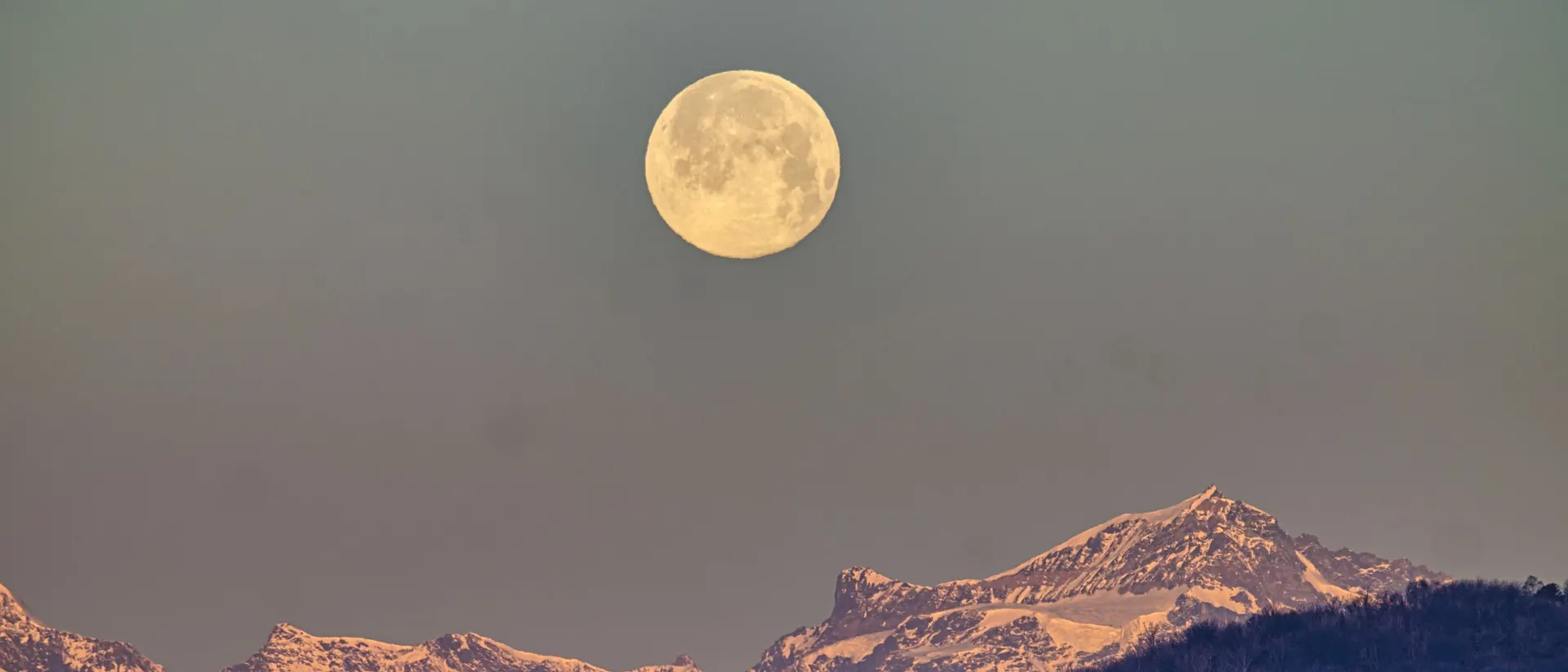
The Moon may appear large when it sits just above buildings or trees. That is the Moon illusion, a perception effect that occurs during ordinary full Moons too. It is separate from the actual, modest change in angular size caused by the Moon's changing orbital distance.
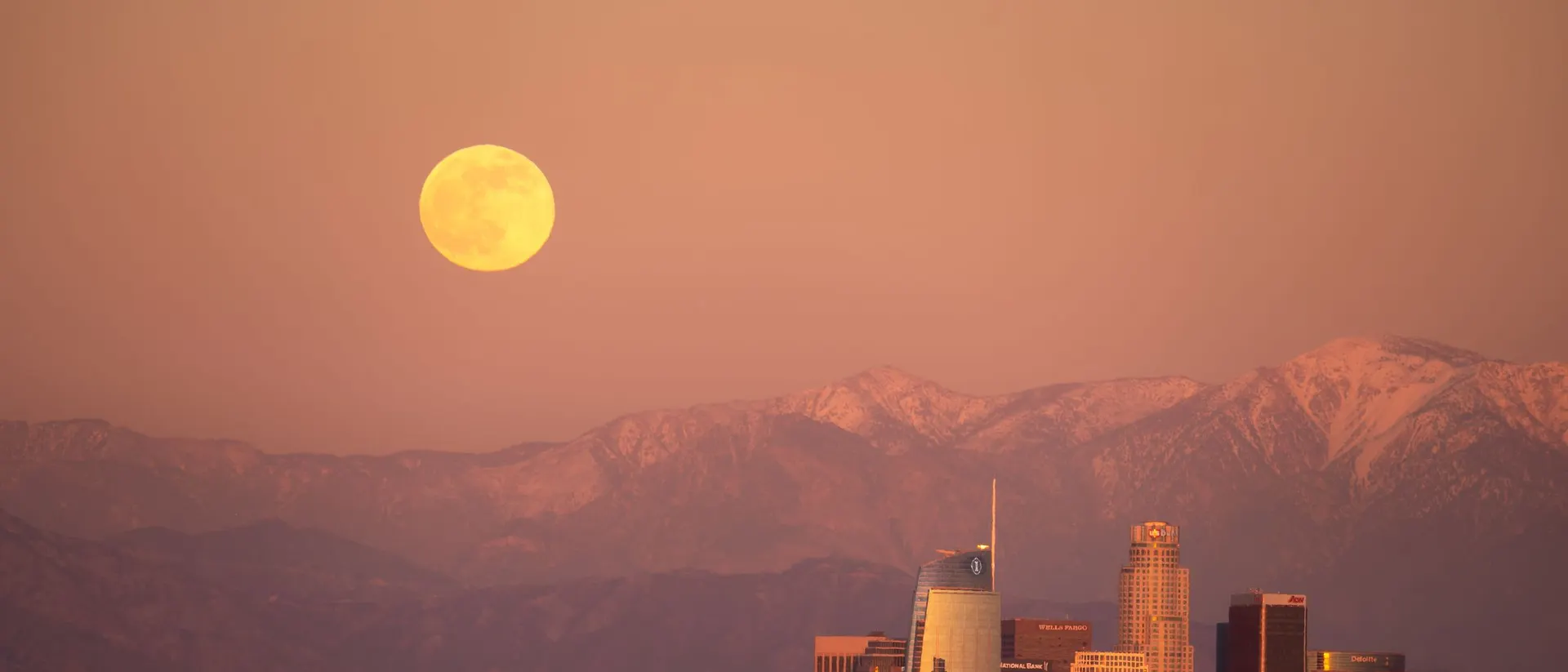
A long-lens photograph can make the Moon look huge against a skyline without showing what you would see unaided. See what a supermoon means for the distance criterion and the separate Moon-illusion effect.
Does the supermoon label change the best night?
No. November 23 and 25 are close to the same perigee as November 24, and the Moon's distance changes continuously rather than crossing a visible on-off boundary at full phase. NASA includes November 24 under its near-perigee convention, while timeanddate excludes it under its fixed-distance rule. The weather and moonrise view should decide when you go out.
Why can the Beaver Moon look orange when it rises?
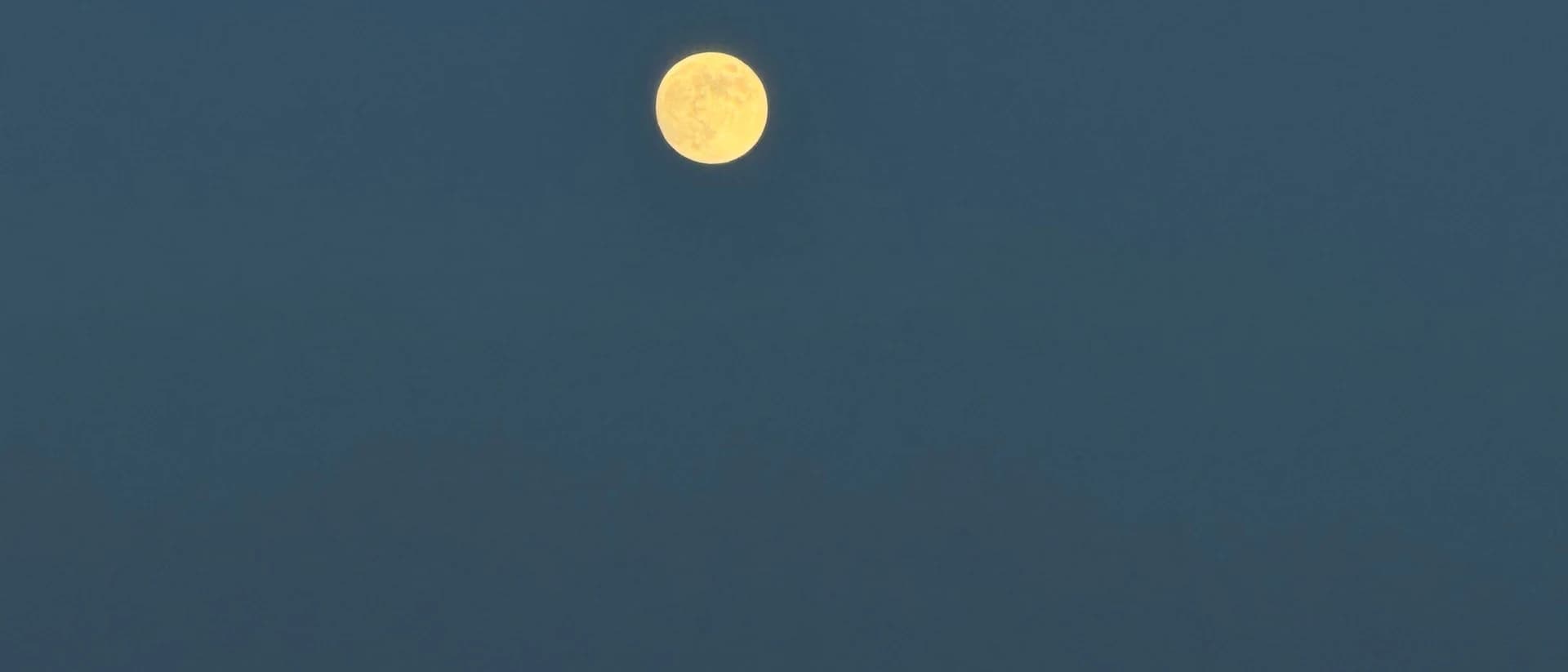
A low Moon sometimes looks yellow, copper or orange because its light travels through more of Earth's atmosphere before reaching you. Shorter blue wavelengths are scattered out of the direct beam more strongly, leaving a warmer-looking disc. Haze, dust and smoke can change how strong the color appears.
The color does not indicate that the Moon is entering a special phase. A full Moon can rise orange and look much whiter after it climbs higher. The November date and the Beaver Moon name have nothing to do with the color.
How to photograph the Beaver Moon on November 24
Choose whether you want lunar detail or a Moon rising beside a real landmark. A close photograph of the disc favours a long focal length and a short exposure. A skyline photograph needs a wider composition, with enough space for the Moon's expected rising position and any foreground you want to keep.
NASA recommends treating the bright Moon as a sunlit subject. Its Looney 11 rule gives a manual starting point of f/11 and a shutter time near the reciprocal of ISO, such as 1/100 second at ISO 100. That is only a starting exposure: check whether lunar details are blown out, then adjust for your equipment, haze and Moon altitude. A tripod and remote shutter can help reduce camera shake, especially with a telephoto lens.
Arrive before the published moonrise time if you want a low-horizon shot. Check where the eastern sky is open and whether a ridge or building will delay first visibility. The Moon can be pale against daylight or warm-coloured near the horizon; you cannot predict its exact appearance weeks ahead.
A long telephoto lens can place a large-looking Moon behind a distant building because of the narrow framing and the chosen shooting position. That photo does not mean the disc looked equally large to everyone standing nearby. If you combine exposures to preserve a bright disc and dark foreground, disclose that the image is a composite instead of presenting it as a single exposure.
A phone works for a quick record, but a wide-angle view may reduce the Moon to a small dot. Use a genuine optical telephoto camera if available, lower exposure on the bright disc and brace the device. NASA's Moon photography guidance explains why a properly exposed Moon and a bright foreground can require different settings.
Why is November's full Moon called the Beaver Moon?
"Beaver Moon" is a traditional name widely used in modern North American full-Moon calendars. NASA traces the spread of many familiar monthly full-Moon names to lists published by the Maine Farmers' Almanac beginning in the 1930s. That history of publication is easier to document than a single origin for every name.
Two explanations commonly accompany Beaver Moon. One links the season to beavers preparing lodges and food stores ahead of winter. The other connects it with the historical timing of beaver trapping before waterways froze. The Farmers' Almanac and NASA both describe these interpretations, but they should not be presented as one shared tradition of all Indigenous peoples.
Different communities used different seasonal names, and names could reflect local wildlife, weather or food gathering. "Frost Moon" is another name you will encounter for a November full Moon. For a date-and-time reference, the name is useful mainly because it tells you which full Moon people mean; the astronomical event does not depend on the naming tradition.
The Beaver Moon is two days before U.S. Thanksgiving
Thanksgiving Day in the United States is Thursday, November 26, 2026, according to the federal holiday calendar. The Beaver Moon's exact phase is Tuesday, November 24, so the events are two calendar days apart. The proximity is a calendar coincidence, not a lunar rule governing Thanksgiving.
For the month's other phases, use the November 2026 Moon phase calendar or the 2026 Moon phases hub. This page deals with the full Moon's viewing times.
The next full Moon is the December Cold Moon on December 24, 2026, at 01:28 UTC, according to the Naval Observatory. In New York, that instant is 8:28 PM EST on Wednesday, December 23, so U.S. readers may see a different calendar date in a local guide. Check the Cold Moon guide for its local viewing nights instead of carrying November's advice into December.
Beaver Moon versus the next Cold Moon
The Beaver Moon is November's only full Moon in 2026. The following full phase, called the Cold Moon in many North American calendars, occurs on December 24 at 01:28 UTC. That is December 23 at 8:28 PM EST in New York and 5:28 PM PST in Los Angeles. The calendar-day difference is a time-zone conversion, not a disagreement about which lunar phase is next.
The December full Moon is closer to Earth at the exact phase than the November one, according to Espenak's distance table. That is a comparison of geocentric distances, not a reason to assume you will plainly see a size difference from your backyard. For viewing choices and moonrise times in December, use the Cold Moon guide rather than copying November's local schedule.
A simple plan for November 24
Check whether the eastern or northeastern horizon is open from the place where you plan to stand. If you want a rise photograph, arrive before the listed time so you are not finding parking when the Moon first clears the horizon. If you only want to see a bright full-looking Moon, you can wait until it climbs above obstructions after dusk.
You do not need a dark-sky park or special equipment. A city sidewalk, your yard or a clear view from home may be enough. The best site is one where you can actually see the Moon, not necessarily the place with the least artificial lighting.
If Tuesday's forecast looks poor, switch to Monday the 23rd. If both are poor, Wednesday the 25th is still worth a look. You will not lose the experience because you missed the single minute listed as the full phase.
Frequently Asked Questions
13 questions answered
Is the Beaver Moon full tonight?
Is the Beaver Moon brighter than usual?
When is the Beaver Moon in 2026?
Is the Beaver Moon on November 23 or November 24 in the United States?
Can the local full-Moon date be November 25?
Which evening should I watch the Beaver Moon?
Is the November 2026 full Moon a supermoon?
Do I need a telescope to see the Beaver Moon?
Can I see the Beaver Moon during daylight?
Why does the Beaver Moon look orange at moonrise?
Will the Beaver Moon look bigger than a regular full Moon?
Is the Beaver Moon on Thanksgiving in 2026?
When is the next full Moon after the Beaver Moon?
Put this into action
Stop guessing. Use our professional tools to schedule, convert, and manage time zones perfectly, 100% free.
Track Sky EventsOfficial Sources & References
- NASA Science: official data and scientific overviews for astronomical events and missions.