Blue Moon 2026 & 2027: Exact Dates, Times, and the Timezone Twist Nobody Explains
Quick Answer
The next Blue Moon is May 20, 2027 (seasonal); the next monthly one is December 31, 2028. A 'Blue Moon' is just a name for an extra full moon in a month or season, not a color. Whether a particular full moon counts as a Blue Moon can change based on your timezone, because the instant of peak illumination falls on different local dates depending on where you live. The monthly definition depends on calendar dates, the seasonal one is timezone-independent.
The next Blue Moon is May 20, 2027, a seasonal Blue Moon, the third full moon in an astronomical season of four, reaching peak illumination at roughly 10:59 UTC. The next monthly Blue Moon (the second full moon in a single calendar month) arrives later than that, December 31, 2028, with peak illumination near 16:49 UTC. The widely-discussed May 31, 2026 monthly Blue Moon has already occurred; if you missed it, your next chance is the seasonal Blue Moon in May 2027, just under 12 months later.
But here is the part almost every other site gets wrong: whether a particular full moon counts as a Blue Moon can literally change based on where you live. The instant of full moon is a single moment in time, but which calendar date it lands on depends entirely on your timezone. A full moon at 01:00 UTC on June 1 is a June full moon in London, but the same instant, converted to New York time (EDT, UTC−4), falls at 9:00 PM on May 31, making it a May full moon. That single conversion can create a monthly Blue Moon in one country and not in another. We walk through exactly how this works below, because it is the single most misunderstood fact in popular astronomy.
The Two Definitions of "Blue Moon" and Why Both Exist
There are two completely different definitions of "Blue Moon" in active use, and they produce different dates. If you have ever been confused by conflicting Blue Moon dates online, this is why.
The Monthly Blue Moon is the definition most people know: the second full moon in a single calendar month. Because the lunar cycle is about 29.5 days and calendar months are 28 to 31 days, a month that begins with a full moon can squeeze a second one in at the very end. This definition was popularized by a 1946 error in Sky & Telescope magazine, where an author misread a 1937 Maine farmers' almanac. The mistake caught on, and today the monthly definition dominates casual usage, dictionaries, and most media coverage. It is, in effect, a wrong definition that became official through repetition.
The Seasonal Blue Moon is the older, original almanac definition: the third full moon in an astronomical season that contains four full moons. Astronomical seasons are defined by the solstices and equinoxes. For example, the season from the June solstice to the September equinox contains either three or four full moons. When it contains four, the third one is the Blue Moon. This definition was the one printed in the 1937 Maine farmers' almanac that Sky & Telescope misread. It is older, more astronomically rigorous, and considerably rarer in popular discussion.
Both definitions are now in active use, and neither is going away. The table below shows which definition applies to each upcoming Blue Moon:
| Date | Type | Notes |
|---|---|---|
| May 31, 2026 | Monthly | Second full moon in May 2026. Already passed. |
| May 20, 2027 | Seasonal | Third full moon of the spring 2027 season (which has four). |
| December 31, 2028 | Monthly | Second full moon of December 2028. |
| August 24, 2029 | Seasonal | Third full moon of the summer 2029 season (which has four). |
If you only ever learn one fact from this article, make it this: the two definitions disagree, and a "Blue Moon" under one definition may not be one under the other. Anyone telling you a single date without specifying which definition is using is leaving out critical context.
For a deeper look at how full moons are named throughout the year, see our full moon names explained reference.
Blue Moon sequences
A Blue Moon is a calendar event, not a color: the Moon does not actually turn blue. It is the second full moon in one calendar month, or the third of four in one season.
Showing the May 2026 monthly double and the Northern Hemisphere spring 2027 seasonal group for UTC.
May 2026: two full moons (UTC)
- May 1, 2026 · 17:23 UTC time
- May 31, 2026 · 08:45 UTC timeMonthly Blue Moon
The second full moon in May 2026 is the monthly Blue Moon.
Northern spring 2027: four full moons
Four full moons fall between the March equinox (March 20, 2027 UTC) and the June solstice 2027; the third is the seasonal Blue Moon.
- March 22, 2027 · 10:44
- April 20, 2027 · 22:27
- May 20, 2027 · 10:59Seasonal Blue Moon
- June 19, 2027 · 00:44
Season boundaries are fixed physical instants; the local date of each full moon can differ from the UTC date.
Monthly doubles in 2028–2029
- UTC: December 2028 (Dec 2 and Dec 31)
- UTC: December 2028 (Dec 2 and Dec 31)
Date boundaries shift which local month a full moon belongs to, so the same event table gives different months in different zones. This comparison is restricted to 2028 and 2029.
The Timezone Twist: Why Your Blue Moon Might Not Be Mine
This is the part of the story that other astronomy sites almost never explain, and it is the single most important thing to understand about Blue Moons if you care about precise timing.
A full moon is not a night. It is a single instant. The Moon is "full" at the exact moment its ecliptic longitude matches the Sun's by 180 degrees. That instant is the same everywhere in the universe, but the local clock time and even the local date depend on your timezone. Most of the time this does not matter for casual observation. The Moon looks full for about 12 hours either side of the exact instant. But for the monthly Blue Moon definition, the calendar date of the full moon is everything. And the calendar date can shift across timezones.
Consider a hypothetical full moon at 01:30 UTC on June 1. In London (UTC+1 in BST), that is 02:30 on June 1, a June full moon. In New York (EDT, UTC−4), the same instant is 9:30 PM on May 31, a May full moon. In Auckland (NZST, UTC+12), it is 1:30 PM on June 1, also a June full moon. So if May 2026 already had one full moon at the start of the month, Londoners see two June full moons (no Blue Moon in May), but New Yorkers see two May full moons (a Blue Moon in May). Same instant of full moon, different verdict.
This actually happened with the May 31, 2026 monthly Blue Moon. The exact moment of full moon was 00:45 UTC on May 31, 2026. In the United States (UTC−4 to UTC−10), that fell on the evening of May 30 local time. Still counted as the May 31 full moon in most almanacs, but the precise "second full moon of May" status depended on local convention. In much of Asia (UTC+5 to UTC+9), the same instant fell on May 31 afternoon or evening, unambiguously making it the second May full moon. In eastern Australia and New Zealand, it fell on the morning of June 1. Not a May full moon at all, breaking the monthly Blue Moon for those longitudes.
What this means in practice: the May 31, 2026 monthly Blue Moon was a real Blue Moon for North and South America, Europe, Africa, and most of Asia, but not for Japan, eastern Australia, or New Zealand, where the second full moon of May actually fell on June 1. None of the major reference sites mentioned this. We are mentioning it because it is the kind of fact that distinguishes a precise reference from a vague one.
For ongoing moon phase tracking across timezones, our moon phases 2026 calendar lists every full moon, new moon, and quarter moon with UTC timestamps.
Blue Moon 2027, The Seasonal One: May 20, 2027
The next Blue Moon by the seasonal definition falls on May 20, 2027. It is the third full moon in the spring 2027 astronomical season (which runs from the March 20, 2027 equinox to the June 21, 2027 solstice). That season contains four full moons: March 22, April 20, May 20, and June 19. The third one, May 20, 2027, is the seasonal Blue Moon.
Here is the exact time of the May 20, 2027 Blue Moon converted to major timezones:
| Timezone | Local Time of Full Moon |
|---|---|
| UTC | May 20, 2027, 10:59 |
| London (BST, UTC+1) | May 20, 2027, 11:59 |
| New York (EDT, UTC−4) | May 20, 2027, 06:59 |
| Chicago (CDT, UTC−5) | May 20, 2027, 05:59 |
| Denver (MDT, UTC−6) | May 20, 2027, 04:59 |
| Los Angeles (PDT, UTC−7) | May 20, 2027, 03:59 |
| Beijing (CST, UTC+8) | May 20, 2027, 18:59 |
| New Delhi (IST, UTC+5:30) | May 20, 2027, 16:29 |
| Sydney (AEST, UTC+10) | May 20, 2027, 20:59 |
Notice that every major zone here sees the Blue Moon on May 20 local time, the 10:59 UTC instant lands mid-morning in Europe, early morning in North America, and evening in East Asia. Because the seasonal definition counts full moons by their position within the astronomical season, not by calendar date, no local date can change its Blue Moon status the way it can for monthly Blue Moons. The seasonal Blue Moon is timezone-independent. It is the third full moon of the season, regardless of which calendar date it lands on locally. This is one of the underappreciated advantages of the seasonal definition, and it is part of why the original almanac makers preferred it.
For comparison with another kind of unusually-timed full moon, see our guide to what is a supermoon. Supermoons also depend on precise timing relative to perigee, and the same full moon can be a supermoon in one timezone and barely miss supermoon status in another.
The Next Monthly Blue Moon: December 31, 2028
The next monthly Blue Moon arrives on December 31, 2028, closing out the year with a rare New Year's Eve full moon. December 2028 contains two full moons, one on December 2 at ~01:40 UTC and one on December 31 at ~16:49 UTC, and the second one is the monthly Blue Moon.
Here is the exact time of the December 31, 2028 Blue Moon in major timezones:
| Timezone | Local Time of Full Moon |
|---|---|
| UTC | December 31, 2028, 16:49 |
| London (GMT, UTC+0) | December 31, 2028, 16:49 |
| New York (EST, UTC−5) | December 31, 2028, 11:49 |
| Chicago (CST, UTC−6) | December 31, 2028, 10:49 |
| Denver (MST, UTC−7) | December 31, 2028, 09:49 |
| Los Angeles (PST, UTC−8) | December 31, 2028, 08:49 |
| Beijing (CST, UTC+8) | January 1, 2029, 00:49 |
| New Delhi (IST, UTC+5:30) | December 31, 2028, 22:19 |
| Sydney (AEDT, UTC+11) | January 1, 2029, 03:49 |
Here the timezone twist really matters: in Beijing and Sydney, the December 31 Blue Moon falls in the early hours of January 1, 2029 local time. Does that break the monthly Blue Moon for those timezones? It depends on convention. Most almanacs assign each full moon to a date based on UTC, then publish that date globally, but the spirit of the monthly Blue Moon definition is "two full moons in one local calendar month." By that strict spirit, December 2028 still holds two full moons for East Asian and Australian observers (December 2 and the January 1 moon belongs to January), while for the Americas and Europe the Blue Moon lands squarely on New Year's Eve. In practice, most calendars publish the UTC-derived date and call it a Blue Moon everywhere, which is what we will do here, but the underlying ambiguity is real.
The reverse problem occurred with May 31, 2026. The full moon instant was 00:45 UTC on May 31, which in much of the Asia-Pacific region fell on the evening of May 31 local time or the morning of June 1 local time. For Japan, Korea, and eastern Australia, this made June 1 the "second" May full moon's local date, but it is still counted as May 31 in almanacs, again because the UTC date is what gets published.
The honest summary: the monthly Blue Moon definition is sloppy because it relies on calendar dates, and calendar dates depend on timezones. The seasonal definition is cleaner. This is part of why we recommend learning both, even though the monthly definition is the one you will see in most media.
Future Blue Moon Dates: 2026 Through 2030
Here is the full table of upcoming Blue Moons under both definitions through 2030:
| Date (UTC) | Type | Exact UTC Time | Notes |
|---|---|---|---|
| May 31, 2026 | Monthly | 08:45 UTC | Already occurred. Timezone-dependent in Asia-Pacific. |
| May 20, 2027 | Seasonal | 10:59 UTC | Third of four full moons in spring 2027. |
| December 31, 2028 | Monthly | 16:49 UTC | Second full moon of December 2028, a New Year's Eve Blue Moon. |
| August 24, 2029 | Seasonal | 01:51 UTC | Third of four full moons in summer 2029. |
| September 30, 2031 | Monthly | 18:58 UTC | Second full moon of September 2031. |
Two patterns worth noting. First, monthly Blue Moons land at the tail end of long months because a month must be longer than the 29.53-day lunar cycle to hold two full moons, only 29–31-day months can, and the phase must line up just right. Second, there is no "Blue Moon every 2.5 years" rule. The actual gap ranges from under a year (May 2026 to May 2027) to nearly two years (May 2027 to December 2028). Anyone giving you a fixed interval is approximating.
For ongoing moon phase tracking, bookmark our moon phases explained page, which covers the entire lunar cycle from new moon through full and back.
Will the Moon Actually Look Blue?
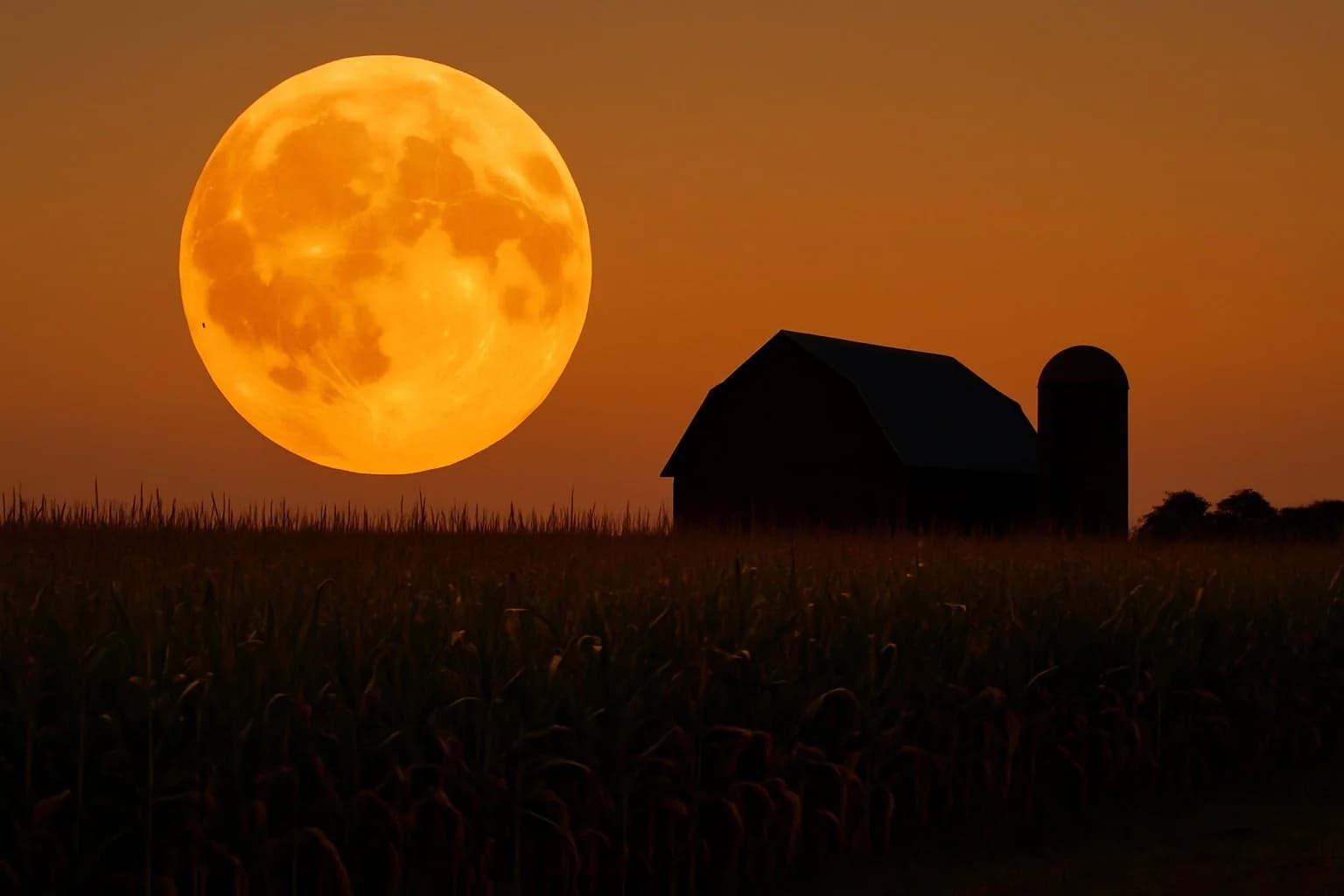
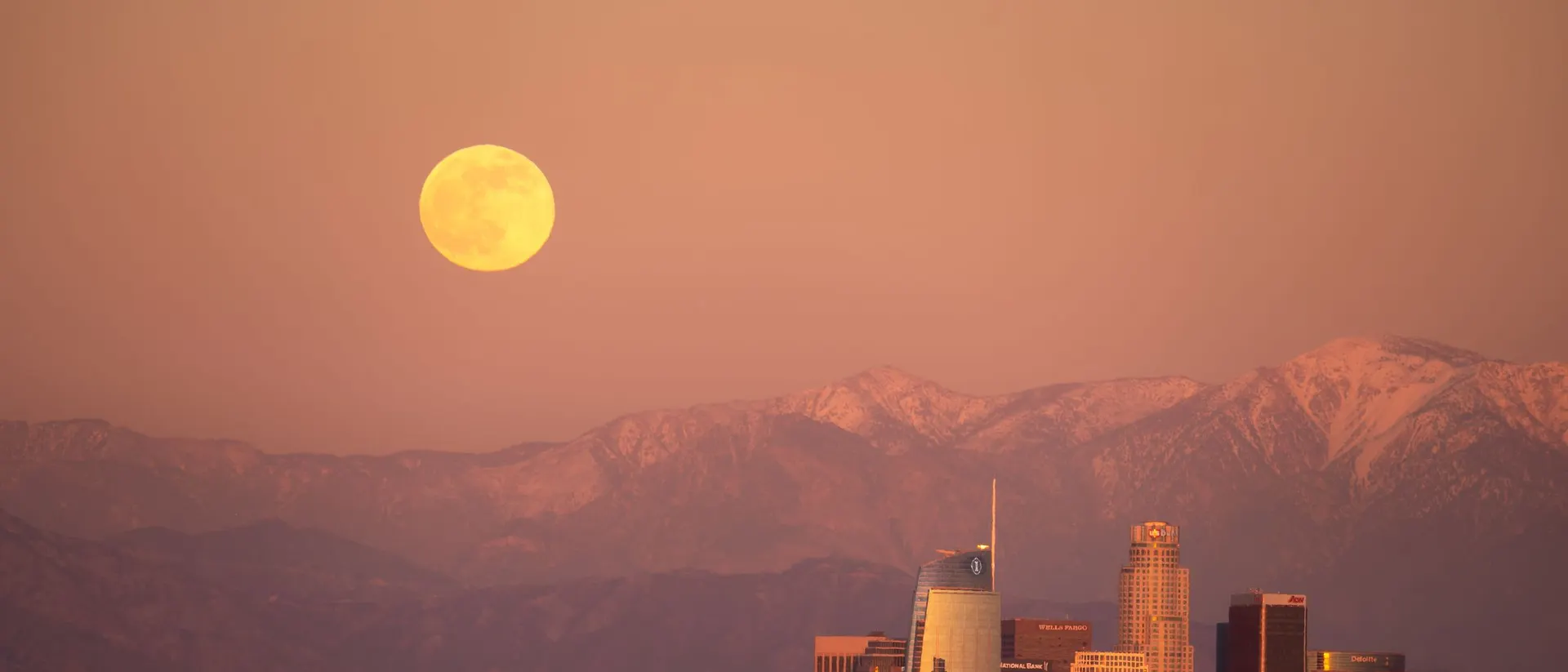
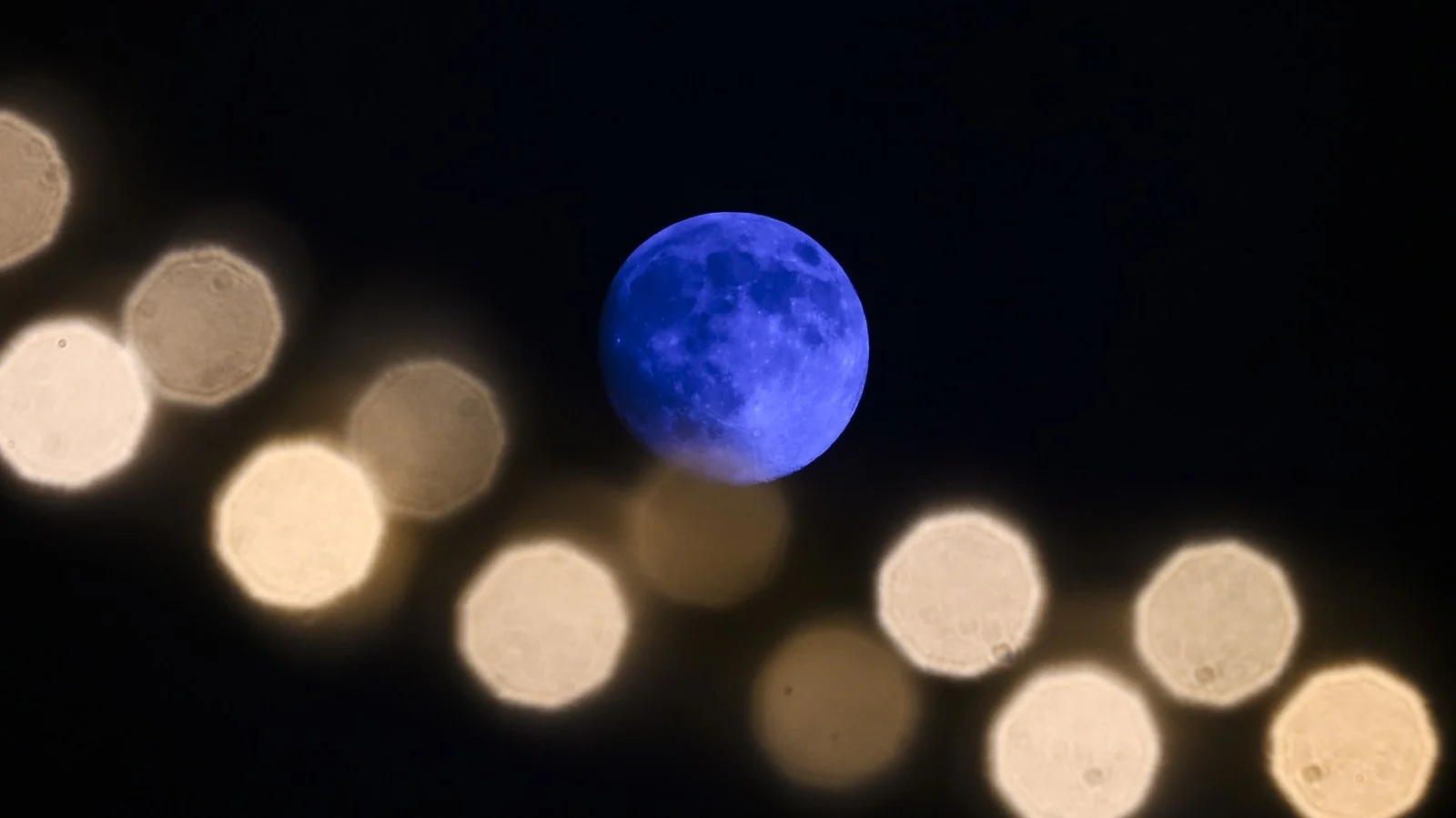
No. The term "Blue Moon" has nothing to do with the Moon's color. A Blue Moon looks like any other full moon: pale white, occasionally yellowish or orange when near the horizon due to atmospheric scattering (the same effect that makes sunsets red). The name is purely a calendrical label.
There is, however, a real but unrelated phenomenon where the Moon can appear genuinely blue: it requires specific kinds of atmospheric dust. Major volcanic eruptions that pump fine sulfur dioxide aerosols into the stratosphere (most recently El Chichón in 1982 and Mount Pinatubo in 1991) have produced blue-tinted moons and even blue-tinted suns visible for months afterward. The effect is caused by the aerosol particles being exactly the right size (around 1 micrometer) to preferentially scatter red light and let blue light through, the reverse of normal atmospheric scattering. If you see a genuinely blue-colored Moon, you are probably looking through volcanic dust, and that is a once-in-a-generation sight, not a calendrical coincidence.
The phrase "once in a blue moon," meaning "very rarely," predates the calendrical definition. It originally referred to something so absurd it could not happen, like the Moon being blue. Only later, when the calendrical Blue Moon concept emerged in the 1800s, did the phrase shift to mean "rare but actually possible." The shift is itself a small piece of language history.
How to See the Next Blue Moon
A Blue Moon is a full moon, and a full moon is one of the easiest things in the sky to see. You do not need a telescope, binoculars, or any special equipment. You need clear weather and a view of the sky.
The Moon rises around sunset on the night of a full moon and sets around sunrise the next morning. It is visible all night, climbing highest around local midnight. For the May 20, 2027 seasonal Blue Moon, look east shortly after sunset. The Moon will rise looking large and pale orange due to the moon illusion, an optical effect that makes the Moon appear enormous when it is low. Within an hour of rising, the Moon will be high enough to take on its usual pale white color.
The best viewing is in the two hours after moonrise and the two hours before moonset, when the Moon is low enough to show foreground objects for scale (great for photography) but high enough to escape the worst of the horizon haze. For the rest of the night, the Moon is high and bright. Beautiful but flat-looking through a telescope, because the direct overhead sunlight at full moon eliminates shadows and washes out surface detail.
If you want to photograph the Blue Moon, the same advice applies as for any full moon: use a tripod, set your camera to manual exposure, and underexpose significantly compared to what the camera's auto meter suggests. The Moon is much brighter than you think. A good starting point is ISO 200, f/8, 1/250 second with a 200mm lens on a full-frame camera. Adjust from there.
What to Do Between Now and May 2027
The next Blue Moon is still months away, but there are several full moons between now and then, and any of them is worth watching. Our moon phases 2026 page lists every full moon for the rest of the year with exact UTC times and timezone conversions. If you are specifically interested in unusually close and bright full moons, our 2026 supermoon dates page lists the three supermoons of late 2026. These are not Blue Moons, but they are visually more dramatic than a typical full moon because the Moon is near its closest approach to Earth.
If you found the timezone-twist section interesting, the same principle (that the local date of an astronomical event depends on your longitude) applies to almost every event we cover. Meteor shower peaks, equinoxes, solstices, and eclipses all have a single instant of maximum that translates to different local times around the world. Our moon phases explained reference is a good starting point if you want to understand the underlying lunar cycle that produces Blue Moons in the first place.
Explore More
- Full Moon Names Explained: Why each month's full moon has a traditional name, from Wolf to Cold to Strawberry.
- Moon Phases 2026: Every new moon, first quarter, full moon, and last quarter for 2026, with exact UTC times and timezone conversions.
- What Is a Supermoon?: Why some full moons look bigger than others, and how the supermoon definition depends on precise perigee timing.
- 2026 Supermoon Dates: The three supermoons of late 2026, with peak times in 7 timezones.
- Moon Phases Explained: The complete lunar cycle, from new moon through waxing crescent to full and back, with the astronomy behind each phase.
Frequently Asked Questions
5 questions answered
When is the next Blue Moon?
What exactly is a Blue Moon?
Will the Moon actually look blue?
Why can my timezone change whether a full moon counts as a Blue Moon?
What are the future Blue Moon dates?
Put this into action
Stop guessing. Use our professional tools to schedule, convert, and manage time zones perfectly, 100% free.
Track Sky EventsOfficial Sources & References
- NASA Science: official data and scientific overviews for astronomical events and missions.