November 2026 Moon Phases: Calendar, Full Moon and Best Dark Nights
Quick Answer
Slug: /articles/november-2026-moon-phases Primary keyword: november 2026 moon phases Meta title: November 2026 Moon Phases: Full Moon & Daily Calendar Meta description: Explore November 2026 moon phases on a daily calendar. See the November 9 new moon, November 24 full moon, and exact UTC and US local phase times. Updated: October 2026
November 2026 Moon Phases: Calendar, Full Moon and Best Dark Nights
SEO title: November 2026 Moon Phases: Full Moon & Daily Calendar
Meta description: Explore November 2026 moon phases on a daily calendar. See the November 9 new moon, November 24 full moon, and exact UTC and US local phase times.
Quick Answer: November 2026 has four major lunar phases by UTC date: last quarter on November 1 at 20:28 UTC, new Moon on November 9 at 07:02 UTC, first quarter on November 17 at 11:48 UTC, and full Moon on November 24 at 14:53 UTC. The full Moon is the Beaver Moon. For darker evening skies, start with November 7 to 12; for a nearly full Moon, use the evenings of November 23 or 24. Dates change in some time zones: the November new Moon falls on November 8 in Los Angeles, and the next last quarter falls on November 30 there even though it is December 1 in UTC.
November 2026 at a glance
| Lunar event | UTC date and time | New York (EST) | Los Angeles (PST) | What it means for viewing |
|---|---|---|---|---|
| Last quarter | Nov 1, 20:28 | Nov 1, 3:28 PM | Nov 1, 12:28 PM | Waning Moon chiefly useful in the morning sky |
| New Moon | Nov 9, 07:02 | Nov 9, 2:02 AM | Nov 8, 11:02 PM | Little direct moonlight; good opportunity for dark-sky observing if weather allows |
| First quarter | Nov 17, 11:48 | Nov 17, 6:48 AM | Nov 17, 3:48 AM | Moon prominent in the afternoon and evening |
| Full Moon | Nov 24, 14:53 | Nov 24, 9:53 AM | Nov 24, 6:53 AM | Bright Moon rises near sunset; evening of Nov 24 is the first viewing choice |
| Next last quarter | Dec 1, 06:08 | Dec 1, 1:08 AM | Nov 30, 10:08 PM | One lunar event appears in November on a Pacific local-date calendar |
Times use the U.S. Naval Observatory's primary phase table. They are phase instants, not sunrise, sunset, moonrise or moonset. Both U.S. cities are on standard time by these November dates.
November 2026 Moon phase calendar
The grid begins on Sunday, November 1 and ends on Monday, November 30. Each square gives the Moon's approximate illuminated fraction and phase state at 12:00 PM in the selected time zone, not an average over the day. Named events appear separately with their exact local clock times. That difference is intentional: on a phase-event date, the Moon may already have moved into the next named phase by noon.
Choose a time zone to move the event markers onto their correct local calendar dates. New York is shown by default, so the table remains useful even if the interactive control is not enabled in your website renderer.
Showing New York (EST). Illumination is calculated for noon locally; times in event labels are local.
| Sunday | Monday | Tuesday | Wednesday | Thursday | Friday | Saturday |
|---|---|---|---|---|---|---|
| Waning gibbous51.8% lit at noonLast quarter3:28 PM EST | Waning crescent40.6% lit at noon | Waning crescent30.2% lit at noon | Waning crescent20.8% lit at noon | Waning crescent13.0% lit at noon | Waning crescent6.8% lit at noon | Waning crescent2.7% lit at noon |
| Waning crescent0.5% lit at noon | Waxing crescent0.4% lit at noonNew Moon2:02 AM EST | Waxing crescent2.1% lit at noon | Waxing crescent5.6% lit at noon | Waxing crescent10.7% lit at noon | Waxing crescent17.2% lit at noon | Waxing crescent24.8% lit at noon |
| Waxing crescent33.4% lit at noon | Waxing crescent42.6% lit at noon | Waxing gibbous52.3% lit at noonFirst quarter6:48 AM EST | Waxing gibbous62.1% lit at noon | Waxing gibbous71.7% lit at noon | Waxing gibbous80.7% lit at noon | Waxing gibbous88.5% lit at noon |
| Waxing gibbous94.7% lit at noon | Waxing gibbous98.6% lit at noon | Waning gibbous99.8% lit at noonFull Moon9:53 AM EST | Waning gibbous98.1% lit at noon | Waning gibbous93.5% lit at noon | Waning gibbous86.4% lit at noon | Waning gibbous77.3% lit at noon |
| Waning gibbous67.0% lit at noon | Waning gibbous56.1% lit at noon |
The dark or bright part of each Moon icon is a simplified phase diagram, not a telescope photograph. The text labels carry the same information without relying on shape or colour. Waxing means the illuminated portion is growing; waning means it is shrinking. For the phase-event dates, read the marked time in the cell rather than assuming that the event occurs at midnight.
The percentage is the geocentric illuminated fraction calculated for local noon with Swiss Ephemeris lunar geometry. It is rounded to one decimal place. It may not match another calendar's percentage if that calendar samples the Moon at midnight, lunar transit or a different reference hour. Moonlight at your observing site still depends on whether the Moon is above your horizon.
How to read a daily Moon calendar
The calendar gives you two kinds of information. Its daily state is what the Moon is doing around noon in your chosen time zone. Its event marker tells you when one of the main phases occurs, down to the minute. The Moon does not stay at an exact phase for a whole calendar day, so the two labels can differ on an event date without either being wrong.
For example, New York's last quarter occurs on November 1 at 3:28 PM EST. At noon that day the Moon is still just over half illuminated and waning, so its daily icon can correctly be labelled waning gibbous. The last-quarter marker appears on the same square because the exact quarter arrives a few hours later. The dates should not be treated as 24-hour blocks during which the Moon holds one shape.
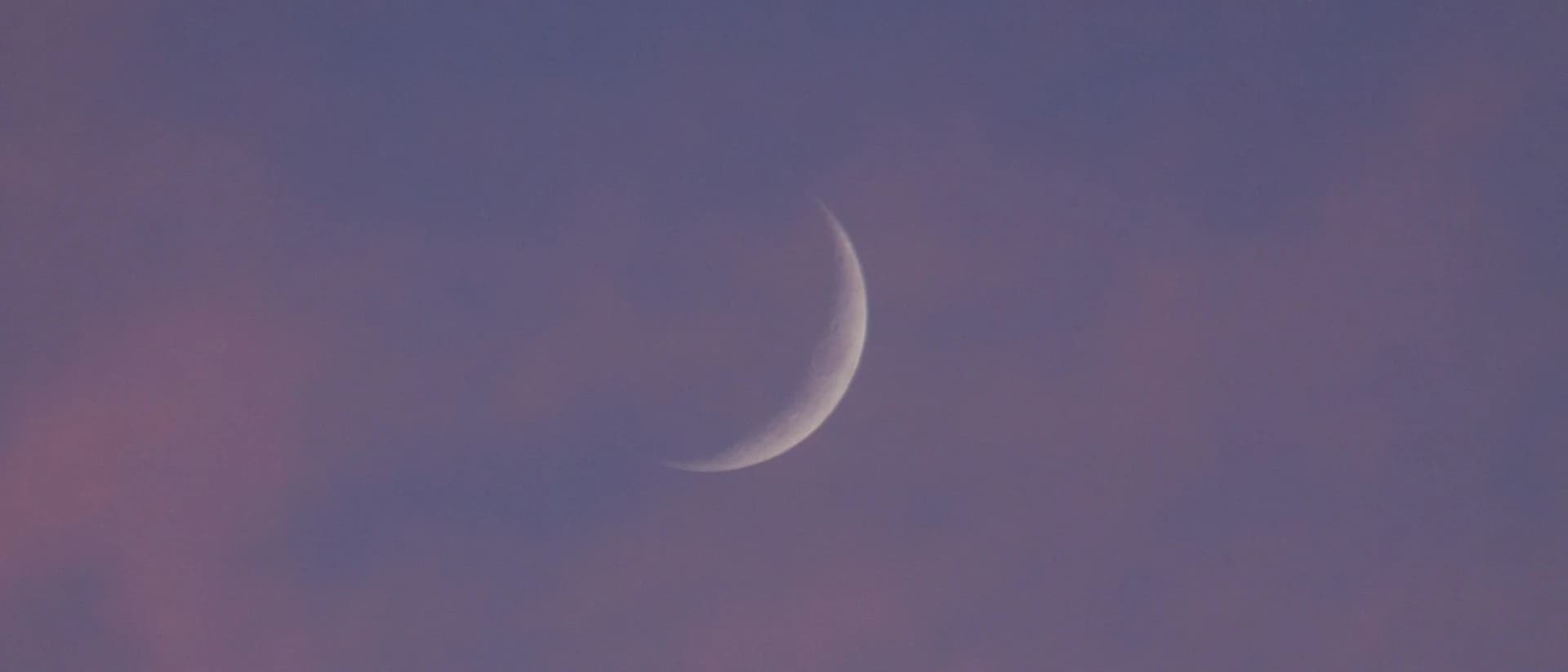
A new Moon is not a black disc you should expect to see overhead. A thin crescent may appear after sunset on a later evening, but its visibility depends on its distance from the Sun in the sky and the clarity of your horizon. The percentage alone cannot guarantee a sighting.
November begins in the waning half of the cycle after the October 26 full Moon. The new Moon on November 9 begins the waxing half, ending at the full Beaver Moon on November 24. The next last quarter falls on December 1 UTC, but November 30 in Pacific time.
Exact November 2026 Moon phases
November 1: last quarter
Last quarter occurs at 20:28 UTC on November 1. It is 3:28 PM EST in New York and 12:28 PM PST in Los Angeles. For observers in India, however, the same instant is already 1:58 AM IST on November 2. A U.S. lunar calendar may mark November 1 while an Indian calendar marks November 2. Both refer to the same event.
The last-quarter Moon is generally associated with the later night and morning sky. Over the days that follow, the illuminated fraction shrinks toward the November 9 new Moon. If you want a dark evening in the first part of the month, a waning Moon can work in your favour because it often rises after the evening observing period has begun.
November 9: new Moon
The new Moon is at 07:02 UTC on November 9. That converts to 2:02 AM EST on November 9 in New York, but 11:02 PM PST on November 8 in Los Angeles. The Pacific local date is the previous day, a detail worth checking before putting a new-moon night on a calendar.
The nights around November 8 and 9 have little moonlight. That makes them good candidates for looking at faint stars, constellations and meteors, assuming the sky is clear and you can get away from direct lights. A new Moon does not mean the sky is necessarily clear, nor does it mean the Moon is below every horizon for every minute of the night. It means the illuminated side is turned mostly away from Earth and the Moon is close to the Sun in our sky.
November 17: first quarter
First quarter arrives on November 17 at 11:48 UTC, which is 6:48 AM EST and 3:48 AM PST. The Moon is approximately half illuminated at the phase instant, but first quarter does not mean the Moon is one quarter illuminated. It means roughly one quarter of the way through the cycle from one new Moon to the next.
A first-quarter Moon is useful for watching the lunar surface. Along the line between light and dark, called the terminator, shadows can make relief around craters and mountains easier to see through binoculars or a telescope. For faint-sky watching, however, the brighter Moon can interfere earlier in the evening until it sets.
November 24: full Beaver Moon
The full Moon is at 14:53 UTC on Tuesday, November 24. The local phase time is 9:53 AM EST in New York and 6:53 AM PST in Los Angeles, so the exact full phase happens during daylight hours in both places. That does not mean you missed the Moon. It will still look essentially full that evening.
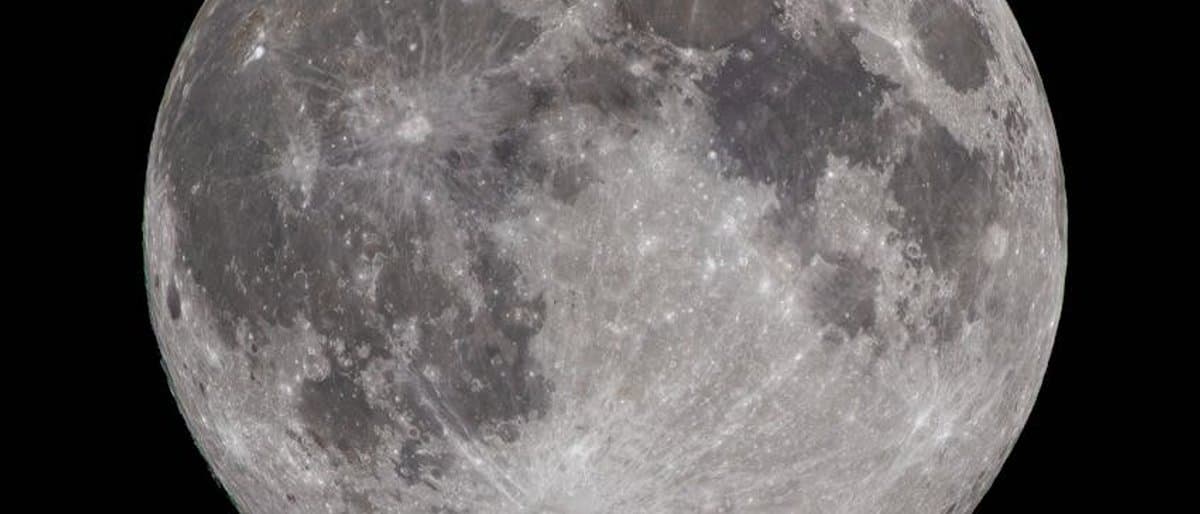
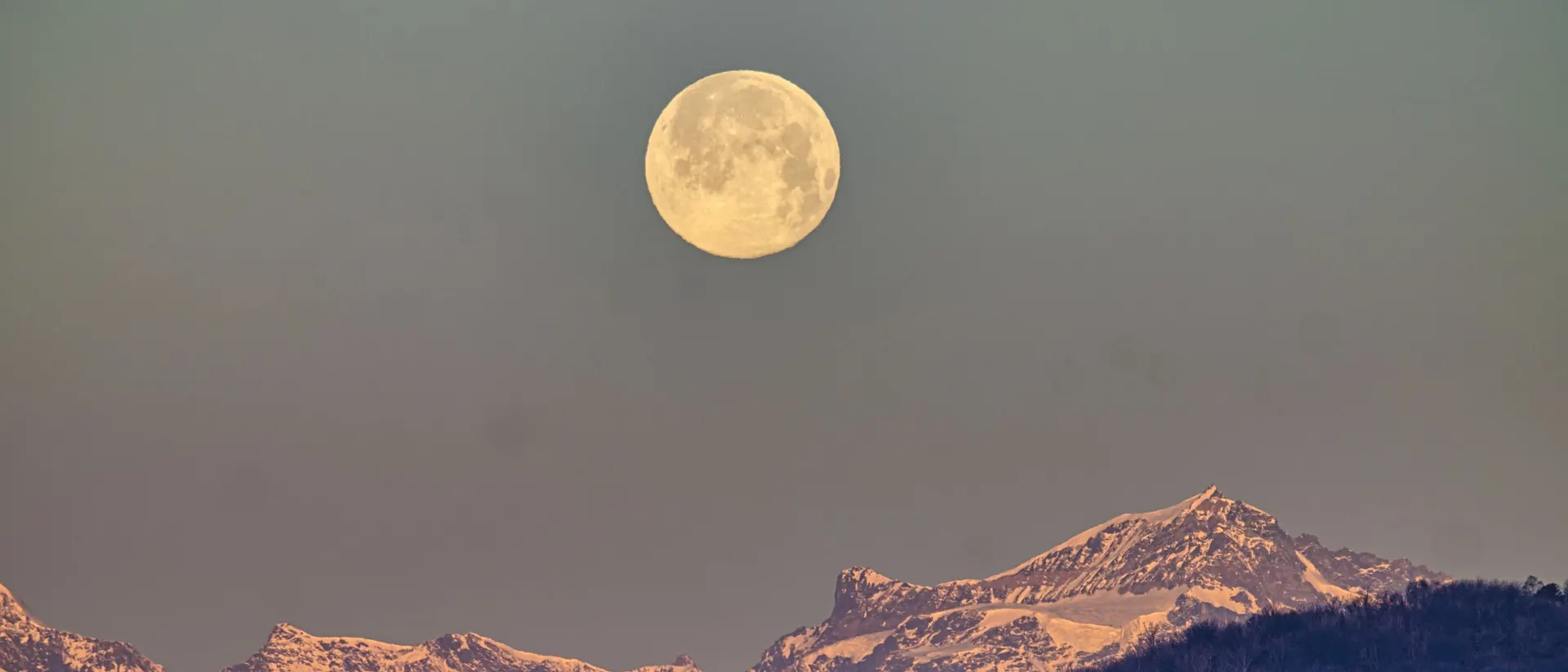
The November full Moon is commonly called the Beaver Moon. For viewing, November 24 is a sensible first choice if skies are clear, while November 23 is nearly as useful. The detailed Beaver Moon 2026 guide deals with regional moonrise times, the supermoon definition disagreement and which evening offers the better horizon view. This monthly calendar keeps the full Moon in its correct date square without repeating that separate event guide.
Best November nights for stargazing
If your main goal is a dark sky rather than the Moon itself, put November 7 through 12 near the top of your shortlist. The November 9 new Moon sits in the middle of that interval. With little illuminated Moon in the sky, there is less natural skyglow to hide faint stars and meteors, especially around the middle of the night.
Moon phase does not predict clouds. If you are driving to a dark site, compare nearby forecasts and avoid direct light instead of picking a night only because the calendar says "new Moon."
November 2 through 6 can also offer dark evenings before the waning crescent rises later at night. Check moonrise locally rather than assuming its percentage tells you whether moonlight will interfere with your session.
After first quarter on November 17, the waxing gibbous Moon brightens through the evening. November 22 through 26 is less useful for faint deep-sky targets but well suited to watching the Moon itself. A full Moon is visible from most cities under clear skies.
From November 27 through 30, the waning Moon rises later and can leave darker early-evening intervals. It is still substantially illuminated at month-end, and the next quarter occurs December 1 UTC.
November meteor showers and the Moon
The November Moon calendar is especially useful for deciding which meteor-shower nights deserve your time. The two Taurid branches overlap during the month, while the Leonids have their main November peak. Their published rates describe standardized shower activity, not guaranteed personal meteor counts. Cloud cover, sky brightness and the radiant's height still affect what you actually see.
| Meteor shower | November 2026 window | Moon context | A useful choice |
|---|---|---|---|
| Southern Taurids | Nov 4-5 main viewing window | Waning crescent between last quarter and new Moon | Try a clear late evening or midnight session; do not expect a meteor storm |
| Northern Taurids | Nov 11-12 main viewing window | Young waxing crescent shortly after Nov 9 new Moon | Evening Moon sets early; later hours are favourable for meteor watching |
| Leonids | Nov 16-17 main viewing window | Moon approaches first quarter on Nov 17 | Faint meteors are easier after the Moon sets; check local timing |
AMS lists Southern Taurid viewing around November 4-5 and Northern Taurid viewing around November 11-12. Both are modest-rate showers, even though individual bright fireballs are possible. No special 2026 Southern Taurid swarm is forecast; a favourable Moon does not guarantee a fireball.
The Leonids are different. AMS highlights November 16-17 and lists a normal maximum near ZHR 15. The Moon is approaching first quarter, so early evening moonlight can hide faint meteors while later hours may improve after moonset. Radiant geometry often favours the hours after midnight as well. Consult the Leonids 2026 guide before setting an alarm rather than using the Moon-phase table as a complete meteor forecast.
For a broader choice between showers, see the 2026 meteor-shower calendar. For why a rate such as ZHR 15 does not promise fifteen visible meteors from a garden, use How many meteors can you see in an hour?. Those guides answer different questions from the monthly lunar calendar.
Moonrise and moonset depend on your city
A lunar phase happens at one instant worldwide. Moonrise and moonset do not. The time the Moon reaches your horizon depends on your exact location, the date, the horizon and the refraction assumptions used by the calculator. A full Moon time of 9:53 AM in New York does not tell you when the Beaver Moon rises there that afternoon.
To plan a particular evening, enter your city and date in the U.S. Naval Observatory Sun and Moon data service or the timeanddate moonrise and moonset calculator. Both provide location-based data; check that the city and time zone selected are the ones you intend. A high ridge, a roofline or a thick cloud bank can make actual first visibility later than the calculated horizon crossing.
For a young waxing crescent, check sunset and moonset to find an early-evening window near the western horizon. For a waning crescent, look toward the east before sunrise. Near full Moon, an evening moonrise may be useful for photographs because the Moon is opposite the Sun.
This is also why the time-zone selector above changes the dates of exact phase events but does not manufacture a moonrise table for every city in that zone. New York and Miami share the Eastern time zone, but their Moon horizons are not the same. A time zone is not a substitute for coordinates.
Why November phase dates differ between countries
All phase tables should start from a single common instant. The U.S. Naval Observatory publishes it in UTC. Your local time is obtained by converting that instant using the time-zone rules in effect on the date, including any daylight saving time adjustment.
The clearest November example is new Moon. At 07:02 UTC on November 9, the local time is 2:02 AM on November 9 in New York, but only 11:02 PM on November 8 in Los Angeles. New Moon has not happened twice. The two calendars label one event with different local dates.
Another easy-to-miss example is the phase that follows November's full Moon. The next last quarter is 06:08 UTC on December 1. New York has already reached December 1 at 1:08 AM EST, but Los Angeles is still on November 30 at 10:08 PM PST. That is why one local monthly calendar may show a last-quarter marker on November 30 when a UTC calendar correctly places it in December.
November 1 gives a third example. The last quarter at 20:28 UTC on November 1 is 3:28 PM in New York but 1:58 AM on November 2 in India. If you switch the calendar above to India, the event marker moves to November 2. The physical phase and UTC timestamp have not changed.
Do not manually subtract a fixed Eastern Daylight Time offset for these dates. U.S. daylight saving time ends on November 1, 2026, before the 20:28 UTC last-quarter event, so New York is on EST and Los Angeles is on PST. The selector's times were derived with IANA time zones for each phase instant, not a year-round assumed offset.
The previous full Moon was the Hunter's Moon on October 26, 2026, which helps explain why November begins with a waning Moon rather than a new one.
Why the Moon changes shape during the month
The Moon is illuminated by the Sun throughout its orbit. What changes for an observer on Earth is the fraction of that sunlit half visible from our direction. New Moon occurs when the Moon is near the Sun's direction in the sky; full Moon occurs when the Moon is on the opposite side of Earth from the Sun in terms of sky direction.
The familiar phase names describe that changing view. During waxing crescent and waxing gibbous, the bright fraction grows from night to night. During waning gibbous and waning crescent, it shrinks. At first and last quarter, the disc appears roughly half bright, even though the names contain the word "quarter." They indicate positions about one-quarter and three-quarters of the way through the lunar cycle, not a quarter of the visible disc illuminated.
A lunar phase is also not Earth's shadow falling on the Moon. Earth's shadow produces a lunar eclipse only when the geometry is right near a full Moon; ordinary lunar phases happen because we see different amounts of the Moon's sunlit side. That is why a normal new Moon is mostly invisible, and why a full Moon can look bright even when no eclipse is occurring.
The daily fraction describes the apparent Moon shape, not how bright your sky will be. For crater shadows, the days around first or last quarter are often more useful than full Moon because the terminator crosses the visible surface. For a bright, round Moon above a skyline, choose November 23 or 24.
Frequently Asked Questions
11 questions answered
What are the four major Moon phase dates in November 2026?
When is the new Moon in November 2026?
When is the full Moon in November 2026?
Does November 2026 have two full Moons?
Does November 2026 have two last-quarter Moons?
Why does my Moon app show November 8 as the new Moon?
Which nights have the darkest sky in November?
Is the November 24 full Moon a supermoon?
Can I see the Moon during the day in November?
Does the Moon phase tell me when the Moon rises?
Which lunar phase is best for photographing craters?
Put this into action
Stop guessing. Use our professional tools to schedule, convert, and manage time zones perfectly, 100% free.
Track Sky EventsOfficial Sources & References
- NASA Science: official data and scientific overviews for astronomical events and missions.