Leonid Meteor Shower 2026: Peak Times and the Storm-Cycle Story
Quick Answer
The Leonid meteor shower peaks on the night of Monday, November 16 into the early hours of Tuesday, November 17, 2026, with the predicted maximum around 06:00 UTC on the 17th. Under dark skies the Leonids deliver 10 to 20 meteors per hour, fast, bright streaks from the dust trail of Comet 55P/Tempel-Tuttle, hitting the atmosphere at 71 kilometers per second, the fastest entry speed of any major annual shower.
But the Leonids' real story is bigger than 2026. This is the shower of storms. Roughly every 33 years, when Tempel-Tuttle swings through perihelion, the Leonids don't drizzle, they erupt. In 1833 the sky over North America produced an estimated 100,000 meteors per hour, waking thousands who thought the stars were falling. In 1966, observers in the southwestern US counted rates of 40 per second. The most recent storms rolled through 1999–2002, when rates briefly hit thousands per hour. The comet's next perihelion arrives in the early 2030s, which makes the Leonids the shower to build a viewing habit around now, while the build-up years are underway.
Here's the honest part for 2026: this is a normal Leonid year. Expect a patient, quality-over-quantity show, not a storm. The good news is the moon: a first-quarter moon at about half illumination that sets around midnight, handing you dark skies exactly when Leo climbs high and the hourly rates peak. If you only have one clear night, make it the night of November 16–17, watch from about 1 AM local until dawn.
The 2026 Moon Situation, Solved by Patience
At the predicted peak the moon is roughly 7–8 days old, a first-quarter moon at 50–53% illumination. Moonlight washes out the fainter meteors during the evening hours, but the moon exits around midnight local time, and the radiant, the point in Leo the meteors appear to fly from, doesn't reach productive height until after 1 AM anyway.
That timing is a gift: the moon's exit and the radiant's climb line up almost perfectly. Plan your session for 1 AM to dawn, after moonset, and 2026 delivers a genuinely dark Leonid window. Use the evening for cold-weather prep, a nap, and scouting your site, the cold-weather kit advice in the Geminid guide covers exactly this kind of freezing post-midnight session.
Meet the Parent: Comet 55P/Tempel-Tuttle
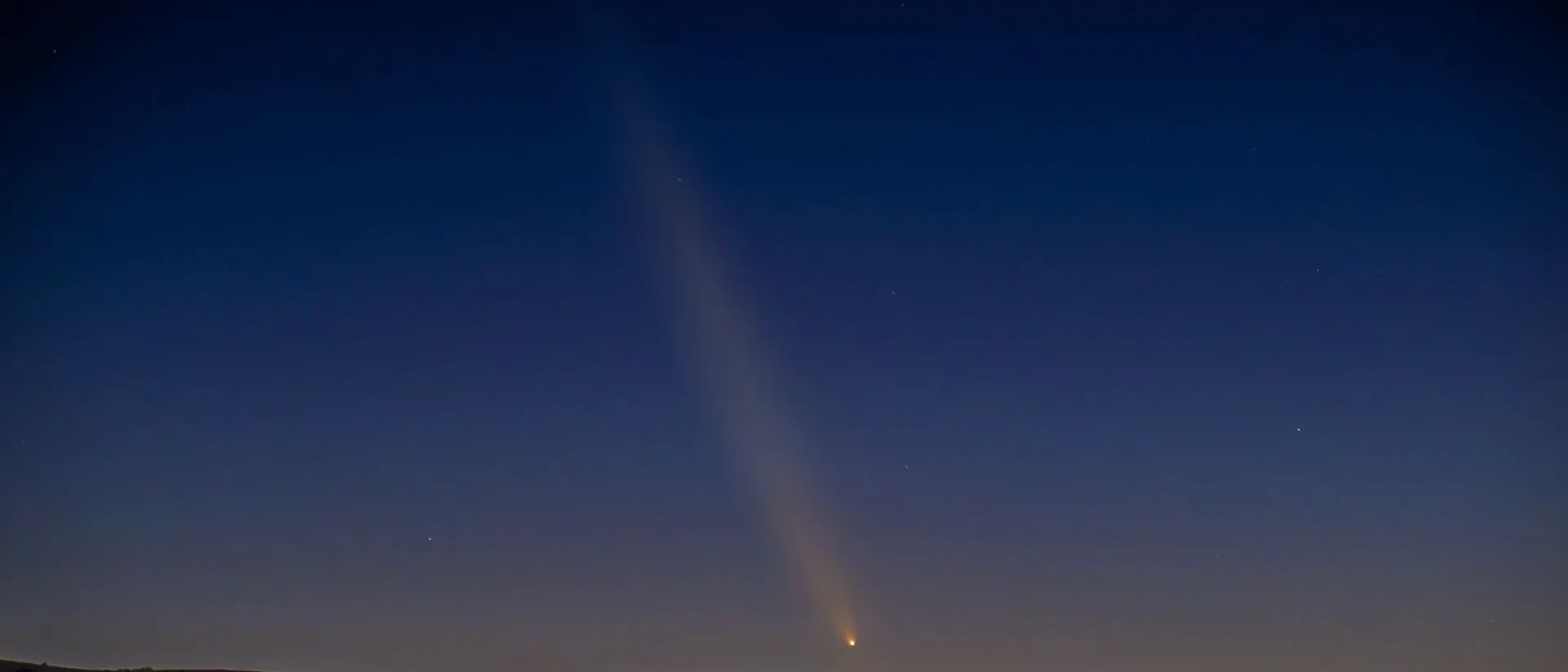
Every Leonid you will ever see is a fragment of Comet 55P/Tempel-Tuttle, a small nucleus on a 33-year orbit that dives inside Earth's orbit and then retreats past the orbit of Uranus. Discovered independently in 1865–66 by Wilhelm Tempel and Horace Tuttle, the comet went unidentified between 1899 and 1965 before being recovered, a lost-and-found story that delayed recognition of its link to the Leonid storms of the 19th century.
Tempel-Tuttle's dust doesn't spread evenly along its orbit. It hangs in dense, narrow ribbons deposited at specific perihelion years. When Earth threads a fresh ribbon, as in 1833, 1866, 1966, and 1999–2002, rates skyrocket for a single hour or two. Meteor astronomers have mapped these ribbons well enough to predict storm years decades out; the current consensus is that the next storm window arrives with the comet's next perihelion passage in the early 2030s, with enhanced activity possible from the late 2020s onward. Every ordinary year now is a rehearsal for that window, and 2026 is one of the better-arranged ordinary years, thanks to that midnight moonset.
The Night the Stars Fell: 1833
If you want to understand why the Leonids carry a reputation far beyond their modern hourly rates, go back to the night of November 12–13, 1833. From the Great Lakes to the Gulf, from the East Coast to the Great Plains (where the Lakota were recording the event in their winter counts), the sky produced an estimated 50,000 to 100,000 meteors per hour, meteors falling as thick as snowflakes. Thousands of sleepers were woken by neighbors shouting that the stars were falling; many believed the Day of Judgment had arrived. The event was front-page news for days and became one of the first widely reported meteor storms in American history, and one of the first to be studied: astronomers including Denison Olmsted collected eyewitness reports and noticed the meteors all radiated from a point in Leo, a key early step in understanding that showers are cometary debris, not weather.
The pattern repeated in 1866 over Europe, then famously on November 17, 1966, when observers at Kitt Peak and sites across the southwest US counted up to 40 meteors per second for a stretch of about 20 minutes, a rate of over 100,000 per hour that left even professional astronomers shouting. When Tempel-Tuttle returned in 1998, the Leonids answered with storms in 1999, 2001, and 2002, with peak rates in the thousands per hour, caught for the first time on broadcast cameras and early web streams. That's the lineage of the shower you'll be watching in November 2026, quiet now, but with the comet returning to begin the next cycle in the early 2030s.
Where to Look: The Sickle of Leo
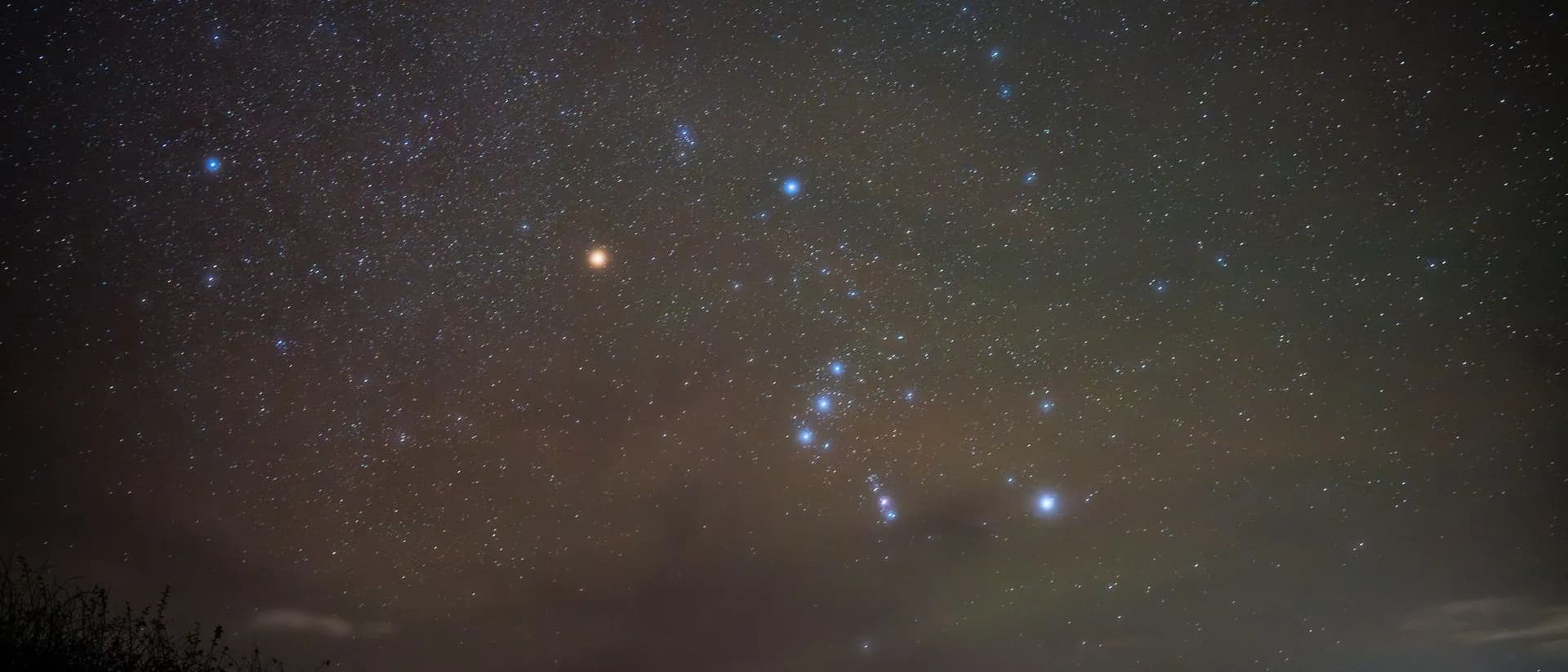
The Leonid radiant sits in the "sickle", the backward question-mark asterism that forms the Lion's head, anchored by the bright star Regulus. Leo rises in the east-northeast around 10 PM local time in mid-November, and the radiant stands 40–60 degrees up in the southeast by 3 AM.
You don't aim at the radiant. Meteors streak outward from it in all directions; the longest, most photographic trails appear 30–60 degrees away. Lie back facing generally east-southeast, take in the whole sky, and let your dark-adapted vision (20 minutes minimum, no phone) do the work.
Finding Leo in Five Minutes
Leo is one of the easiest constellations to find once you know the trick: find the Big Dipper, then drive south. In mid-November after 10 PM, the Big Dipper sits low in the north-northeast, its handle dragging the horizon. Take the two pointer stars at the front of the bowl (Merak and Dubhe) and extend the line away from the bowl, the first bright star you land on, well up in the east-northeast, is Regulus, the foot of the question mark. That question mark, the sickle, is the Lion's head, and it's where every Leonid begins its apparent journey.
If clouds block the Dipper, use Orion instead: it rises after 10 PM in the east, unmistakable with its three-star belt. Draw a line from Orion's belt up through the sky toward the east-northeast and you reach the same sickle. Give your eyes 20 minutes without a phone screen, and the faint stars of the Lion's body, the triangle that forms his hindquarters, anchored by Denebola, resolve too. You don't need to see the constellation to see the meteors; you need it to know where to center your gaze, which is high east-southeast by 2 AM.
What You'll Realistically See in 2026
Under true rural dark skies, with the moon gone and the radiant high: 10 to 20 meteors per hour, with a real chance of bright fireballs, the Leonids have a noted fireball fraction. Suburban viewers: plan on 5 to 8 per hour. City dwellers: catch the brightest two or three, or drive out.
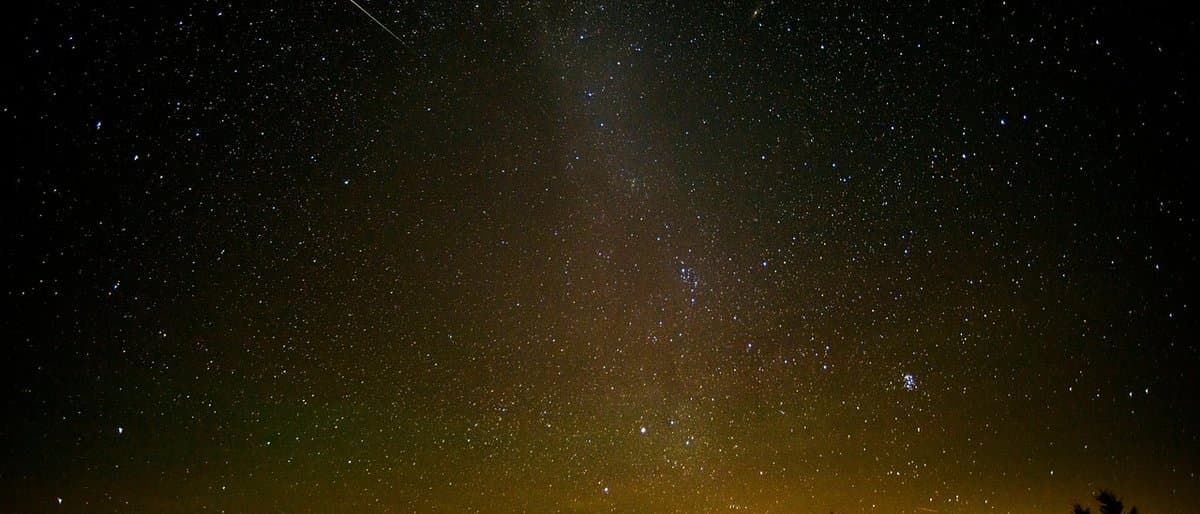
The Leonids' speed is their signature: at 71 km/s, these are the fastest of the major showers, and the swiftest meteors produce the thinnest, sharpest trains. Some Leonids leave persistent trains, glowing ionization trails that hang for several seconds after the meteor itself is gone. That's the detail to watch for; it's what separates a Leonid sighting from any other November meteor. For the general reason a published rate and your own count differ, see what the hourly meteor rate actually means.
Exact Timing for the Night of November 16–17, 2026
The predicted maximum falls around 06:00 UTC on November 17. Because the radiant only rises in late evening and peaks in the early morning hours, the practical viewing window differs by zone, but the rule of thumb is universal: 1 AM to dawn, local time. The table converts the UTC maximum into local wall-clock terms:
| Location | Local Time of Predicted Max | Practical Window (after moonset) |
|---|---|---|
| Los Angeles (PST, UTC-8) | 10:00 PM Nov 16 | 1 AM – 5:30 AM |
| Denver (MST, UTC-7) | 11:00 PM Nov 16 | 1 AM – 5:30 AM |
| Chicago (CST, UTC-6) | 12:00 AM Nov 17 | 1 AM – 5:30 AM |
| New York (EST, UTC-5) | 1:00 AM Nov 17 | 1 AM – 5:30 AM |
| London (GMT, UTC+0) | 6:00 AM Nov 17 | 3 AM – 6:30 AM (twilight) |
| New Delhi (IST, UTC+5:30) | 11:30 AM Nov 17 | 3 AM – 5:30 AM (pre-dawn) |
| Sydney (AEDT, UTC+11) | 5:00 PM Nov 17 | 2 AM – 4:30 AM (radiant low) |
Two notes. First, the "predicted max" matters less than dark-sky hours: Leonid rates climb steadily as Leo rises, so any clear post-moonset hour is worth watching even far from the official maximum. Second, Southern Hemisphere viewers get a poor radiant, Leo barely clears the northern horizon from mid-southern latitudes, so the shower is best treated as a Northern Hemisphere event. For converting any other zone, the time zone converter handles it in one step.
The November Night Kit
Leonid viewing happens in the coldest hours of the first true-cold month. The kit that matters:
- Insulation from below: a foam pad or camp cot under your sleeping bag, the ground steals heat faster than the air does
- Rated bag + blankets: a 0°C (32°F) bag minimum for most US latitudes in mid-November; two cheap blankets beat one expensive bag
- Hands and feet: chemical hand warmers in gloves and boots; a thermos of something hot does double duty as hand-warmer and morale
- Red light only: a headlamp with a red mode preserves dark adaptation for everyone around you
- The chair: a reclining lawn chair or zero-gravity chair beats a ground tarp for a 4-hour session, neck strain ends more meteor watches than cold does
- Phone on airplane mode: one white-screen glance resets 20 minutes of dark adaptation
The full deep-dive version of this list lives in the Geminid guide, the same kit carries you from Leonids in mid-November to the Geminids in mid-December, one degree colder each week.
Leonid Peaks and Moon Conditions, 2026–2030
| Year | Peak Night | Moon at Peak | Verdict |
|---|---|---|---|
| 2026 | Nov 16–17 | ~50% first quarter, sets ~midnight | Good, dark post-midnight window |
| 2027 | Nov 17–18 | ~86% waning gibbous, up much of the night | Tough, late-night interference |
| 2028 | Nov 17–18 | New moon | Excellent, the dark-sky Leonid year |
| 2029 | Nov 17–18 | ~85% waxing gibbous | Poor, moon up nearly all night |
| 2030 | Nov 17–18 | ~55% waning gibbous, sets late evening | Fair, moon exits before radiant climbs |
Two takeaways. If you miss 2026, 2028 is the moonless Leonid year to build a trip around, and by then the comet's approach will be stirring the rates upward. And the same 19-year Metonic cycle logic we use for the 2026 meteor shower calendar applies here: the good-moon pattern of 2028 recurs around 2047.
After the Leonids: The Geminids Are Three Weeks Out
The Leonids are the dress rehearsal for the main event. The Geminid Meteor Shower peaks on the night of December 13–14, 2026, with moonless skies and up to 120 meteors per hour, the best shower of 2026, and the best Geminid conditions until December 2028. Three weeks after a patient 15-per-hour Leonid night, you can stand under 100+ per hour. Use the gap to test your cold-weather kit, your camera settings, and your dark-sky site, and the best stargazing nights of 2026 lists both dates on one calendar.
Photographing the Leonids
Same doctrine as any fast shower, with one adjustment: the Leonids' speed rewards wide lenses over long exposures. A 14–20mm lens at f/2.8 or faster, ISO 3200–6400, 13-second exposures on a fixed tripod, continuous shooting. Point 40–60 degrees from the radiant, toward the Big Dipper or down toward the eastern horizon both work in 2026. Expect to burn 1,500+ frames for 3–5 keepers; the odds per frame are low, which is why the post-moonset window matters, every hour of dark sky roughly triples your catch.
Explore More
- Meteor Showers 2026: the complete calendar with every peak date and viewing condition.
- Geminid Meteor Shower 2026: the year's main event, three weeks after the Leonids.
- Moon Phases 2026: dark-sky windows for planning November and December trips.
- Winter Solstice 2026: the deep-sky season's other milestone, one month after the Geminids.
Frequently Asked Questions
6 questions answered
When is the Leonid meteor shower in 2026?
How many Leonid meteors will I see per hour in 2026?
Is 2026 a Leonid storm year?
Where is the Leonid radiant?
Why are Leonid meteors so fast?
What should I watch instead if clouds ruin November 17?
Put this into action
Stop guessing. Use our professional tools to schedule, convert, and manage time zones perfectly, 100% free.
Track Sky EventsOfficial Sources & References
- NASA Science: official data and scientific overviews for astronomical events and missions.