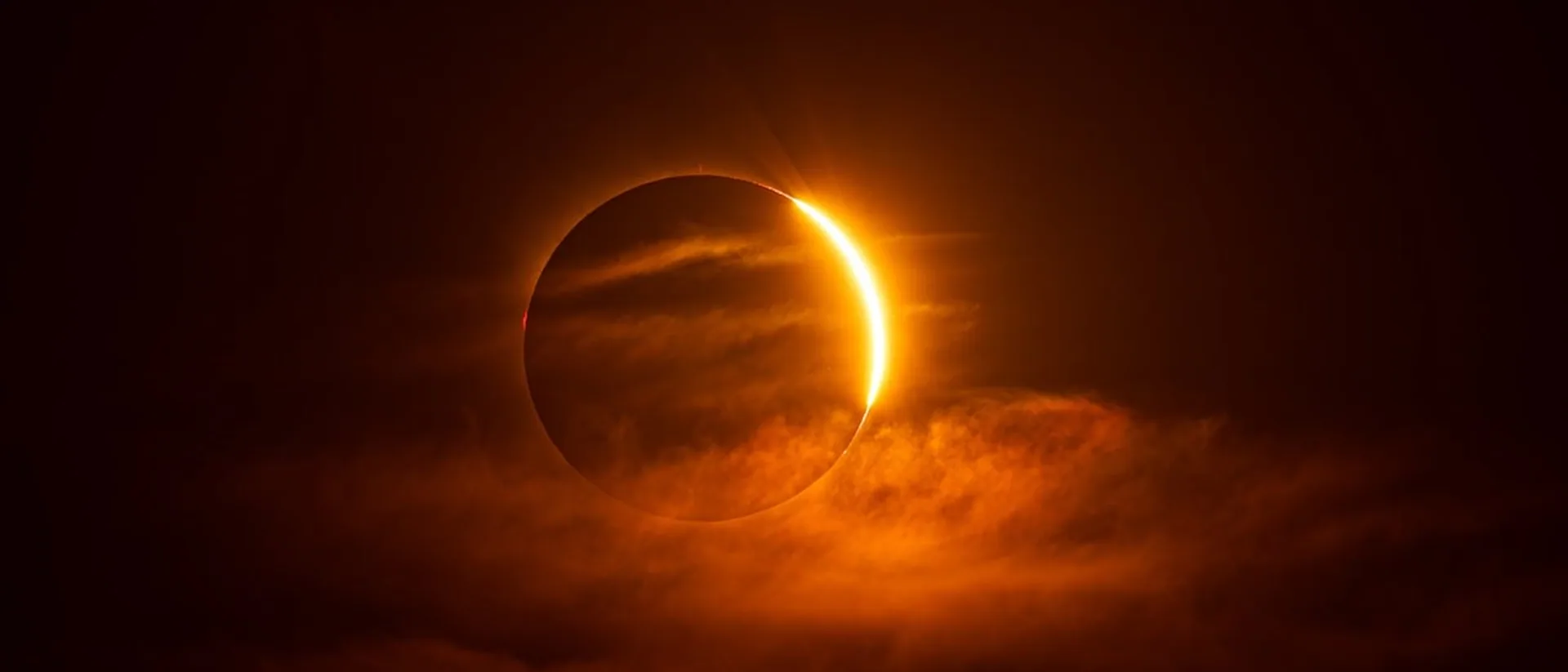
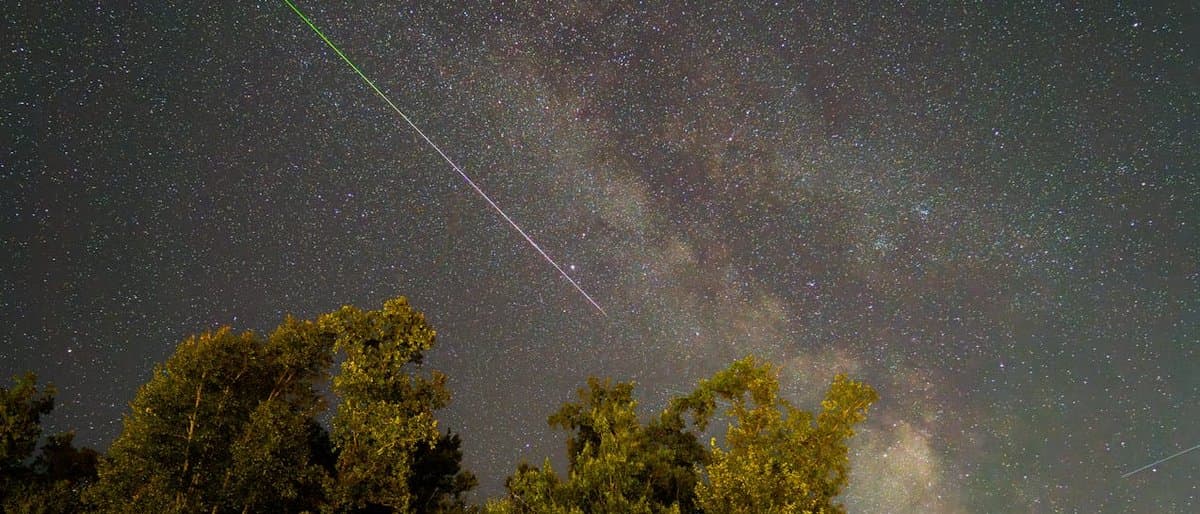
August 12, 2026: The Day of Two Wonders
Quick Answer
On Wednesday, August 12, 2026, two of the year's biggest astronomical events converge: a total solar eclipse during the day (maximum 17:45:53 UTC, 2 minutes 18 seconds of totality over Greenland, Iceland, and northern Spain) and the Perseid meteor shower peak that night (peak 14:53 UTC on August 13). The same new moon that produces the eclipse also produces perfect dark-sky conditions for the Perseids, making this the best moon-dark Perseid display since 2021, the next comparable one is not until 2029. As of July 17, 2026, this event is 26 days away; flights and hotels along the path of totality are selling out fast.
On Wednesday, August 12, 2026, two of the most spectacular astronomical events occur on the same day: a total solar eclipse during the day (maximum eclipse at 17:45:53 UTC, with up to 2 minutes 18 seconds of totality visible from Greenland, Iceland, and northern Spain), and the peak of the Perseid meteor shower that night (predicted maximum at 14:53 UTC on August 13, with prime viewing the night of August 12 to 13). The same new moon that produces the eclipse also produces perfect dark-sky conditions for the Perseids, making this the best moon-dark Perseid display since 2021, the next comparable one is not until 2029. This double event is genuinely rare: having a total solar eclipse and the Perseid peak fall on the same date is a coincidence that happens perhaps once every few decades.
As of July 17, 2026, this event is 26 days away. If you have been thinking about traveling to see it, to Iceland, to northern Spain, or anywhere along the path of totality, book now. Flights and hotels along the path are selling out, and prices will only rise as the date approaches. This article is the complete guide to the day: what happens, when, where, and how to experience both events in a single 24-hour window.
For the underlying Perseid meteor shower details, see our Perseid meteor shower 2026 page. For the eclipse itself, see our August 12, 2026 total solar eclipse page.
Why This Day Is So Rare
The Perseid meteor shower peaks around August 12 every year. That part is predictable, because the Perseids are caused by Earth passing through the dust stream left by Comet Swift-Tuttle, and Earth crosses the same point in its orbit at the same time each year. The Perseid peak has fallen on August 11, 12, or 13 every year for centuries, and will continue to do so for centuries more.
A total solar eclipse, by contrast, can occur at any new moon, and there are 12 to 13 new moons per year, only one or two of which typically produce a total solar eclipse visible from somewhere on Earth. The August 12, 2026 new moon happens to fall on the same date as the Perseid peak, and the geometry of the Sun-Moon-Earth system happens to produce a total solar eclipse on that date.
The coincidence is more remarkable than it might seem. The lunar cycle (29.5 days) and the solar year (365.25 days) are not cleanly divisible, so new moons drift across the calendar by about 11 days per year. For a new moon to fall on August 12, and for that new moon to also produce a total solar eclipse visible from populated land, is a genuine alignment of independent cycles. Having both events on the same date happens perhaps once every few decades.
The historical record of eclipse-Perseid coincidences:
- August 11, 1999: total solar eclipse visible from Europe (the last major total eclipse in Europe before 2026), with the Perseid peak the next night. A similar double event, widely observed.
- August 12, 2026: the current event.
- August 12, 2045: the next comparable opportunity, a total solar eclipse visible from the United States (coast to coast), with the Perseid peak the same night. Mark your calendar for 19 years from now.
The 2026 event is the best chance most currently-living people will have to experience both a total solar eclipse and a strong Perseid peak in a single 24-hour window, from the same general part of the world.
For the moon-phase calendar that determines these alignments, see our moon phases 2026 page.
The Eclipse: Total Solar Eclipse of August 12, 2026
The total solar eclipse of August 12, 2026 is the first total solar eclipse to cross continental Europe since 1999, and the first of two back-to-back European totalities, because the next one, on August 2, 2027, crosses Spain again just eleven months later.
Path of totality: the Moon's shadow first touches Earth in the Arctic, sweeps across Greenland, then crosses the North Atlantic to Iceland, then continues to northern Spain (specifically the regions of Galicia, Asturias, Cantabria, and the Basque Country) before the shadow lifts off Earth in the Mediterranean. The path of totality, where the Sun is 100% covered by the Moon and the sky becomes dark enough to see stars, is about 200 to 300 km wide along most of its track.
Maximum eclipse: 17:45:53 UTC, near Iceland. At this point, totality lasts 2 minutes 18 seconds, the maximum duration for this eclipse.
Partial eclipse visibility: a partial solar eclipse (where the Moon covers only part of the Sun) is visible from most of Europe, North Africa, northeastern North America (particularly New England and eastern Canada), and the eastern Arctic. The partial eclipse is interesting but not spectacular. Totality is what makes a solar eclipse a once-in-a-lifetime experience.
Key eclipse times in major cities along or near the path of totality:
| City | Partial Eclipse Begins | Total Eclipse Begins | Maximum Eclipse | Total Eclipse Ends | Partial Eclipse Ends | Duration of Totality |
|---|---|---|---|---|---|---|
| Reykjavik, Iceland | 16:47 GMT / 16:47 UTC | 17:48 / 17:48 UTC | 17:49 / 17:49 UTC | 17:49 / 17:49 UTC | 18:47 / 18:47 UTC | ~1m 00s |
| Keflavík (Reykjanes), Iceland | 16:47 GMT / 16:47 UTC | 17:48 / 17:48 UTC | 17:49 / 17:49 UTC | 17:50 / 17:50 UTC | 18:48 / 18:48 UTC | ~1m 39s |
| Gijón, Spain | 19:31 CEST / 17:31 UTC | 20:27 CEST / 18:27 UTC | 20:27 CEST / 18:27 UTC | 20:28 CEST / 18:28 UTC | 21:21 CEST / 19:21 UTC | ~1m 45s |
| Zaragoza, Spain | 19:35 CEST / 17:35 UTC | 20:29 CEST / 18:29 UTC | 20:29 CEST / 18:29 UTC | 20:30 CEST / 18:30 UTC | 21:21 CEST / 19:21 UTC | ~1m 25s |
| Palma de Mallorca, Spain | 19:38 CEST / 17:38 UTC | 20:31 CEST / 18:31 UTC | 20:31 CEST / 18:31 UTC | 20:32 CEST / 18:32 UTC | 21:22 CEST / 19:22 UTC | ~1m 35s (Sun on horizon) |
Important caveat: eclipse times are precise to the second and depend on your exact location. The times above are approximate for the city centers. If you are planning to observe from a specific location, use a dedicated eclipse calculator (like the one at timeanddate.com/eclipse or Xavier Jubier's interactive eclipse maps) to get the exact times for your GPS coordinates.
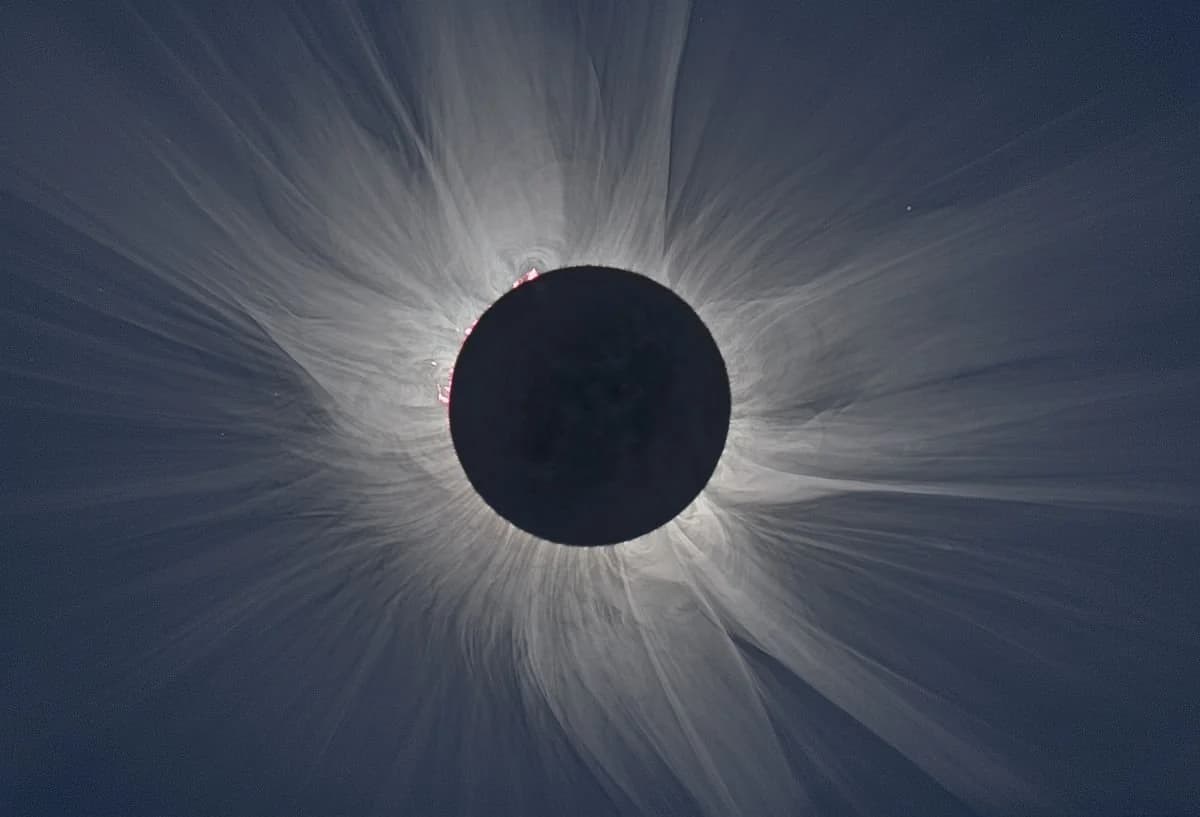
What totality looks like: as the Moon completely covers the Sun, the sky darkens to a deep twilight, not pitch black, but dark enough that bright stars and planets become visible. The Sun's corona, its outer atmosphere normally invisible because the Sun's disk is so much brighter, appears as a pearly white halo around the black disk of the Moon. The temperature drops noticeably (often 5 to 10°F / 3 to 5°C). Birds may stop singing and roost. Insects may begin their evening chorus. The experience is visceral, primal, and unforgettable. Most people who see their first total solar eclipse describe it as one of the most powerful natural events they have ever witnessed.
Safety: looking at the Sun during the partial phases (before and after totality) without proper eye protection can cause permanent eye damage. You MUST use certified solar eclipse glasses (ISO 12312-2) or a properly-filtered telescope/binoculars to view the partial phases. During totality, and ONLY during totality, it is safe to look at the eclipsed Sun directly without filters. The moment totality ends (the first sliver of Sun reappears), you must immediately put your eclipse glasses back on.
For the full eclipse viewing guide, see our August 12, 2026 total solar eclipse page.
The Perseids: Best Meteor Shower of 2026
The Perseid meteor shower peaks on August 12 to 13, 2026, with maximum activity predicted around 14:53 UTC on August 13, 2026. The night of August 12 to 13 is the prime viewing window, and on this night, the Moon is new (the same new moon that produced the solar eclipse earlier in the day), meaning there is zero moonlight interference.
Predicted meteor rates: under ideal dark-sky conditions (Bortle class 1 to 2), observers can expect 60 to 100 meteors per hour at peak, with many bright "fireball" meteors. The Perseids are known for producing bright meteors and persistent "trains," glowing trails that persist for seconds after the meteor itself has faded.
Why this is the best Perseid shower in years:
- New moon on August 12, 2026 means perfect dark-sky conditions for the entire night of August 12 to 13. The faintest meteors will be visible.
- The Perseid peak falls on a Wednesday night / Thursday morning in 2026, not ideal for a weekend trip, but the advantage is that light pollution from weekend campers is reduced.
- The next best Perseid viewing is in 2028; in 2027, the Perseid peak falls near a full moon, washing out the faint meteors.
Perseid observing basics:
- Find a dark sky location. The Perseids are visible from any clear sky, but rates drop dramatically with light pollution. From a city, you might see 5 to 10 meteors per hour. From a dark sky location, you can see 60 to 100 per hour. Use lightpollutionmap.info to find a Bortle class 1 to 3 location near you.
- Be out during the peak hours. Perseid rates increase after midnight local time, as Earth rotates to face the oncoming meteor stream. The best viewing is from about 1 AM to 4 AM local time on the morning of August 13. The radiant (the point in the sky from which the meteors appear to originate) rises higher in the sky after midnight, increasing the number of meteors visible.
- Allow 20 to 30 minutes for dark adaptation. Avoid white light (including phone screens) during this period. Use only a red flashlight.
- Look at the whole sky, not just at the radiant. Perseid meteors can appear anywhere in the sky, though they will appear to "streak away" from the radiant in the constellation Perseus (high in the northeast after midnight).
- Be patient. Meteor watching requires patience. You may see 5 meteors in 10 minutes, then nothing for 20 minutes, then 10 meteors in 5 minutes. Plan to be out for at least 1 to 2 hours for the full experience.
- Get comfortable. A reclining lawn chair or a blanket on the ground, plus warm clothes and a thermos of hot drinks, makes a huge difference. You are going to be looking up for hours. Make it comfortable.
For the full Perseid viewing guide, see our Perseid meteor shower 2026 page.
The Hour-by-Hour Timeline: August 12 to 13, 2026
This is the killer feature of this article: a complete hour-by-hour timeline of the double event, with times in UTC and major local timezones. Use this to plan your observing session.
Morning, August 12, 2026:
| Time (UTC) | Local Time | Event |
|---|---|---|
| 17:37 UTC, Aug 12 | 18:37 BST (London) / 13:37 EDT (New York) | New Moon (the Moon is between Earth and Sun, invisible, perfect dark-sky baseline) |
The new moon on the morning of August 12 sets up the entire day. The Moon is essentially invisible all day, which means: (1) the geometry is right for a solar eclipse (Moon between Earth and Sun, casting its shadow on Earth), and (2) the Moon will set before sunset and not rise again until after sunrise on August 13, providing perfect dark-sky conditions for the Perseids all night.
Afternoon, August 12, 2026: The Eclipse
| Time (UTC) | Local Time | Event |
|---|---|---|
| ~16:00 UTC, Aug 12 | 17:00 BST / 18:00 CEST | Partial eclipse begins (western Europe, northern Africa, northeastern North America) |
| ~16:26 UTC, Aug 12 | 17:26 BST (Reykjavik) | Total eclipse begins in Reykjavik, Iceland |
| 17:45:53 UTC, Aug 12 | 18:45 BST / 19:45 CEST | Maximum eclipse (greatest eclipse, near Iceland) |
| ~18:26 UTC, Aug 12 | 20:26 CEST (Madrid) | Total eclipse begins in Madrid, Spain |
| ~18:30 UTC, Aug 12 | 20:30 CEST (Madrid) | Total eclipse ends in Madrid, Spain |
| ~19:30 UTC, Aug 12 | 21:30 CEST | Partial eclipse ends (Spain, western Europe) |
The eclipse window for any given location along the path of totality is about 2 to 3 hours from first partial contact to last partial contact, with totality lasting 2 to 2.5 minutes in the middle. For observers in the partial eclipse zone (most of Europe, northeastern North America), the eclipse is a partial event lasting 1 to 2 hours with the Moon covering 20 to 90% of the Sun depending on location.
Evening, August 12, 2026: After Sunset, Perseid Watching Begins
| Time (local) | Event |
|---|---|
| ~21:30 local (Spain) | Sunset in northern Spain, ending the eclipse day. The Sun sets in twilight, the sky darkens. |
| ~22:00 local | Best Perseid viewing begins (radiant rising in northeast). Get to your observing location. |
| 22:00 to 00:00 local | Early Perseid viewing. Rates modest, perhaps 20 to 40 meteors per hour. Bright fireballs possible. |
| 00:00 to 03:00 local, Aug 13 | Peak Perseid activity under moonless sky. 60 to 100 meteors per hour under dark skies. The radiant is high in the northeast sky. |
| 03:00 to 04:30 local, Aug 13 | Continued Perseid viewing as the radiant moves toward the northwest. Rates gradually declining. |
| ~04:30 to 05:30 local, Aug 13 | Astronomical twilight begins (Sun 18° below horizon). Sky starts to brighten. Perseid viewing effectively over for the night. |
Total potential observing window: from about 22:00 local on August 12 to about 04:30 local on August 13, roughly 6.5 hours of dark-sky meteor watching, with the best 3 hours being from midnight to 3 AM.
For the complete moon-phase and twilight calendar that drives this schedule, see our moon phases 2026 page and our civil vs nautical vs astronomical twilight page.
Timezone-Specific Eclipse and Perseid Times
Here is the complete double-event timeline in five major timezones. All times are for Wednesday, August 12, 2026 (and the early morning of Thursday, August 13, 2026).
Reykjavik, Iceland (GMT, UTC+0):
- 17:37: New Moon (Moon invisible all day)
- 16:47: Partial eclipse begins
- 17:48: Total eclipse begins (totality starts)
- 17:48: Maximum eclipse (deepest totality)
- 17:49: Total eclipse ends (totality ends, PUT ECLIPSE GLASSES BACK ON)
- 18:47: Partial eclipse ends
- ~22:00: Perseid meteor watching begins (radiant rising in northeast)
- 00:00 to 03:00: Peak Perseid activity under moonless sky
- ~04:30: Astronomical twilight begins, Perseid viewing effectively over
London, UK (BST, UTC+1):
- 18:37: New Moon
- (Eclipse is partial from London, about 93% of the Sun covered at maximum)
- 18:17: Partial eclipse begins
- 19:13: Maximum partial eclipse (~93%)
- 20:06: Partial eclipse ends
- ~21:30: Sunset
- ~22:00: Perseid meteor watching begins
- 00:00 to 03:00: Peak Perseid activity under moonless sky
- ~04:30: Astronomical twilight begins
Gijón, Spain (CEST, UTC+2), northernmost Spanish city inside the path; Madrid itself only sees a 99.9% partial:
- 19:37: New Moon
- 19:31: Partial eclipse begins
- 20:27: Total eclipse begins (totality starts, SAFE TO VIEW WITHOUT FILTERS)
- 20:27: Maximum eclipse (Sun ~10° high, sunset-quality totality)
- 20:28: Total eclipse ends (totality ends, PUT ECLIPSE GLASSES BACK ON)
- 21:20: Partial eclipse ends
- ~21:15: Sun sets shortly after the eclipse ends
- ~22:30: Perseid meteor watching begins
- 00:30 to 03:30: Peak Perseid activity under moonless sky
- ~05:00: Astronomical twilight begins
New York, USA (EDT, UTC−4):
- 13:37: New Moon
- (Eclipse is partial from New York, about 19% of the Sun covered in the mid-afternoon)
- 13:08: Partial eclipse begins
- 13:54: Maximum partial eclipse (~19%)
- 14:39: Partial eclipse ends
- (No totality from New York, or from anywhere in the United States. For totality, you must travel to Iceland, Greenland, Spain, or the Russian Arctic.)
- ~20:30: Perseid meteor watching begins (after sunset)
- 00:00 to 03:00: Peak Perseid activity under moonless sky
- ~04:00: Astronomical twilight begins
UTC reference:
- 17:37 UTC, Aug 12: New Moon
- ~15:34 UTC, Aug 12: Partial eclipse begins (Siberia/Arctic)
- ~16:47 UTC, Aug 12: Partial eclipse begins (Reykjavik)
- ~17:48 UTC, Aug 12: Total eclipse begins (Reykjavik)
- 17:45:53 UTC, Aug 12: Maximum eclipse (45 km off Iceland's west coast)
- ~18:27 UTC, Aug 12: Total eclipse begins (northern Spain)
- ~19:24 UTC, Aug 12: Partial eclipse ends (Spain);
- ~19:58 UTC, Aug 12: The Moon's shadow leaves Earth entirely
- Evening local, Aug 12: Perseid meteor watching begins
- 00:00 to 03:00 local, Aug 13: Peak Perseid activity
- 14:53 UTC, Aug 13: Predicted Perseid maximum (daytime, not visible, but activity is elevated ±12 hours)
For the complete eclipse guide with path of totality maps, see our August 12, 2026 total solar eclipse page.
The Travel Opportunity: Eclipse by Day, Shooting Stars by Night
The August 12 double event is one of the best astronomy travel opportunities of the decade. If you can travel to Iceland, northern Spain, or Greenland, you can experience both a total solar eclipse during the day and the best Perseid meteor shower in years that night, all from the same location, all in a single 24-hour window.
Iceland is the standout destination for several reasons:
- Totality duration: Reykjavik gets about 1 minute of totality (up to ~2m 13s at Látrabjarg in the Westfjords, the longest on land along the entire path).
- Dark skies: Iceland has some of the darkest skies in Europe, particularly outside Reykjavik. The Perseids will be spectacular.
- Aurora potential: we are still in the elevated solar activity window (solar maximum was 2024 to 2025, but activity remains high in 2026). On the night of August 12 to 13, if the Sun is active, you could potentially see aurora in addition to the Perseids. Three astronomical phenomena in one 24-hour period (eclipse, meteors, aurora) would be a once-in-a-lifetime experience.
- Tourist infrastructure: Iceland is well set up for tourists, with good roads, hotels, and tour operators.
- Weather risk: Iceland's weather is famously changeable. Cloud cover is a real risk for both the eclipse and the Perseids. Have a backup plan and be prepared to chase clear skies.
Northern Spain is an excellent alternative:
- Totality duration: northern Spain gets 2 minutes 12 to 18 seconds of totality, depending on exact location.
- Better weather odds: northern Spain in August is typically dry and clear, with better odds of clear skies for both the eclipse and the Perseids.
- Tourist infrastructure: excellent. Spain is a major tourist destination with good roads, hotels, and restaurants.
- Accessibility: easy flights from all over Europe, and from the US via Madrid or Barcelona.
- Cultural attractions: northern Spain (Galicia, Asturias, Basque Country) is beautiful and culturally rich, a great travel destination beyond the eclipse.
Greenland is the adventure option:
- Totality duration: up to 2 minutes 18 seconds, the maximum for this eclipse.
- Dark skies: Greenland has essentially no light pollution.
- Travel difficulty: Greenland is significantly harder and more expensive to reach than Iceland or Spain. Limited flights, limited accommodation, limited roads.
- Weather risk: high cloud cover risk in coastal Greenland.
- Aurora potential: like Iceland, Greenland has aurora potential.
For partial eclipse observers (North America, rest of Europe): If you cannot travel to the path of totality, you can still see a partial eclipse from northeastern North America (particularly New England and eastern Canada) and most of Europe. You will also see the Perseids from anywhere in the Northern Hemisphere with clear dark skies. A partial eclipse is interesting but not spectacular. Totality is what makes a solar eclipse worth the trip. If at all possible, get to the path of totality.
Safety: What You Need to Know
For the solar eclipse:
- Certified eclipse glasses are mandatory for the partial phases. Looking at the partially-eclipsed Sun without proper eye protection can cause permanent retinal damage, including blindness. Eclipse glasses must meet the ISO 12312-2 international safety standard. Beware of counterfeit glasses; buy only from reputable sources (the American Astronomical Society maintains a list of reputable vendors at eclipse.aas.org/resources/solar-filters).
- During totality, and ONLY during totality, it is safe to look at the eclipsed Sun without filters. The Sun's photosphere (the bright disk) is completely covered by the Moon, and only the corona (much fainter) is visible. This is the only time it is safe to look directly at the Sun.
- The moment totality ends (the first sliver of Sun reappears), you must immediately put your eclipse glasses back on. The Sun's brightness returns in an instant, and looking at even a tiny sliver of the un-eclipsed Sun can cause permanent eye damage. Have a plan for this: set a timer, have someone shout "filters on!" or similar.
- Do not look at the Sun through binoculars, a telescope, or a camera lens without proper solar filters. Unfiltered optical instruments will cause instantaneous and severe eye damage, including blindness. Solar filters must be placed at the FRONT of the optical instrument (not near the eyepiece), where they block the sunlight before it enters the optics.
For the Perseids:
- No special equipment required. The Perseids are visible to the naked eye. Binoculars are not helpful for meteor watching; meteors move too fast to track with binoculars, and binoculars restrict your field of view.
- Dress warmly. Even in August, nights get cold when you are standing still for hours. Dress for temperatures 20°F (10°C) colder than the daytime high. Bring blankets and warm drinks.
- Choose a safe observing location. If you are driving to a dark sky location, make sure you are parked safely off the road and not on private property without permission. Bring a flashlight (red light preferred to preserve night vision) for navigating in the dark.
- Be patient and comfortable. A reclining lawn chair or a blanket on the ground makes a huge difference. Plan to be out for at least 1 to 2 hours.
For the complete safety guide, see our August 12, 2026 total solar eclipse page.
What to Do Next
26 days. That is how much time you have to plan for this event. Here is what to do, in order:
- Decide where you will be on August 12, 2026. If you can travel to Iceland, northern Spain, or Greenland, do it. If not, find a dark sky location within driving distance for the Perseids.
- Book travel and accommodation immediately. Hotels along the path of totality are selling out. Prices will only rise as the date approaches.
- Order certified eclipse glasses (ISO 12312-2). If you wait until the last week, they will be sold out or back-ordered. Order from a reputable vendor (see the American Astronomical Society list).
- Check the weather forecast starting August 5. If clouds are forecast for your chosen location, be prepared to travel to a clearer location within the path of totality.
- Practice your eclipse observing. Make sure your eclipse glasses fit and work. If you are using a telescope or camera, practice setting up and filtering your equipment in advance.
- Plan your Perseid observing session. Find a dark sky location, check the moonrise/moonset times (the Moon is new, so this is not an issue on August 12 to 13), and plan to be out from about 10 PM local on August 12 to about 4 AM local on August 13.
- Tell your friends and family. This is a shared experience; it is more fun with others, and you may inspire someone to fall in love with astronomy.
For ongoing updates as the event approaches, bookmark this page and our Perseid meteor shower 2026 page. For the broader astronomy calendar, see our best stargazing nights 2026 page.
Explore More
- August 12, 2026 Total Solar Eclipse: the complete eclipse viewing guide, with path of totality maps, eclipse times for every major city, and safety information.
- Perseid Meteor Shower 2026: the complete Perseid viewing guide, with predicted meteor rates, observing tips, and photography advice.
- Moon Phases 2026: the August 12 new moon is what makes this double event possible. See the full moon-phase calendar.
- Meteor Showers 2026: every meteor shower in 2026, with peak dates and viewing guides.
- Northern Lights 2026: if you are traveling to Iceland for the eclipse, you may also see aurora that night. Here is the aurora viewing guide.
Frequently Asked Questions
5 questions answered
What happened on August 12, 2026?
Why was August 12, 2026 so rare?
Was the Perseid peak good on the night of August 12?
When is the next comparable double event?
Why does a new moon matter for meteor watching?
Put this into action
Stop guessing. Use our professional tools to schedule, convert, and manage time zones perfectly, 100% free.
Track Sky EventsOfficial Sources & References
- NASA Science: official data and scientific overviews for astronomical events and missions.