Moon Phases 2027: Complete Full Moon and New Moon Calendar
Quick Answer
Slug: /articles/moon-phases-2027 Primary keyword: moon phases 2027 Meta title: 2027 Moon Phase Calendar: Full & New Moon Dates Meta description: Browse 2027 moon phases by month, including full moons, new moons and quarter phases. Compare exact UTC times with US local dates in the yearly calendar. Updated: October 2026
Moon Phases 2027: Complete Full Moon and New Moon Calendar
SEO title: 2027 Moon Phase Calendar: Full & New Moon Dates
Meta description: Browse 2027 moon phases by month, including full moons, new moons and quarter phases. Compare exact UTC times with US local dates in the yearly calendar.
Quick Answer: In 2027, there are 12 full moons and 13 new moons in the U.S. Naval Observatory's UTC calendar. The first new moon is January 7 at 20:24 UTC, and the first full moon is January 22 at 12:17 UTC. August has two new moons, on August 2 at 10:05 UTC and August 31 at 17:41 UTC. Every phase time below is an exact worldwide instant in UTC; the date displayed on your clock can differ, particularly for events near midnight UTC.
At a glance
| Question | Answer |
|---|---|
| Primary phase instants in 2027 | 49 total: 13 new, 12 first-quarter, 12 full and 12 last-quarter |
| First new moon | January 7 at 20:24 UTC |
| First full moon | January 22 at 12:17 UTC |
| Two new moons in one month | August 2 and August 31 (UTC) |
| Full moons per UTC month | One in each month; 12 for the year |
| Calendar reference | U.S. Naval Observatory UTC phase table |
| Time-zone difference | Some local phase dates shift to the day before or after |
| For moonrise | Use a local rise/set calculator, not the phase instant |
The yearly phase table answers when the four main lunar phases occur, without requiring you to open 12 separate calendars. For an evening observing plan, also check moonrise and moonset at your location. A full-phase timestamp is not a moonrise time, and a new-moon date does not guarantee a clear, moonless sky all night.
Complete 2027 moon phase calendar
The table gives the date of each event in UTC, followed by its time in the same cell. The U.S. Naval Observatory records one exact instant for each primary phase. August has two new moons, so both appear in its August row. All 49 event entries were taken from the USNO year table and checked for chronological order.
| Month (UTC) | New Moon | First Quarter | Full Moon | Last Quarter |
|---|---|---|---|---|
| January | 7 at 20:24 | 15 at 20:34 | 22 at 12:17 | 29 at 10:55 |
| February | 6 at 15:56 | 14 at 07:58 | 20 at 23:23 | 28 at 05:16 |
| March | 8 at 09:29 | 15 at 16:25 | 22 at 10:44 | 30 at 00:54 |
| April | 6 at 23:51 | 13 at 22:56 | 20 at 22:27 | 28 at 20:18 |
| May | 6 at 10:58 | 13 at 04:44 | 20 at 10:59 | 28 at 13:58 |
| June | 4 at 19:40 | 11 at 10:56 | 19 at 00:44 | 27 at 04:54 |
| July | 4 at 03:02 | 10 at 18:39 | 18 at 15:45 | 26 at 16:55 |
| August | 2 at 10:05 31 at 17:41 | 9 at 04:54 | 17 at 07:29 | 25 at 02:27 |
| September | 30 at 02:36 | 7 at 18:31 | 15 at 23:03 | 23 at 10:20 |
| October | 29 at 13:36 | 7 at 11:47 | 15 at 13:47 | 22 at 17:29 |
| November | 28 at 03:24 | 6 at 08:00 | 14 at 03:26 | 21 at 00:48 |
| December | 27 at 20:12 | 6 at 05:22 | 13 at 16:09 | 20 at 09:11 |
Each phase is listed under its UTC calendar month, even if its date changes when converted to New York, Los Angeles or another location. For example, June's full moon is June 19 in UTC but June 18 in U.S. time zones. Moving the row to May or July would misrepresent the source table; a local display should instead convert the event and label the selected zone.
Use the companion 2026-2027 Moon Phase Selector for a functional local-time view. It filters by local dates; the static table retains USNO UTC grouping. If your CMS cannot embed the component, keep the full table and do not call it interactive.
Full moon dates in 2027
There is one full-phase instant in each UTC calendar month of 2027, for a total of 12 full moons. In 2027 there is no second full moon in a UTC calendar month, so the commonly used "second full moon in a month" Blue Moon rule does not apply to this UTC calendar.
| Full Moon (UTC date) | Full phase at (UTC) | Common almanac name |
|---|---|---|
| January 22, 2027 | 12:17 | Wolf Moon |
| February 20, 2027 | 23:23 | Snow Moon |
| March 22, 2027 | 10:44 | Worm Moon |
| April 20, 2027 | 22:27 | Pink Moon |
| May 20, 2027 | 10:59 | Flower Moon |
| June 19, 2027 | 00:44 | Strawberry Moon |
| July 18, 2027 | 15:45 | Buck Moon |
| August 17, 2027 | 07:29 | Sturgeon Moon |
| September 15, 2027 | 23:03 | Harvest (September) Moon |
| October 15, 2027 | 13:47 | Hunter's Moon |
| November 14, 2027 | 03:26 | Beaver Moon |
| December 13, 2027 | 16:09 | Cold Moon |
The names are common modern North American almanac labels, not official astronomical phase names and not a single naming system used by all Indigenous nations. The September 15 full moon is called the Harvest Moon under the familiar rule identifying the full moon closest to the September equinox; timeanddate and the Old Farmer's Almanac identify the September 2027 event that way.
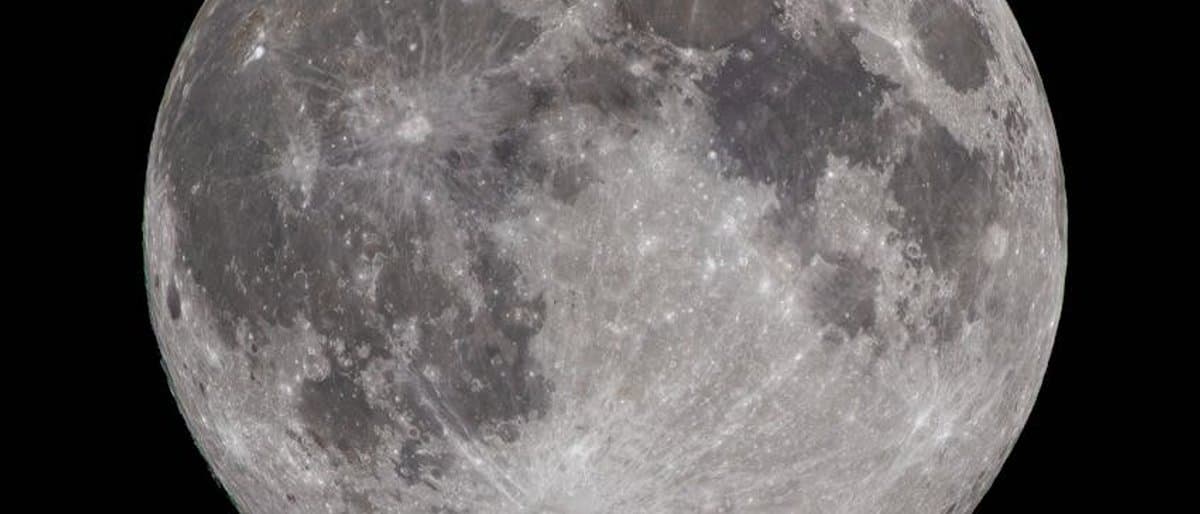
The full-phase moment can fall while the Sun is up. That does not mean you must observe at that minute. If January 22 is bright daylight where you live, the Moon can still look nearly full on the evening of January 21 or 22, depending on moonrise and your weather. A dedicated full-moon event guide should help choose between local evenings; this annual table records the astronomical dates.
New moon dates in 2027
The USNO lists 13 new-moon instants in the UTC calendar year. August is the unusual month, with one new moon at the beginning and another at the end. The interval between the August 2 and August 31 events is about 29.32 days, which fits inside August's 31 civil days.
| New Moon (UTC date) | Exact time (UTC) | Calendar note |
|---|---|---|
| January 7, 2027 | 20:24 | New Moon |
| February 6, 2027 | 15:56 | New Moon |
| March 8, 2027 | 09:29 | New Moon |
| April 6, 2027 | 23:51 | New Moon |
| May 6, 2027 | 10:58 | New Moon |
| June 4, 2027 | 19:40 | New Moon |
| July 4, 2027 | 03:02 | New Moon |
| August 2, 2027 | 10:05 | First of two August new moons |
| August 31, 2027 | 17:41 | Second August new moon |
| September 30, 2027 | 02:36 | New Moon |
| October 29, 2027 | 13:36 | New Moon |
| November 28, 2027 | 03:24 | New Moon |
| December 27, 2027 | 20:12 | New Moon |
You may see the second August new moon called a "Black Moon" in some publications. That nickname has multiple popular definitions, so it is not used as a technical category in this calendar. The two dates and times are the useful facts, whatever name a publisher attaches to them.
A new moon is usually not visible to the unaided eye because the sunlit side is directed away from Earth. It is not an event to go outside and watch at the listed instant. For stargazing, however, the nights near new moon can offer darker skies than nights with a bright waxing or waning gibbous Moon. That benefit still depends on when the Moon is above the local horizon and on weather and artificial lighting.
Month-by-month guide to the 2027 Moon
Use the month headings below to move from a day or phase lookup to a practical observing choice. These are page anchors within this article, not links to unpublished monthly guides. Add individual monthly-guide links only once those pages exist.
January | February | March | April | May | June | July | August | September | October | November | December
January 2027
The year opens with a new moon on January 7 and first quarter on January 15. The full Wolf Moon reaches its phase on January 22 at 12:17 UTC, followed by last quarter on January 29. January's first week begins in the waning part of the previous lunar cycle, so do not assume the first of the month is a new moon.
For darker evening skies, concentrate on the dates around January 7 and check your local Moon set times. If the full moon is your target, the best evening is not decided by the 12:17 UTC entry alone; an eastern view and the local moonrise forecast matter more.
February 2027
February's new moon is February 6 at 15:56 UTC. This also coincides with an annular solar eclipse visible only along its geographic eclipse path; the rest of the world does not get an annular view. First quarter is February 14, full moon February 20 and last quarter February 28 in UTC.
The February 20 full moon coincides with a penumbral lunar eclipse. A penumbral eclipse may cause subtle shading rather than the obvious dark bite of a partial eclipse. Check the local eclipse visibility map before planning a viewing trip: a full moon on your calendar does not mean the eclipse is visible from your street.
March 2027
The new moon is March 8, first quarter March 15 and full moon March 22. Last quarter is March 30 at 00:54 UTC. Because that final event is close to midnight UTC, it becomes March 29 in U.S. Eastern and Pacific daylight time. This is a straightforward example of why calendars using local dates can disagree without disagreeing on the astronomy.
For lunar surface observing, the days around the first-quarter phase offer a useful day-night boundary across the visible Moon. For fainter stars or galaxies, look near the new-moon window, after also checking local twilight and cloud cover.
April 2027
April's primary phases are new moon April 6 at 23:51 UTC, first quarter April 13, full moon April 20 and last quarter April 28. The new moon time is very late in UTC, so in places well east of Greenwich the date is already April 7.
A date printed in a U.S. almanac and one printed in an Asian calendar may therefore differ for April's new moon. Keep the source timestamp, apply the viewer's time zone, and avoid copying the U.S. date into an international article without qualification.
May 2027
May begins its phase cycle with new moon May 6 and first quarter May 13. Full moon follows on May 20 and last quarter on May 28. All four instants fall comfortably within May in the USNO UTC table; a local view must still perform a time-zone conversion rather than assume the printed day survives everywhere.
If you are observing the Moon through binoculars, the first-quarter days can provide pronounced shadows near the terminator. If you are planning a dark-sky trip, do not choose May 20 merely because it is a prominent calendar marker: the bright full moon can make faint night-sky targets harder to see.
June 2027
June's new moon is June 4, first quarter June 11 and full moon June 19 at 00:44 UTC. New York reaches that full phase on the evening of June 18 at 8:44 PM EDT, and Los Angeles reaches it June 18 at 5:44 PM PDT. That is why an American full-moon list may use June 18 while the USNO UTC table says June 19.
Last quarter comes June 27 at 04:54 UTC. By that point the Moon is generally more associated with the late-night and morning sky than with early-evening viewing. Use local rise and set times before treating June 27 as an all-night dark-sky opportunity.
July 2027
July's new moon is July 4 at 03:02 UTC, first quarter July 10 and full moon July 18. Last quarter follows on July 26. The full moon aligns with an extremely slight penumbral lunar eclipse that appears in NASA's technical eclipse catalog but is omitted from some shorter lists of worthwhile viewing events.
NASA's eclipse catalog gives this July event a penumbral magnitude of only 0.0014 and an interval of roughly 12 minutes from beginning to end. That is a catalog-level encounter with Earth's outer shadow, not a practical promise of noticeable darkening. Do not drive to a viewing site expecting a visible lunar-eclipse display on July 18.
August 2027
August has the calendar's two new moons: August 2 at 10:05 UTC and August 31 at 17:41 UTC. Between them fall first quarter on August 9, the full Sturgeon Moon on August 17 and last quarter on August 25. The second new moon does not erase or replace the first one in the monthly table.
August 2 also brings a total solar eclipse on a narrow track running through parts of southern Spain, North Africa and the Middle East, with partial viewing across a much broader region. Totality is location-specific, and looking directly at the Sun outside verified totality requires proper solar viewing equipment. A new moon on August 31 has no comparable solar eclipse associated with it.
August 17 has a penumbral lunar eclipse visible from selected parts of the world, depending on local night and Moon position. The days around the August 31 new moon may be useful for general dark-sky planning, but the correct choice still depends on your local forecast.
September 2027
The main September sequence is first quarter on September 7, full moon on September 15 and last quarter on September 23. New moon follows September 30 at 02:36 UTC. For New York that final phase occurs on September 29 at 10:36 PM EDT, so a local September calendar may mark the previous date.
The September full moon is the Harvest Moon under the usual equinox-based naming rule. That label does not imply a special astronomical kind of full moon or guarantee an unusually bright appearance. The phase and moonrise information remain the same whether your calendar calls it the Harvest Moon or the Corn Moon.
October 2027
October has first quarter on October 7 and full moon on October 15. Last quarter is October 22, followed by new moon October 29. The new moon falls shortly before Halloween, making the late-October period a useful date to inspect for dark evening skies.
That is an opportunity, not a guarantee of a dark view. Artificial skyglow, cloud and the Moon's actual rise and set times still govern what you can see. If you are planning an October evening event, check local sunset and astronomical twilight rather than treating October 29 as a universal darkness timestamp.
November 2027
November begins with first quarter on November 6. The full Beaver Moon comes November 14, last quarter November 21 and new moon November 28. The sequence differs from November 2026, when the month's new moon and full moon fell on November 9 and November 24 respectively.
Near November 28, lunar interference is lower than around midmonth, subject to local conditions. To see the Beaver Moon rising, check local moonrise rather than its November 14 full-phase timestamp.
December 2027
The year's final first quarter is December 6, followed by the Cold Moon at full phase on December 13 at 16:09 UTC. Last quarter is December 20 and the final new moon is December 27 at 20:12 UTC. All four dates appear in December in the source's UTC table.
A December 13 full moon creates different sky conditions from the darker days around December 27. Use the full-moon period for a bright lunar view and the late-month period to consider fainter sky targets, provided twilight, Moon position and cloud conditions work in your location.
How to pick dark nights with this calendar
For viewing faint stars, many nebulae or a meteor shower, the useful distinction is not simply full moon versus new moon. It is whether bright moonlight reaches the sky during the hours you plan to observe. Near new moon, the Moon is near the Sun in the sky and is generally absent from the fully dark night, but a calendar date alone does not tell you your weather or the strength of local lighting.
A workable first pass is to look within several evenings of a new-moon instant, then use local sunset, twilight, moonrise and moonset data to choose the actual session. Around first quarter, the Moon is commonly most convenient in the afternoon and evening. Around last quarter, it becomes more prominent late at night and into the morning. Those patterns are a guide, not exact clock times for every latitude and season.
The two August new moons deserve separate checks. August 2 is associated with a solar eclipse, while August 31 begins another lunar cycle. If you want a night-sky session rather than eclipse travel, there is no reason to treat the second date as a stronger dark-sky event purely because it is the second new moon of the month.
During full-moon weeks, the sky is brighter and faint meteor shower members become harder to see. That does not make meteor observing impossible, and a particularly bright meteor can still stand out. It does mean you should not compare two shower forecasts using published hourly rates without also checking the Moon in your sky.
For photography, a thin crescent close to the horizon may give an attractive subject shortly after sunset, while a half-lit Moon often shows stronger relief along the sunlit-dark boundary through a telescope. The full moon shows the entire near side bright but often gives less pronounced side-lighting on central surface features. Choose the phase for the photograph you want, not because one phase is universally best.
Moonrise and moonset are local, phase times are worldwide
USNO phase times are exact instants and do not depend on your city. Moonrise and moonset, by contrast, depend on your location, local horizon and the refraction assumptions used by the calculator. Two cities in the same time zone can have different moonrise minutes, and someone behind a building may see the Moon later than a standard horizon calculation suggests.
This matters if you want to watch the Moon appear low over a coastline or a building. Start with a full-moon date from this table, then enter your exact city into an established rise/set service such as the USNO Complete Sun and Moon Data. Confirm local sunset and the direction of moonrise before choosing the foreground or setting a photography appointment.
The source table in this article does not manufacture one moonrise time for the United States. It also does not assign a single "best night" for each full moon across all countries. Those decisions need local information, even though the phase instant is worldwide.
Why a lunar phase date changes between time zones
A lunar phase has one global instant. A calendar date is a label in a time zone. When an event occurs just after midnight UTC, North American locations can still be on the previous calendar evening, while places farther east can already be on the new date.
The June 2027 full moon provides a clear example. USNO places it at June 19, 00:44 UTC. The local equivalents below use IANA time-zone rules for the date rather than fixed assumptions about daylight saving time.
| Place | June full-Moon instant locally |
|---|---|
| UTC | Sat, Jun 19, 12:44 AM UTC |
| New York | Fri, Jun 18, 8:44 PM EDT |
| Los Angeles | Fri, Jun 18, 5:44 PM PDT |
| London | Sat, Jun 19, 1:44 AM BST |
| New Delhi | Sat, Jun 19, 6:14 AM IST |
| Sydney | Sat, Jun 19, 10:44 AM AEST |
New York and Los Angeles both correctly label the full Moon as June 18, while London, New Delhi and Sydney label it June 19. None has discovered a separate full moon. A monthly table organized by UTC should keep the event in June 19's UTC entry, and a local-time display should show the user's converted date alongside the named time zone.
Daylight saving time is a second reason not to reuse one offset all year. New York alternates between EST and EDT; Los Angeles alternates between PST and PDT. The annual widget must apply the time-zone database at each event, not subtract five or eight hours from every UTC value mechanically.
The 2027 eclipses in the lunar calendar
New moon and full moon are the phases at which eclipses can occur, but most such phases do not produce an eclipse. The Moon's orbital plane is tilted relative to Earth's orbital plane, so the alignment usually misses. The NASA eclipse catalogs identify two solar eclipses and three lunar eclipse contacts in 2027, with one of the lunar events exceptionally slight.
February 6 brings an annular solar eclipse near that month's new moon. The annular path crosses selected parts of South America and Africa; areas outside the annular track may see a partial eclipse or none, depending on location. February 20 brings a penumbral lunar eclipse near the full moon, with visibility spread over several regions according to local night conditions.
July 18 has the very shallow penumbral lunar eclipse mentioned above. Its magnitude of 0.0014 makes it essentially a technical grazing event, which helps explain why NASA's shorter public future-eclipses page lists the more recognizable February and August lunar eclipses instead. For a reader planning to see an obvious lunar eclipse, July 18 should not be sold as a viewing highlight.
August 2 is the year's total solar eclipse, occurring around the first August new moon. August 17 brings another penumbral lunar eclipse around the full moon. NASA's eclipse maps, not this phase table alone, determine where any of those eclipses can be seen. If you are preparing for an eclipse, use a verified path and timing guide and never use ordinary sunglasses to view the uneclipsed or partially eclipsed Sun.
Our next lunar eclipse guide is the appropriate follow-on page if it is live; its visibility details should be checked against NASA's current maps before publication.
What the four primary phases mean
The calendar lists four principal points in the lunar cycle: new moon, first quarter, full moon and last quarter. Between them the Moon passes through waxing crescent, waxing gibbous, waning gibbous and waning crescent stages. The visible shape changes continuously; these four instants are reference points, not four kinds of nights.
At new moon, the Moon lies near the Sun in the sky and its illuminated hemisphere mostly faces away from Earth. At first quarter, roughly half of the Earth-facing disc is sunlit. At full moon, the Earth-facing side is lit almost completely. At last quarter, the visible sunlit half has decreased again as the Moon moves toward the next new moon.
The word "quarter" describes progress through the lunar cycle, not one-quarter illumination. That is why the first- and last-quarter Moon each look roughly half lit. The average cycle from new moon to new moon is about 29.5 days, not exactly one civil calendar month. It is long enough that most months contain one new moon, but short enough for a second one to fit into a long month such as August 2027.
The phase is also different from the Moon's age, its local position and the percentage of its disc illuminated at a selected hour. A daily Moon calendar can calculate those additional values, but they must be derived for a stated time and methodology. This annual guide does not invent a percentage for every day from the four event timestamps.
For more on lunar geometry, use the moon phases explained guide if published.
Frequently Asked Questions
11 questions answered
How many full moons are there in 2027?
How many new moons are there in 2027?
Does August 2027 have two full moons?
Is there a Blue Moon in 2027?
When is the next full moon?
Why does my U.S. calendar say June 18 for a full moon when this table says June 19?
When are the darkest nights for stargazing in 2027?
Can I see the Moon at the exact new-moon time?
Are full moon phase times the same everywhere?
Can I print this calendar?
What are the 2027 lunar eclipses?
Put this into action
Stop guessing. Use our professional tools to schedule, convert, and manage time zones perfectly, 100% free.
View Moon PhasesOfficial Sources & References
- NASA Science: official data and scientific overviews for astronomical events and missions.