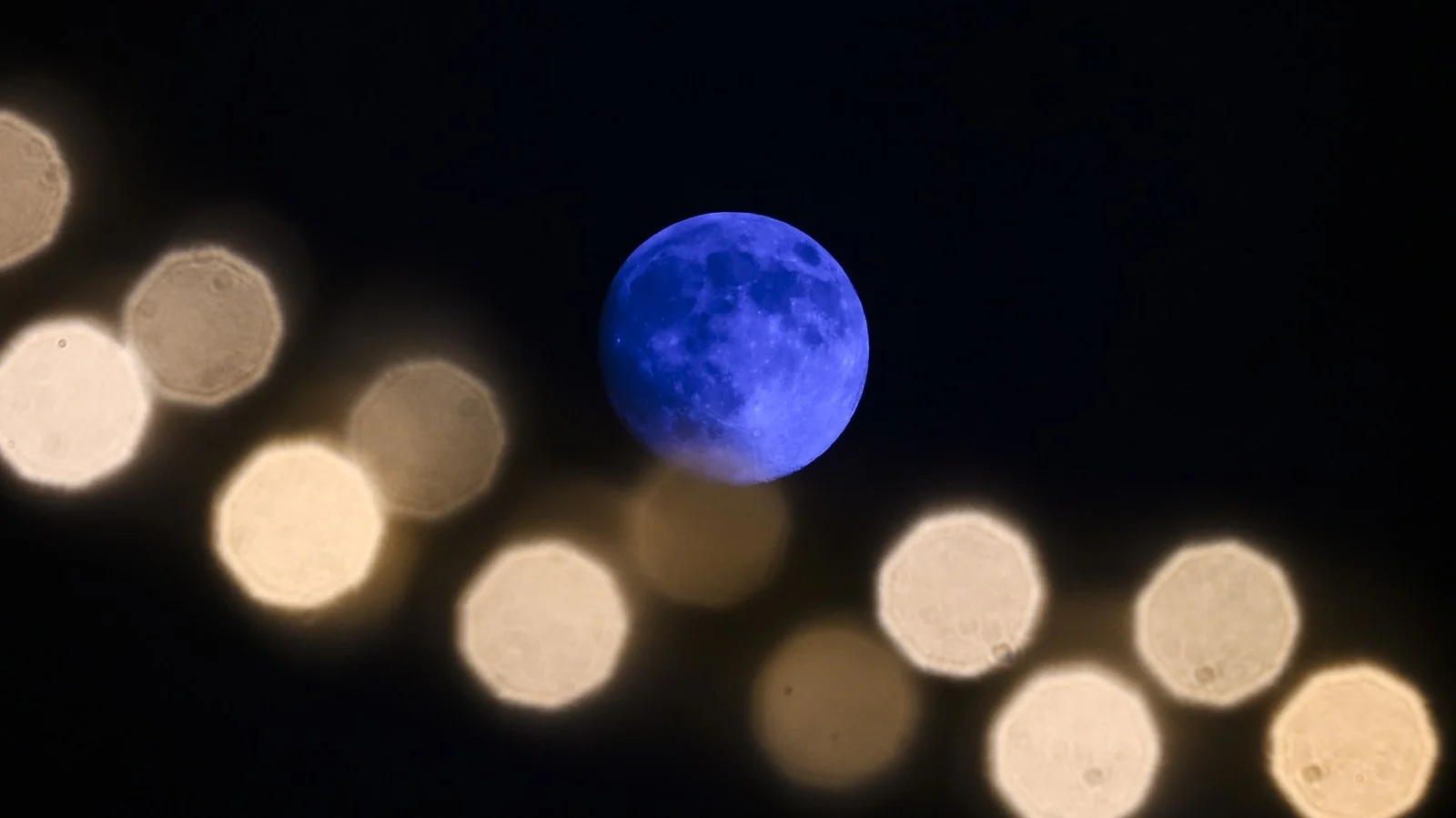
Hunter's Moon 2026: Exact Date, Times by Time Zone, and the Halloween Question
Quick Answer
The Hunter's Moon in 2026 falls on Monday, October 26, 2026 at 04:11 UTC — which is 12:11 AM Eastern and 9:11 PM Pacific on Sunday, October 25 — and it is five days before Halloween, so Halloween night has no true full moon.
Hunter's Moon 2026 at a Glance
| Fact | Answer |
|---|---|
| Date | Monday, October 26, 2026 |
| Exact moment (universal time) | 04:11 UTC |
| Eastern Time | 12:11 AM EDT, Monday, October 26 |
| Pacific Time | 9:11 PM PDT, Sunday, October 25 |
| Which full moon | The October full moon — the 11th of 13 in 2026 |
| Distance at full | Roughly 378,000 km — too far for a supermoon |
| Time before Halloween | 5 days |
| Moon on Halloween night | Waning gibbous, roughly two-thirds illuminated |
| Local date caveat | Pacific, Mountain and Central America see the instant on October 25 |
When Is the Hunter's Moon in 2026?
The full moon is an instant rather than a night, and that instant for 2026 is 04:11 UTC on Monday, October 26. Every other "Hunter's Moon 2026 date" you encounter — October 25 or October 26 — describes the same moment, observed from a different side of the planet. The United States is the source of the confusion, because it spans enough time zones that the instant falls on two different calendar days within one country.
In Eastern Time the full moon arrives at 12:11 AM on Monday, October 26 — just after midnight. In Central Time that is 11:11 PM on Sunday, October 25. In Mountain Time it is 10:11 PM on Sunday, and in Pacific Time it is 9:11 PM on Sunday, October 25. So the western United States gets to watch the moon complete itself at a perfectly reasonable hour on a Sunday evening, while the East Coast has to stay up past midnight.
The practical consequence: the best viewing night in North America is the evening of Sunday, October 25, because that is when the moon is already rising as the sun goes down and the sky darkens with a full moon essentially overhead of the horizon. In Europe, Africa and Asia, where the instant falls on the morning or afternoon of Monday, October 26, the equivalent night is the evening of Monday, October 26.
Hunter's Moon Time by Time Zone
| Time zone | Local time of the full moon |
|---|---|
| UTC | Monday, October 26, 04:11 |
| London (GMT, UTC+0) | Monday, October 26, 04:11 |
| Berlin, Paris (CET, UTC+1) | Monday, October 26, 05:11 |
| Johannesburg (SAST, UTC+2) | Monday, October 26, 06:11 |
| Dubai (GST, UTC+4) | Monday, October 26, 08:11 |
| New Delhi (IST, UTC+5:30) | Monday, October 26, 09:41 |
| Beijing, Hong Kong (CST, UTC+8) | Monday, October 26, 12:11 |
| Tokyo, Seoul (JST, UTC+9) | Monday, October 26, 13:11 |
| Sydney (AEDT, UTC+11) | Monday, October 26, 15:11 |
| Auckland (NZDT, UTC+13) | Monday, October 26, 17:11 |
| São Paulo (BRT, UTC−3) | Sunday, October 25, 01:11 |
| New York (EDT, UTC−4) | Monday, October 26, 00:11 |
| Mexico City (CST, UTC−6) | Sunday, October 25, 22:11 |
| Chicago (CDT, UTC−5) | Sunday, October 25, 23:11 |
| Denver (MDT, UTC−6) | Sunday, October 25, 22:11 |
| Los Angeles (PDT, UTC−7) | Sunday, October 25, 21:11 |
| Anchorage (AKDT, UTC−8) | Sunday, October 25, 20:11 |
| Honolulu (HST, UTC−10) | Sunday, October 25, 18:11 |
Two details in that table cause most of the conflicting dates published online. First, the United Kingdom, Ireland and most of mainland Europe leave summer time on Sunday, October 25, so Europe is on UTC+0 for this event while the US is still on daylight time — an extra hour of separation that is easy to forget. Second, the United States does not leave daylight saving time until Sunday, November 1, a week later.
If you want the precise phase data for your own location rather than a table of cities, the complete 2026 lunar calendar — every new moon, quarter and full moon with its UTC time — is in our moon phases 2026 guide.
What Is the Hunter's Moon?
The Hunter's Moon is the name given to the full moon that follows the Harvest Moon, which in most years means the full moon in October. Its defining feature is not a special appearance but a timing behaviour: for several consecutive evenings the moon rises only about 20 to 30 minutes later than usual, instead of the roughly 50 minutes that separates a normal moonrise from one night to the next.
The name comes from practical necessity. Before electric lighting, a full moon that came up with the sunset gave farmers and hunters several usable hours of light after dark. The autumn grain, corn and hay were being gathered, and the remaining work of harvesting, threshing and storing happened in that window. A moon that rose at sunset — and then again, almost, at dusk the next evening — extended the working day for exactly the period when it was needed.
That is why the Hunter's Moon is grouped with the Harvest Moon rather than treated as an isolated curiosity. Both describe the same practical idea from different angles: the Harvest Moon is the one that lights the harvesting, and the Hunter's Moon is the one that lights what comes after. The deeper etymology is uncertain, and the phrase almost certainly predates the European settlers who recorded it. The English-language name most often traces to a 19th-century American almanac tradition, while parallel traditions among Algonquian-speaking peoples of the northeastern woodlands used the October full moon to mark the season for setting snares and traps once the harvest was in.
For the naming logic behind every other month — Wolf, Worm, Pink, Sturgeon, Beaver, Cold — see full moon names explained.
Hunter's Moon or Harvest Moon? Which One Is 2026's?
There is a genuine annual ambiguity here, and it trips up a lot of otherwise careful calendars. The Harvest Moon is defined as the full moon nearest the autumnal equinox. In some years that is the September full moon; in others it is the October one.
In 2026 the equinox falls on Wednesday, September 23 at 00:05 UTC. The September full moon occurs on Saturday, September 26, just under four days later, which makes it the full moon closest to the equinox and therefore the 2026 Harvest Moon. The October full moon on October 26 sits a full 33 days after the equinox, so it keeps the Hunter's Moon name.
The practical upshot for 2026: there are two full moons in the harvest season, they are a month apart, and each carries its own name. If you see an October 2026 calendar that labels the October full moon "Harvest Moon", it is following the alternate convention in which the October full moon borrows the Harvest name whenever the equinox falls late enough. Under the standard convention, September 26 is the Harvest Moon and October 26 is the Hunter's Moon, which is the naming this article and the rest of the site use.
Full Moon Dates for the Rest of 2026
Three full moons remain in 2026 after the Hunter's Moon, and they run progressively closer to the moon's perigee:
| Date | Full moon | Time (UTC) | Distance | Note |
|---|---|---|---|---|
| October 26 | Hunter's Moon | 04:11 | ~378,000 km | Ordinary full moon, not a supermoon |
| November 24 | Beaver Moon | 14:54 | Close to perigee | First supermoon of 2026 |
| December 24 | Cold Moon | 01:28 | Closest full moon of 2026 | Second supermoon of 2026 |
The Hunter's Moon sits at roughly 378,000 km from Earth, comfortably beyond the roughly 363,000 km perigee threshold that defines a supermoon. That makes it an ordinary full moon in size and brightness — the moon is about 8% smaller in apparent diameter than it will be at the end of the year. If you take one thing from the autumn sky, take it on a night when the moon is closer.
That is exactly what happens over the following eight weeks. The moon works its way back toward perigee, and the last two full moons of 2026 both qualify as supermoons, with the December 24 Cold Moon the closest of the entire year. Our Beaver Moon and supermoon coverage covers how close a full moon has to be, and the December Cold Moon guide takes the final one night by night.
Is There a Full Moon on Halloween 2026?
No. This is the single most common false fact about Halloween, and it is false in 2026 by a wide margin.
Halloween 2026 falls on Saturday, October 31. The Hunter's Moon is on Monday, October 26. That is a gap of five full days, so the moon on Halloween night is not full and cannot be described as a full moon.
What the moon actually is on October 31 is a waning gibbous — still well past the half-lit stage, still bright enough to light a landscape on a clear night, but unmistakably a shape rather than a disc. It is roughly two-thirds illuminated and shrinking by about one percent an hour. No amount of atmospheric haze, low cloud or camera processing turns that back into a full disc, and any October 31, 2026 "full moon Halloween" claim is wrong.
The reason the myth persists is that Halloween has genuinely coincided with a full moon several times in living memory — 2001, 2003, 2004, 2006, 2009, 2012, 2013, 2015, 2018, 2020 and 2023 all had a full moon on or very near October 31. 2026 is simply not one of those years. The full moon moves about 50 minutes later each night, so whether Halloween gets a full moon is essentially a lottery that repeats roughly twice a decade.
For the complete 2026 calendar, including the fall-back night that follows, see our Halloween 2026 guide.
The Moon on the Nights Around Halloween
Illumination at roughly 9 PM local, Eastern Time, on each evening:
| Evening | Phase | Illuminated |
|---|---|---|
| Saturday, October 24 | Full | ~100% |
| Sunday, October 25 | Essentially full | ~100% |
| Monday, October 26 | Full to waning gibbous | ~99% |
| Tuesday, October 27 | Waning gibbous | ~96% |
| Wednesday, October 28 | Waning gibbous | ~91% |
| Thursday, October 29 | Waning gibbous | ~84% |
| Friday, October 30 | Waning gibbous | ~76% |
| Saturday, October 31 (Halloween) | Waning gibbous | ~66% |
Two entries in that table carry most of the practical weight. The evening of Sunday, October 25 is the one to plan around in North America, because in Eastern Time the moon completes itself at 12:11 AM — which means it is rising as darkness falls and looks full all evening. And Halloween night at roughly two-thirds illumination is still a bright, obvious moon that will be well up by trick-or-treating time in most of the country.
How and When to See the Hunter's Moon
The moon needs no equipment. The only variables are timing, direction and weather. Sunset times below show when the sky is dark enough for the moon to be the obvious object in the sky, computed for each city's standard longitude and rounded to the nearest minute.
| City | Sunset, Oct 25 | Sunset, Oct 26 |
|---|---|---|
| New York | 5:59 PM | 5:57 PM |
| Chicago | 5:52 PM | 5:51 PM |
| Denver | 6:04 PM | 6:03 PM |
| Los Angeles | 6:06 PM | 6:04 PM |
| Miami | 6:43 PM | 6:42 PM |
| Seattle | 5:59 PM | 5:58 PM |
| London | 4:42 PM | 4:41 PM |
| Sydney | 7:15 PM | 7:15 PM |
All times are local standard time for that date — daylight time in North America, winter time in Europe, summer time in Australia. Expect roughly a two-minute difference from your own horizon if you are far from the city centre.
Three practical notes for anyone heading out. First, the moon rises in the east and moves south, so give yourself ten minutes after sunset before judging whether it is "up" — near the horizon a full moon's brightness is scattered by the atmosphere and it can be hard to see at first. Second, the best-looking full moon of any month is usually the one that is just risen, because of the moon illusion, which makes a low moon appear dramatically larger than the same moon at high altitude. Third, a full moon is a poor night for deep-sky astronomy: it washes out faint galaxies and nebulae, and a first-quarter moon a week later is far better for that work.
The Hunter's Moon and Halloween: Two Events, Five Days Apart
It is worth separating these clearly, because search engines and social posts routinely merge them into a single "Halloween full moon" event that does not exist.
The Hunter's Moon is an astronomical event with a fixed instant and a trackable date. Halloween is a cultural observance fixed to October 31 every year. Their relationship changes annually, and in 2026 they are simply five days apart. Because the moon shifts about 50 minutes later each night, the gap of one year makes a huge difference: in 2025 a full moon fell on Halloween itself, and by 2026 it has moved on to the following month. The Hunter's Moon and Halloween combination that people remember from 2020 or 2023 will not repeat until the moon's cycle drifts back around, which it does roughly twice a decade.
The same October sky carries one more event. The Orionid meteor shower peaks on the nights of October 21 and 22, producing up to about 20 fast meteors per hour from debris shed by Halley's Comet. That timing matters for 2026 specifically: the Orionids peak on a waxing gibbous moon two or three nights before the Hunter's Moon, so the moon is in the evening sky for the peak nights rather than washing them out entirely. Meteors are best after midnight once the moon has set, and the window opens later each night. Our Orionid meteor shower 2026 guide covers the peak window, radiant position and viewing conditions.
Explore More
- Moon Phases 2026: Full, New & Quarter Dates All Year — the complete 2026 lunar calendar
- Full Moon Names Explained — where Hunter's, Harvest and every other name comes from
- Halloween 2026: The Saturday Halloween — the date, the fall-back night and the moon that is not full
- Orionid Meteor Shower 2026 — the October sky event just before the Hunter's Moon
Frequently Asked Questions
12 questions answered
When is the Hunter's Moon in 2026?
What is the Hunter's Moon?
Is there a full moon on Halloween 2026?
What time is the Hunter's Moon 2026 in my timezone?
Is the Hunter's Moon the same as the Harvest Moon?
Why is it called the Hunter's Moon?
Is the Hunter's Moon 2026 a supermoon?
What nights does the Hunter's Moon look full?
When does the moon rise for the Hunter's Moon 2026?
Is the Hunter's Moon the same as a blue moon?
Does the Hunter's Moon affect the tides?
When is the next Hunter's Moon?
Put this into action
Stop guessing. Use our professional tools to schedule, convert, and manage time zones perfectly — 100% free.
Track Sky EventsOfficial Sources & References
- NASA Science — Official data and scientific overviews for astronomical events and missions.